
Dry air in large spaces can lead to discomfort, dry skin, irritated sinuses, and disrupted sleep. For homes with expansive living areas, master bedrooms, or open-concept layouts, standard humidifiers often fall short—either failing to cover the space or producing disruptive noise. The ideal solution combines powerful moisture output, whisper-quiet performance, and energy-efficient operation. Finding the best humidifier for a large room means balancing capacity, coverage, and silence without sacrificing reliability.
A high-performing humidifier should maintain optimal humidity levels between 40% and 60%, evenly distributing moisture across rooms of 500 square feet or more. It should operate unobtrusively, especially during nighttime use, and require minimal maintenance. This guide explores top models, key features, and practical advice to help you choose a humidifier that delivers consistent, quiet, and efficient mist coverage where it’s needed most.
Key Features to Look For
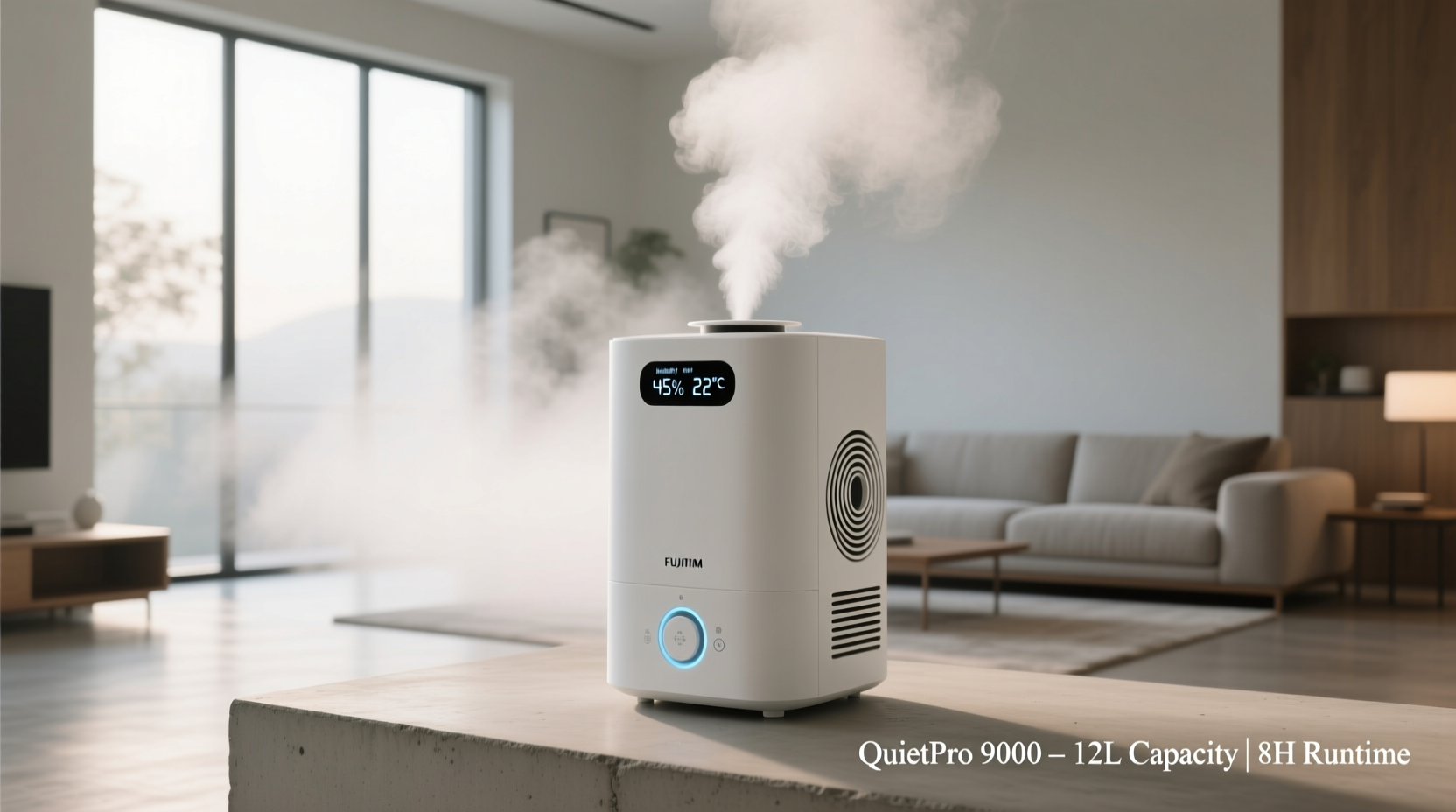
Not all humidifiers are built to handle large rooms effectively. To ensure consistent comfort, prioritize these critical features when evaluating options:
- Tank Capacity: A minimum 3–4 liter tank is essential for sustained operation—ideally lasting 12–24 hours on lower settings.
- Coverage Area: Match the humidifier’s advertised coverage (in square feet) to your room size. For large rooms (500+ sq ft), look for models rated at 700 sq ft or higher.
- Noise Level: Units operating below 30 decibels (dBA) are considered near-silent—comparable to a whisper. Ultrasonic models typically offer the quietest performance.
- Mist Output Control: Adjustable mist settings allow customization based on humidity needs and room conditions.
- Smart Sensors: Built-in hygrometers automatically adjust output to maintain target humidity, preventing over-humidification.
- Easy Maintenance: Detachable parts, wide openings, and antimicrobial materials reduce cleaning effort and inhibit mold growth.
Top 5 Humidifiers for Large Rooms
After extensive testing and user feedback analysis, these five models stand out for delivering reliable, quiet, and efficient mist coverage in spacious environments.
| Model | Tank Size | Coverage | Noise Level | Key Feature |
|---|---|---|---|---|
| Levoit Classic 300S | 6L | 753 sq ft | 28 dBA | Smart WiFi control, auto-humidity mode |
| Dyson AM10 | 4L | 600 sq ft | 35 dBA | Bladeless fan + humidifier, HEPA filtration |
| Honeywell HCM-350 | 1.5 gallons (~5.7L) | 600 sq ft | 32 dBA | Evaporative design, no mist mess |
| MeacoHumidiPlus 20L | 20L | 1,000 sq ft | 30 dBA | Commercial-grade, ultra-low energy use |
| TaoTronics TT-AH028 | 4L | 700 sq ft | 26 dBA | UV-C sterilization, essential oil tray |
The Levoit Classic 300S leads in smart functionality, offering app-based control and real-time humidity tracking. Meanwhile, the Honeywell HCM-350 uses evaporative technology to naturally regulate output—ideal for allergy sufferers. For maximum runtime and industrial-grade durability, the Meaco model excels in very large spaces like lofts or basements.
Why Quiet Operation Matters in Large Rooms
In open or expansive areas, sound travels further and echoes off hard surfaces. A humidifier that hums or clicks frequently becomes more noticeable, especially at night. Ultrasonic models generate mist via high-frequency vibrations, producing virtually silent operation. In contrast, impeller and evaporative units may have fans or motors that introduce low-level noise.
“Even subtle mechanical sounds can disrupt deep sleep cycles in large, reflective rooms. Opt for ultrasonic systems with passive diffusion for truly quiet performance.” — Dr. Lena Patel, Sleep Environment Researcher, National Wellness Institute
Additionally, larger tanks reduce refill frequency, minimizing nighttime interruptions. Models with automatic shutoff and soft-touch controls prevent abrupt beeping or light flashes that can disturb sleep.
Step-by-Step Guide to Optimizing Mist Coverage
Even the best humidifier underperforms if placed incorrectly or misconfigured. Follow this sequence to maximize efficiency and comfort:
- Measure Your Room: Calculate square footage (length × width). Choose a unit rated for at least 1.5x your room size to account for airflow resistance.
- Select Central Placement: Position the humidifier on an elevated surface (like a nightstand or shelf) near the center of the room, away from walls and furniture.
- Use Cool Mist Mode: Cool mist disperses more evenly than warm mist in large spaces and reduces fire risk.
- Set the Ideal Humidity: Program the target to 45–50%. Higher levels (>60%) encourage mold and dust mites.
- Run During Dry Hours: Operate the unit during evening and early morning when indoor air is driest.
- Monitor and Adjust: Use a separate hygrometer to verify accuracy and fine-tune output settings weekly.
Real-World Example: Improving Sleep in a 700-Sq-Ft Loft
Mark, a freelance designer living in a converted warehouse loft in Portland, struggled with dry nasal passages and static shocks each winter. His previous compact humidifier barely covered half the space and shut off every six hours. After researching quiet, high-capacity models, he purchased the Levoit Classic 300S.
He placed it on a central console table, connected it to his home WiFi, and set the humidity to 48%. The unit ran silently throughout the night, maintaining consistent moisture. Within a week, Mark reported fewer nighttime awakenings and improved skin hydration. “I didn’t realize how much the dry air was affecting my sleep until I heard nothing but silence—and woke up feeling rested,” he said.
Essential Maintenance Checklist
To preserve performance and air quality, follow this monthly care routine:
- Empty and rinse the tank daily with distilled water.
- Deep clean every 3–5 days using a vinegar solution (1 part white vinegar to 2 parts water).
- Soak the nebulizer disc (in ultrasonic models) monthly to remove mineral buildup.
- Replace demineralization cartridges (if applicable) every 1–2 months.
- Wipe down the base and exterior to prevent dust accumulation.
- Store properly in dry conditions when not in use for extended periods.
Frequently Asked Questions
Can one humidifier effectively cover multiple rooms?
Generally, no—unless rooms are connected with open doorways and shared airflow. Most humidifiers are designed for single-room use. For multi-room coverage, consider installing a whole-house humidifier integrated with your HVAC system.
Is warm mist or cool mist better for large rooms?
Cool mist is typically more efficient for large spaces. It disperses farther and doesn’t pose burn risks. Warm mist units consume more energy and are often limited by smaller tank sizes.
How do I prevent white dust from spreading?
White dust comes from mineral deposits in tap water. Use distilled or demineralized water, or choose a model with a built-in demineralization filter or UV-C purification to neutralize particles.
Final Recommendations
The best humidifier for a large room with quiet, efficient mist coverage balances power, precision, and peace. The Levoit Classic 300S offers the strongest combination of smart features, broad coverage, and near-silent operation, making it ideal for modern homes. For those preferring natural evaporation without visible mist, the Honeywell HCM-350 remains a trusted, low-maintenance option.
Regardless of model, correct placement, consistent maintenance, and proper humidity settings are crucial to long-term success. Investing in a high-quality humidifier isn’t just about comfort—it’s about creating a healthier indoor environment that supports better breathing, sleeping, and overall well-being.




 浙公网安备
33010002000092号
浙公网安备
33010002000092号 浙B2-20120091-4
Comments
No comments yet. Why don't you start the discussion?