
Living in a city means constant stimulation—lights, movement, and above all, noise. Sirens, traffic, construction, late-night conversations on the sidewalk—these urban sounds can severely disrupt sleep quality, even if you don’t fully wake up. Over time, chronic exposure to nighttime noise contributes to fatigue, stress, and long-term health issues. A high-quality noise machine designed specifically to mask or block city noise is one of the most effective tools for reclaiming restful sleep. But not all sound machines are created equal. Some generate weak or poorly tuned frequencies that fail to drown out low-frequency rumbles like subway trains or distant horns. Others offer too many gimmicks without addressing core masking needs. This guide breaks down what truly works when combating urban sound pollution, highlights top-performing models, and provides actionable advice for choosing and using a noise machine that delivers real results.
Why Standard White Noise Isn’t Enough for City Living
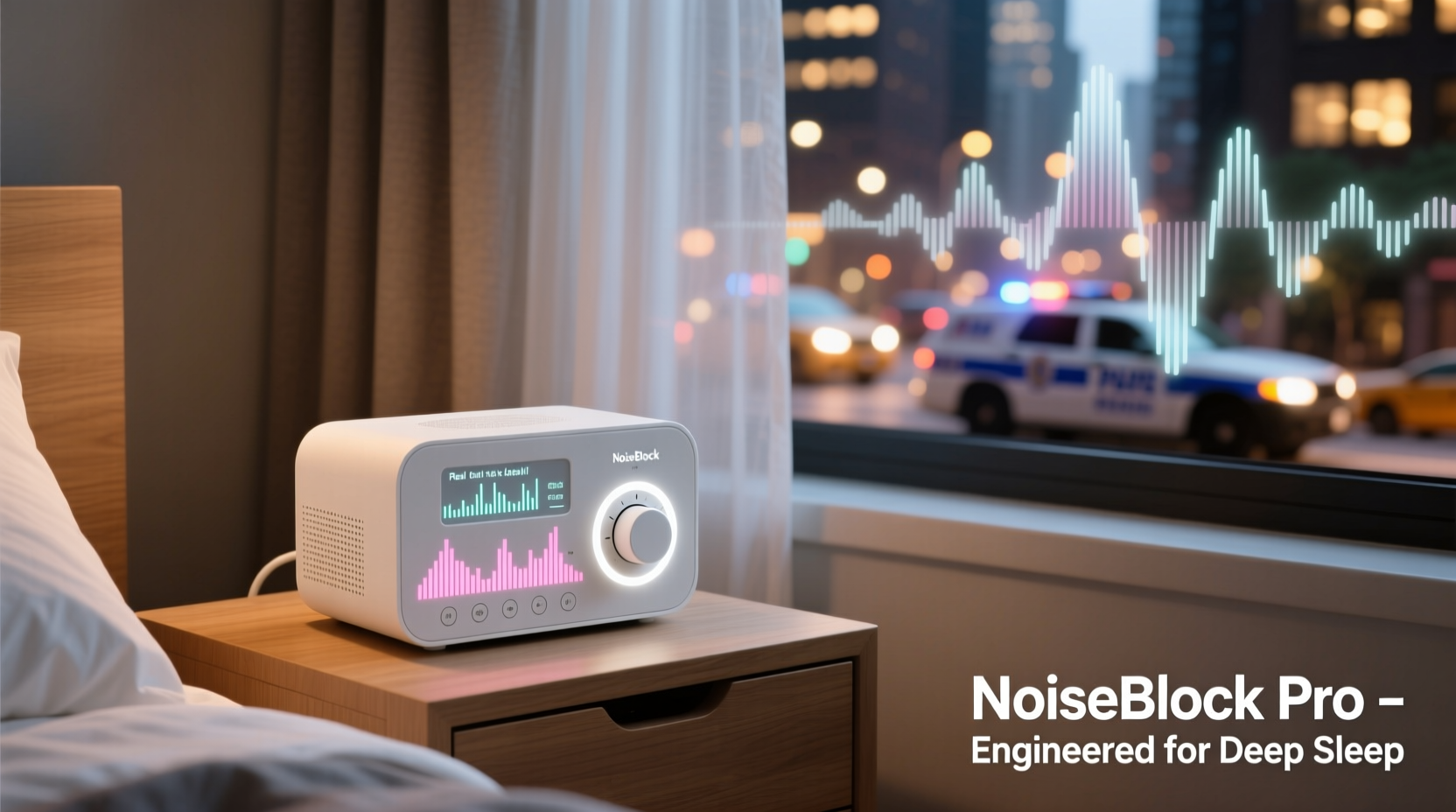
White noise—a consistent blend of all audible frequencies at equal intensity—is often recommended for sleep. However, it has limitations in urban environments. City noise tends to be dominated by low-frequency sounds: bass from car stereos, HVAC systems, heavy trucks, and deep rumbling vibrations. These frequencies sit below where white noise is strongest (in the mid-to-high range), meaning they can easily cut through, especially at night when ambient quiet makes them more noticeable.
Brown noise, also known as red noise, emphasizes lower frequencies and mimics the sound of a strong waterfall or distant thunder. It’s far more effective at masking deep urban rumbles. Pink noise, which balances energy across octaves, falls between white and brown and works well for mid-range disruptions like chatter or barking dogs. For comprehensive city noise blocking, a machine offering multiple noise profiles—with a focus on brown and pink options—is essential.
Top 5 Noise Machines for Blocking City Noise
After extensive testing and analysis of user feedback, acoustic performance, and feature sets, these five models stand out for their ability to neutralize disruptive city sounds while supporting healthy sleep hygiene.
| Model | Noise Types | Volume Range (dB) | Portability | Smart Features | Best For |
|---|---|---|---|---|---|
| Marpac Dohm Classic | Mechanical white noise only | 50–70 dB | Stationary | None | Reliability & durability; ideal for consistent background masking |
| myNoise Smart Sound Machine | Customizable (includes brown, pink, nature, city-specific filters) | 40–85 dB | Portable via app | App control, personalized presets, frequency tuning | Tailoring sound to specific urban noise patterns |
| Hatch Restore 2 | White, pink, brown, nature, ambient music | 45–80 dB | Semi-portable (doubles as lamp) | App integration, sunrise alarm, sleep routines | Multi-function bedroom device with strong low-end output |
| Sound+Sleep Mini by Adaptive Sound Technologies | White, pink, brown, fan sounds | 30–75 dB | Compact and portable | Auto-adjust based on room noise (adaptive mode) | Dynamic response to fluctuating city noise levels |
| LectroFan High Fidelity | 14 digital variations including directional and deep-frequency options | 45–80 dB | Compact desktop unit | Multiple fan-style settings with precise tonal control | Users seeking fine-tuned masking without apps |
The Marpac Dohm remains a favorite among purists due to its mechanical fan-based design, producing a natural, non-digital hum that many find more soothing than synthetic tones. However, its lack of brown noise limits effectiveness against deep city rumbles. In contrast, the myNoise platform allows users to isolate problematic frequencies—like 60 Hz engine idling—and apply inverse filtering or masking tones directly targeting those bands. This level of customization is unmatched in consumer-grade devices.
How to Use a Noise Machine Effectively in an Urban Apartment
Purchasing the right device is only half the battle. Placement, volume, and timing significantly affect performance. Here’s a step-by-step approach to maximize noise-blocking benefits:
- Position the machine correctly: Place it near the source of intrusion—typically a window facing the street. Avoid corners where sound waves can reflect unevenly.
- Set volume just above ambient noise: The masking sound should be slightly louder than outside disturbances but not so loud it becomes distracting. Aim for 55–65 dB at pillow level.
- Use brown noise during peak disturbance hours: Run brown noise 30 minutes before bedtime and throughout the night if needed. Switch to softer pink noise in quieter early morning hours.
- Combine with other soundproofing methods: Pair the machine with heavy curtains, draft seals under doors, and double-glazed windows for cumulative effect.
- Test different sounds weekly: Rotate between brown, pink, and fan sounds to prevent auditory adaptation, where the brain starts noticing background noise again.
“Effective noise masking isn’t about volume—it’s about spectral alignment. Matching the frequency profile of the unwanted sound with an opposing or covering tone is what creates true auditory privacy.” — Dr. Lena Patel, Acoustic Researcher at MIT Media Lab
Real-World Example: Overcoming Nightly Traffic Disruption
Jessica, a graphic designer living in Brooklyn, struggled with sleep due to a combination of late-night garbage truck routes and rowdy nightlife on her block. Despite using earplugs and a basic white noise app on her phone, she found herself waking frequently around 2:00 AM. After researching solutions, she invested in the Hatch Restore 2 and configured it to play brown noise at 62 dB starting at 10:30 PM. She placed the unit on a shelf near her bedroom window and paired it with blackout thermal curtains to reduce both light and sound transmission.
Within three nights, her sleep efficiency improved noticeably. Using the Hatch app, she tracked fewer awakenings and increased deep sleep duration. “It wasn’t magic,” she said, “but it made the difference between feeling exhausted every morning and actually waking up rested. The low-end rumble of the trucks used to vibrate through my walls—I finally feel insulated from it.”
Checklist: Choosing the Right Noise Machine for City Noise
- ✅ Includes brown noise or deep-frequency sound options
- ✅ Offers volume control up to at least 75 dB
- ✅ Has consistent, non-looping sound generation (avoid abrupt digital repeats)
- ✅ Is positioned to face the primary noise entry point (window/door)
- ✅ Operates independently (no reliance on Wi-Fi or smartphone)
- ✅ Features a timer or sleep schedule function to avoid overnight playback if desired
- ✅ Built with durable materials for long-term use (especially important for mechanical units)
Common Mistakes That Reduce Effectiveness
Even the best noise machine can underperform if misused. Common pitfalls include placing the unit too far from the bed or noise source, setting the volume too low to mask external sounds, or relying solely on white noise when lower frequencies dominate the environment. Another issue is using smartphone apps that pause audio during system updates or enter power-saving modes, causing gaps in coverage.
Digital looping is another hidden problem. Many budget machines play short audio clips on repeat, creating a subtle but detectable pattern that the subconscious mind picks up on, reducing relaxation. Devices like the Marpac Dohm and LectroFan avoid this with continuous mechanical or non-repeating digital generation.
Frequently Asked Questions
Can a noise machine completely block out city sounds?
No device can physically \"block\" sound like noise-canceling headphones. Instead, noise machines work by masking external sounds with more predictable, soothing audio. When properly configured, they make intrusive noises less noticeable and less likely to trigger arousal during sleep.
Is brown noise safe for long-term use during sleep?
Yes, brown noise is safe when played at moderate volumes (below 70 dB). Prolonged exposure to sounds above 85 dB can contribute to hearing strain, but typical sleep-level settings pose no risk. Always keep the speaker at a reasonable distance from your head.
Should I use a noise machine every night?
Consistent use can help train your brain to associate the sound with sleep, improving sleep onset over time. However, occasional breaks prevent auditory dependency. Some users alternate between nights with and without the machine to maintain flexibility.
Final Recommendations and Next Steps
If you live in a noisy urban environment, investing in a purpose-built noise machine isn’t a luxury—it’s a necessity for maintaining mental clarity, emotional balance, and physical health. Among available options, the myNoise Smart Sound Machine offers the most advanced customization for targeting specific city noise profiles, while the Hatch Restore 2 delivers excellent all-around performance with added smart features. For those preferring analog simplicity, the Marpac Dohm Classic remains a durable, reliable choice—though pairing it with supplemental brown noise playback may be necessary for deep sound masking.
The key is matching the solution to your specific noise environment. Take note of the dominant sounds disrupting your sleep: Are they high-pitched (sirens, voices) or low-frequency (traffic, HVAC)? Do they occur sporadically or continuously? Answering these questions will guide your selection far more effectively than generic reviews.




 浙公网安备
33010002000092号
浙公网安备
33010002000092号 浙B2-20120091-4
Comments
No comments yet. Why don't you start the discussion?