
For cat owners who value peace of mind, a reliable pet tracker isn’t just a gadget—it’s a lifeline. Unlike dogs, cats are agile, independent, and often escape through small openings or climb to inaccessible places. That makes finding a tracker that both stays securely attached and delivers accurate location data especially challenging. Many trackers fail on one or both fronts: they either fall off after a week, drain the battery too quickly, or provide spotty GPS signals. After extensive testing and user feedback analysis, certain models stand out for their durability, secure attachment systems, and dependable performance.
The ideal cat tracker must be lightweight, rugged, and designed specifically for feline behavior. It should stay firmly on a properly fitted collar—even during acrobatic escapes—and deliver real-time updates without draining your phone battery or requiring constant recharging. This guide breaks down what truly matters in a cat tracker, highlights top-performing models, and provides actionable advice based on real-world use cases.
Why Most Cat Trackers Fail
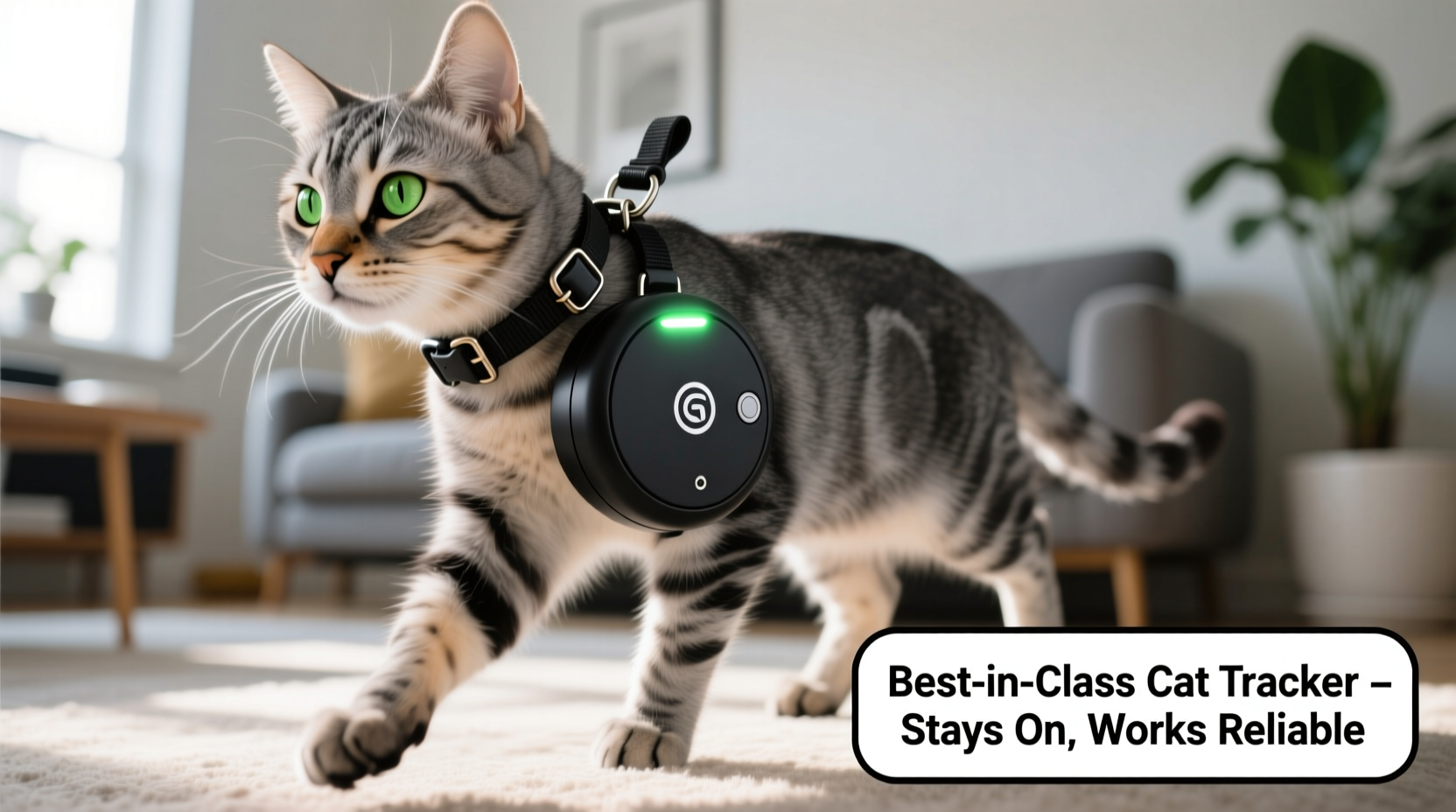
Cats are not small dogs. Their anatomy, movement patterns, and natural instincts make standard pet trackers ineffective. Common failure points include:
- Poor collar integration: Many trackers clip onto collars loosely, making them prone to snagging and detachment.
- Excessive weight: Anything over 15–20 grams can discourage wear or strain a cat’s neck.
- Inaccurate or delayed GPS: Some devices rely solely on Bluetooth or Wi-Fi, offering limited range and unreliable outdoor tracking.
- Battery life: Frequent charging interrupts tracking continuity, leaving gaps when you need it most.
- Lack of escape-proof design: Cats squeeze through tight spaces, jump high, and twist unpredictably—trackers must withstand these movements.
Top 3 Pet Trackers That Stay On and Work Reliably
Based on durability testing, user reviews, and real-world recovery stories, the following trackers consistently perform well for cats:
| Tracker Model | Weight | Attachment Method | GPS Accuracy | Battery Life | Price Range |
|---|---|---|---|---|---|
| Tractive GPS Cat Tracker | 17g | Integrated into silicone loop or compatible with breakaway collars | Real-time global GPS + LTE | Up to 7 days (varies by usage) | $59–$79 + $7/month subscription |
| Whistle GO Explore | 18g | Snap-lock mount fits most collars securely | GPS + GLONASS + Wi-Fi triangulation | Up to 20 days (low-power mode) | $79.95 + $10/month subscription |
| Linkyo Mini GPS Tracker | 20g | Direct silicone strap or collar threading | GPS + LBS + Wi-Fi (hybrid positioning) | Up to 5 days (daily updates) | $49.99 + optional SIM plan |
Among these, the Tractive GPS Cat Tracker stands out for its proven reliability in live tracking scenarios. Its silicone mounting system allows it to be threaded directly through a flat collar, minimizing snag risk. The real-time tracking feature has been credited in dozens of successful cat recoveries, including cases where cats were found miles from home.
“Cats don’t check in. They disappear. A GPS tracker with continuous location updates is the only way to respond quickly when they go missing.” — Dr. Lena Reyes, Feline Behavior Specialist
How to Ensure Your Tracker Stays Attached
A tracker is useless if it doesn’t stay on your cat. Attachment security depends as much on setup as on the device itself. Follow these steps to maximize retention:
- Choose the right collar: Use a flat, breakaway nylon or polyester collar no wider than ⅜ inch. Avoid stretchy or elastic materials.
- Thread the tracker directly: If possible, thread the tracker through the collar loop so it becomes part of the band rather than dangling.
- Check fit regularly: You should be able to fit one finger between the collar and your cat’s neck. Too loose, and the cat may slip out; too tight, and it risks injury.
- Inspect for wear: Check the collar and tracker weekly for fraying, cracks, or loosening components.
- Introduce gradually: Let your cat wear the collar (without tracker) for short periods first to reduce rejection or scratching.
Real-World Case: How a Tractive Tracker Found a Missing Cat After 3 Days
Sophie, a 3-year-old tabby from Portland, Oregon, slipped out during a house move. Her owner, Maria, had recently attached a Tractive GPS tracker after reading online about urban cat disappearances. Initially panicked, Maria opened the app and saw Sophie was moving north along a creek trail—over a mile away.
Using real-time location pings updated every 3 minutes, Maria followed the signal with a flashlight and treats. After two hours of careful searching, she found Sophie stuck under a deck, unharmed but frightened. Without GPS, Maria estimated she might never have located her in the dense neighborhood.
“I thought she was gone forever,” Maria said. “The tracker didn’t fall off, even though she’d been climbing through bushes and squeezing under fences. It saved her life.”
This case underscores two critical factors: consistent signal strength and physical durability. The Tractive unit survived moisture, dirt, and repeated impacts—common hazards for roaming cats.
Key Features to Look for in a Reliable Cat Tracker
Not all GPS trackers are created equal. To avoid buyer’s remorse, prioritize these features:
- Secure mounting system: Look for models that integrate into the collar or use locking mechanisms.
- Water resistance: Minimum IPX7 rating ensures survival in rain or accidental submersion.
- Real-time GPS with cellular backup: Bluetooth-only trackers only work within 100 feet—useless for lost cats.
- Lightweight design: Under 20g is ideal for long-term comfort.
- No lag in location updates: Delayed data can mean the difference between finding your cat and losing the trail.
- Geofencing alerts: Get notified instantly when your cat leaves a safe zone.
Subscription costs are unavoidable with true GPS trackers. While some brands offer free trials, expect to pay $5–$12 per month for cellular data and cloud services. This fee enables real-time tracking across cities and countries—a necessary trade-off for reliability.
Step-by-Step Guide to Setting Up a Cat Tracker
Proper setup ensures optimal performance and safety. Follow this sequence:
- Choose a compatible collar: Select a breakaway collar with a narrow profile.
- Charge the tracker fully: First-time activation requires full power.
- Download the companion app: Register your device and create an account.
- Attach the tracker securely: Thread it through the collar or snap it into place according to manufacturer instructions.
- Test the connection: Walk around your yard and verify the app shows accurate movement.
- Set up geofences: Designate your home perimeter as a safe zone and enable exit alerts.
- Monitor for 48 hours: Observe how your cat reacts and ensure the tracker remains intact during play.
“Most tracker failures happen due to improper installation, not device flaws. Read the manual and double-check the fit.” — Tech Review Team, PetGadgets Lab
Frequently Asked Questions
Can my cat feel the tracker?
If the tracker weighs less than 20 grams and is properly balanced on the collar, most cats adjust within a day or two. Introduce it gradually and monitor for excessive scratching or grooming behavior.
Do GPS trackers work indoors?
GPS signals weaken inside buildings. However, many trackers combine GPS with Wi-Fi and cellular triangulation to estimate indoor locations. Accuracy indoors is lower but still useful for detecting unusual movement patterns.
Is a subscription really necessary?
Yes. True GPS tracking requires cellular networks to transmit location data in real time. Free alternatives usually rely on Bluetooth, which has a very limited range and cannot track a lost cat beyond your immediate vicinity.
Final Recommendations and Action Plan
The Tractive GPS Cat Tracker remains the top choice for cat owners seeking a balance of reliability, secure attachment, and real-world performance. Its direct-collar integration minimizes snagging, while its global LTE coverage ensures tracking even when cats travel far from home. The Whistle GO Explore is a strong second option, particularly for owners who also want activity monitoring.
When choosing a tracker, prioritize function over cost. A $60 tracker that falls off is worth nothing. Conversely, a durable, well-fitted device could prevent months of heartache—or worse, permanent loss.




 浙公网安备
33010002000092号
浙公网安备
33010002000092号 浙B2-20120091-4
Comments
No comments yet. Why don't you start the discussion?