
As the holiday season approaches, many homes come alive with the warm melodies of Christmas carols. Whether you're hosting a festive gathering or simply creating a cozy atmosphere, how and where you place your speakers can make all the difference in delivering immersive, evenly distributed sound. Poor speaker placement leads to dead zones, echo, or overly loud spots—ruining the ambiance you're trying to create. Achieving full indoor coverage requires more than just volume; it demands strategic positioning based on room layout, acoustics, and speaker type.
This guide walks through the science and practical strategies behind optimal speaker placement for holiday music, helping you fill every corner of your home with rich, joyful carols—without distortion or imbalance.
Understand Your Space: Room Layout and Acoustics
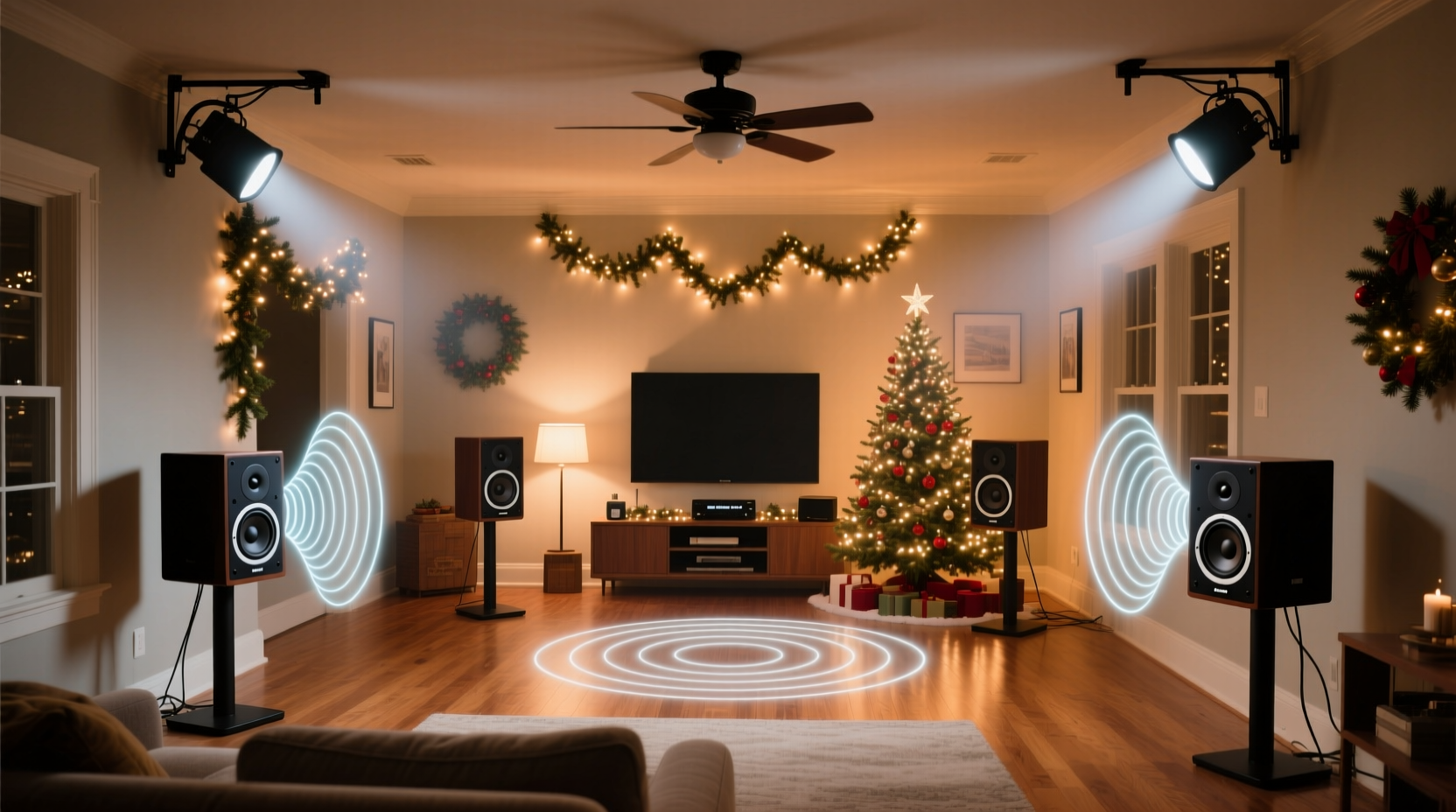
The foundation of effective speaker placement begins with understanding your environment. No two rooms are acoustically identical. Hard surfaces like tile, glass, and wood reflect sound, potentially causing echoes or harshness. Soft materials such as carpets, curtains, and upholstered furniture absorb sound, which can dampen clarity if overdone.
Start by mapping out the primary living areas where people will spend time—living room, dining area, kitchen, entryway. These are your target zones for audio coverage. Identify natural barriers: walls, doorways, stairwells, and open ceilings (like vaulted or two-story foyers) all affect how sound travels.
Open-concept spaces allow sound to flow more freely but may require multiple speakers to prevent uneven dispersion. Conversely, closed-off rooms need careful speaker direction to ensure music reaches adjacent areas without becoming muffled.
Choosing the Right Speaker Type for Holiday Use
Not all speakers are built for whole-home holiday playback. The ideal setup depends on whether you’re using standalone Bluetooth speakers, a multi-room audio system, or wired bookshelf models.
- Portable Bluetooth Speakers: Great for small to medium rooms. Best used in multiples for wider coverage.
- Smart Speakers (e.g., Amazon Echo, Google Nest): Can be grouped via app to play synchronized music across rooms.
- Wired Bookshelf or Satellite Speakers: Offer superior sound quality and consistency when connected to an AV receiver.
- Soundbars with Surround Kits: Effective in long living rooms, especially when paired with rear speakers.
If you plan to use multiple devices, ensure they support synchronization. Unsynchronized playback creates a distracting lag effect, particularly noticeable in hallways or between rooms.
“Even the most expensive speakers fail when placed incorrectly. Positioning is 70% of sound quality.” — Daniel Ruiz, Audio Engineer & Home Theater Consultant
Strategic Placement Principles for Full Coverage
To achieve uniform sound distribution, follow these proven acoustic principles:
- Elevate Speakers: Place speakers at ear level when seated (typically 3–4 feet off the ground). Avoid placing them directly on the floor unless designed for it.
- Aim Toward Listening Areas: Angle speakers slightly inward toward the center of the room or seating zone to focus sound where people gather.
- Maintain Distance from Walls: Keep at least 1–2 feet from walls to reduce bass buildup and muddiness.
- Use Symmetry: In rectangular rooms, place identical speakers equidistant from side walls for balanced stereo imaging.
- Exploit Doorways and Openings: Position a speaker near a doorway to “beam” sound into an adjacent room.
In homes with high ceilings or stairwells, consider vertical stacking or wall-mounting to project sound downward into lower levels. Ceiling-mounted speakers are ideal for kitchens or hallways but should be installed at angles that point toward activity zones.
Speaker Placement by Room Type
| Room | Best Placement | Why It Works |
|---|---|---|
| Living Room | Front corners or on side tables, angled inward | Creates wide stereo image; covers couches and central seating |
| Kitchen | Countertop near sink or island, elevated | Reaches cooks and guests; avoids obstruction from cabinets |
| Dining Area | On a sideboard or shelf at head height | Ensures clear sound during meals without overpowering conversation |
| Entryway/Foyer | Near front door, slightly elevated | Greet guests with music; connects to adjacent rooms acoustically |
| Staircase Landing | Mid-level shelf or mounted speaker pointing down | Projects sound to both upper and lower floors efficiently |
Step-by-Step Guide to Optimizing Indoor Carol Playback
Follow this timeline to set up your holiday sound system effectively before guests arrive:
- Day 1: Audit Your Equipment
Gather all available speakers. Test each one for clarity and connectivity. Label them by room or function (e.g., “Kitchen,” “Living Room Left”). - Day 2: Map Your Home Zones
Sketch a simple floor plan. Mark high-traffic areas and note any acoustically challenging spots (e.g., tiled bathroom opening into hallway). - Day 3: Initial Placement
Position speakers according to the principles above. Use temporary stands or furniture to hold them at proper height. - Day 4: Sound Test & Adjust
Play a familiar Christmas carol (e.g., “Silent Night”) at moderate volume. Walk through each room, noting:- Where the music is too soft or absent
- Where it becomes too loud or distorted
- Any echo or muffled sections
- Day 5: Fine-Tune Angles and Volume
Adjust speaker direction and individual volume levels. Use grouping features in smart speaker apps to balance output across zones. - Day 6: Final Run-Through
Simulate a typical evening: turn on background lights, run appliances (e.g., dishwasher), and walk through while listening. Make final tweaks.
Real-World Example: A Two-Story Home Setup
Sarah, a homeowner in Portland, wanted her annual cookie-decorating party to feel festive throughout her 2,000-square-foot house. Her main areas included an open kitchen/living room, a formal dining space, and a second-floor loft used by kids and teens.
She began with four devices: two smart speakers in the living room, one in the kitchen, and one in the loft. Initially, she placed all units on countertops, resulting in booming bass in the living room, weak sound in the dining area, and no continuity upstairs.
After repositioning:
- Lifted living room speakers onto wooden shelves at ear level
- Moved kitchen speaker from the back counter to the island, facing outward
- Placed the loft speaker on a railing-facing shelf, angled downward
- Grouped all devices via app and reduced living room volume by 20%
The result? Guests reported hearing clear music everywhere—from mixing dough in the kitchen to lounging upstairs. Sarah even added a fifth mini speaker near the entryway, enhancing the welcoming effect for arriving visitors.
Common Mistakes to Avoid
Even well-intentioned setups can go wrong. Here’s what not to do:
| Mistake | Better Approach |
|---|---|
| Placing all speakers in one room | Distribute them strategically across key zones |
| Pointing speakers directly at walls | Angle toward open space or seating areas |
| Using mismatched speaker models on high volume | Stick to similar types or adjust levels individually |
| Ignoring outdoor areas with indoor speakers | Keep indoor and outdoor systems separate to maintain control |
| Overloading small rooms with large speakers | Match speaker size to room dimensions |
FAQ: Frequently Asked Questions
How many speakers do I need for full home coverage?
It depends on your home’s layout. A typical 3-bedroom house benefits from 3–5 speakers: one in the living room, kitchen, dining area, and optionally one upstairs or in a hallway. Open-concept designs may require fewer, while compartmentalized homes need more.
Can I use my TV soundbar to play Christmas music throughout the house?
Yes, if it's part of a smart audio ecosystem (like Sonos or Bose SoundTouch). Otherwise, a soundbar alone only covers its immediate room. Pair it with compatible wireless speakers for broader reach.
Should I play carols on a loop or shuffle?
A shuffled playlist prevents listener fatigue and keeps the mood fresh. Loops can become monotonous, especially with repeated choruses. Aim for a curated mix of classic and modern renditions.
Checklist: Optimize Your Holiday Speaker Setup
- ✅ Inventory all available speakers and test functionality
- ✅ Sketch a floor plan highlighting key listening areas
- ✅ Choose appropriate speaker locations based on room use
- ✅ Elevate speakers to ear level (3–4 feet)
- ✅ Angle speakers toward seating or traffic paths
- ✅ Keep speakers 1–2 feet from walls and corners
- ✅ Group smart speakers for synchronized playback
- ✅ Conduct a walkthrough sound check with holiday music
- ✅ Adjust volume per zone to avoid hotspots
- ✅ Finalize placement 1–2 days before event or daily use
Conclusion: Create a Soundscape That Feels Like Home
The right speaker placement doesn’t just amplify music—it enhances memory, emotion, and connection. A well-distributed holiday soundtrack turns a house into a home, wrapping guests in warmth and nostalgia with every note. By applying acoustic principles, avoiding common errors, and tailoring your setup to your space, you ensure that “Joy to the World” truly reaches every room.




 浙公网安备
33010002000092号
浙公网安备
33010002000092号 浙B2-20120091-4
Comments
No comments yet. Why don't you start the discussion?