
For individuals weighing over 230 pounds, a standard mattress often fails to deliver the necessary support and pressure relief. Sagging, poor spinal alignment, and premature wear are common complaints. The right plus size mattress doesn’t just enhance sleep quality—it protects long-term joint health, improves circulation, and reduces pain. Choosing wisely means balancing firmness, durability, motion isolation, and edge support. This guide breaks down what truly matters when selecting a mattress built to handle higher body weight without sacrificing comfort.
Why Standard Mattresses Fall Short for Heavier Sleepers
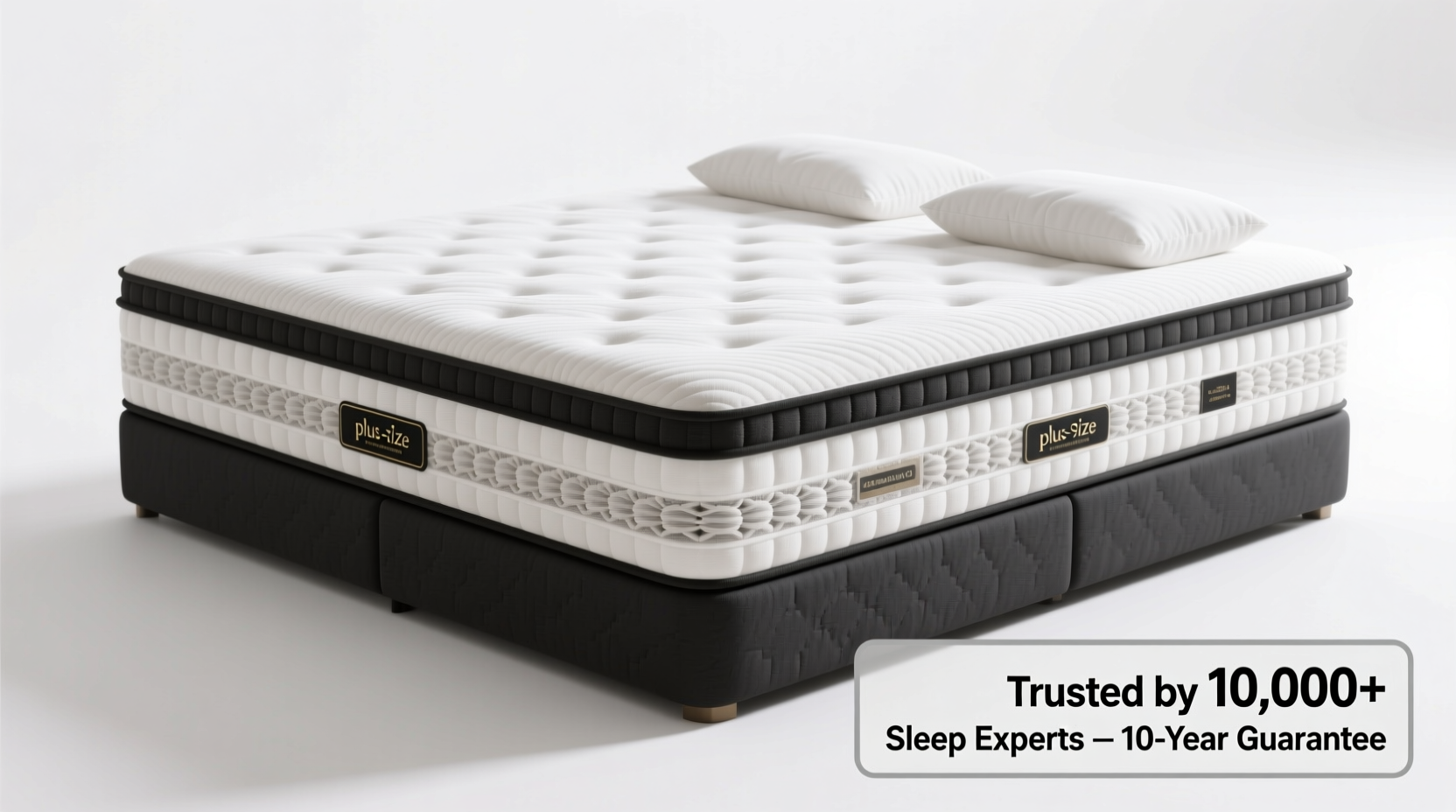
Most off-the-shelf mattresses are tested using weights between 130–200 pounds. When someone exceeds that range, especially above 250 pounds, several structural issues arise:
- Insufficient support: Softer foams compress too deeply, leading to misaligned spines and morning back pain.
- Reduced durability: Lower-density foams and weak coil systems degrade faster under consistent heavy use.
- Poor edge support: Many mattresses collapse at the edges, making it difficult to sit or sleep near the perimeter.
- Limited sinkage control: Without proper zoned support, hips and shoulders sink excessively, disrupting posture.
“Sleeping on an inadequate mattress can exacerbate chronic pain and reduce REM cycles in heavier individuals.” — Dr. Lena Patel, Sleep Health Researcher at the National Institute of Sleep Medicine
Key Features of the Best Plus Size Mattress
A high-performance mattress for larger bodies must meet specific engineering standards. Look for these non-negotiables:
Firmness Level (Medium-Firm to Firm)
A rating between 6.5 and 8 on the firmness scale provides optimal balance—soft enough for pressure relief at key points like hips and shoulders, but firm enough to prevent bottoming out. Too soft leads to sinking; too hard causes discomfort and pressure buildup.
High-Density Foam Layers (≥ 1.8 lb/ft³)
Low-density foams (< 1.5 lb/ft³) break down quickly. High-density memory foam or polyfoam resists compression, maintains shape, and offers durable contouring. For combination sleepers, this ensures consistent support across positions.
Reinforced Innerspring or Hybrid Coils
Individually wrapped coils with a gauge of 14.5 or lower provide targeted support and minimize motion transfer. Pocketed coils also improve airflow, preventing heat retention—a common issue with thick foam builds.
Enhanced Edge Support
Reinforced perimeter systems—such as dense foam encasement or firmer outer coils—allow up to 30% more usable surface area. This is critical for easier mobility and safer entry/exit from bed.
Top 5 Recommended Mattresses for Plus Size Sleepers
| Model | Type | Firmness | Density/Coil Gauge | Best For |
|---|---|---|---|---|
| Saatva Classic | Hybrid Innerspring | Firm (8/10) | Dual-coil system (14.5 & 17.5 gauge), HD foam | Back/stomach sleepers needing strong lumbar support |
| WinkBed Plus | Hybrid | Luxury Firm (7/10) | 8-inch pocketed coils, 2” gel foam | Side sleepers wanting balanced cushioning |
| Helix Plus | Hybrid Foam | Targeted Medium-Firm (7.5/10) | 7” reinforced coils, 2.5” TitanFoam™ (2.0 lb/ft³) | Couples with differing weight profiles |
| Ambella Home Natural Latex | All-Latex | Firm (8.5/10) | 100% natural Dunlop latex, steel coil base | Eco-conscious buyers seeking longevity |
| Beautyrest Black Breeze Neo Hybrid | Hybrid | Plush-Firm (6.5/10) | Adaptive coil + graphite-infused foam | Hot sleepers needing cooling + support |
Real User Experience: How One Sleeper Found Relief
Carlos M., 310 lbs and a side sleeper, struggled with chronic shoulder and lower back pain after years on a budget all-foam mattress. “I’d wake up feeling like I was sleeping in a hammock,” he said. After switching to the Helix Plus, which uses high-density foam and zoned coils, his alignment improved within two weeks. “My hips don’t sink too far, my spine stays neutral, and I actually feel rested now.” His experience underscores how proper material density and structural design directly impact physical recovery during sleep.
Step-by-Step Guide to Choosing Your Ideal Plus Size Mattress
- Determine your primary sleep position: Back and stomach sleepers benefit from firmer options; side sleepers may prefer medium-firm models with extra shoulder padding.
- Check weight capacity: Ensure the manufacturer specifies suitability for over 250 lbs per person (or 500+ lbs for couples).
- Verify foam density and coil gauge: Prioritize ≥ 1.8 lb/ft³ foam and ≤ 15-gauge coils.
- Look for reinforced edges: Especially important if you share the bed or frequently sit on the side.
- Test return policies and trial periods: Aim for at least 100 nights and free returns—many brands now offer white-glove pickup.
- Read verified customer reviews from heavier users: Filter reviews by weight category where possible.
- Consider foundation compatibility: Some hybrid and latex models require solid or slatted bases to maintain warranty.
Checklist Before You Buy
- ✅ Mattress rated for body weight over 250 lbs
- ✅ Foam density ≥ 1.8 lb/ft³ in comfort layers
- ✅ Coil system with gauge ≤ 15 (lower = stronger)
- ✅ Reinforced edge support (foam encasement or denser perimeter coils)
- ✅ At least a 100-night sleep trial
- ✅ 10+ year warranty covering sagging deeper than 1 inch
- ✅ Cooling technology if prone to overheating (gel infusion, breathable cover, latex)
FAQ
Can a memory foam mattress work for heavier individuals?
Yes—but only if it uses high-density foam (≥ 1.8 lb/ft³). Low-density memory foam will compress permanently and fail within 1–2 years. Look for models specifically labeled “for heavier people” or “plus size.”
How much should I expect to spend on a quality plus size mattress?
Expect to invest $1,200–$2,500 for a queen-size model that delivers lasting performance. Cheaper options often cut corners on materials, leading to early replacement costs. Think of it as a long-term health investment.
Do hybrid mattresses last longer than all-foam ones for heavier sleepers?
Generally, yes. The combination of responsive coils and supportive foam resists sagging better than all-foam constructions. Coils provide a stable base, reducing stress on foam layers and extending overall lifespan.
Final Thoughts: Invest in Support That Lasts
The best plus size mattress for comfort and support isn’t about luxury fluff—it’s about intelligent engineering designed for real bodies and real needs. From enhanced coil systems to high-density foams and reinforced edges, every component plays a role in ensuring restful, pain-free sleep night after night. Don’t settle for generic recommendations. Demand transparency in materials, test firmness realistically, and prioritize durability over short-term savings.




 浙公网安备
33010002000092号
浙公网安备
33010002000092号 浙B2-20120091-4
Comments
No comments yet. Why don't you start the discussion?