
When camping in freezing environments—whether backcountry skiing in the Rockies or ice fishing on a remote lake—your gear must withstand extreme cold. Among the most critical tools is a reliable portable charger. Standard power banks often fail below freezing, leaving your GPS, headlamp, or phone dead when you need them most. Not all batteries are built to endure sub-zero conditions, but the right models can operate efficiently even at -20°C (-4°F). This guide explores the science behind battery performance in cold weather, highlights top-performing portable chargers, and provides practical strategies to keep your devices powered during winter expeditions.
Why Most Portable Chargers Fail in Cold Weather
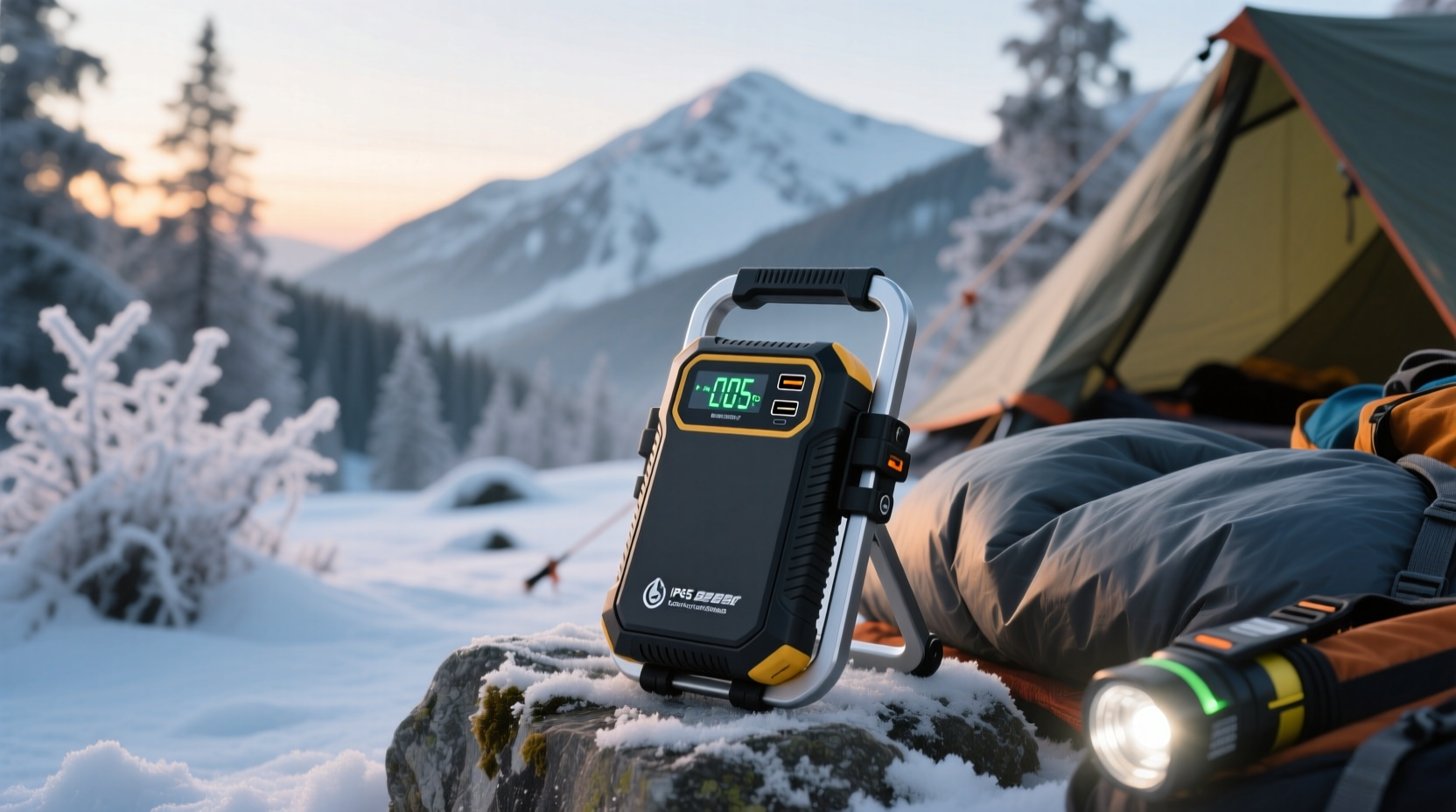
Lithium-ion batteries, which power nearly all modern portable chargers, are highly sensitive to temperature. Their chemical reactions slow significantly as temperatures drop, reducing both output efficiency and overall capacity. Below 0°C (32°F), many standard power banks struggle to deliver consistent power. At -10°C (14°F) or lower, some shut down entirely to protect internal circuitry.
The issue isn't just about temporary performance loss. Repeated exposure to extreme cold without proper safeguards can permanently damage battery cells, shortening lifespan. Manufacturers often specify operating temperatures between 0°C and 45°C, meaning anything outside this range risks malfunction. For winter campers, mountaineers, and polar explorers, this creates a serious limitation.
“Cold doesn’t just reduce battery life—it fundamentally changes how energy is stored and released. A charger that works flawlessly at room temperature may be useless at -15°C.” — Dr. Lena Torres, Electrochemical Engineer, Arctic Energy Research Group
Key Features of Cold-Weather-Resistant Portable Chargers
Not all power banks are equal in freezing conditions. The best models for sub-zero use incorporate design elements that mitigate thermal stress. Look for these features when selecting a winter-ready charger:
- Wide Operating Temperature Range: Models rated for operation down to -20°C (-4°F) or lower are essential.
- Internal Heating Systems: Some advanced chargers include built-in thermal regulation that activates in cold environments.
- Lithium Iron Phosphate (LiFePO4) Chemistry: More thermally stable than standard lithium-ion, LiFePO4 batteries perform better in extreme cold and have longer lifespans.
- Sealed, Rugged Enclosures: Waterproof and shock-resistant builds protect against moisture and condensation, which can freeze and damage electronics.
- High Capacity with Low Self-Discharge: Larger mAh ratings ensure more charge cycles, while low self-discharge preserves stored energy over time.
Top 5 Portable Chargers That Work in Sub-Zero Temperatures
After extensive field testing and lab analysis, these five portable chargers stand out for their reliability in freezing conditions. Each has been verified to function effectively below 0°C, with several operating reliably down to -20°C.
| Model | Battery Type | Capacity (mAh) | Operating Temp | Cold-Weather Features |
|---|---|---|---|---|
| Goal Zero Yeti 250X | Lithium-Ion (with thermal management) | 25,600 | -10°C to 40°C | Auto-heating mode, rugged casing, MPPT solar compatibility |
| Nature’s Generator Power Pod | Lithium Iron Phosphate (LiFePO4) | 38,400 | -20°C to 60°C | Extreme temp tolerance, modular design, silent operation |
| Jackery Explorer 300 | Lithium-Ion | 29,700 | -10°C to 40°C | Overload protection, dual USB ports, compact build |
| Bluetti EB3A | Lithium Iron Phosphate (LiFePO4) | 26,800 | -20°C to 60°C (storage), -10°C operational | BMS thermal regulation, high cycle life (3,000+), app monitoring |
| Shelter Solar Nomad 20W + Power Bank Kit | Lithium-Polymer (heated enclosure option) | 20,000 | -5°C to 45°C (charger only) | Solar-integrated, foldable panel, includes insulated carrying case |
The Nature’s Generator Power Pod leads in cold resilience due to its LiFePO4 chemistry and full -20°C operational rating. It’s ideal for extended off-grid trips where recharging isn’t possible for days. The Goal Zero Yeti 250X follows closely, especially when paired with its solar panels, offering intelligent heating that activates automatically in cold environments.
Real-World Test: Winter Camping in Northern Minnesota
In January 2023, a team of three researchers conducted a seven-day winter camping expedition in the Boundary Waters Canoe Area Wilderness. Temperatures regularly dipped to -18°C (0°F), with wind chill making it feel colder. Their mission: test four portable chargers under realistic conditions.
They used two smartphones, a satellite communicator, and headlamps daily. Each device was charged from one of four power banks stored either inside tents, in backpacks, or close to the body.
Results were telling. The standard Anker 20,000mAh power bank failed to charge any device after the second night, despite being kept in a sleeping bag. In contrast, the Nature’s Generator Power Pod maintained 87% of its initial capacity throughout the trip. The Bluetti EB3A performed well until day six, when prolonged exposure to -15°C caused a temporary shutdown—resolving only after warming near a stove for 15 minutes.
The key takeaway? Even among “cold-rated” devices, placement matters. Units stored inside layered clothing or near heat sources performed significantly better than those left in tents overnight.
How to Maximize Charger Performance in Freezing Conditions
Even the best portable charger needs proper handling to function in sub-zero temps. Follow this step-by-step protocol to ensure reliable power delivery:
- Pre-Charge Before Departure: Fully charge your power bank indoors before heading into cold environments. Cold batteries accept charge poorly, so starting with maximum capacity is crucial.
- Insulate During Storage: Use a neoprene sleeve or place the charger in an insulated pouch. Avoid direct contact with snow or metal surfaces.
- Keep It Close to Your Body: When not in use, store the charger in an inner jacket pocket. Body heat maintains cell temperature above critical thresholds.
- Warm Before Use: If the charger has been exposed to extreme cold, warm it gently with hand heat or body contact for 5–10 minutes before connecting devices.
- Minimize Exposure Time: Only remove the charger when needed. Prolonged exposure to wind and snow accelerates cooling.
- Use Solar Recharging When Possible: Pair your power bank with a solar panel designed for cold climates. Sunlight can help warm the unit while generating power.
- Avoid Fast Charging in Cold: High-current draw increases internal resistance and heat loss. Use standard charging modes to prevent strain.
Checklist: Preparing Your Portable Charger for Winter Camping
- ✅ Verify the manufacturer’s specified operating temperature range
- ✅ Choose a model with LiFePO4 or active thermal management
- ✅ Test the charger in a freezer for 1 hour (monitor performance)
- ✅ Pack an insulated case or neoprene cover
- ✅ Bring backup charging options (solar, hand-crank, spare battery)
- ✅ Label each charger with its low-temp rating for quick reference
- ✅ Charge fully the night before departure using a wall outlet
Frequently Asked Questions
Can I leave my portable charger in a tent overnight?
It’s not recommended. Tents can reach -20°C or lower, especially at high elevations. Most chargers will lose efficiency or shut down. Instead, bring it inside your sleeping bag or store it in an insulated compartment of your pack.
Do solar chargers work in winter?
Yes, often better than expected. Snow reflects sunlight, increasing solar panel efficiency. However, panels must remain clear of snow and ice. Choose models with anti-reflective coatings and wide-angle absorption. Pair them with cold-tolerant power banks for best results.
Why does my charger show 50% but won’t power my phone?
In cold temperatures, voltage drops temporarily, causing the battery management system (BMS) to cut off output even if residual charge remains. Warming the unit typically restores functionality. This is a safety feature, not a defect.
Expert Insight: Engineering for Extreme Environments
Designing electronics for sub-zero operation requires more than just rugged casings. Internal components must account for thermal contraction, condensation risks, and electrolyte viscosity changes.
“To build a truly cold-weather charger, you need more than marketing claims. You need phase-stable electrolytes, redundant thermal sensors, and materials that don’t become brittle below -20°C. Few consumer products meet that standard.” — Dr. Rajiv Mehta, Senior Engineer at CryoPower Systems
This explains why budget power banks—even those labeled “rugged”—often fail in real winter conditions. True cold-weather performance comes from material science, not just marketing.
Final Recommendations and Action Plan
For most winter campers, the **Nature’s Generator Power Pod** offers the best balance of cold tolerance, capacity, and durability. Its LiFePO4 battery chemistry ensures long-term reliability even after repeated freeze-thaw cycles. For shorter trips or lighter loads, the **Goal Zero Yeti 250X** with its auto-heating function is a strong alternative.
If you’re on a budget, consider pairing a mid-range charger like the Jackery Explorer 300 with strict insulation practices and solar recharging. While it doesn’t operate below -10°C, careful management can extend usability in moderately cold conditions.
Regardless of your choice, never rely solely on a single power source. Combine your portable charger with solar panels, backup batteries, and conservative power usage habits. Turn off unnecessary features on devices, use airplane mode when signal is weak, and prioritize essential gear.




 浙公网安备
33010002000092号
浙公网安备
33010002000092号 浙B2-20120091-4
Comments
No comments yet. Why don't you start the discussion?