
For years, a persistent warning has echoed through households: “Don’t charge your phone overnight—it’ll ruin the battery!” While well-intentioned, this advice is often based on outdated assumptions and incomplete information. Modern smartphones are equipped with advanced lithium-ion batteries and intelligent charging systems designed to prevent overcharging. Yet misconceptions linger, leading many users to unplug their devices at midnight or avoid overnight charging altogether. The truth lies somewhere between myth and modern engineering.
Understanding how today’s phones manage power requires separating fact from fiction. With proper context, you can make informed decisions about when and how to charge—without fear of damaging your device or shortening its lifespan.
The Evolution of Phone Batteries
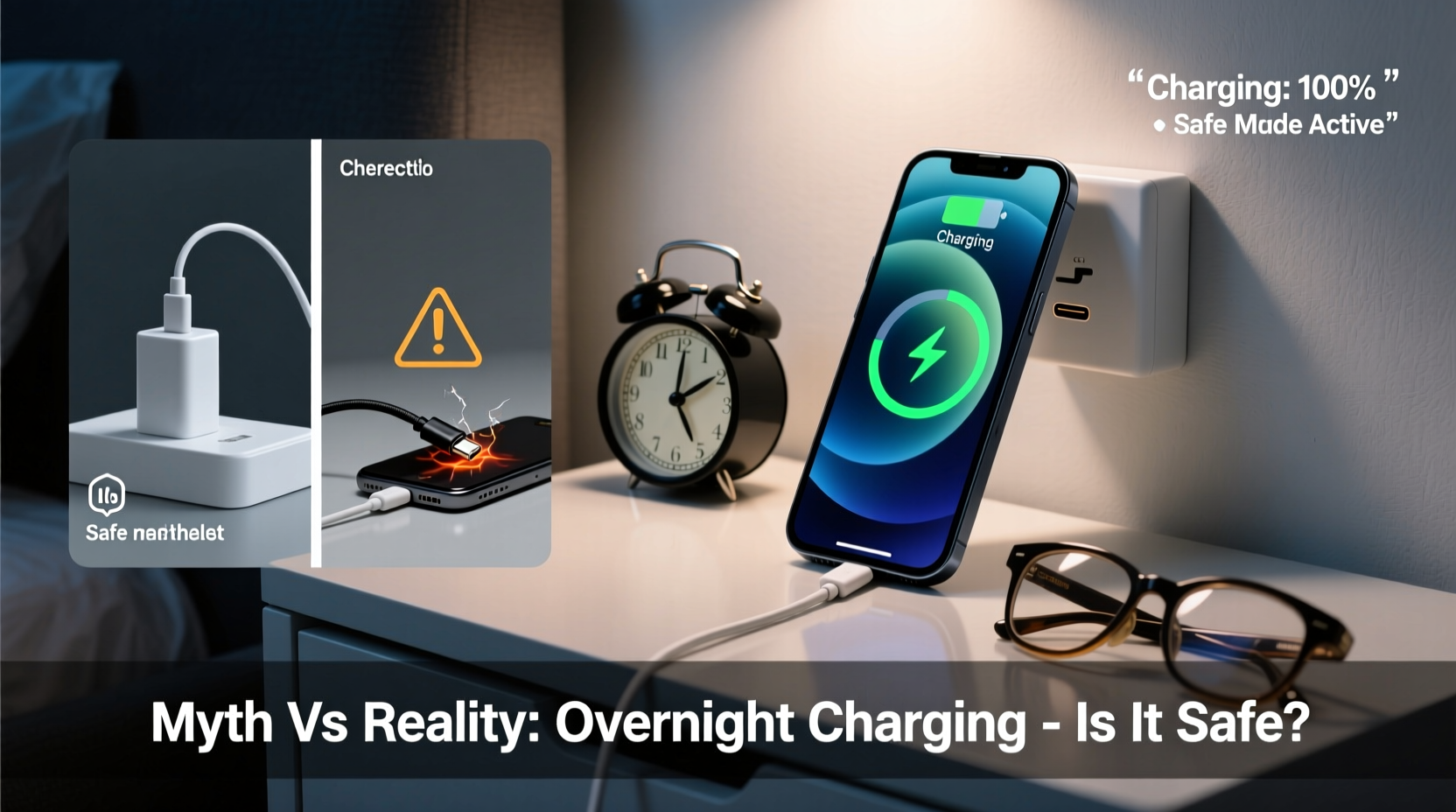
Early mobile phones used nickel-based batteries that suffered from memory effect and overheating risks when left plugged in too long. These limitations contributed to widespread caution around extended charging. But since the early 2010s, nearly all smartphones have transitioned to lithium-ion (Li-ion) or lithium-polymer (Li-Po) batteries, which behave very differently.
Lithium-ion batteries do not suffer from memory effect and are engineered to stop drawing current once they reach full capacity. This is managed by a built-in protection circuit module (PCM), which communicates with the phone’s operating system and charger to regulate voltage and temperature. Once the battery hits 100%, the flow of electricity halts until the level drops slightly, at which point a small top-up charge may resume.
“Modern smartphones are designed to handle overnight charging safely. The real threat isn’t duration—it’s heat and prolonged high voltage states.” — Dr. Alan Kim, Battery Research Scientist, Stanford University
This shift means that leaving your phone plugged in after it reaches full charge does not equate to continuous overcharging. However, other factors like heat buildup and long-term exposure to 100% charge levels can still affect battery longevity over time.
Debunking Common Myths About Overnight Charging
- Myth: Charging overnight overcharges the battery. Reality: Smartphones stop charging at 100%. They only draw tiny amounts of power later to maintain full charge, known as trickle charging.
- Myth: It increases fire risk significantly. Reality: Fires due to overnight charging are extremely rare and usually involve third-party chargers, damaged cables, or obstructed ventilation.
- Myth: Your battery will degrade twice as fast if charged overnight. Reality: Degradation depends more on total charge cycles, temperature, and how often the battery stays at 100% than on charging duration alone.
- Myth: You should always let your phone die before recharging. Reality: Deep discharges stress lithium-ion batteries. Partial charging is actually better for long-term health.
Best Practices for Charging: Science-Backed Guidelines
While overnight charging itself isn’t inherently dangerous, optimizing how and when you charge can extend your battery’s lifespan. Lithium-ion batteries perform best when kept between 20% and 80% state of charge. Remaining at extreme ends—either fully drained or fully charged—for extended periods creates electrochemical stress.
Here’s what experts recommend for maintaining optimal battery health:
1. Use Adaptive Charging Features
Many newer phones include adaptive or optimized charging modes. For example, iPhone’s “Optimized Battery Charging” learns your daily routine and delays charging past 80% until just before you wake up. Similarly, Samsung’s “Adaptive Fast Charging” adjusts speed based on usage patterns and ambient temperature.
2. Charge in Cool Environments
Heat is one of the biggest enemies of battery longevity. Charging generates heat, and doing so under warm conditions—like under a pillow or in direct sunlight—can push internal temperatures beyond safe limits. Ideal charging occurs between 16°C and 22°C (60°F–72°F).
3. Remove Thick Cases During Charging
Some protective cases, especially those made of silicone or rubber, insulate heat. Removing them while charging allows better airflow and reduces thermal buildup.
4. Avoid Fast Charging Every Night
While convenient, frequent use of fast or turbo charging increases heat production and places greater strain on the battery. Reserve fast charging for emergencies and use standard 5W or 10W chargers overnight when possible.
5. Don’t Worry About Short Top-Ups
Unlike older technologies, lithium-ion batteries thrive on partial charges. Plugging in for 15 minutes throughout the day causes less wear than letting the battery drop below 10%.
Battery Longevity: A Real-World Example
Consider two users: Maria and James. Both own identical flagship smartphones purchased on the same day.
Maria charges her phone every night from 9 PM to 7 AM using an official charger on a cool wooden nightstand. She uses Optimized Battery Charging and keeps her phone case off while charging. Her battery typically sits between 30% and 90% during the day.
James also charges nightly but uses a third-party fast charger, leaves his phone under his blanket, and rarely lets the battery drop below 20%. After 18 months, diagnostics show Maria’s battery retains 92% of its original capacity, while James’ holds only 76%.
The difference isn’t due to overnight charging per se—but rather environmental control, charger quality, and cumulative heat exposure. This scenario illustrates that behavior matters more than timing.
Do’s and Don’ts of Overnight Charging
| Do | Don’t |
|---|---|
| Use manufacturer-approved chargers and cables | Use cheap, uncertified chargers |
| Enable optimized/adaptive charging features | Ignore software updates related to battery management |
| Charge in a cool, ventilated area | Leave phone on soft surfaces that block airflow |
| Remove bulky cases during charging | Play graphics-heavy games while charging overnight |
| Unplug occasionally to allow minor discharge | Keep phone at 100% charge for days on end |
Step-by-Step Guide to Safer Overnight Charging
- Evaluate your charger: Ensure it’s certified by the manufacturer or carries safety marks like UL, CE, or FCC.
- Clear the charging zone: Place your phone on a hard surface away from bedding, curtains, or flammable materials.
- Enable battery optimization: Turn on features like “Optimized Battery Charging” (iOS) or “Protect Battery” mode (Samsung).
- Remove thick cases: Take off insulated or metal cases that could trap heat.
- Monitor temperature: If the phone feels hot during charging, unplug it and inspect for background apps consuming power.
- Limit fast charging at night: Use slower, standard chargers instead of high-wattage adapters unless necessary.
- Check battery health monthly: On iOS, go to Settings > Battery > Battery Health. On Android, use diagnostic tools or apps like AccuBattery to track capacity trends.
Frequently Asked Questions
Is it safe to leave my phone charging all night?
Yes, for modern smartphones, it is generally safe. Built-in safeguards prevent overcharging. However, ensure you’re using a quality charger and avoid excessive heat buildup for long-term battery health.
Does charging to 100% damage the battery?
Occasional full charges aren’t harmful, but keeping the battery at 100% for prolonged periods—especially in warm environments—can accelerate degradation. For best results, aim to keep the charge between 20% and 80% most of the time.
Can I use any USB cable for charging?
No. Poor-quality cables can deliver inconsistent voltage, increasing the risk of overheating or slow charging. Always use MFi-certified (for Apple) or USB-IF certified cables from reputable brands.
Expert Insights on Battery Management
As battery technology advances, manufacturers are integrating smarter ways to preserve longevity. Google introduced “Battery Care” in Pixel devices, which pauses charging at 80% during extended overnight sessions. Apple’s machine learning-driven approach delays final charging stages based on user habits.
“The future of battery care isn’t avoiding overnight charging—it’s making it smarter. We’re moving toward predictive charging that aligns with human routines and minimizes electrochemical stress.” — Dr. Lena Park, Senior Engineer at LG Energy Solution
These innovations reflect a broader trend: rather than imposing rigid rules, modern systems adapt to real-life usage. Users benefit most when they combine smart software features with mindful charging environments.
Conclusion: Charging Smarter, Not Less
The idea that overnight charging is inherently bad belongs to a previous era of mobile technology. Today’s devices are engineered to manage power intelligently, making it both safe and practical to charge your phone while you sleep. The real key to preserving battery life isn’t avoiding overnight sessions—it’s minimizing heat, using quality equipment, and leveraging built-in optimization tools.
Rather than obsessing over unplugging at exactly 100%, focus on consistent, low-stress charging habits. Keep your phone cool, enable adaptive features, and avoid extreme charge levels over long durations. These small adjustments compound over time, helping your battery last longer and perform better.




 浙公网安备
33010002000092号
浙公网安备
33010002000092号 浙B2-20120091-4
Comments
No comments yet. Why don't you start the discussion?