
There’s a quiet magic in the first glow of Christmas lights on a freshly decorated tree. But achieving that warm, balanced radiance—especially when using multiple strands—is more than just draping wires. It’s an art form that blends technique, safety, and aesthetic intention. Many people plug in their lights only to find dark patches, tangled clusters, or an overwhelming glare. The solution lies not in more lights, but in better layering.
Layering multiple strands effectively transforms a flat-looking tree into a luminous centerpiece. Whether you're working with traditional incandescents or energy-efficient LEDs, mastering this process ensures even coverage, depth, and dimension. From pre-lighting prep to final adjustments, every step contributes to a professional-quality result.
Start with the Right Foundation
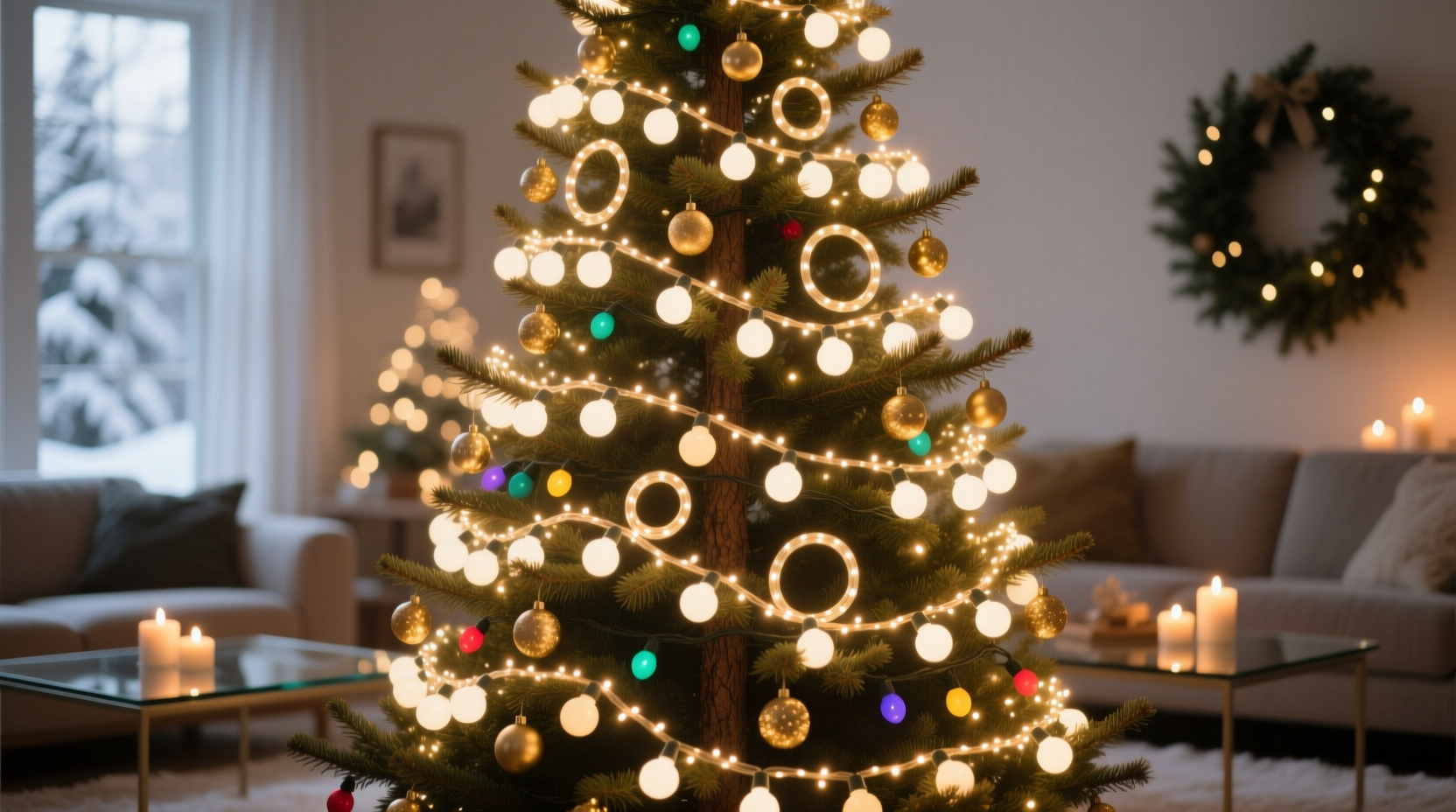
Before touching a single strand of lights, assess your tree and supplies. Artificial trees vary in density and branch structure, which affects how light reflects and disperses. A sparse 6-foot tree may need fewer strands than a full-bodied 7-footer, but both benefit from strategic placement.
Choose lights that complement each other in color temperature and brightness. Mixing warm white and cool white strands without intention can create visual dissonance. For a cohesive look, stick to one color temperature unless you’re aiming for a deliberate multicolored effect.
This rule of thumb ensures sufficient illumination without overcrowding. If using LED mini-lights, which are brighter per bulb, consider slightly fewer strands. Always test all strands before installation. A single faulty set can disrupt an entire circuit or leave a section dark.
Step-by-Step Guide to Layering Lights
The key to beautiful layering is treating lights like paint—building up coverage gradually, from back to front, inside to outside. Follow this sequence for optimal results:
- Prepare the tree: Fluff branches thoroughly, especially near the trunk and lower tiers. Poorly shaped branches create shadows.
- Begin with interior strands: Start by weaving the first strand deep into the center of the tree, beginning at the top. This creates a “glow core” that illuminates from within.
- Weave outward in spirals: Move down and out in a continuous spiral, tucking lights between branches rather than wrapping around them. This prevents the “candy cane” effect and promotes even distribution.
- Add second layer at mid-depth: Use a separate strand to cover the middle layer of branches. Offset the pattern slightly from the first layer to avoid alignment.
- Finish with exterior accents: Apply a final layer along outer tips and front-facing branches. These highlight texture and add sparkle where the eye naturally looks.
- Test and adjust: Step back under dim room lighting to evaluate coverage. Fill gaps with short extension runs if needed.
Using three distinct layers mimics natural light diffusion—like sunlight filtering through leaves. Each layer serves a purpose: the innermost provides base illumination, the middle adds volume, and the outer brings definition.
Do’s and Don’ts of Multi-Strand Wiring
Safety and functionality are just as important as appearance. Overloading circuits or creating tangles defeats the purpose of meticulous layering. Refer to the table below for best practices:
| Do | Don't |
|---|---|
| Check manufacturer’s “connectable” limit (e.g., “link up to 3 sets”) | Daisy-chain more strands than recommended |
| Use a power strip with surge protection for grouped outlets | Plug too many strands into one wall outlet |
| Separate light layers onto different circuits when possible | Run cords under heavy rugs or furniture |
| Label control plugs (e.g., “inner layer,” “outer sparkles”) | Hide all plugs behind the tree where they’re inaccessible |
| Secure excess cord with twist ties or velcro straps | Yank tangled strands to free them |
One often-overlooked hazard is heat buildup. While LEDs run cool, densely packed incandescent strands near insulation materials (like tree bags or fabric skirts) can pose fire risks. Maintain airflow around electrical components and never leave lights unattended for long periods.
Real Example: Transforming a Flat-Looking Tree
Sarah, a homeowner in Vermont, struggled for years with her 7.5-foot pre-lit tree looking dull despite adding extra strands. “It was bright at the front but completely dark from the sides and top,” she said. After consulting a local holiday decorator, she tried a layered approach.
She began by removing all existing supplemental lights. Then, she added two new 300-bulb warm white LED strands, dedicating one to internal depth and the other to outer contouring. Instead of wrapping, she hand-wove each strand inward from the perimeter, anchoring lights every 8–10 inches with bendable wire clips.
The change was immediate. When viewed from her living room doorway, the tree now appeared fully illuminated from every angle. “It finally has that department-store glow,” she noted. “And I’m using fewer total bulbs than before.”
Her success came not from more lights, but from smarter placement—proving that technique outweighs quantity.
Expert Insight: What Professionals Know
“Amateurs focus on quantity. Pros focus on placement. The secret to a stunning tree isn’t 2,000 bulbs—it’s getting light where it matters: deep inside, not just on the surface.” — Daniel Reyes, Lead Holiday Designer at Evergreen Displays Inc.
Reyes, who has styled trees for luxury hotels across New England, emphasizes three principles: depth penetration, directional control, and maintenance access. “If you can’t reach a plug without dismantling half the tree, you’ve already failed,” he says. He recommends installing lights before ornaments and leaving service lanes—open paths from base to tip—on at least two sides of the tree for future adjustments.
Tips for Different Tree Types
Not all trees respond the same way to layered lighting. Consider these variations:
- Flocked trees: The textured coating can obscure light. Use slightly more bulbs or opt for C7 or C9 bulbs with greater lumen output.
- Slender or pencil trees: With limited depth, focus on vertical column layering—run strands straight up and down rather than spiraling.
- Pre-lit artificial trees: Treat factory-installed lights as your base layer. Add supplemental strands only where needed, typically in upper third and outer edges.
- Live trees: Monitor moisture and needle drop. Weave lights loosely to allow for branch settling, and inspect daily for exposed wiring.
Checklist: Pre-Lighting Preparation
Before you begin, ensure you’re ready with this essential checklist:
- ☐ Tree is fully assembled and fluffed
- ☐ All light strands tested and working
- ☐ Power source accessible and surge-protected
- ☐ Extension cords rated for indoor use and sufficient length
- ☐ Tools ready: wire clips, twist ties, step stool
- ☐ Lighting plan decided (e.g., warm vs. cool, all-on vs. segmented)
- ☐ Safety check: no frayed wires, loose sockets, or damaged plugs
Skipping any of these steps can lead to frustration later. A five-minute inspection saves hours of rework.
Frequently Asked Questions
Can I mix LED and incandescent lights on the same tree?
Yes, but be cautious. They differ in brightness, color temperature, and heat output. If mixing, keep them on separate circuits and avoid placing them side-by-side on the same branch to prevent uneven glow. Most experts recommend sticking to one type for consistency.
How do I hide cords and plugs?
Route cords down the inside of the tree stand and out the back. Use cord covers or tuck them behind skirts. Never cut or modify plugs to fit spaces. Label each cord at the plug end so you can identify controls easily.
Is it safe to leave layered lights on overnight?
Modern LED strands are generally safe for extended use, but it’s best practice to turn them off when leaving the house or sleeping. Use a timer to automate operation—typically 6–10 hours per night—to extend bulb life and reduce energy use.
Final Thoughts: Light with Intention
A beautifully lit Christmas tree doesn’t happen by accident. It results from thoughtful planning, careful execution, and respect for both design and safety. Layering multiple strands isn’t about covering every inch with bulbs—it’s about creating the illusion of light pouring from within.
By starting deep, building outward, and maintaining electrical discipline, you can achieve a display that rivals professional installations. The goal isn’t just brightness, but warmth; not just coverage, but character.




 浙公网安备
33010002000092号
浙公网安备
33010002000092号 浙B2-20120091-4
Comments
No comments yet. Why don't you start the discussion?