
Winter garments—especially those made from natural fibers like wool, cashmere, and fur—are among the most vulnerable to moth infestations. These delicate fabrics provide an ideal food source for moth larvae, which silently chew through fabric, leaving behind holes, weakened seams, and unsightly damage. Unlike surface stains or tears, moth damage is often irreversible. However, with the right preparation and storage techniques, you can safeguard your winter wardrobe year after year. The key lies not in luck, but in consistent, science-backed habits that disrupt the moth lifecycle and create an inhospitable environment for pests.
Understanding the Threat: How Moths Damage Winter Clothes
Moths themselves don’t chew clothing. It’s their larvae—the tiny, nearly invisible caterpillars—that consume keratin, a protein found in animal-based fibers such as wool, silk, alpaca, and cashmere. Adult moths lay eggs in dark, undisturbed areas of closets or drawers, often near soiled fabric where sweat, oils, or food residue provide additional nutrients for emerging larvae. Once hatched, the larvae feed for weeks or even months before pupating, all while burrowing into fabric and creating irregular holes.
The misconception that moths only target dirty clothes isn’t entirely accurate. While soiled garments are more attractive due to residual organic matter, clean wool items are still at risk. Moth infestations thrive in low-light, low-airflow environments—conditions commonly found in seasonal storage spaces. This makes end-of-season storage one of the most critical times to take preventive action.
“Moths are attracted to neglect. The longer clothes sit untouched and unmonitored, the greater the risk. Proper cleaning and vigilant storage break the cycle.” — Dr. Lydia Chen, Entomologist & Textile Preservation Specialist
Step-by-Step Guide: Preparing Winter Clothes for Storage
Cleaning is the first and most essential line of defense. Storing unwashed clothes—even those that appear clean—invites disaster. Body oils, skin cells, and food spills attract moths and accelerate larval development. Follow this detailed process to prepare each garment safely:
- Inspect every item thoroughly. Lay garments flat under bright light and examine seams, collars, cuffs, and lining for signs of moths—tiny holes, webbing, or frass (insect droppings). Isolate any suspect pieces immediately.
- Wash or dry clean according to care labels. Wool and cashmere should be hand-washed in cold water with a gentle wool detergent or professionally dry cleaned. Avoid hot water, which can shrink or felt delicate fibers.
- Dry completely before storage. Air-dry flat away from direct sunlight. Never store damp or slightly moist garments; moisture encourages mold and increases fabric vulnerability.
- Repair minor damage. Mend loose buttons, reinforce weak seams, or patch small holes. Intact garments are less likely to attract pests seeking easy access points.
- Allow garments to air out for 24 hours post-cleaning. This ensures no residual moisture remains and allows synthetic treatments (if used) to stabilize.
Choosing the Right Storage Solutions: Do’s and Don’ts
What you store your clothes in matters as much as how you clean them. Inappropriate containers can trap moisture, restrict airflow, or inadvertently protect moth colonies from detection.
| Storage Method | Recommended For | Advantages | Risks / Limitations |
|---|---|---|---|
| Cotton garment bags | Coats, suits, wool dresses | Breathable, protects from dust, allows visibility | Not pest-proof; must be combined with repellents |
| Plastic bins with tight seals | Sweaters, scarves, gloves | Moth-proof when sealed, stackable, durable | Potential condensation if not fully dry |
| Vacuum-sealed bags | Bulkier items (down jackets, blankets) | Space-saving, blocks insects | Can compress and distort knits or down clusters over time |
| Wooden chests | Decorative storage, heirloom pieces | Aesthetic, sturdy | Porous wood may harbor eggs; avoid unless lined and treated |
| Plastic bags (non-sealed) | None recommended | Inexpensive, widely available | Traps moisture, promotes mildew, offers zero protection |
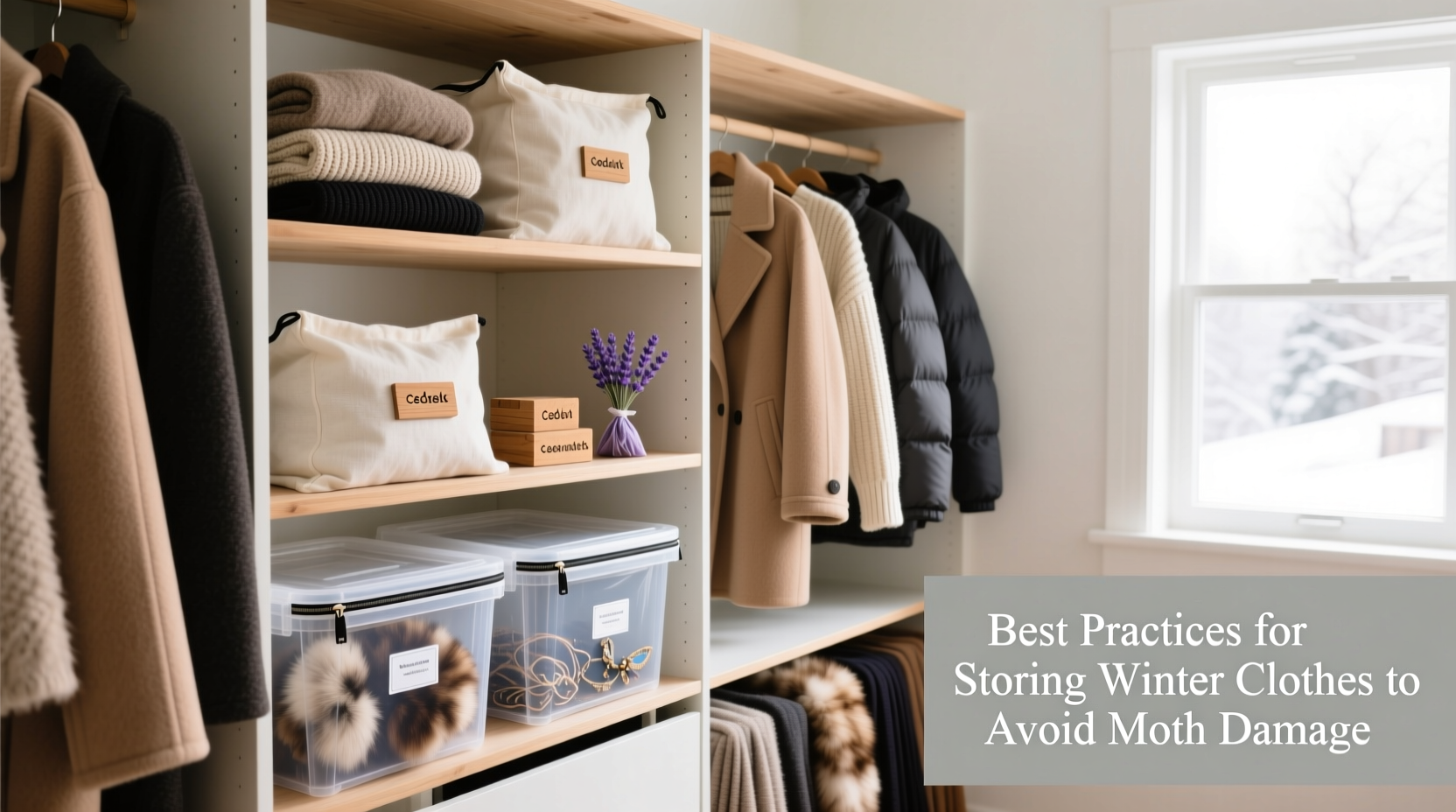
Airtight plastic containers are generally the best choice for long-term storage. Ensure they have locking lids and are made from clear, BPA-free materials. Before use, wipe interiors with a vinegar-water solution (1:3 ratio) to eliminate lingering odors or contaminants.
Effective Natural and Chemical Repellents
While cedar and lavender are popular natural options, their effectiveness varies significantly based on concentration, freshness, and exposure time. Cedar oil repels moths but loses potency after 3–6 months unless the wood is sanded to refresh the surface. Lavender sachets work best in combination with other methods and should be replaced or refreshed every few months.
For stronger protection, consider integrated solutions:
- Silica gel packets: Absorb moisture and inhibit mold, which can indirectly support pest activity.
- Moth crystals (paradichlorobenzene): Effective but require careful handling. Use only in well-sealed containers and never in living spaces due to toxic fumes.
- Freezing method: For small, valuable items (e.g., vintage knitwear), place in sealed bags and freeze for 72 hours to kill eggs and larvae. Allow to thaw slowly to prevent condensation.
- Herbal blends: Mix dried rosemary, thyme, and cloves in muslin bags. These emit strong scents disliked by moths and are safe for homes with children or pets.
Optimal Storage Environment: Location Matters
Even perfectly cleaned clothes can fall victim to poor storage conditions. Ideal storage spaces are cool (60–70°F), dry (below 50% humidity), and well-ventilated. Basements and attics are common choices but often fail these criteria—basements tend to be damp, and attics become excessively hot, both of which degrade fabric and encourage pests.
Instead, prioritize interior closets on middle-level shelves or spare bedroom dressers. Elevate containers off the floor using wooden pallets or plastic risers to prevent contact with potential ground moisture. Avoid stacking heavy items on top of stored garments to prevent fiber compression.
Monitor conditions with a simple hygrometer. If humidity exceeds 55%, include additional desiccants or consider relocating items to a climate-controlled space.
Mini Case Study: Preventing Damage in a Historic Home
Sarah, a homeowner in New England, inherited a collection of 1940s wool military uniforms from her grandfather. Stored for decades in a cedar-lined attic trunk, several pieces emerged with extensive tunneling and brittle fabric. A textile conservator determined the damage occurred not from lack of cedar, but because temperature fluctuations caused condensation inside the trunk, creating a microclimate where moths thrived despite the scent.
After professional cleaning, Sarah adopted a new system: each uniform was wrapped in acid-free tissue, placed in a sealed polycarbonate case with silica gel, and stored in a climate-controlled closet on the main floor. She checks the cases quarterly and renews desiccants annually. Three years later, all garments remain intact, demonstrating that location and moisture control are as vital as repellents.
Seasonal Maintenance Checklist
Prevention doesn’t end at storage. Regular oversight ensures early detection and sustained protection. Use this checklist twice per season:
- Inspect stored garments for signs of moths: holes, shed casings, or fine webbing.
- Replace or refresh natural repellents (cedar blocks, lavender).
- Check humidity levels and replenish desiccants if needed.
- Rotate garments gently to prevent permanent creasing.
- Expose items to indirect sunlight for 1–2 hours annually to deter pests (avoid direct UV exposure).
- Re-clean any item showing signs of contamination before returning to storage.
- Update inventory log with condition notes and storage dates.
Frequently Asked Questions
Can I store winter clothes in vacuum bags without damaging them?
Yes, for short to medium-term storage (up to 6 months), vacuum bags are safe for resilient fabrics like down, polyester, and tightly woven wool. However, prolonged compression can weaken knits, distort shoulder seams, or crush down clusters, reducing insulation. For delicate or structured garments, breathable cotton storage is preferable.
Are cedar hangers enough to protect my wool coats?
Cedar hangers offer limited protection. While they release aromatic oils that may repel adult moths, they do not kill eggs or larvae already present in fabric. For maximum effectiveness, combine cedar hangers with thorough cleaning, regular inspection, and sealed storage during off-seasons.
How do I know if moths are still active in my closet?
Signs include small cream-colored moths fluttering in dim light, silken tubes in folds of clothing, or tiny beige cocoons in corners of drawers. Set pheromone traps in your closet—they attract male moths and help confirm infestation. A sudden increase in trapped moths indicates an active population requiring immediate treatment.
Final Thoughts and Call to Action
Protecting winter clothes from moths isn’t about a single product or quick fix—it’s about building a sustainable system of care. From meticulous cleaning to intelligent container selection and environmental monitoring, each step compounds your defense. The effort invested today preserves not just fabric, but memories, craftsmanship, and value embedded in your wardrobe.
Don’t wait until spring to discover hidden damage. Take action now: pull out last season’s stored items, inspect them closely, and refine your approach. Share your own moth-prevention strategies or ask questions in the comments—your experience could help others protect what matters most.




 浙公网安备
33010002000092号
浙公网安备
33010002000092号 浙B2-20120091-4
Comments
No comments yet. Why don't you start the discussion?