
A rice cooker is often seen as a single-purpose appliance: cook rice, wait, and serve. But this humble kitchen companion is capable of far more than boiling grains. With precise temperature control, consistent heat distribution, and a built-in timer, modern rice cookers can function as steamers, slow cookers, porridge makers, and even cake bakers. By understanding its mechanics and leveraging its versatility, you can transform your rice cooker into a multi-functional powerhouse that saves time, energy, and counter space.
The secret lies in recognizing that most rice cookers operate on a simple principle: they heat contents until water evaporates or absorbs, then automatically switch to a “keep warm” mode when the internal temperature rises. This behavior makes them ideal not only for grains but also for foods that benefit from gentle, moist heat. Whether you're living in a small apartment with limited appliances or simply want to streamline your cooking routine, mastering these advanced uses will expand your culinary possibilities significantly.
Steam Meals and Vegetables Without Overcooking
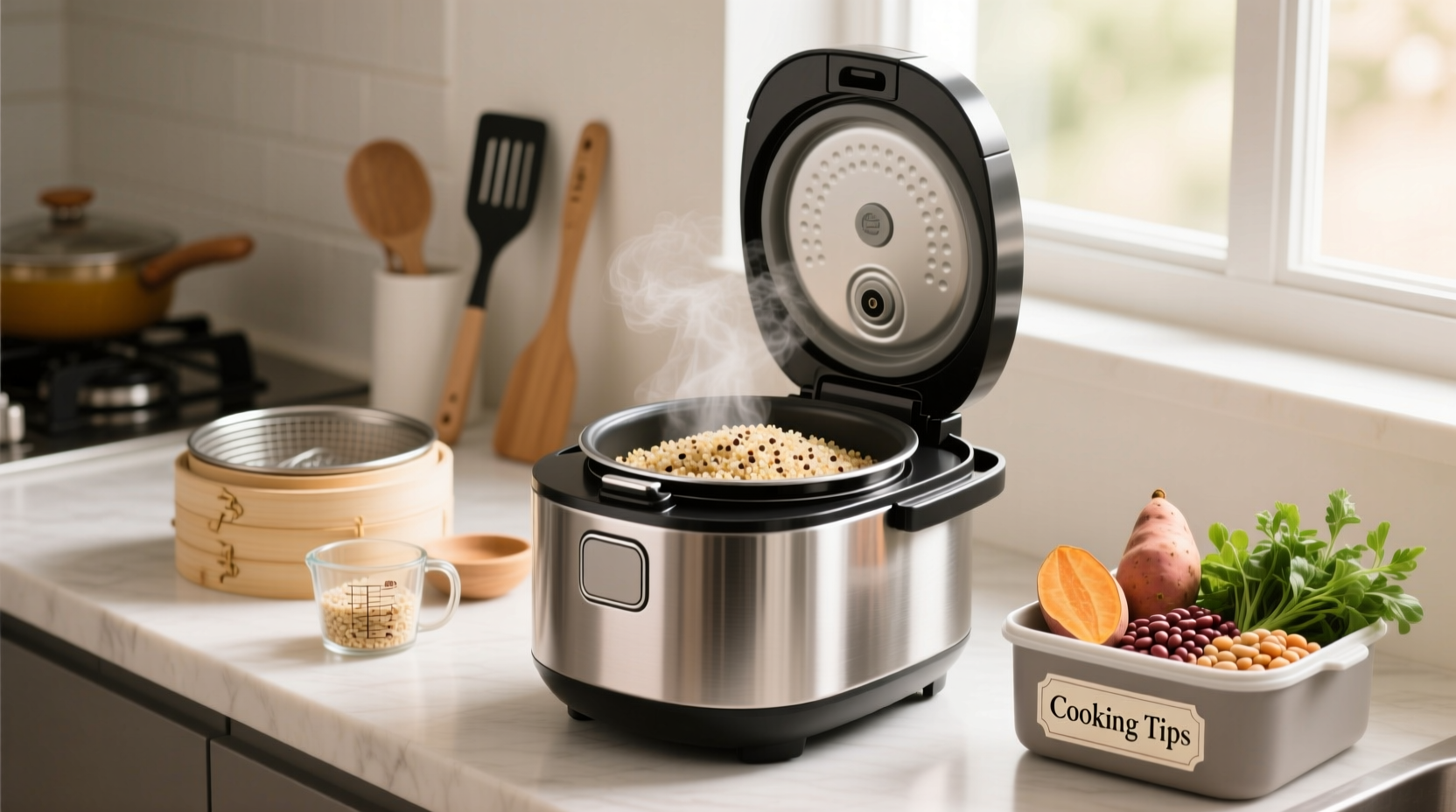
One of the most underutilized features of a rice cooker is its steaming capability. Many models come with a steaming tray designed to sit above the inner pot, allowing you to cook rice below while vegetables, fish, or dumplings steam above. Even if your model doesn’t include one, a heat-safe trivet or stainless steel plate can create enough elevation for indirect cooking.
Steaming preserves nutrients better than boiling and prevents food from becoming waterlogged. Delicate proteins like salmon fillets or chicken breasts stay tender and flaky when steamed gently over simmering liquid. Vegetables such as broccoli, carrots, and bok choy retain their bright color and crisp texture without turning mushy.
To steam effectively:
- Add 1–2 cups of liquid (water, stock, or seasoned liquid) to the inner pot.
- Place ingredients in a steaming basket or on a raised rack.
- Cover and press “Cook.” Most items take 15–25 minutes depending on thickness.
- Check doneness and serve immediately.
Cook One-Pot Grains, Porridges, and Congee
While rice is the obvious choice, your rice cooker can handle any grain that benefits from slow absorption of liquid. Oats, quinoa, barley, millet, and farro all cook beautifully with minimal supervision. The key is adjusting the liquid-to-grain ratio and selecting the appropriate setting—many newer models have dedicated buttons for \"Porridge,\" \"Multigrain,\" or \"Oatmeal.\"
Congee—a traditional Asian rice porridge—is particularly well-suited to rice cookers. It requires long, gentle simmering to break down the rice into a creamy consistency, which the rice cooker handles effortlessly. Start with a 1:6 rice-to-water ratio, add aromatics like ginger or scallions, and let it bubble slowly for 2–3 hours on “Slow Cook” or “Porridge” mode. Finish with toppings like century egg, shredded chicken, or soy sauce.
| Grain Type | Liquid Ratio (1 cup grain) | Approximate Time | Best Setting |
|---|---|---|---|
| White Rice | 1:1.5 | 20 min | Cook |
| Brown Rice | 1:2 | 45 min | Brown/Whole Grain |
| Oats (rolled) | 1:3 | 30 min | Porridge |
| Quinoa | 1:2 | 25 min | Multigrain |
| Congee | 1:6 | 2–3 hrs | Porridge/Slow Cook |
You can also prep overnight oats by combining rolled oats, milk, chia seeds, and sweetener in the pot, then letting it soak overnight. In the morning, turn on the cooker for 15 minutes to warm through—no stirring required.
Simmer Soups, Stews, and One-Pot Meals
Contrary to popular belief, rice cookers can be excellent tools for preparing full meals beyond grains. Their ability to maintain a steady simmer makes them perfect for soups, bean stews, and saucy dishes like risotto or chili.
For example, lentil soup can be made by sautéing onions, garlic, and carrots directly in the pot (if non-stick coating allows), then adding rinsed lentils, diced tomatoes, vegetable broth, and spices. Close the lid, select “Soup” or “Slow Cook,” and let it develop flavor over 1.5 to 2 hours. No need to monitor or stir—the rice cooker does the work.
“We’ve used rice cookers in test kitchens to prepare everything from polenta to tomato ragu. Their consistent low heat mimics a double boiler, reducing scorch risk.” — Chef Luis Mendez, Culinary Innovation Lab
Some newer induction-based rice cookers even allow for pre-heating or browning functions, enabling true one-pot meal preparation. If yours lacks this feature, you can still brown meat or sauté aromatics in a separate pan before transferring to the rice cooker.
Step-by-Step Guide: Cooking Chicken and Vegetable Stew
- Sear chicken thighs in a skillet until golden; set aside.
- In the rice cooker, combine onions, garlic, potatoes, carrots, and celery.
- Add seared chicken, diced tomatoes, 3 cups broth, thyme, salt, and pepper.
- Select “Slow Cook” or “Soup” mode and cook for 2 hours.
- Remove chicken, shred, return to pot, and serve hot.
Bake Cakes and Prepare Desserts
Yes, you can bake a cake in a rice cooker. This technique has been popular in Asia for decades, especially among students and young professionals with limited kitchen access. Using the moist heat environment, sponge cakes rise evenly and remain soft without drying out.
The process is surprisingly simple. Mix eggs, sugar, flour, baking powder, and a splash of milk or oil until smooth. Pour into a greased inner pot, tap gently to remove air bubbles, and close the lid. Select “Cake” mode if available, or use “Cook” and allow the cycle to complete. Once it switches to “Keep Warm,” let the cake rest for 15–20 minutes before opening. Repeat the “Cook” cycle if needed for full doneness.
Favorites include:
- Vanilla sponge cake
- Chocolate fudge cake (add cocoa powder and melted chocolate)
- Carrot cake (with grated carrot and cinnamon)
- Rice pudding (using leftover rice, milk, sugar, and raisins)
Dessert applications extend beyond cakes. You can make sticky sweet rice with mango (using glutinous rice, coconut milk, and sugar), bread pudding, or even molten lava-style chocolate cake with a gooey center.
Prepare Breakfasts and Batch-Cook Staples
Start your day right by programming your rice cooker to have breakfast ready when you wake up. Set it the night before to cook oatmeal with apples, cinnamon, and nuts, or steel-cut oats with almond milk and dates. Some digital models offer delayed start timers—ideal for automated morning meals.
Additionally, rice cookers excel at batch-prepping staples:
- Hard-boiled eggs: Place eggs in the pot with 2 cups water. Use “Steam” for 15–20 minutes, then plunge into ice water.
- Yogurt making: After scalding milk and cooling it to 110°F, pour into the pot with starter culture. Use “Yogurt” mode (available on select models) for 8–10 hours.
- Reheating leftovers: Gently reheat sauces, soups, or casseroles on “Warm” to prevent burning.
- Boiling corn or artichokes: Steam whole ears of corn or large vegetables using the upper tray.
Mini Case Study: Urban Apartment Cooking Hack
Sophie, a graphic designer living in a studio apartment in Tokyo, relies solely on her mini rice cooker for daily meals. With no oven or stovetop, she uses it to steam salmon and broccoli for dinner, cook congee for breakfast, and even bake a birthday cake for her roommate using a recipe adapted from a Japanese home economics blog. “It’s my entire kitchen,” she says. “I save so much time—and cleanup is just one pot.” Her success highlights how a single appliance, when used creatively, can support a full range of nutritious, satisfying meals.
Essential Best Practices Checklist
✅ Your Rice Cooker Mastery Checklist
- Use the steaming tray for proteins and vegetables while cooking grains underneath.
- Adjust liquid ratios when cooking alternative grains like quinoa or oats.
- Make congee or porridge using the “Porridge” setting for optimal texture.
- Prep one-pot stews and soups by layering ingredients and using slow-cook modes.
- Bake sponge cakes or rice pudding using the “Cake” or manual “Cook” cycle.
- Batch-cook hard-boiled eggs, yogurt, or reheated meals efficiently.
- Always allow natural pressure release after long cycles to prevent overflow.
- Clean the inner pot, lid, and steam vent regularly to avoid residue buildup.
- Consult your manual for specific settings—models vary widely in functionality.
- Never submerge the main unit in water; wipe exterior with a damp cloth only.
Frequently Asked Questions
Can I cook pasta in a rice cooker?
Yes, but with caution. Use plenty of water (at least 6 cups per cup of pasta) to prevent sticking. Add pasta to boiling water (start the cooker first), stir once, cover, and cook until al dente (8–12 minutes). Drain excess water carefully after cooking. Shapes like penne, macaroni, or small shells work best.
Is it safe to leave the rice cooker unattended?
Generally, yes. Modern rice cookers are designed to switch automatically to “Keep Warm” mode once cooking is complete. However, avoid leaving it on for more than 12 hours to prevent bacterial growth, especially with dairy- or egg-based dishes. Always follow manufacturer guidelines for maximum safety.
Why does my rice sometimes burn at the bottom?
Burning usually occurs due to insufficient liquid, excessive heat on older models, or residue buildup on the heating plate. Ensure accurate water measurements, clean the pot and sensor regularly, and avoid using metal utensils that scratch the non-stick coating.
Maximize Your Appliance, Minimize Your Effort
Your rice cooker is more than a rice-making machine—it’s a silent partner in efficient, flavorful, and stress-free cooking. From steaming delicate fish to baking dessert, the appliance adapts to your needs with minimal oversight. By embracing its full capabilities, you reduce reliance on multiple gadgets, cut down on cleanup, and open doors to global cuisines that thrive on slow, moist heat.
The real power of the rice cooker lies not in complexity, but in consistency. It won’t replace your stove or oven entirely, but it can handle many tasks just as well—if not better—especially when convenience and reliability matter most. Whether you’re a busy parent, a student, or someone who values streamlined cooking, now is the time to unlock what your rice cooker can truly do.




 浙公网安备
33010002000092号
浙公网安备
33010002000092号 浙B2-20120091-4
Comments
No comments yet. Why don't you start the discussion?