
When it comes to convenient, satisfying comfort food, few pantry staples deliver like a well-crafted canned chicken soup. Among national brands, Progresso stands out for its commitment to robust flavors, hearty ingredients, and minimal artificial additives. With multiple varieties available—ranging from classic chicken noodle to bold international-inspired blends—choosing the right one can be overwhelming. This in-depth comparison evaluates the top Progresso chicken soup offerings based on taste, ingredient quality, texture, sodium levels, and culinary versatility. Whether you're seeking quick relief during illness, a base for weekday meals, or a flavorful addition to casseroles, understanding the differences between these soups ensures you get both convenience and quality.
Definition & Overview
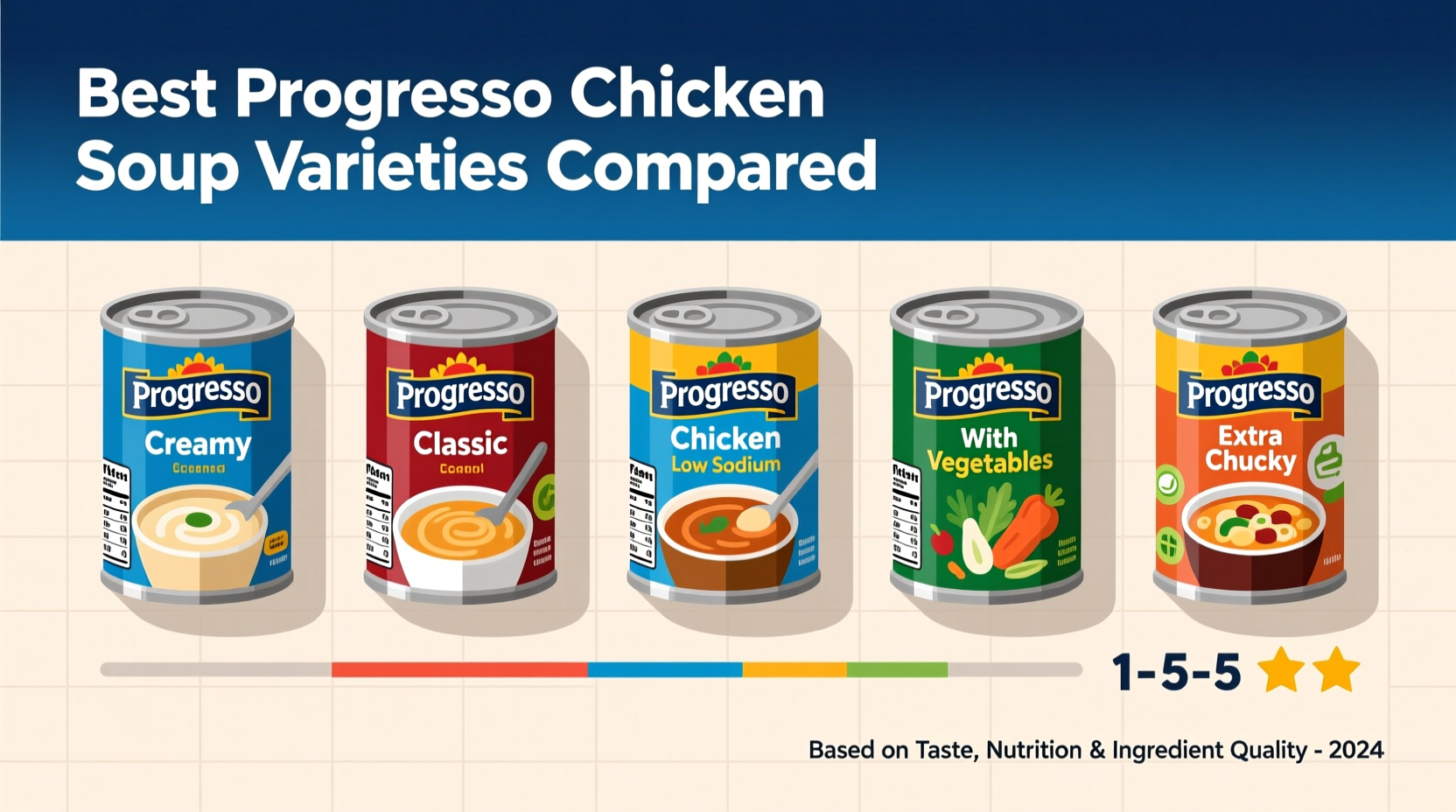
Progresso chicken soups are part of a broader line of premium canned soups marketed as having \"more broth, more meat, more vegetables\" than standard competitors. Unlike many budget canned soups that rely heavily on water, modified starches, and powdered seasonings, Progresso emphasizes whole-food ingredients such as real shredded chicken, carrots, celery, and egg noodles. The brand positions itself between economy labels like Campbell’s and higher-end refrigerated or organic options, offering accessible flavor without sacrificing too much on nutrition.
Chicken-based soups in the Progresso lineup typically fall into two categories: traditional American-style broths (e.g., chicken noodle, chicken with rice) and globally influenced variants (e.g., chicken tortilla, chicken dumpling). These soups are shelf-stable, require only heating, and serve as standalone meals or cooking components. Their popularity stems from consistent performance across preparation methods—whether microwaved, reheated on the stove, or used as a liquid base in recipes.
Key Characteristics of Progresso Chicken Soups
Across all varieties, certain attributes define the Progresso standard. While individual formulations vary, the following characteristics are common:
- Broth Base: Primarily water and chicken stock, with natural flavors enhancing depth.
- Protein Content: Contains real white meat chicken; amounts range from 5–9g per serving depending on variety.
- Vegetables: Includes visible pieces of carrots, celery, onions, and sometimes tomatoes or corn.
- Grains/Starches: Noodles, rice, or dumplings present in most types, contributing to heartiness.
- Sodium Levels: Ranges from 600–900mg per cup; lower-sodium versions available but less common.
- Texture: Thicker than average due to vegetable content and starch release during processing.
- Flavor Profile: Savory, umami-rich, with herbal notes (typically thyme, parsley); avoids excessive sweetness.
- Shelf Life: Approximately 2 years unopened; refrigerate after opening and consume within 3–4 days.
Tip: For improved texture and freshness, stir in additional herbs (like dill or chives), a splash of lemon juice, or freshly cracked pepper after heating.
Variants & Types: A Detailed Comparison
Progresso offers several distinct chicken soup profiles. Below is an evaluation of the six most widely available and consistently rated varieties, based on sensory analysis, ingredient scrutiny, and practical use cases.
| Variant | Flavor Profile | Key Ingredients | Texture | Sodium (per 1-cup serving) | Best Use Case |
|---|---|---|---|---|---|
| Traditional Chicken Noodle | Classic, mild, comforting; reminiscent of homemade | Chicken, egg noodles, carrots, celery, onion | Firm noodles, tender vegetables, clear broth | 890 mg | Sick-day meal, quick lunch, base for pot pie filling |
| Hearty Chicken with Rice | Richer, grain-forward, slightly earthy | White meat chicken, long-grain rice, carrots, garlic | Thick, porridge-like; rice absorbs broth over time | 790 mg | Cold-weather comfort, vegetarian modifications possible |
| Chicken Tortilla | Spicy, smoky, Latin-inspired; chipotle and lime notes | Chicken, corn, tomatoes, red peppers, tortilla strips | Chunky, textured with crisp-fried tortilla bits | 850 mg | Taco night complement, chili alternative, topping with avocado |
| Chicken Dumpling | Rich, creamy, pastry-laden; similar to stew | Dumplings (flour-based), chicken, carrots, peas | Very thick; dumplings soften upon reheating | 870 mg | Winter meals, substitute for chicken and biscuits |
| Low Sodium Chicken Noodle | Milder, cleaner taste; requires seasoning boost | Same as traditional, reduced salt formulation | Noodles slightly firmer; less broth integration | 480 mg | Blood pressure management, post-workout recovery |
| Chicken with Whole Grain Pasta | Earthy, nutty; enhanced by fiber-rich pasta | Whole wheat rotini, chicken, spinach, tomato | Chewier pasta; darker, more opaque broth | 820 mg | Health-conscious eating, added fiber needs |
Insights from the Comparison
The **Traditional Chicken Noodle** remains the gold standard for familiarity and balance. Its high sodium level is a drawback for some, but the flavor payoff justifies occasional use. In contrast, the **Low Sodium** version sacrifices depth unless enhanced with fresh aromatics or a dash of soy sauce.
The **Chicken with Rice** variant appeals to those preferring a more substantial, porridge-like consistency. It holds up better when reheated multiple times, making it suitable for batch cooking. However, prolonged storage leads to rice expansion and a mushier texture.
For adventurous palates, **Chicken Tortilla** delivers standout complexity. Smoked paprika, cumin, and lime juice create a vibrant profile often missing in canned soups. The inclusion of actual fried tortilla strips adds crunch, though they lose crispness quickly once opened.
**Chicken Dumpling** borders on indulgence. Resembling a condensed version of Southern chicken and dumplings, it's ideal for cold nights but less versatile in recipe adaptation due to its dense structure.
The **Whole Grain Pasta** option distinguishes itself nutritionally, offering 5g of fiber per serving—double most other variants. Spinach and tomato add color and micronutrients, though the broth appears cloudier and may not suit dishes requiring clarity.
Practical Usage: How to Use Each Variety Effectively
While all Progresso chicken soups can be consumed directly from the can, their true value emerges when integrated into broader meal planning. Here’s how to maximize each type:
Traditional Chicken Noodle
Use as a base for upgraded comfort bowls. Add shredded rotisserie chicken, fresh parsley, and a squeeze of lemon. Alternatively, reduce the broth slightly on the stove and mix with cooked wild rice for a luxe twist. Ideal for reviving appetite during convalescence due to its gentle, digestible profile.
Hearty Chicken with Rice
Lends itself to fusion applications. Stir in a spoonful of harissa for North African flair, or top with scallions and sesame oil for an Asian-inspired bowl. Because the rice swells upon standing, this soup works well as a stuffing base for bell peppers or tomatoes when baked.
Chicken Tortilla
Elevate with toppings: diced avocado, crumbled queso fresco, crushed tortilla chips, and a dollop of Greek yogurt. Can double as a braising liquid for black beans or lentils. Simmer with extra canned tomatoes and chili powder to stretch into a full taco filling.
Chicken Dumpling
Best served hot and fresh. To prevent sogginess, reheat gently on low heat with a splash of water or broth. Pair with a crisp green salad to offset richness. Not recommended for freezing due to dumpling disintegration.
Low Sodium Chicken Noodle
Customize for dietary needs. Boost flavor naturally with minced garlic sautéed in olive oil, dried thyme, or Parmesan rind simmered in the broth. Suitable for children or elderly individuals monitoring salt intake while still needing protein-dense meals.
Chicken with Whole Grain Pasta
Incorporate into meal prep routines. Portion into containers and top with grilled chicken breast and steamed broccoli for a complete lunch. The fiber content promotes satiety, making it effective for weight management diets.
Pro Tip: When using any Progresso soup as a cooking ingredient (e.g., in casseroles or sauces), account for existing salt levels before adding additional seasoning.
Comparison with Similar Brands
How does Progresso stack up against other major soup brands? The table below compares key metrics with Campbell’s and Healthy Choice equivalents.
| Attribute | Progresso | Campbell’s | Healthy Choice |
|---|---|---|---|
| Chicken Quantity | High – visible chunks | Low – mostly shreds | Moderate – small pieces |
| Vegetable Content | Abundant, varied | Minimal, often pureed | Fair, mostly carrots/celery |
| Sodium (avg per cup) | 820 mg | 890 mg | 600 mg |
| Artificial Additives | Few (no artificial flavors in core lines) | Common (modified cornstarch, MSG) | Occasional (artificial preservatives) |
| Price Point | Mid-range (~$2.50/can) | Budget (~$1.80/can) | Premium (~$2.70/can) |
| Culinary Versatility | High – holds up in cooking | Low – thin broth breaks down | Moderate – designed for eating straight |
\"Progresso strikes a rare balance: restaurant-quality ingredients at grocery-store accessibility. It’s the only national brand where I regularly recommend using the soup as a starting point, not just an endpoint.\" — Claire Nguyen, Culinary Instructor, Midwest Institute of Food Arts
Practical Tips & FAQs
Is Progresso chicken soup healthy?
Relative to other canned soups, yes—especially regarding ingredient transparency. However, most varieties are high in sodium. Opt for the low-sodium version if managing blood pressure. For better nutrition, augment with fresh vegetables and lean protein.
Can I freeze Progresso chicken soup?
Yes, but with caveats. Cream-based or dumpling-heavy types may separate or become gummy. Broth-based versions (like chicken noodle) freeze well for up to 3 months. Store in airtight containers, leaving headspace for expansion.
How can I reduce the sodium without losing flavor?
Dilute with unsalted chicken broth or water (ratio: ¾ Progresso + ¼ low-sodium liquid). Enhance with acid (lemon juice, vinegar), umami (Worcestershire, mushrooms), or aromatic spices (garlic powder, smoked paprika).
Are there gluten-free options in the Progresso chicken line?
No current chicken soups in the Progresso lineup are labeled gluten-free. All contain either wheat-based noodles, dumplings, or modified food starch derived from wheat. Those with celiac disease should avoid unless explicitly certified.
What’s the best way to reheat Progresso soup?
On the stovetop over medium-low heat, stirring occasionally. Avoid boiling vigorously, which can break down noodles and make proteins rubbery. If microwaving, use 60-second intervals with stirring between.
How long does opened soup last in the fridge?
Transfer to a covered glass or plastic container and refrigerate immediately. Consume within 3–4 days. Discard if odor, cloudiness, or mold develops.
Can I use these soups in recipes like casseroles or stuffings?
Absolutely. They add moisture and flavor efficiently. Substitute for canned cream of chicken in recipes like green bean casserole or chicken pot pie. Reduce other liquids accordingly due to existing broth volume.
Checklist: Maximizing Your Progresso Soup Experience
- Read labels: Choose based on your dietary goals (fiber, sodium, protein).
- Enhance, don’t just heat: Add fresh herbs, citrus, or spices.
- Repurpose leftovers: Use in grain bowls, sauces, or bakes.
- Store properly: Refrigerate promptly and use within four days.
- Batch smart: Buy multipacks during sales for pantry stocking.
Summary & Key Takeaways
Progresso offers one of the most diverse and high-performing ranges of chicken soups on the U.S. market. From the timeless appeal of its Traditional Chicken Noodle to the bold character of Chicken Tortilla, each variety serves a distinct culinary role. The brand excels in ingredient quality, delivering real chicken and vegetables absent in cheaper alternatives. While sodium levels remain a concern for daily consumption, strategic use—paired with fresh enhancements and mindful pairing—makes these soups valuable tools in modern kitchens.
The Hearty Chicken with Rice and Whole Grain Pasta variants stand out for nutritional balance, while the Low Sodium option accommodates health restrictions without total flavor compromise. For cooks seeking convenience with integrity, Progresso bridges the gap between speed and substance.
Ultimately, the “best” variety depends on context: illness recovery calls for simplicity and gentleness; weeknight dinners benefit from boldness and adaptability. By understanding the strengths and limitations of each type, home cooks can leverage Progresso soups not merely as emergency meals, but as intelligent building blocks in everyday cuisine.
Next Step: Try pairing two different Progresso soups with custom toppings and share your favorite combination in a kitchen experiment journal. You might discover a signature bowl worth repeating.




 浙公网安备
33010002000092号
浙公网安备
33010002000092号 浙B2-20120091-4
Comments
No comments yet. Why don't you start the discussion?