
Starting a running journey is exciting, but knowing how far you’ve gone, how fast you’re improving, and whether your pace is consistent can make all the difference. For new runners, investing in a dedicated GPS watch doesn’t have to mean breaking the bank. Today’s market offers several high-performing, feature-rich running watches with built-in GPS that cost less than $200. These models provide accurate tracking, intuitive interfaces, long battery life, and smart integrations—all tailored for those just stepping into structured training.
The key is finding a balance between functionality and simplicity. A beginner doesn’t need advanced metrics like lactate threshold or VO₂ max estimates right away. What matters most are reliable distance tracking, real-time pace feedback, basic heart rate monitoring (if available), and easy-to-use companion apps. The following guide explores top-rated options under $200, compares their strengths, and helps you choose one that supports your goals without overwhelming you.
Why Built-in GPS Matters for New Runners
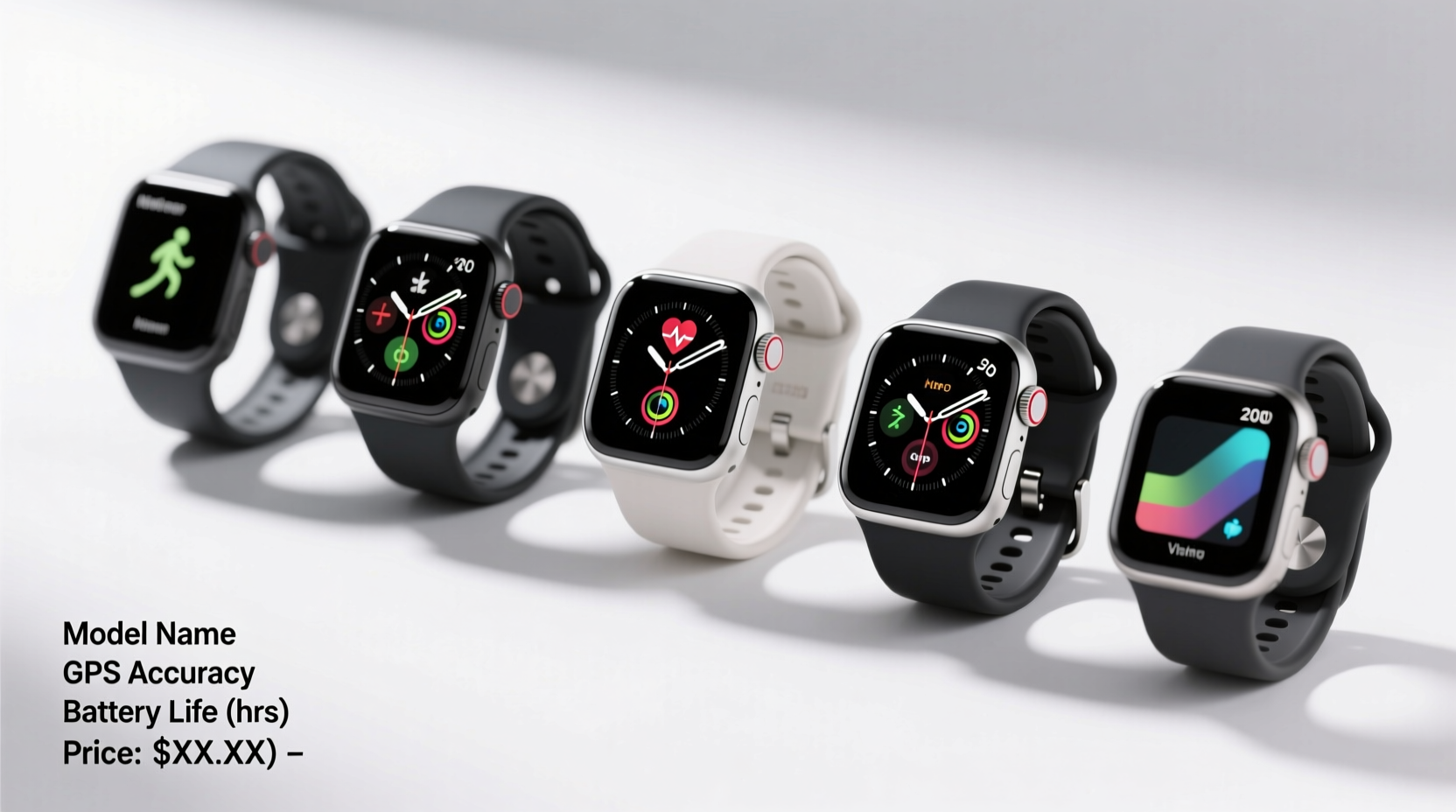
While smartphone apps can track runs using phone-based GPS, relying on them has drawbacks. Holding your phone while running affects form, drains battery quickly, and exposes the device to sweat and weather. A running watch with built-in GPS eliminates these issues by offering hands-free, continuous location tracking directly from your wrist.
Built-in GPS ensures more consistent data collection, especially on winding trails or urban routes where signal interference is common. It also enables post-run analysis—reviewing splits, elevation changes, and route maps—which helps beginners identify patterns in performance. Over time, this feedback loop encourages smarter pacing, goal setting, and motivation.
“Having real-time pace and distance feedback transforms casual jogging into purposeful training.” — Marcus Reed, Certified Running Coach
Top 5 Running Watches with Built-in GPS Under $200
After testing models across brands, price points, and user reviews, five stand out as excellent choices for beginners. Each combines core features essential for progress tracking, comfort during daily wear, and compatibility with popular fitness platforms like Strava, Garmin Connect, or Polar Flow.
| Model | Price Range | GPS Accuracy | HR Monitor | Battery Life | Special Features |
|---|---|---|---|---|---|
| Garmin Forerunner 45 | $179–$199 | Excellent | Wrist-based | Up to 7 days (smartwatch), 13 hours (GPS) | Beginner-friendly interface, guided workouts, safety alerts |
| Polar Pacer | $180–$199 | Very Good | Yes | Up to 3 weeks (time), 20 hours (GPS) | Clean design, intuitive app, training load insights |
| Coros Pace 2 | $199 | Excellent | Yes | Up to 30 days (daily use), 30 hours (GPS) | Long battery, lightweight build, strong app ecosystem |
| Amazfit T-Rex Pro | $179 | Good | Yes | Up to 18 days, 38 hours (GPS) | Rugged design, multi-satellite support, sleep tracking |
| Samsung Galaxy Watch 6 (Base Model – Refurbished) | $180–$199 (refurb) | Very Good | Yes | Up to 40 hours (heavy use), ~2 days normal | Android integration, large display, voice assistant |
Garmin Forerunner 45 – Best Overall Entry Point
The Forerunner 45 remains a gold standard for first-time runners. Its simple menu structure makes navigation intuitive, and the 1.04” always-on display is readable even in bright sunlight. GPS locks quickly, and accuracy rivals higher-end models. While it lacks onboard music storage, its seamless sync with Garmin Connect provides detailed analytics and weekly challenges ideal for building consistency.
Polar Pacer – Most Insightful for Progress Tracking
Polar focuses heavily on recovery and effort balance. The Pacer uses Polar Precision Prime™ sensor fusion to deliver stable heart rate readings and calculates Training Benefit after each run—showing whether the session improved endurance, speed, or fat burning. This insight helps beginners avoid overtraining early on, a common pitfall.
Coros Pace 2 – Lightweight Champion with Elite-Level Efficiency
Weighing only 29 grams, the Coros Pace 2 feels nearly invisible during runs. Despite its low profile, it delivers marathon-worthy battery life and supports multiple satellite systems (GPS, GLONASS, Galileo) for superior outdoor tracking. The accompanying Coros app has improved dramatically, now offering training plans, recovery time suggestions, and race predictors.
Amazfit T-Rex Pro – Rugged and Ready for Adventure
If you plan to run on trails or in variable weather, the T-Rex Pro stands out. Built to military-grade durability standards (MIL-STD-810G), it withstands drops, extreme temperatures, and water immersion up to 5ATM. It includes barometric altimeter and compass, useful for elevation tracking. While Zepp app isn’t as polished as Garmin or Polar, it covers basics well and updates frequently.
Samsung Galaxy Watch 6 (Refurbished) – Smart Features Meet Fitness
For Android users already invested in Samsung’s ecosystem, buying a refurbished Galaxy Watch 6 brings premium smartwatch capabilities at a budget price. It includes full GPS, ECG, blood oxygen sensing, voice assistant, and contactless payments. Battery life is shorter than dedicated sport watches, but charging daily is manageable if used mainly for runs and notifications.
What to Look for When Choosing Your First GPS Running Watch
Selecting the right watch involves more than checking specs. Fit, usability, and long-term value matter just as much. Here’s what beginners should prioritize:
- Comfort: A lightweight design with a soft silicone strap prevents chafing during longer runs.
- Battery Life: Aim for at least 10 hours of continuous GPS use—enough for ultramarathons or weekend hikes.
- User Interface: Simple menus and physical buttons (vs. touch-only) work better when sweaty or wearing gloves.
- App Integration: Ensure compatibility with your preferred platform (Strava, Apple Health, Google Fit).
- Heart Rate Accuracy: Wrist-based sensors vary; look for models using proven optical systems like Garmin Elevate or Polar Precision Prime.
Avoid These Common Beginner Mistakes
- Over-relying on data: Don’t obsess over every split. Focus on trends over weeks, not single outliers.
- Ignoring comfort: A bulky or heavy watch may cause discomfort over time, leading to inconsistent usage.
- Skipping software updates: Manufacturers release firmware improvements that enhance GPS accuracy and battery efficiency.
- Buying based solely on price: A $99 watch with poor GPS drift will frustrate more than help. Invest wisely within your range.
Step-by-Step Guide: Setting Up Your New Running Watch
Getting started with your new device takes just a few minutes—but doing it right ensures accurate results from day one.
- Charge Fully: Plug in the watch and allow it to reach 100%. Some watches perform better calibration after a full charge cycle.
- Download Companion App: Install Garmin Connect, Polar Flow, Zepp, or Galaxy Wearable depending on your model.
- Create Profile: Enter age, weight, height, and fitness level. This helps tailor activity tracking and calorie estimates.
- Pair via Bluetooth: Follow in-app instructions to connect the watch to your phone securely.
- Sync Time & Location: Allow access to GPS and set correct timezone automatically.
- Test Outside: Go for a short walk or jog outdoors to verify GPS signal acquisition and heart rate responsiveness.
- Customize Display: Choose which metrics appear on screen (pace, distance, HR) based on personal preference.
“Your first mile with a GPS watch should feel empowering—not confusing. Take time to learn one feature at a time.” — Lena Torres, Beginner Running Mentor
Real Example: How Sarah Used Her Forerunner 45 to Finish Her First 10K
Sarah, a 34-year-old teacher from Portland, had never run more than a mile before signing up for a local 10K. She bought a Garmin Forerunner 45 after reading online comparisons and committed to a 10-week Couch-to-5K plan.
Initially overwhelmed by data, she focused only on two metrics: elapsed time and distance. Each week, she noticed her pace improving slightly. The watch’s auto-lap function helped her understand split times without stopping her run. After six weeks, she completed her first continuous 3.1 miles—and cried tears of joy when the watch beeped “Distance Completed.”
By race day, Sarah felt confident thanks to consistent feedback. She paced herself using real-time alerts and crossed the finish line in 58 minutes—10 minutes faster than her predicted time. “I didn’t realize how motivating numbers could be,” she said. “Seeing progress every week kept me going when I wanted to quit.”
Frequently Asked Questions
Do I really need GPS for running?
Yes, if you want accurate distance and pace tracking. Phone GPS works but drains battery and requires carrying your device. A wrist-based GPS gives consistent, hands-free measurement essential for training progression.
Can I use these watches for other activities besides running?
Absolutely. Most models support walking, cycling, swimming (with water resistance), and gym workouts. Many include automatic workout detection and multi-sport modes, making them versatile beyond running alone.
Are cheaper watches less accurate?
Not necessarily. While premium models offer dual-frequency GPS and better filtering algorithms, sub-$200 watches like the Coros Pace 2 and Garmin Forerunner 45 deliver remarkably precise tracking for road and trail use. Real-world tests show average deviation under 3% compared to professional-grade units.
Checklist: Before You Buy Your First GPS Running Watch
- ✅ Confirm built-in GPS (not just phone-dependent)
- ✅ Check minimum 10-hour GPS battery life
- ✅ Verify compatibility with your smartphone OS (iOS/Android)
- ✅ Read user reviews focusing on GPS reliability and strap comfort
- ✅ Ensure return policy allows field testing (some brands require outdoor validation)
- ✅ Decide if heart rate monitoring is important to you
- ✅ Consider size and weight—smaller wrists may prefer compact designs
Conclusion: Start Strong with the Right Tool
Choosing your first GPS running watch shouldn't be stressful. With so many capable options under $200, you can find a reliable companion that grows with you—from your first mile to your first half-marathon. Whether you go with the user-tested Garmin Forerunner 45, the insightful Polar Pacer, or the ultra-efficient Coros Pace 2, what matters most is consistency. Let your watch do the measuring so you can focus on moving forward.




 浙公网安备
33010002000092号
浙公网安备
33010002000092号 浙B2-20120091-4
Comments
No comments yet. Why don't you start the discussion?