
Cumin is a cornerstone spice in global cuisines, prized for its earthy warmth and subtle bitterness that enhances everything from chili and tacos to curries and stews. But when the spice jar runs empty or dietary restrictions apply, finding an effective replacement becomes essential. Not all substitutes work universally—some replicate depth, others mimic aroma, and a few offer only partial similarity. Choosing the wrong alternative can alter the character of a dish entirely. Understanding which spices or blends can stand in for cumin—and how to use them properly—ensures flavor continuity without sacrificing authenticity. This guide explores scientifically sound, chef-tested alternatives grounded in flavor chemistry and culinary application.
Definition & Overview
Cumin (Cuminum cyminum) is a flowering plant in the Apiaceae family, native to the eastern Mediterranean and South Asia. Its dried seeds are used whole or ground as a spice, playing a central role in Indian, Middle Eastern, North African, Mexican, and Latin American cooking. The flavor is distinctly warm, slightly nutty, with a peppery edge and faintly bitter finish. It contributes both aroma and backbone to spice blends like garam masala, chili powder, berbere, and taco seasoning.
In its most common form—ground cumin—it disperses evenly through dishes during cooking, releasing volatile oils when heated in oil or fat (a technique known as tempering). Whole cumin seeds are often dry-toasted or bloomed in hot oil to intensify their fragrance before being added to rice, lentils, or pickling brines. Because of its low volatility compared to spices like coriander or cardamom, cumin provides long-lasting savoriness rather than fleeting top notes.
Key Characteristics
| Characteristic | Description |
|---|---|
| Flavor Profile | Earthy, warm, slightly peppery, mildly bitter, with a hint of citrus and toasted nuts |
| Aroma | Pungent, roasted, smoky-sweet when toasted; more herbal when raw |
| Color | Light to medium brown (ground), beige-tan (whole seeds) |
| Heat Level | None (non-pungent); contributes warmth via flavor perception, not capsaicin |
| Culinary Function | Base note in spice blends, flavor enhancer, aroma builder, color contributor |
| Shelf Life | 6–12 months (ground), up to 2 years (whole seeds, stored airtight and dark) |
Practical Usage
Cumin functions as a foundational spice, much like onions or garlic in savory dishes. It’s rarely the star but is indispensable for depth. In home cooking, it's typically added early in the process—sautéed in oil with aromatics such as onion, garlic, or ginger—to bloom its essential oils. This step unlocks its full aromatic potential and integrates it into the dish’s base flavor.
Professional kitchens often toast whole cumin seeds lightly before grinding them fresh, maximizing potency. For example, in Indian dal preparations, cumin seeds are crackled in ghee at the start (known as *tadka*), forming a flavor bridge between fat and legumes. Similarly, in Mexican mole or adobo, ground cumin is layered with chilies and oregano to build complexity.
When substituting cumin, consider both timing and function:
- If using a substitute in a slow-cooked stew or chili, opt for robust, heat-stable options like coriander-cumin blends or smoked paprika.
- For finishing touches or cold applications (e.g., dressings, dips), milder analogs such as caraway or fennel should be used sparingly to avoid overpowering.
- Always adjust salt after adding substitutes—many blends contain sodium, which can accumulate quickly.
Pro Tip: When replacing cumin in a recipe calling for 1 teaspoon ground cumin, start with ¾ teaspoon of any substitute. Taste after 5 minutes of simmering and adjust incrementally. Overcompensation leads to imbalance.
Variants & Types
Cumin comes in several physical forms, each suited to different techniques:
- Whole Seeds – Retain freshness longer and offer textural contrast when used in pickles, breads, or rice dishes. Ideal for tempering.
- Ground Cumin – Faster to incorporate and distribute evenly. Best for rubs, marinades, soups, and sauces.
- Roasted or Toasted Cumin Powder – Darker, smokier, less bitter. Common in street food-style chaats and grilled meats.
- Black Cumin (Kalonji / Nigella sativa) – Botanically unrelated; has a more onion-like, astringent profile. Used in naan and Bengali panch phoron.
While black cumin is sometimes confused with regular cumin, they are not interchangeable. True cumin substitutes must mirror the sensory footprint of Cuminum cyminum, not merely share a name.
Best Substitutes for Cumin in Recipes
No single spice replicates cumin exactly, but several come close in specific contexts. The ideal choice depends on cuisine type, cooking method, and desired outcome.
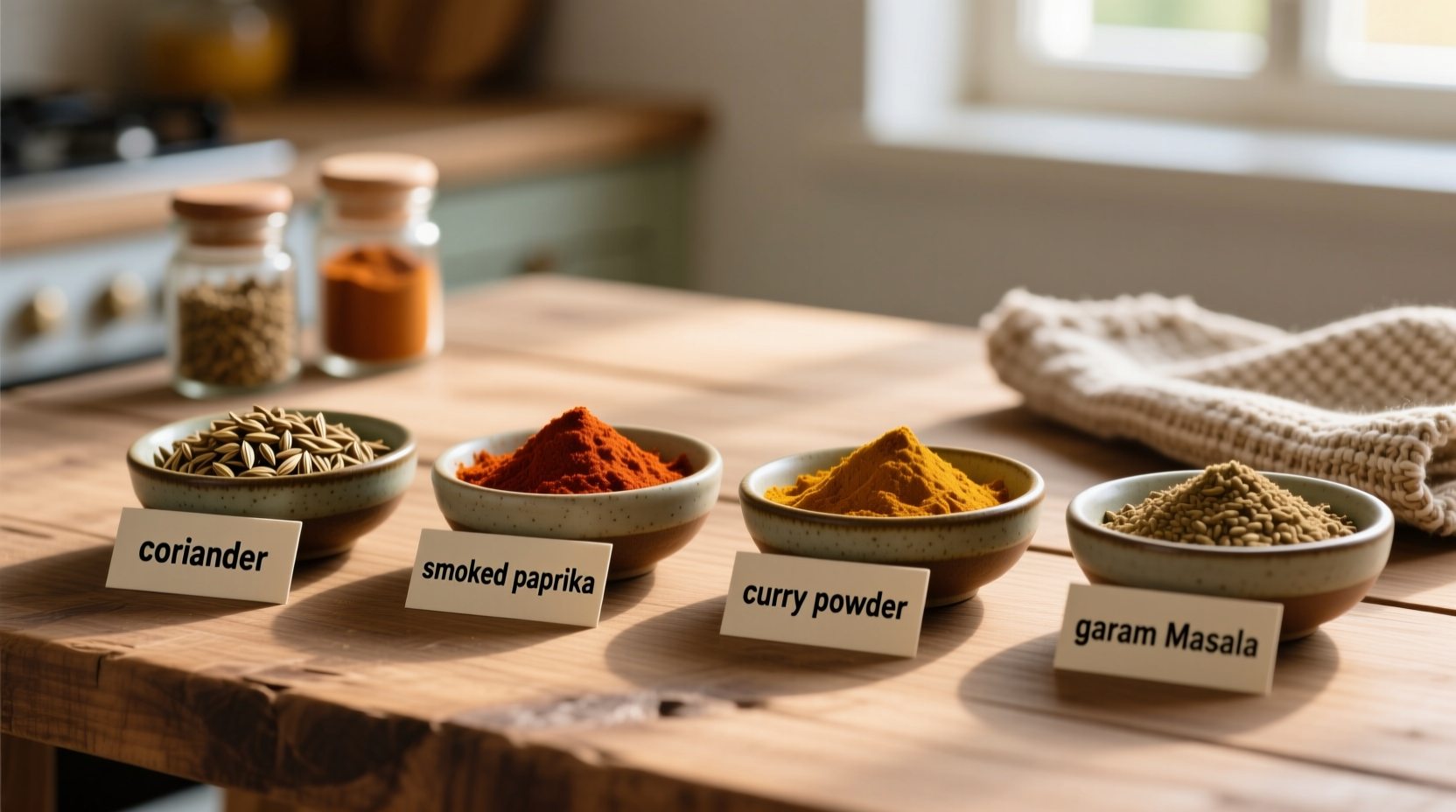
1. Coriander + Smoked Paprika (Balanced Earthy-Smoky Blend)
This combination mimics cumin’s warmth and slight smokiness. Ground coriander offers citrusy depth, while smoked paprika adds the roasted nuance found in toasted cumin.
- Ratio: ½ tsp ground coriander + ½ tsp smoked paprika per 1 tsp cumin
- Best for: Chili, barbecue rubs, Tex-Mex dishes
- Limitation: Lacks the peppery bite; may taste sweeter
2. Chili Powder (Pre-Blended Substitute)
Most commercial chili powders contain cumin already—often 40–60% of the blend. If you're out of cumin but have chili powder, you can reverse-engineer it.
- Ratio: 1½ tsp chili powder (no salt added) per 1 tsp cumin
- Best for: Tacos, enchiladas, sloppy joes
- Caution: Check label—may include garlic, oregano, or salt; reduce other seasonings accordingly
3. Caraway Seeds (Closest Single Spice Match)
Caraway shares cumin’s botanical family and has a similar warm, slightly sharp profile with licorice undertones. It's stronger, so use less.
- Ratio: ¾ tsp ground caraway per 1 tsp cumin
- Best for: German rye bread, cabbage dishes, some Middle Eastern rice pilafs
- Note: Avoid in Indian or Mexican dishes where cumin’s neutrality is key
4. Garam Masala (Indian Alternative)
A warm spice blend containing cinnamon, cardamom, cloves, and often cumin itself. While not a direct match, it adds complexity in place of plain cumin.
- Ratio: ¾ tsp garam masala per 1 tsp cumin
- Best for: Curries, lentil soups, roasted vegetables
- Adjustment: Add later in cooking to preserve volatile aromatics
5. Taco Seasoning (Convenient Pantry Swap)
Like chili powder, most store-bought taco seasonings are cumin-forward. They work well in quick weeknight meals.
- Ratio: 1½ tsp taco seasoning (low-sodium preferred) per 1 tsp cumin
- Best for: Ground beef dishes, bean burritos, casseroles
- Tip: Omit additional salt and oregano if using this blend
6. Fennel Seeds (Mild Anise-Like Option)
Fennel has a sweet, licorice-like quality but can approximate cumin when combined with other spices. Use only in small amounts.
- Ratio: ½ tsp ground fennel + ¼ tsp turmeric + pinch black pepper per 1 tsp cumin
- Best for: Mediterranean vegetable dishes, Italian sausage-style mixtures
- Warning: Dominant anise note may clash in traditional cumin-heavy cuisines
7. Ground Mustard + Coriander (Savory Depth Builder)
Mustard brings pungency and umami, complementing coriander’s warmth to simulate cumin’s bite.
- Ratio: ½ tsp ground coriander + ½ tsp dry mustard per 1 tsp cumin
- Best for: Marinades, spice rubs, hearty soups
- Effect: Adds tang and sharpness absent in pure cumin
8. Curry Powder (Cumin-Rich Blend)
Most curry powders contain cumin as a primary ingredient, along with turmeric, fenugreek, and chili. It won’t replace cumin exactly but maintains overall dish harmony.
- Ratio: 1 tsp mild curry powder per 1 tsp cumin
- Best for: Stews, rice dishes, roasted chickpeas
- Consideration: Will tint food yellow; adjust turmeric levels elsewhere
Comparison with Similar Ingredients
Several spices are mistaken for cumin due to visual or flavor similarities. Understanding differences prevents culinary missteps.
| Spice | Similarity to Cumin | Key Differences | Interchangeable? |
|---|---|---|---|
| Caraway | High (same family, similar shape) | More pronounced anise/licorice flavor; sharper finish | Limited (use ¾ strength) |
| Fennel | Moderate (seed appearance) | Sweeter, dominant anise; lacks earthiness | No (except blended) |
| Coriander | Moderate (common pairing) | Citrusy, floral, less warm; no bitterness | Only when combined with other spices |
| Black Cumin (Nigella) | Low (name confusion) | Onion-garlic aroma; tiny black seeds | No |
| Chili Powder | High (contains cumin) | Bulkier, often includes garlic/salt/oregano | Yes (with adjustments) |
“In professional kitchens, we don’t look for one-for-one swaps—we look for functional equivalents. Cumin builds foundation. Your substitute should anchor the dish, not dominate it.” — Chef Amira Hassan, Executive Chef, Zaytouna Restaurant
Practical Tips & FAQs
Can I omit cumin entirely?
Yes, but expect a noticeable loss of depth, especially in ethnic dishes like chili, biryani, or falafel. To compensate, increase complementary spices like coriander, smoked paprika, or garlic powder by 25%.
Is cumin essential in chili?
Traditional Texas or Cincinnati chili relies heavily on cumin. However, modern variations exist. A blend of ½ tsp coriander + ½ tsp smoked paprika maintains structure without cumin.
What’s the best cumin substitute for vegetarians or vegans?
All listed substitutes are plant-based. For vegan cooking, ensure pre-made blends (like taco seasoning) don’t contain dairy derivatives or shellac-coated spices—check labels carefully.
How do I make my own cumin-free taco seasoning?
Mix: 2 tbsp paprika, 1 tbsp garlic powder, 1 tbsp onion powder, 1½ tsp oregano, 1 tsp salt, ½ tsp black pepper, ½ tsp cayenne. Store in airtight jar. Use 2 tsp per serving instead of cumin.
Does toasting improve substitute spices?
Absolutely. Lightly toasting whole seeds (caraway, fennel, coriander) in a dry pan for 60–90 seconds deepens their resemblance to toasted cumin. Grind immediately after cooling.
Can I use cumin substitutes in baking?
Rarely. Cumin is uncommon in sweet baked goods. However, in savory breads (e.g., cumin rolls, seed crackers), caraway or a coriander-fennel mix works well.
Do cumin substitutes lose potency faster?
Some do. Pre-blended seasonings degrade quicker due to varied volatile oils. Homemade mixes should be used within 3–4 months; store in dark glass jars away from heat.
Storage Tip: Keep any cumin substitute in an airtight container, shielded from light and moisture. Whole seeds last significantly longer than ground forms—consider buying small quantities of whole spices and grinding as needed.
Summary & Key Takeaways
Cumin’s unique flavor—earthy, warm, subtly bitter—is difficult to replicate precisely, but practical substitutes exist for every kitchen scenario. The best approach is strategic blending rather than direct substitution. Coriander paired with smoked paprika delivers broad compatibility, while chili powder or taco seasoning offers convenience with minor recalibration of other seasonings.
Key principles for success:
- No single spice perfectly replaces cumin—focus on functional equivalence over exact mimicry.
- Adjust ratios conservatively; start with ¾ the amount and taste as you go.
- Consider the dish’s origin: Indian curries need different solutions than Mexican tacos.
- Toast whole seeds before use to enhance depth and reduce raw harshness.
- Always check ingredient lists on commercial blends to avoid double-dosing salt or overlapping spices.
Understanding why cumin matters—not just what it tastes like—empowers better substitutions. It acts as a flavor bridge, linking fat, protein, and acid into a cohesive whole. Whether you’re adapting a family recipe or managing pantry limitations, the right substitute preserves the soul of the dish without compromising integrity.
Explore your spice cabinet with confidence—every great cook knows that flexibility and knowledge matter more than rigid adherence to recipes.




 浙公网安备
33010002000092号
浙公网安备
33010002000092号 浙B2-20120091-4
Comments
No comments yet. Why don't you start the discussion?