
Quality sleep isn’t just about how long you spend in bed—it’s deeply influenced by the environment you create for rest. Among the many factors that affect sleep quality, one of the most critical—and often overlooked—is room temperature. While it might seem like a minor detail, the thermostat setting in your bedroom plays a pivotal role in determining whether you drift into deep, restorative sleep or toss and turn through the night.
The human body follows a natural circadian rhythm, which regulates everything from alertness to hormone production. As night approaches, core body temperature naturally drops, signaling the brain that it’s time to sleep. If your bedroom is too warm or too cold, this process can be disrupted, making it harder to fall asleep and stay in the deeper stages of sleep—especially slow-wave and REM sleep, which are essential for physical recovery and cognitive function.
So, what is the ideal temperature for optimal rest? And how can you fine-tune your sleeping environment to support uninterrupted, high-quality sleep? Let’s explore what sleep scientists and medical professionals recommend.
The Science Behind Sleep and Body Temperature
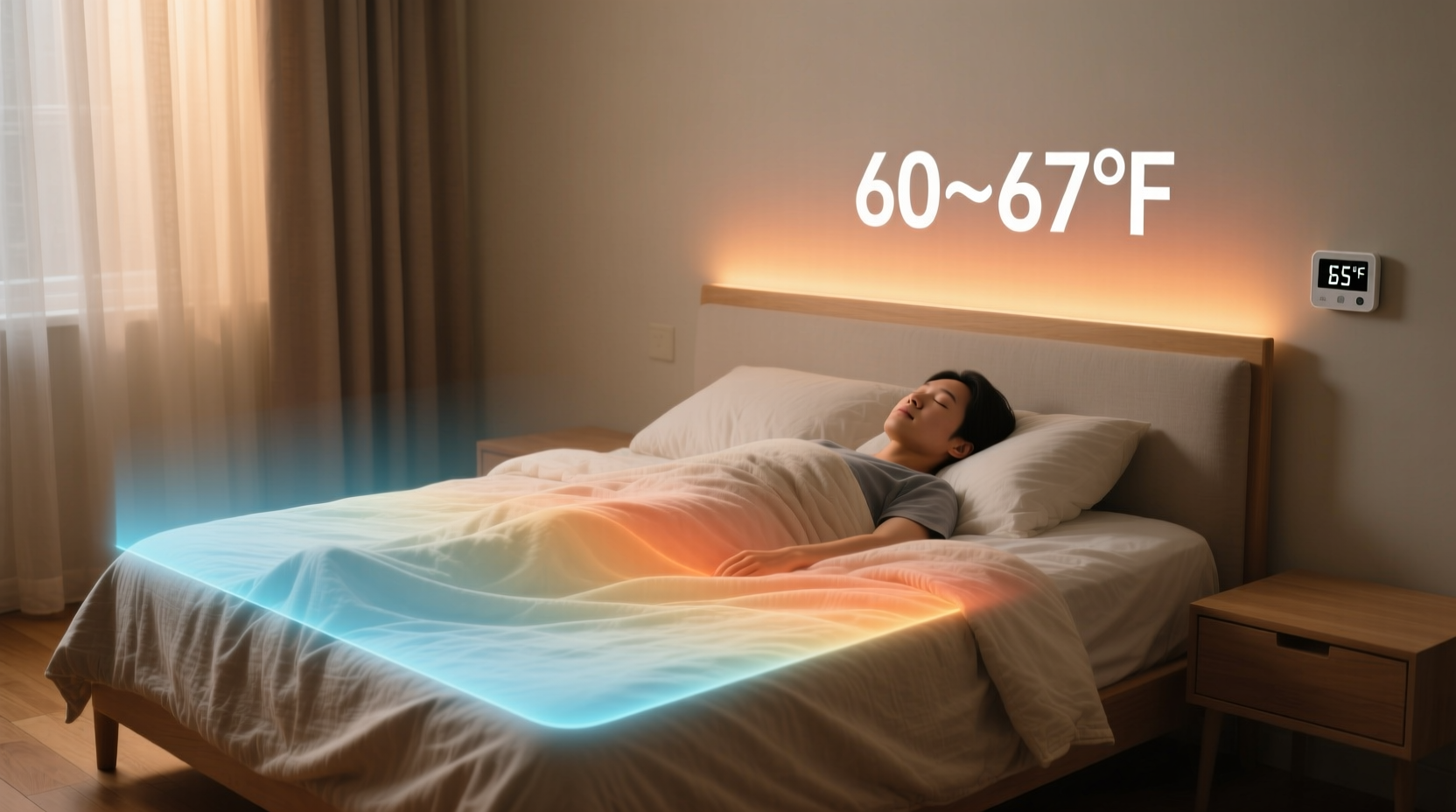
Your body’s internal thermostat is closely tied to your sleep-wake cycle. Core body temperature begins to decline in the evening, reaching its lowest point in the early morning hours before rising again as wake time approaches. This drop is not accidental—it’s a biological cue that helps initiate and sustain sleep.
Research consistently shows that when ambient room temperature supports this natural cooling process, sleep onset occurs faster and sleep architecture improves. A 2012 study published in the journal *Sleep Medicine Reviews* found that deviations from optimal thermal conditions—even slight ones—can fragment sleep, reduce REM duration, and increase nighttime awakenings.
The hypothalamus, specifically the preoptic area, acts as the brain’s thermostat. It responds to both internal signals (like melatonin release) and external cues (such as air temperature) to regulate heat dissipation. When the room is too warm, the body struggles to shed excess heat, delaying the onset of sleep. Conversely, if it's too cold, the body may activate shivering or muscle tension to generate warmth, disrupting relaxation.
“Thermal comfort is one of the most underappreciated yet powerful levers for improving sleep quality. Even a few degrees off can shift you out of deep sleep.” — Dr. Matthew Walker, neuroscientist and author of *Why We Sleep*
What Is the Ideal Sleep Temperature?
Based on extensive research and expert consensus, the optimal bedroom temperature for most adults falls between **60°F and 67°F (15.5°C to 19.4°C)**. Within this range, the body can efficiently lower its core temperature, facilitating a smooth transition into deep sleep.
This recommendation is supported by the National Sleep Foundation, the American Academy of Sleep Medicine, and numerous peer-reviewed studies. For example, a study conducted at the University of South Australia’s Centre for Sleep Research concluded that participants fell asleep faster and experienced more stable sleep cycles when their rooms were kept around 65°F (18.3°C).
It’s important to note that individual preferences vary based on age, metabolism, bedding materials, and health conditions. However, the 60–67°F range serves as a reliable starting point for most people seeking better rest.
How Temperature Affects Different Sleep Stages
Sleep is divided into multiple stages, each with distinct physiological functions. Ambient temperature influences these stages in measurable ways:
- Stage 1 & 2 (Light Sleep): Cooler environments help shorten the time it takes to enter light sleep after lying down. Excessive heat can prolong this phase, increasing restlessness.
- Stage 3 (Deep/Slow-Wave Sleep): This restorative phase, crucial for tissue repair and immune function, is most stable in cooler rooms. High temperatures suppress slow-wave activity, reducing overall sleep quality.
- REM Sleep: During REM, the body loses its ability to regulate temperature—a phenomenon called “poikilothermia.” If the room is too hot or cold during this phase, awakenings become more frequent, impairing dream recall and emotional processing.
Because deep sleep and REM occur predominantly in the second half of the night, maintaining a consistent temperature all night is essential. Fluctuations due to poor insulation, heating systems cycling on/off, or seasonal changes can fragment these critical phases.
Adjusting for Individual Needs and Life Stages
While the general guideline applies to healthy adults, special considerations are necessary for different populations:
| Group | Recommended Range | Notes |
|---|---|---|
| Adults | 60–67°F (15.5–19.4°C) | Ideal for deep sleep and hormonal regulation. |
| Infants & Toddlers | 65–70°F (18.3–21.1°C) | Slightly warmer to prevent chilling; avoid overdressing. |
| Older Adults | 65–72°F (18.3–22.2°C) | Reduced thermoregulation may require slightly warmer settings. |
| Pregnant Women | 62–68°F (16.7–20°C) | Increased metabolic heat may call for cooler temps; use layered bedding. |
| Menopausal Women | 60–65°F (15.5–18.3°C) | Cooler temps can help mitigate night sweats and hot flashes. |
Individuals with certain medical conditions—such as hyperthyroidism, diabetes, or circulatory issues—may also experience altered thermal sensitivity. In such cases, consulting a sleep specialist can help tailor environmental conditions for better outcomes.
Step-by-Step Guide to Optimizing Your Bedroom Climate
Setting your thermostat correctly is only part of the equation. Here’s a practical, step-by-step approach to creating an ideal sleep-cooling environment:
- Measure your current bedroom temperature using a digital thermometer placed away from direct airflow or sunlight. Take readings at bedtime and upon waking to detect fluctuations.
- Set your thermostat to 65°F (18.3°C) as a baseline. Adjust up or down by one degree every few nights until you find your personal sweet spot.
- Use fans strategically—ceiling fans or portable oscillating fans promote air circulation and create a wind-chill effect without drastically lowering the thermostat.
- Invest in breathable bedding. Replace heavy synthetic comforters with moisture-wicking sheets and lightweight duvets filled with down alternatives or wool, which naturally regulate temperature.
- Wear minimal, loose-fitting sleepwear made from natural fabrics like cotton or TENCEL™ to avoid trapping heat.
- Take a cool shower 1–2 hours before bed. This temporarily lowers skin temperature and jumpstarts the body’s natural cooling process.
- Close curtains or blinds during the day to block solar heat gain, especially in summer months.
- Consider a cooling mattress pad or pillow if you frequently overheat at night. These devices use water circulation or phase-change materials to maintain a steady surface temperature.
Common Mistakes That Disrupt Thermal Comfort
Even with good intentions, many people unknowingly sabotage their sleep environment. Avoid these common pitfalls:
- Overbundling with blankets: Layering too much bedding traps heat, leading to overheating even in moderately cool rooms.
- Using non-breathable mattresses: Memory foam retains body heat unless designed with gel infusions or open-cell structures.
- Sleeping near heat sources: Radiators, electronics, or south-facing windows can elevate local temperature significantly.
- Ignoring humidity levels: High humidity reduces sweat evaporation, making you feel hotter than the actual temperature suggests. Aim for 30–50% relative humidity.
- Drinking alcohol before bed: Alcohol causes vasodilation, increasing blood flow to the skin and creating a false sense of warmth that disrupts sleep stability.
Mini Case Study: Improving Sleep Through Temperature Control
Mark, a 42-year-old software engineer, struggled with chronic fatigue despite sleeping seven hours per night. He often woke up sweating and felt groggy in the mornings. After tracking his sleep with a wearable device, he noticed frequent micro-awakenings during the second half of the night.
Upon measuring his bedroom temperature, he discovered it averaged 73°F (22.8°C), well above the recommended range. His memory foam mattress and thick flannel sheets were exacerbating the issue.
He implemented several changes: lowering the thermostat to 65°F, switching to cotton sheets, adding a ceiling fan, and taking a lukewarm shower before bed. Within two weeks, his wearables showed a 23% increase in deep sleep and a 30% reduction in nighttime awakenings. Mark reported feeling more refreshed and focused during the day.
Frequently Asked Questions
Is it bad to sleep in a very cold room?
Extremely cold rooms (below 55°F or 12.8°C) can cause discomfort, muscle stiffness, or increased heart rate as the body works to stay warm. While mild coolness supports sleep, excessive cold should be avoided. Use layered bedding so you can adjust warmth without raising the room temperature.
Can a warm bath help you sleep better?
Yes—but timing matters. Taking a warm bath 1–2 hours before bed raises skin temperature temporarily. When you exit the bath, your body rapidly cools, mimicking the natural dip in core temperature that promotes sleep onset. This thermal shift can shorten sleep latency by up to 15 minutes.
Do smart devices help regulate sleep temperature?
Absolutely. Smart thermostats can learn your schedule and adjust temperatures automatically. Some advanced sleep trackers integrate with HVAC systems or cooling mattresses to dynamically respond to your body’s needs throughout the night.
Checklist: Optimize Your Sleep Environment for Better Rest
Use this checklist to ensure your bedroom supports optimal thermal comfort:
- ☐ Set thermostat between 60–67°F (15.5–19.4°C)
- ☐ Measure actual room temperature with a reliable thermometer
- ☐ Use breathable, moisture-wicking sheets and pajamas
- ☐ Install a fan for improved air circulation
- ☐ Close curtains during daylight hours to block heat
- ☐ Avoid heavy blankets or non-breathable comforters
- ☐ Limit alcohol and large meals before bedtime
- ☐ Consider a cooling mattress pad if prone to overheating
- ☐ Maintain indoor humidity between 30–50%
- ☐ Take a warm bath 1–2 hours before bed to trigger post-bath cooling
Conclusion: Cool Down for Deeper, More Restorative Sleep
The path to deeper, more restful sleep often begins with something as simple as adjusting your thermostat. By aligning your bedroom environment with your body’s natural thermal rhythms, you create the ideal conditions for falling asleep faster, staying asleep longer, and experiencing more restorative deep and REM sleep.
Small changes—like switching to breathable bedding, using a fan, or programming your thermostat—can yield significant improvements in how you feel each morning. Don’t underestimate the power of a cool, comfortable room. It’s not just about comfort; it’s a scientifically validated strategy for enhancing overall health, mood, and cognitive performance.




 浙公网安备
33010002000092号
浙公网安备
33010002000092号 浙B2-20120091-4
Comments
No comments yet. Why don't you start the discussion?