
Garlic is a cornerstone of global cuisine—its pungent aroma and complex flavor elevate everything from simple sautés to slow-simmered stews. But while its culinary value is undeniable, preparing it can be a chore. Minced garlic requires precision: small, uniform pieces that release maximum flavor without overwhelming a dish. Doing this by hand with a knife demands skill, time, and effort—especially when recipes call for multiple cloves. For home cooks seeking efficiency without sacrificing quality, the right tool makes all the difference.
The challenge lies not just in speed but in consistency, ease of cleanup, and preservation of garlic’s volatile compounds, which degrade quickly once exposed to air. The ideal mincing method balances finesse with practicality, ensuring optimal flavor dispersion while minimizing waste and odor retention. Fortunately, modern kitchens offer a range of specialized tools designed specifically for this task. From traditional chef’s knives to high-tech electric choppers, each option presents distinct advantages depending on volume, frequency, and desired texture.
Definition & Overview: What Is Minced Garlic?
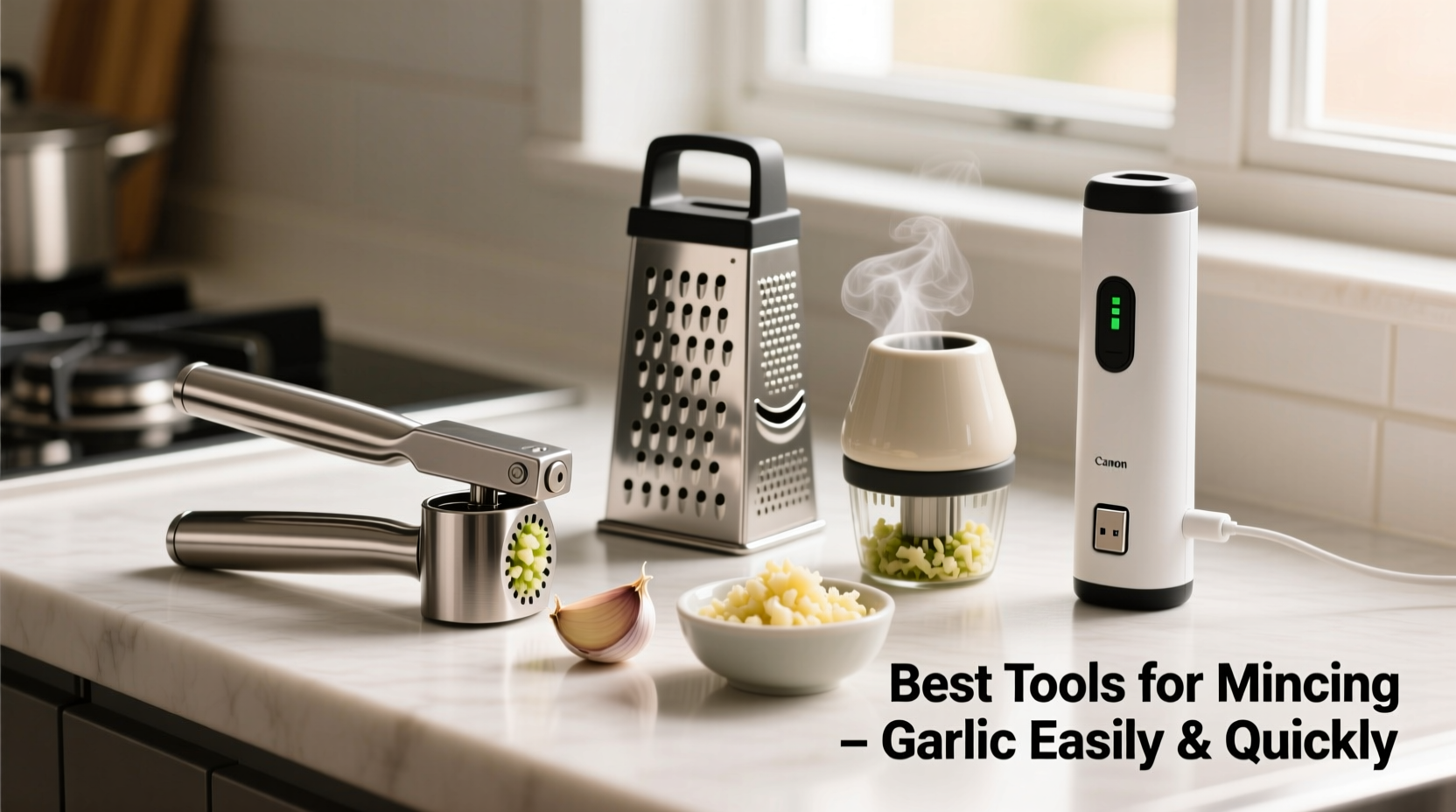
Minced garlic refers to garlic cloves that have been finely chopped into tiny, nearly uniform pieces—typically 1–2 millimeters in size. Unlike crushed or sliced garlic, which retain more structure and deliver a slower release of flavor, minced garlic disperses rapidly throughout a dish, creating an even, aromatic foundation. This form is essential in applications where subtlety and integration are key, such as sauces, dressings, marinades, and stir-fries.
True mincing breaks down cell walls extensively, releasing allicin—the sulfur-containing compound responsible for garlic’s characteristic bite and health benefits. Because allicin forms instantly upon cutting and degrades within minutes, freshly minced garlic offers superior taste and potency compared to pre-minced or jarred alternatives. While garlic can be processed in various ways (crushed, pressed, grated, or powdered), mincing remains one of the most versatile and widely used techniques across both home and professional cooking.
Key Characteristics of Freshly Minced Garlic
- Flavor Profile: Sharp, pungent, slightly sweet when raw; mellows and deepens when cooked.
- Aroma: Intense, sulfurous when raw; becomes nutty and roasted with heat.
- Texture: Fine, moist particles with minimal clumping if properly prepared.
- Heat Level: Moderate to high (varies slightly by cultivar and freshness).
- Culinary Function: Aromatics base (soffritto, mirepoix, holy trinity); flavor enhancer; antimicrobial agent.
- Shelf Life (once minced): Up to 24 hours refrigerated in oil (risk of botulism if stored longer); best used immediately.
Expert Tip: To preserve flavor and prevent oxidation, mix freshly minced garlic with a pinch of salt—a technique known as \"drawing\"—which stabilizes the enzymes and reduces bitterness during storage.
Practical Usage: How to Use Minced Garlic in Cooking
Freshly minced garlic shines in dishes requiring rapid flavor infusion. It's commonly added early in the cooking process to build depth, though timing affects its final character:
- Early Addition (Sauté Base): When sautéed in oil or butter at the beginning of cooking, minced garlic softens and blends seamlessly into the fat, forming the backbone of flavor in curries, soups, and pasta sauces. Be cautious not to burn it—garlic scorches easily above 350°F (175°C), turning bitter.
- Late Addition (Finishing Touch): Added in the last minute of cooking or off-heat, minced garlic retains more of its sharpness and punch, ideal for gremolatas, sambals, or finishing oils.
- Raw Applications: In vinaigrettes, aiolis, chimichurri, or bruschetta, raw minced garlic provides immediate zing. For smoother integration, let it macerate briefly in vinegar or lemon juice to tame its intensity.
Recommended Ratios:
| Dish Type | Garlic Amount (per serving) | Notes |
|---|---|---|
| Pasta Sauce | 1–2 cloves | Sauté gently in olive oil before adding tomatoes |
| Stir-Fry | 1 clove | Add after aromatics like ginger; cook 15–30 seconds |
| Vinaigrette | ½ clove | Macerate in acid for 5+ minutes before emulsifying |
| Rice or Grains | 1 clove per cup uncooked | Toast lightly in fat before adding liquid |
For consistent results, always peel garlic thoroughly and remove the central sprout (if present), which can impart a metallic bitterness. Pressing or mincing should occur just before use to maximize flavor impact.
Variants & Types of Garlic Preparation Tools
No single tool fits every kitchen or cooking style. Below are the most effective options for mincing garlic, ranked by performance, versatility, and user experience.
1. Chef’s Knife (Classic Method)
The traditional approach involves slicing peeled cloves thinly, then rocking the blade back and forth in a rhythmic motion until finely minced. This method offers complete control over texture and quantity but requires practice to achieve uniformity.
- Pros: Full control, no extra tools needed, integrates well into prep workflow.
- Cons: Time-consuming for large batches; risk of uneven mince; sticky residue on blade.
- Best For: chefs and experienced home cooks who value tactile feedback and precision.
2. Garlic Press (Manual)
A handheld device that forces cloves through small holes via leverage. Produces a wet, paste-like mince rich in juice and flavor.
- Pros: Fast, efficient, extracts nearly all usable material; minimal waste.
- Cons: Difficult to clean; may leave pulp behind; inconsistent hole sizes affect texture.
- Best For: quick mincing of 1–4 cloves; raw applications like dressings or garlic butter.
3. Microplane Grater
Originally designed for citrus zest, this fine rasp grater works exceptionally well for garlic, producing a near-paste consistency.
- Pros: Ultra-fine texture; easy to use; doubles as zester or spice grinder.
- Cons: Can clog with moisture; requires careful cleaning; short lifespan if misused.
- Best For: delicate dishes needing seamless garlic integration (e.g., custards, butter sauces).
4. Rocker Knife (Mezzaluna)
A curved-bladed knife rocked back and forth over garlic piles, often used with a wooden board. Common in Italian kitchens.
- Pros: Efficient for bulk mincing; ergonomic motion reduces strain.
- Cons: Requires two hands; less precise than a chef’s knife.
- Best For: preparing large quantities of aromatics (garlic, herbs, onions).
5. Electric Chopper / Mini Food Processor
Small motorized devices capable of pulsing garlic into a fine mince in seconds.
- Pros: Extremely fast; handles multiple cloves at once; consistent results.
- Cons: Over-processing can turn garlic into paste; additional appliance storage.
- Best For: meal prep, batch cooking, or households using garlic frequently.
6. Tube Garlic (Pre-Minced)
Not a tool per se, but a common alternative—paste sold in squeezable tubes.
- Pros: Instant access; long shelf life; convenient for camping or small kitchens.
- Cons: Lacks brightness of fresh garlic; often contains preservatives (citric acid, phosphoric acid); muted flavor.
- Best For: emergency use or situations where fresh garlic isn’t available.
Tool Comparison: Performance at a Glance
| Tool | Speed | Texture Control | Cleanup Ease | Best Volume |
|---|---|---|---|---|
| Chef’s Knife | Medium | High | Easy | 1–6 cloves |
| Garlic Press | Fast | Low | Difficult | 1–4 cloves |
| Microplane | Fast | Very High | Medium | 1–2 cloves |
| Mezzaluna | Fast | Medium | Easy | 5+ cloves |
| Electric Chopper | Very Fast | Low–Medium | Medium | 3+ cloves |
| Tube Garlic | Instant | None | None | Any |
Comparison with Similar Ingredients & Tools
Garlic is often confused with related alliums or processed forms. Understanding distinctions ensures proper usage:
| Item | How It Differs | When to Substitute |
|---|---|---|
| Garlic Powder | Dried, ground garlic; milder, less pungent. 1/8 tsp ≈ 1 clove fresh. | In rubs, dry spice blends, or when moisture must be avoided. |
| Granulated Garlic | Slightly coarser than powder; dissolves slower. 1/4 tsp ≈ 1 clove. | In soups, stews, or canned goods with long cook times. |
| Roasted Garlic | Sweet, creamy, spreadable. Cannot substitute directly for raw mince. | As a condiment, spread, or blended into mashed potatoes. |
| Shallots | Milder, sweeter cousin of garlic; often used raw in vinaigrettes. | When subtlety is preferred—e.g., in delicate French sauces. |
“A garlic press gives you juice and fiber together—ideal for immediate impact. But for layered flavor development, nothing beats the controlled mince of a sharp knife.” — Chef Elena Torres, Culinary Instructor, Institute of Artisan Cooking
Practical Tips & FAQs
Q: Can I mince garlic in advance?
A: Technically yes, but flavor deteriorates rapidly. Allicin begins breaking down within 10 minutes of cutting. If pre-mincing is necessary, store in an airtight container with a thin layer of neutral oil and use within 24 hours. Never store plain minced garlic in oil at room temperature due to botulism risk.
Q: How do I prevent garlic odor on my hands and tools?
A: Wash hands with stainless steel (e.g., rubbing on a spoon under running water) or use a mixture of salt and lemon juice. For tools, especially presses and graters, scrub immediately with warm soapy water and a brush. Baking soda paste helps lift stubborn residues.
Q: Why does my garlic turn green or blue when minced?
A: This natural reaction occurs when sulfur compounds in garlic interact with copper (from water, pans, or utensils), forming harmless copper sulfate. It’s safe to eat and common in pickled garlic or certain ethnic dishes like Chinese Laba garlic.
Q: Is pre-minced garlic from a jar worth using?
A: Jarred minced garlic typically contains citric acid and other preservatives to extend shelf life. While convenient, it lacks the vibrancy and complexity of fresh garlic. Reserve it for non-critical applications or emergencies.
Q: Which tool produces the most flavorful mince?
A: The garlic press and microplane extract the highest amount of juice and cellular content, maximizing flavor release. However, a well-executed knife mince allows better control over cooking progression—critical in nuanced dishes.
Q: Can I freeze minced garlic?
A: Yes. Freeze individual portions in ice cube trays with olive oil or water. Transfer to freezer bags once solid. Use directly from frozen in cooked dishes—no need to thaw.
Pro Tips for Better Garlic Mincing
- Peel garlic faster by microwaving cloves for 10 seconds or shaking in a sealed jar.
- Always use a sharp knife—dull blades crush rather than cut, increasing bitterness.
- Use a pinch of salt when mincing by hand to absorb moisture and prevent sticking.
- Clean your garlic press immediately—soak in hot water to loosen trapped pulp.
- Label frozen garlic cubes with date and quantity (e.g., “3 cloves”).
Summary & Key Takeaways
Efficient garlic mincing hinges on selecting the right tool for your needs. While the chef’s knife remains the gold standard for control and precision, modern gadgets like garlic presses, microplanes, and electric choppers offer compelling advantages in speed and convenience. Each method impacts flavor release, texture, and cleanup requirements—understanding these trade-offs empowers smarter kitchen decisions.
For daily cooking with one or two cloves, a sharp chef’s knife or microplane delivers excellent results. For frequent or bulk preparation, consider a mezzaluna or mini food processor. Reserve tube or jarred garlic for travel or backup use only. Regardless of method, prioritize freshness, cleanliness, and timing to harness garlic’s full aromatic potential.
Ultimately, the best tool is the one that aligns with your cooking rhythm, cleanup tolerance, and flavor expectations. Invest in quality, maintain your equipment, and treat garlic not just as an ingredient—but as a foundational element of great cooking.
Try mincing the same clove with three different tools—knife, press, and microplane—and compare the texture, yield, and flavor in a simple garlic-infused oil. Observe how each method influences the final result. Your palate will guide your next purchase.




 浙公网安备
33010002000092号
浙公网安备
33010002000092号 浙B2-20120091-4
Comments
No comments yet. Why don't you start the discussion?