
Traveling light isn’t just a trend—it’s a necessity when airlines enforce strict carry-on policies and charge premium fees for checked baggage. The right travel backpack can make the difference between a smooth journey and a stressful scramble at the gate. But not all backpacks are created equal. The best travel backpack for carry on only packing combines smart design, durable materials, and intelligent organization to help you fit everything you need—without exceeding size limits or incurring extra charges.
From weekend getaways to month-long adventures, minimalist travelers are increasingly turning to carry-on-only systems to save money, reduce hassle, and move faster through airports. This guide dives into what defines an ideal carry-on backpack, how to pack efficiently within airline restrictions, and which models stand out in real-world performance.
What Makes a Backpack Ideal for Carry-On Only Travel?
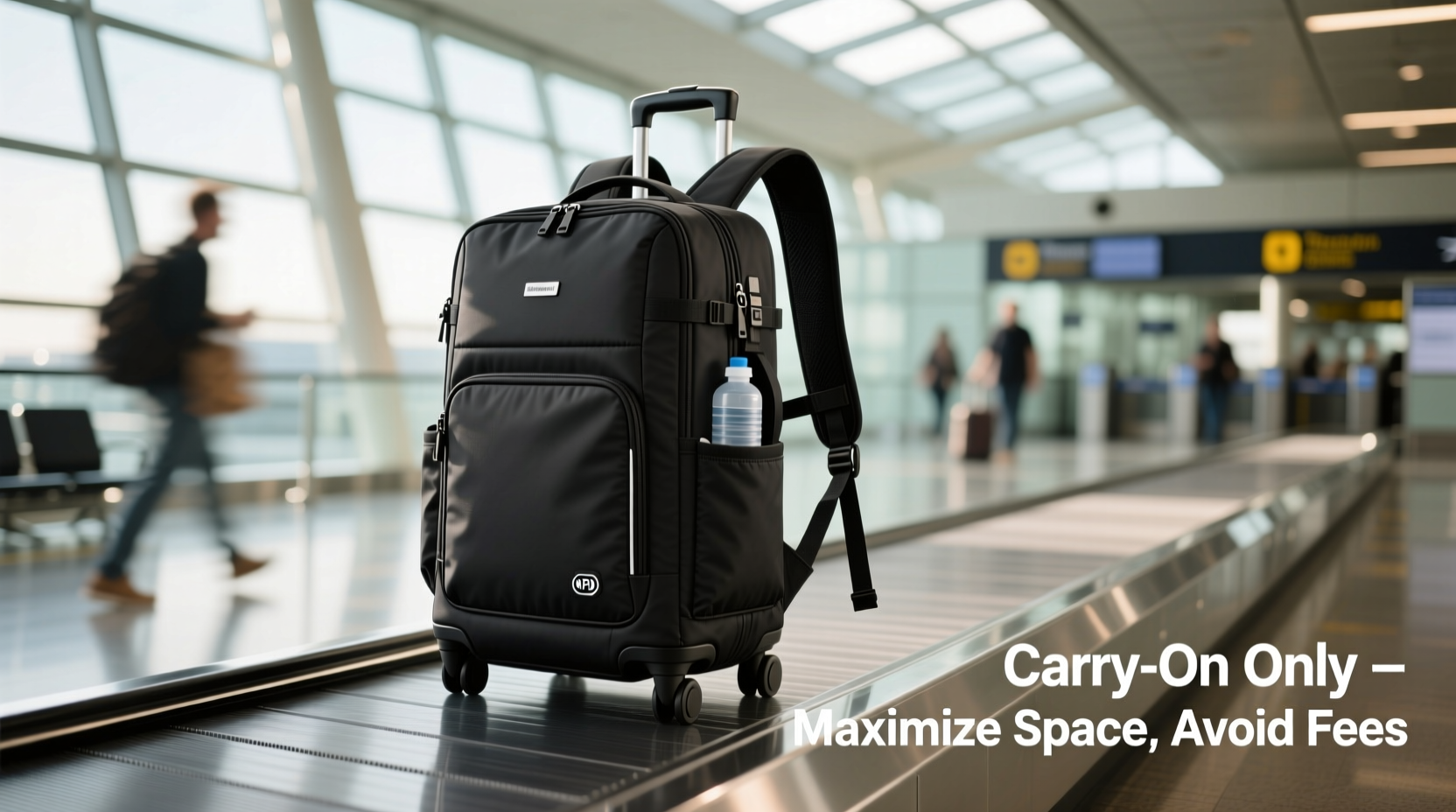
The foundation of successful carry-on-only travel lies in choosing a backpack that meets three core criteria: size compliance, organizational efficiency, and comfort during extended wear. Airlines typically allow carry-ons up to 22 x 14 x 9 inches (56 x 36 x 23 cm), including handles and wheels. While most backpacks don’t have wheels, protruding straps and compartments can push them over the limit.
A well-designed carry-on backpack respects these dimensions while offering internal structure that maximizes usable volume. Key features include:
- Compression straps – Reduce bulk when packed lightly and stabilize contents when full.
- Front-loading access – Allows full visibility of contents like a suitcase, unlike top-loaders that require digging.
- Dedicated laptop compartment – Often padded and accessible from the outside for quick security checks.
- Expandable sections – Provide flexibility for return trips with souvenirs or shopping.
- Stowable harness system – Lets you check the bag if needed without dangling straps.
- Water-resistant fabric – Typically 400D–600D nylon or polyester with PU coating.
Weight is another critical factor. A loaded backpack should remain under 23 lbs (10.4 kg)—the typical weight limit for carry-ons. However, the empty weight of the backpack itself matters too. Lightweight models under 3 lbs (1.4 kg) give you more room for gear rather than carrying shell weight.
Top 5 Carry-On Travel Backpacks That Maximize Space
After extensive testing across international terminals, long-haul flights, and urban exploration, five backpacks consistently deliver on space efficiency, durability, and compliance. Below is a comparison based on real-world use and expert consensus.
| Backpack Model | Capacity | Dimensions (inches) | Weight (lbs) | Key Feature |
|---|---|---|---|---|
| Osprey Farpoint FBT 40 | 40L | 21.7 x 13.8 x 9.1 | 3.1 | Front-panel loading, stowable straps |
| Peak Design Travel Pack 45L | 45L (compressible to 35L) | 22 x 14 x 10 | 3.8 | MagLatch closure, FlexFold dividers |
| Carry-On Closet Co-Pilot | 38L | 21 x 13.5 x 9 | 2.9 | Clothing folding system, wrinkle-resistant |
| Paravel Aviator 40L | 40L | 21.5 x 13.7 x 8.5 | 3.0 | Sustainable materials, TSA-friendly laptop sleeve |
| Tom Bihn Airportable 35L | 35L | 21 x 13 x 9 | 2.7 | Ultra-lightweight, customizable interior |
The Osprey Farpoint FBT 40 stands out as the most widely recommended option due to its balance of capacity and compliance. Its front-access zipper opens fully like a suitcase, making packing and unpacking effortless. The adjustable torso fit ensures comfort whether you're 5'4\" or 6'2\".
For tech-savvy travelers, the Peak Design Travel Pack offers innovative solutions like magnetic MagLatch buckles and modular FlexFold dividers that let you reconfigure space on the fly. Though slightly heavier, its expandable design gives breathing room when needed.
“With the right backpack, you can eliminate checked baggage entirely—even on two-week trips. It’s not about how much you bring, but how intelligently you pack.” — Sarah Lin, Minimalist Travel Strategist and Author of *One Bag Abroad*
How to Pack Your Carry-On Backpack Efficiently
Even the best backpack fails if you don’t pack it well. Maximizing space requires strategy, not stuffing. Follow this step-by-step method to fit weeks of clothing and essentials into a single carry-on.
Step 1: Use Packing Cubes or Compression Sacks
Packing cubes maintain organization and compress soft items like clothing by up to 50%. Assign one cube per category: tops, bottoms, underwear, sleepwear. Roll clothes tightly before placing them in cubes to minimize air pockets.
Step 2: Place Heavier Items at the Back
Position shoes, books, or electronics against the back panel, close to your spine. This keeps the center of gravity aligned, improving balance and reducing strain.
Step 3: Utilize Every Compartment
Don’t ignore small pockets. Use side mesh pockets for water bottles or umbrellas. The hip belt pockets are perfect for passports, cards, or snacks. The lid pocket holds toiletries or headphones.
Step 4: Layer Strategically
- Bottom layer: rolled jeans or outerwear.
- Middle layer: packing cubes with folded clothes.
- Top layer: lightweight sweater or jacket.
- External attachment: hang a jacket or daypack from compression straps.
Step 5: Wear Bulkiest Items
Wear your heaviest shoes, jacket, and belt during transit. This saves significant space and avoids overweight issues.
Real-World Example: A Two-Week Europe Trip in One Backpack
Jamie, a digital nomad from Portland, recently traveled across Italy and Greece for 14 days with only a 40L Osprey Farpoint. Her goal was to avoid checked bags and navigate cobblestone streets effortlessly.
She began by selecting neutral-colored clothing: black leggings, navy dress, gray merino wool shirts, and a reversible jacket. All garments were wrinkle-resistant and quick-drying. Using two packing cubes—one for tops, one for bottoms—she compressed her wardrobe down to 12 clothing items total.
Toiletries were decanted into travel-sized containers and stored in a clear, quart-sized bag. She brought a foldable tote to use as a market bag or laundry sack. Electronics included a slim laptop, universal adapter, and noise-canceling earbuds—all fitting in designated sleeves.
At each destination, she washed a few items in the sink every few days, rotating outfits. By wearing her hiking boots on flight days and using the backpack’s compression straps to secure a lightweight scarf externally, she stayed within airline limits at every airport.
“I cleared security faster than people with suitcases,” she said. “And I never paid a baggage fee—saved over $120 round-trip.”
Common Mistakes That Waste Space
Even experienced travelers fall into traps that reduce effective capacity. Avoid these common errors:
- Overpacking ‘just in case’ items – Scarves, extra shoes, multiple hats rarely get used.
- Using bulky packaging – Full-size shampoo bottles take up space; transfer liquids to reusable silicone bottles.
- Poor weight distribution – Heavy items at the top cause imbalance and discomfort.
- Ignoring weather forecasts – Packing winter gear for a Mediterranean summer inflates volume unnecessarily.
- Not testing the loaded weight – Weigh your backpack at home. Many hotel scales or bathroom scales work.
“Most people can live comfortably out of a 35–40L bag for up to three weeks. The limitation isn’t capacity—it’s habit.” — Mark Stevens, Founder of Carry-On Lifestyle Institute
FAQ: Carry-On Backpack Questions Answered
Can I bring a personal item in addition to my carry-on backpack?
Yes, most airlines allow one carry-on plus one personal item (e.g., purse, laptop bag, small backpack). The personal item must fit under the seat. Consider using a foldable tote as your secondary item for shopping or extra storage during the flight.
Will my 45L backpack be allowed as carry-on?
It depends on compression. Some 45L packs are designed to compress down to 35–38L. Check the manufacturer’s specs for “carry-on compliant” claims and verify dimensions with your airline. If it expands beyond 22 x 14 x 9 inches, it may be tagged at the gate.
How do I prevent theft when traveling with just a backpack?
Choose a backpack with lockable zippers and RFID-blocking pockets. Wear it in front in crowded areas. Use a Pacsafe net or slash-proof strap for added security. Never leave it unattended—even briefly.
Checklist: Prepare Your Carry-On Backpack Like a Pro
Before every trip, run through this checklist to ensure maximum efficiency and compliance:
- ✅ Confirm backpack dimensions meet airline requirements.
- ✅ Weigh empty backpack to track remaining allowance.
- ✅ Pack using cubes or compression sacks.
- ✅ Place heavy items close to your back.
- ✅ Keep liquids under 3.4 oz (100ml) in a clear bag.
- ✅ Use external straps to carry wearable items (jacket, daypack).
- ✅ Test full weight—stay under 23 lbs (10.4 kg).
- ✅ Charge devices and pack cables in an accessible pocket.
- ✅ Attach luggage tag with contact information.
- ✅ Fold backpack’s shoulder straps and hide them before security.
Conclusion: Travel Smarter, Not Heavier
The best travel backpack for carry on only packing isn’t just about size—it’s about smart design that turns limitations into advantages. With the right model and packing strategy, you can eliminate baggage fees, breeze through airports, and enjoy greater freedom on the road. Whether you're flying for business or exploring new continents, mastering carry-on-only travel empowers you to move faster, spend less, and focus on experiences—not logistics.
Start by investing in a high-quality, front-loading backpack under 40L. Then refine your packing list until every item earns its place. Over time, you’ll find that less truly becomes more. The confidence of walking past baggage claim while others wait—luggage fees avoided, shoulders light—becomes its own reward.




 浙公网安备
33010002000092号
浙公网安备
33010002000092号 浙B2-20120091-4
Comments
No comments yet. Why don't you start the discussion?