
Every holiday season, millions of households unpack their artificial Christmas trees with excitement—only to find them coated in a fine layer of dust or lingering odors from storage. While these trees offer convenience and longevity, they often sit packed away for 11 months in garages, attics, or basements, where they collect dust, pet dander, and even mold spores. Cleaning your tree before assembly isn’t just about appearance; it’s a crucial step for indoor air quality, fire safety, and preserving the tree’s condition year after year.
A well-maintained artificial tree can last over a decade, but neglecting pre-season cleaning leads to dull branches, sticky residue, and potential allergens circulating through your home. The good news? With the right tools and approach, you can restore your tree to its original luster without damaging the delicate materials. This guide walks you through every phase—from preparation to final inspection—with actionable steps, expert insights, and real-world examples to ensure your tree looks as vibrant as the first time you bought it.
Why Pre-Assembly Cleaning Matters
Artificial trees are typically made from PVC (polyvinyl chloride) and PE (polyethylene), materials that attract and hold onto dust. Over time, accumulated particles not only dull the tree’s appearance but can also become a respiratory irritant, especially for those with asthma or allergies. According to the American Lung Association, indoor air pollution is one of the top five environmental health risks, and unclean stored items contribute significantly to airborne contaminants.
Beyond health concerns, dirty trees affect aesthetics. Dust makes green needles look grayish, and oily residues from hands during last year’s disassembly can cause spots that repel water-based cleaners. Additionally, if your tree was stored improperly—say, in a damp basement—mold or mildew could have formed, posing both a health hazard and a stubborn cleaning challenge.
Cleaning before assembly allows you to inspect each section thoroughly. You’ll catch broken tips, frayed wires, or loose hinges early, making repairs easier than trying to fix issues once the tree is fully erected and decorated.
“Pre-cleaning an artificial tree is like spring cleaning for your holidays—it sets the tone for a healthier, more enjoyable season.” — Dr. Linda Reeves, Indoor Air Quality Specialist
Step-by-Step Guide to Cleaning Your Artificial Tree
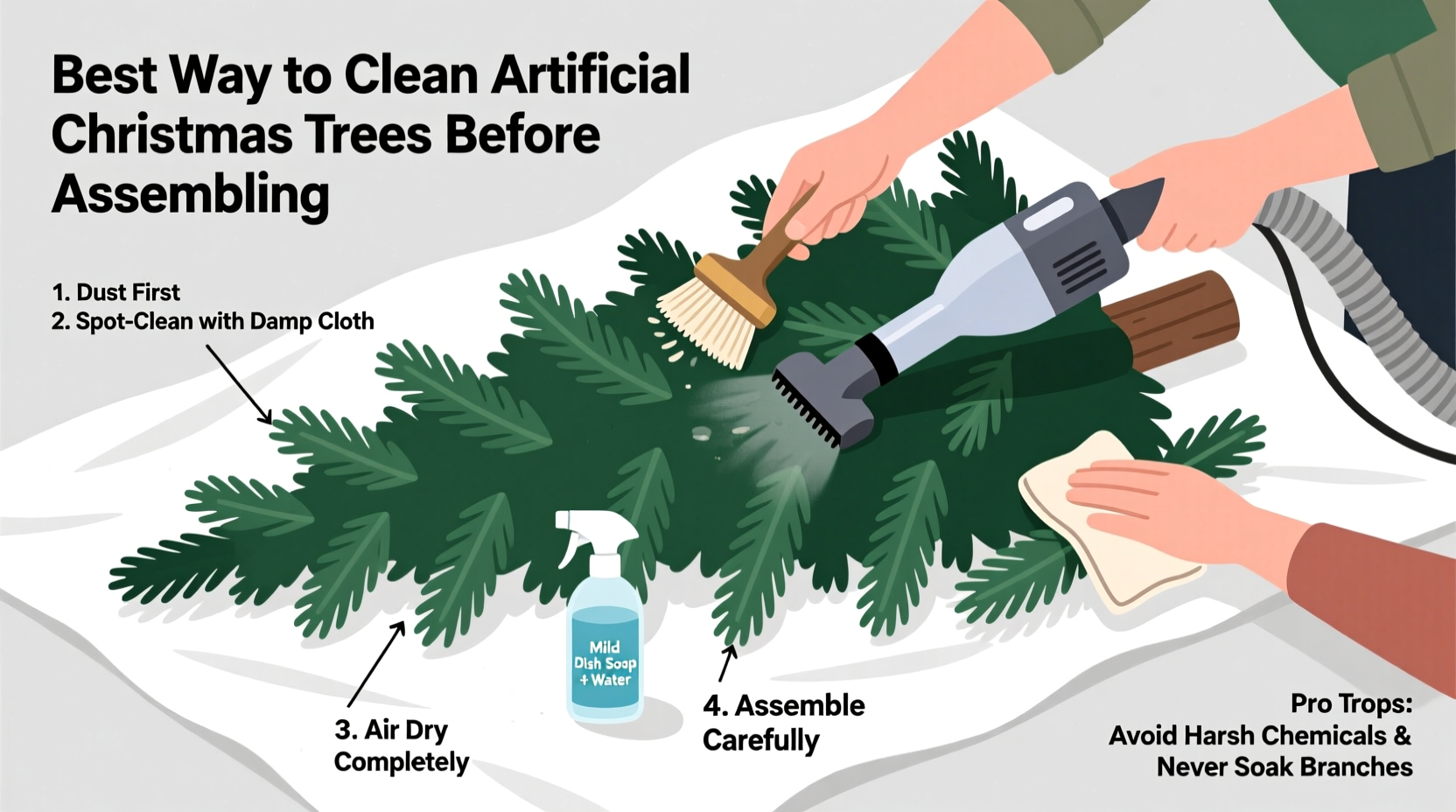
Cleaning an artificial Christmas tree doesn’t require special equipment, but it does demand patience and attention to detail. Follow this comprehensive timeline to ensure a thorough, safe clean.
- Unpack in a spacious, well-ventilated area: Choose a garage, porch, or large room with open windows. Lay down a drop cloth or old sheets to catch debris.
- Inspect each section: Remove branches from the central pole and examine for damage, discoloration, or signs of pests.
- Dry dust with a microfiber cloth or soft brush: Start at the trunk and work outward, using downward strokes to mimic natural needle direction. Avoid aggressive scrubbing.
- Vacuum with a brush attachment: Use low suction and gently pass over dense areas. Focus on branch joints where dust accumulates.
- Treat stains or sticky spots: Dampen a corner of a microfiber cloth with isopropyl alcohol (70%) and lightly dab affected areas. Never soak the material.
- Deodorize naturally: Spritz a mix of water and a few drops of essential oil (e.g., pine, cinnamon) to refresh scent. Let dry completely before reassembling.
- Reassemble only when fully dry: Moisture trapped in crevices can lead to mold growth indoors.
Essential Tools and Safe Cleaning Solutions
Not all cleaning products are safe for artificial trees. Harsh chemicals like bleach, ammonia, or abrasive cleaners can degrade PVC, causing brittleness or color fading. Stick to gentle, non-toxic options that effectively lift grime without compromising material integrity.
| Tool/Solution | Best For | Why It Works | Avoid If… |
|---|---|---|---|
| Microfiber cloth | Dry dusting, light wiping | Lifts particles without scratching | Tree is heavily soiled |
| Vacuum with brush nozzle | Deep dust removal | Reaches tight spaces safely | Suction is too high (can pull off tips) |
| Isopropyl alcohol (70%) | Sticky residue, sap-like buildup | Evaporates quickly, disinfects | Used in excess (can dry out PVC) |
| Misting spray bottle | Applying deodorizers | Controls moisture application | Tree shows mold (water spreads spores) |
| Soft-bristled paintbrush | Detail cleaning between branches | Precise and non-damaging | Using stiff bristles (can break tips) |
Never submerge any part of your artificial tree in water. Even brief exposure can warp internal wiring, loosen glued components, or promote rust in metal frames. Similarly, steam cleaners may seem effective but generate heat that melts plastic foliage.
Real Example: Reviving a 7-Foot Pre-Lit Tree After Attic Storage
Sarah M., a homeowner in Ohio, pulled her 7-foot pre-lit artificial tree from an attic storage bin each November. For three years, she skipped cleaning, simply assembling and decorating it. By the fourth year, the lower third appeared noticeably dull, and her daughter began sneezing shortly after the tree went up.
This time, Sarah decided to deep-clean before assembly. She laid out a tarp in the garage and removed each branch section. Using a vacuum with a brush attachment, she extracted visible dust bunnies from the core. She then used a microfiber cloth dipped lightly in diluted isopropyl alcohol to wipe down sticky spots near the base—likely caused by hand oils during disassembly.
After two hours of careful cleaning and four hours of drying time, she reassembled the tree. The difference was immediate: lights shone brighter against clean foliage, and the room didn’t develop the usual “musty” smell. More importantly, her daughter experienced no allergy symptoms throughout the season.
Sarah now includes tree cleaning as a family ritual, assigning her kids the task of dusting upper branches with cloths while she handles the base. “It takes a little longer,” she says, “but knowing it’s actually healthy to have up makes the effort worth it.”
Do’s and Don’ts: A Quick Checklist
To keep your cleaning process efficient and safe, refer to this checklist before you begin.
✅ Do:
- Work in sections to avoid missing spots
- Use lint-free cloths to prevent fibers from sticking
- Check light connections for fraying or corrosion
- Allow 6–12 hours of drying time before reassembly
- Store cleaned tree in breathable fabric bags (not plastic)
❌ Don’t:
- Use household cleaners like Windex or Lysol
- Soak branches or use wet wipes
- Expose to direct sunlight during drying
- Rush assembly before the tree is fully dry
- Store in cardboard boxes long-term (attracts pests)
Frequently Asked Questions
Can I wash my artificial tree in the bathtub?
No. Submerging an artificial tree—even partially—risks damaging internal wiring, warping plastic, and introducing moisture that leads to mold. Spot cleaning and vacuuming are the safest methods.
How often should I clean my artificial Christmas tree?
At minimum, clean it once per year before assembly. If stored in a dusty or humid environment, consider a light dusting mid-storage period (e.g., June) to prevent buildup.
What if my tree has mold?
If you spot white, black, or fuzzy patches, treat with a cloth dampened with a solution of 1 part vinegar to 3 parts water. Test on a small area first. Wipe gently, then let dry in a ventilated space for at least 12 hours. Discard the tree if mold is widespread or deeply embedded.
Expert Tips for Long-Term Tree Care
Preserving your artificial tree starts long before the next holiday. How you store it determines how much cleaning you’ll need the following year. Experts recommend investing in custom tree storage bags with ventilation panels and sturdy zippers. These allow airflow while protecting against rodents and dust.
Before storing, ensure every component is completely dry. Reassemble the tree loosely in the garage to confirm no moisture remains in the trunk or base. Wrap lights separately in a spooling device or cardboard reel to prevent tangling and bulb damage.
“The single biggest factor in tree longevity isn’t brand or price—it’s post-season care. A five-minute wipe-down before storage cuts cleaning time by 70% next year.” — Mark Tran, Holiday Decorations Technician, 15+ years experience
Consider rotating trees if you own multiple sizes. Using the same tree annually accelerates wear on specific branches. Alternating gives each model time to rest and reduces stress on joints and hinges.
Conclusion: Start the Season Right
The best way to clean an artificial Christmas tree before assembling combines methodical dry cleaning, targeted stain treatment, and proper drying—all done with respect for the tree’s delicate construction. This isn’t a chore to rush through; it’s a meaningful act of preparation that enhances your holiday experience. A clean tree shines brighter, smells fresher, and contributes to a healthier home environment.
Take pride in your tradition. Whether you’re doing it alone or turning it into a family activity, the time invested now pays off in fewer decorations snagging on broken tips, no surprise allergens, and a tree that truly feels like new. This season, don’t just decorate—revive.




 浙公网安备
33010002000092号
浙公网安备
33010002000092号 浙B2-20120091-4
Comments
No comments yet. Why don't you start the discussion?