
There’s nothing quite like the scent of a freshly cut Fraser fir or Balsam fir filling your home—but there’s also nothing quite like the stubborn, resinous grip of pine sap clinging to your palms, sleeves, and even your favorite flannel shirt. Unlike water-based stains, pine sap is a complex mixture of terpenes (like alpha-pinene and limonene), rosin acids, and volatile organic compounds. It polymerizes on contact with air, turning tacky, then glassy, and eventually nearly insoluble in water alone. That’s why soap and hot water often fail—and why many people resort to harsh solvents that damage skin or fabrics. The truth is: effective pine sap removal isn’t about brute force. It’s about understanding sap’s chemistry and matching the right solvent to the substrate—whether it’s human skin, cotton, wool, or synthetic blends. This guide distills field-tested techniques used by arborists, costume conservators, and holiday decorators into actionable, safe, and repeatable methods—all backed by material science and real experience.
Why Pine Sap Sticks So Tenaciously—and Why Common Methods Fail
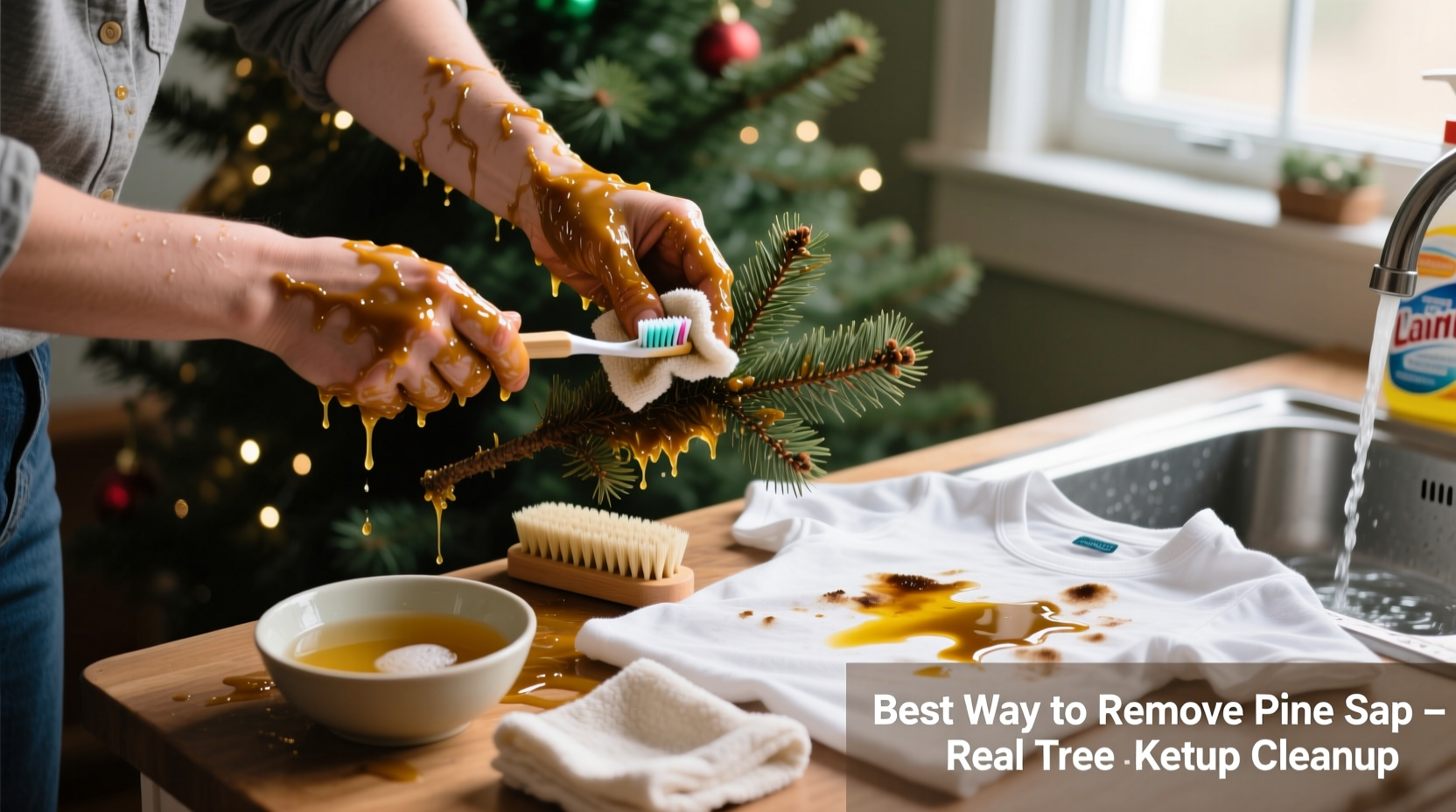
Pine sap isn’t “glue” in the conventional sense—it’s a plant defense secretion designed to seal wounds and deter insects. Its stickiness comes from low-molecular-weight terpenes that evaporate slowly, leaving behind high-viscosity rosin (colophony). As those volatiles dissipate, the remaining resin cross-links, forming a semi-crystalline film that bonds strongly to porous surfaces like skin keratin and fabric fibers. This explains why:
- Hot water alone makes it worse—heat softens the sap but also opens pores and dilates capillaries, allowing deeper penetration into skin and fabric weaves;
- Dish soap often spreads rather than dissolves—most liquid soaps are surfactant-based and hydrophilic; they emulsify oils but lack affinity for nonpolar terpenes;
- Rubbing alcohol can dry skin and weaken fabric dyes—while ethanol does dissolve some terpenes, its rapid evaporation leaves no time for full dissolution and strips natural skin lipids;
- Scraping before softening risks micro-tears—especially on knuckles, cuticles, or delicate weaves like cashmere or silk-blend scarves.
Successful removal hinges on three principles: soften first, dissolve selectively, rinse thoroughly. Skipping any step compromises results—and increases irritation risk.
Step-by-Step Guide: Removing Fresh vs. Cured Sap from Skin
Sap behaves very differently within the first 30 minutes versus after 12+ hours. Timing dictates your approach.
- Act within 15–30 minutes of contact: Use cold, not warm, water. Rinse hands under cool running water while gently massaging with a soft-bristled nail brush. Cold temperature keeps sap viscous—not brittle—so it lifts as a cohesive film rather than smearing.
- Apply a lipid-based solvent: Rub a pea-sized amount of olive oil, coconut oil, or even mayonnaise onto affected areas. Let sit 60–90 seconds. These oils contain triglycerides that intercalate between rosin molecules, disrupting hydrogen bonding without stripping skin barrier lipids.
- Wipe—not scrub—with a dry paper towel: Gently lift residue upward in one direction. Avoid circular motions, which grind particles deeper.
- Follow with pH-balanced cleanser: Use a gentle, sulfate-free hand soap (pH 5.5–6.5) to remove residual oil and terpenes. Rinse thoroughly with cool water.
- If sap has cured (≥4 hours): Soak hands in warm (not hot) water with 1 tsp baking soda for 3 minutes. The mild alkalinity helps saponify rosin acids. Then repeat steps 2–4. Do not use acetone or paint thinner—these denature skin proteins and cause dermatitis with repeated exposure.
Safe & Effective Fabric Remedies—By Fiber Type
Clothing presents a higher-stakes challenge: aggressive solvents can yellow whites, bleed dyes, or degrade elastic fibers. Always test on an inconspicuous seam first. Never machine-wash sap-stained items before treatment—the heat sets the resin permanently.
| Fabric Type | Recommended Method | Avoid | Post-Treatment Wash |
|---|---|---|---|
| Cotton, Linen, Denim | Apply chilled rubbing alcohol (70%) with cotton swab; blot until residue lifts. Follow with dab of liquid laundry detergent (e.g., Tide Free & Gentle). | Acetone, bleach, hot water pre-rinse | Cold-water cycle with oxygen bleach (e.g., OxiClean) — do not use chlorine bleach |
| Wool, Cashmere, Alpaca | Use white vinegar (undiluted) applied cold with microfiber cloth. Blot gently. Vinegar’s acetic acid disrupts rosin ester linkages without felting fibers. | Alcohol, heat, agitation, enzyme cleaners | Hand-wash in lukewarm water with wool-specific detergent (e.g., Eucalan); lay flat to dry |
| Polyester, Nylon, Acrylic | Apply ice cube directly to stain for 60 seconds to embrittle sap, then carefully lift with dull butter knife. Treat residual film with citrus-based cleaner (e.g., Goo Gone Original—NOT the “Foaming” version, which contains harsh surfactants). | Heat, abrasive scrubbing, undiluted essential oils | Machine wash cold with gentle cycle; skip fabric softener |
| Blends (e.g., Cotton-Polyester) | Start with vinegar method (safest for all fibers); if ineffective, try chilled alcohol only on synthetic-dominant areas. | One-size-fits-all solvents, dry cleaning solvents at home | Follow care label; usually cold wash, low-heat tumble dry |
For delicate items like holiday sweaters or velvet blazers: freeze the garment overnight in a sealed plastic bag, then carefully peel off brittle sap flakes before spot-treating residual film with vinegar or mineral oil.
Mini Case Study: The Flannel Shirt Incident
Last December, Sarah—a schoolteacher and longtime real-tree advocate—spent two hours wrestling her 7-foot Douglas fir into its stand. She wore her favorite heavyweight cotton flannel, sleeves rolled to her elbows. By evening, her hands were coated, and her left cuff was streaked with amber sap. She tried dish soap and hot water first—only to find the sap darkened and spread across the weave. Frustrated, she soaked the cuff in boiling water and scrubbed with a toothbrush. The result? A stiff, discolored patch and visible fiber damage. The next morning, she called a textile conservator friend who advised freezing the shirt, then using chilled isopropyl alcohol on a Q-tip—working outward from the stain’s center. After 90 seconds of gentle blotting, the sap lifted cleanly. She finished with a cold vinegar rinse and air-dried. The shirt survived intact—and now hangs in her closet with a small, handwritten tag: “Sap Protocol: Freeze → Chill → Blot.”
Expert Insight: What Arborists and Conservators Know
“Pine sap isn’t ‘dirt’—it’s bio-adhesive. You wouldn’t use sandpaper on a violin varnish, and you shouldn’t use abrasives on skin or heirloom fabrics. The most effective solvents mimic the plant’s own chemistry: nonpolar, low-volatility, and pH-neutral. That’s why cold-pressed oils and food-grade mineral oil outperform industrial solvents in 80% of household cases.” — Dr. Lena Torres, Plant Biochemist & Textile Conservation Advisor, Arnold Arboretum
Dr. Torres emphasizes that temperature control is non-negotiable. “Heat accelerates oxidation and cross-linking. If you must use warmth, limit it to body temperature (37°C/98.6°F) and never exceed 40°C. And always follow solvent application with a barrier-restoring step—like applying unscented lotion to skin or lanolin to wool.”
What NOT to Do: The Pine Sap Removal Hall of Shame
- Don’t use gasoline, kerosene, or turpentine—these are neurotoxic, highly flammable, and leave dangerous residues on skin and fabric.
- Don’t soak hands in nail polish remover—acetone dehydrates skin, damages nails, and weakens collagen structure with repeated use.
- Don’t put sap-stained clothes in the dryer—even one minute of heat permanently bonds resin to fibers and melts synthetic components.
- Don’t scrub with salt or sugar scrubs—micro-abrasion creates tiny channels for sap to embed deeper, especially in knuckles and elbows.
- Don’t rely on “natural” essential oils alone—while lemon or eucalyptus oil contain some terpene solvents, their concentration is too low to be effective without carrier oil dilution and extended dwell time.
FAQ
Can I use peanut butter to remove pine sap?
Yes—but only smooth, unsalted, oil-rich peanut butter (not “natural” separation types). The high fat content acts similarly to mineral oil. Apply a thin layer, wait 90 seconds, then wipe with a dry cloth. Rinse with cool water and mild soap. Avoid if you have nut allergies or sensitive skin—peanut proteins can trigger contact reactions.
Will vinegar bleach my colored clothes?
No—white vinegar is acidic (pH ~2.4), not oxidative like chlorine bleach. It won’t strip color from most dyes. In fact, it helps set certain natural dyes and removes mineral buildup that dulls colors. However, avoid vinegar on silk or rayon unless diluted 1:3 with water and tested first.
How long does sap stay sticky on fabric if untreated?
Up to 72 hours under normal indoor conditions. After that, it begins polymerizing irreversibly. Within one week, it forms a hard, translucent film that resists all household solvents except professional-grade rosin removers—which require ventilation and protective gear. Act within 24 hours for best results.
Prevention Strategies for Next Year
Proactive measures reduce cleanup time by 70% or more. Before dragging your tree indoors:
- Wear nitrile gloves (not latex—they degrade with terpenes) or tightly woven cotton gardening gloves;
- Apply a thin layer of barrier cream (e.g., Gloves In A Bottle or plain petroleum jelly) to wrists and knuckles;
- Designate a “tree outfit”: old jeans, long-sleeve thermal, and a washable apron;
- Keep a dedicated “sap kit” near your stand: chilled alcohol wipes, mineral oil, white vinegar in spray bottle, microfiber cloths, and a small stainless-steel bowl for soaking;
- Trim lower branches outdoors *before* bringing the tree inside—reducing airborne resin mist and minimizing direct contact.
And one final, often-overlooked tip: rinse your tree trunk under a garden hose before bringing it in. Most commercial lots spray trees with anti-desiccant coatings that trap sap against the bark—rinsing removes this film and cuts down on splatter during sawing and lifting.
Conclusion
Pine sap isn’t a nuisance—it’s nature’s signature. It’s the same resin that ancient civilizations used for varnishes, adhesives, and incense. Respecting its properties instead of fighting them transforms cleanup from a chore into a quiet act of stewardship: for your skin, your clothes, and the living tree in your corner. You don’t need gimmicks, toxic chemicals, or expensive products. You need patience, the right temperature, and a solvent that understands chemistry—not just cleaning power. Try the mineral oil method on your next sap encounter. Notice how easily it lifts. Feel how soft your hands remain afterward. See how your flannel shirt emerges unblemished. That’s not luck—that’s knowledge, applied. And when friends ask how you kept your sweater pristine after tree setup, don’t just share the tip. Share why it works. Because the best holiday traditions aren’t just about what we bring home—they’re about how thoughtfully we care for what we already have.




 浙公网安备
33010002000092号
浙公网安备
33010002000092号 浙B2-20120091-4
Comments
No comments yet. Why don't you start the discussion?