
When temperatures rise and air conditioning isn’t an option—whether due to cost, availability, or power outages—finding effective ways to stay cool indoors becomes essential. While fans don’t lower the temperature like AC units, they can dramatically improve comfort by enhancing airflow, promoting evaporative cooling, and strategically managing heat buildup. With the right techniques, you can turn a sweltering room into a tolerable, even refreshing, space using nothing more than fans and intelligent ventilation.
The key lies not in simply turning on a fan, but in understanding how air moves, where heat accumulates, and how to manipulate both to your advantage. From cross-ventilation setups to thermal siphoning and strategic fan placement, this guide delivers actionable, science-backed methods to cool your room effectively—no refrigerant required.
How Fans Actually Cool You (And Why It’s Not About Temperature)
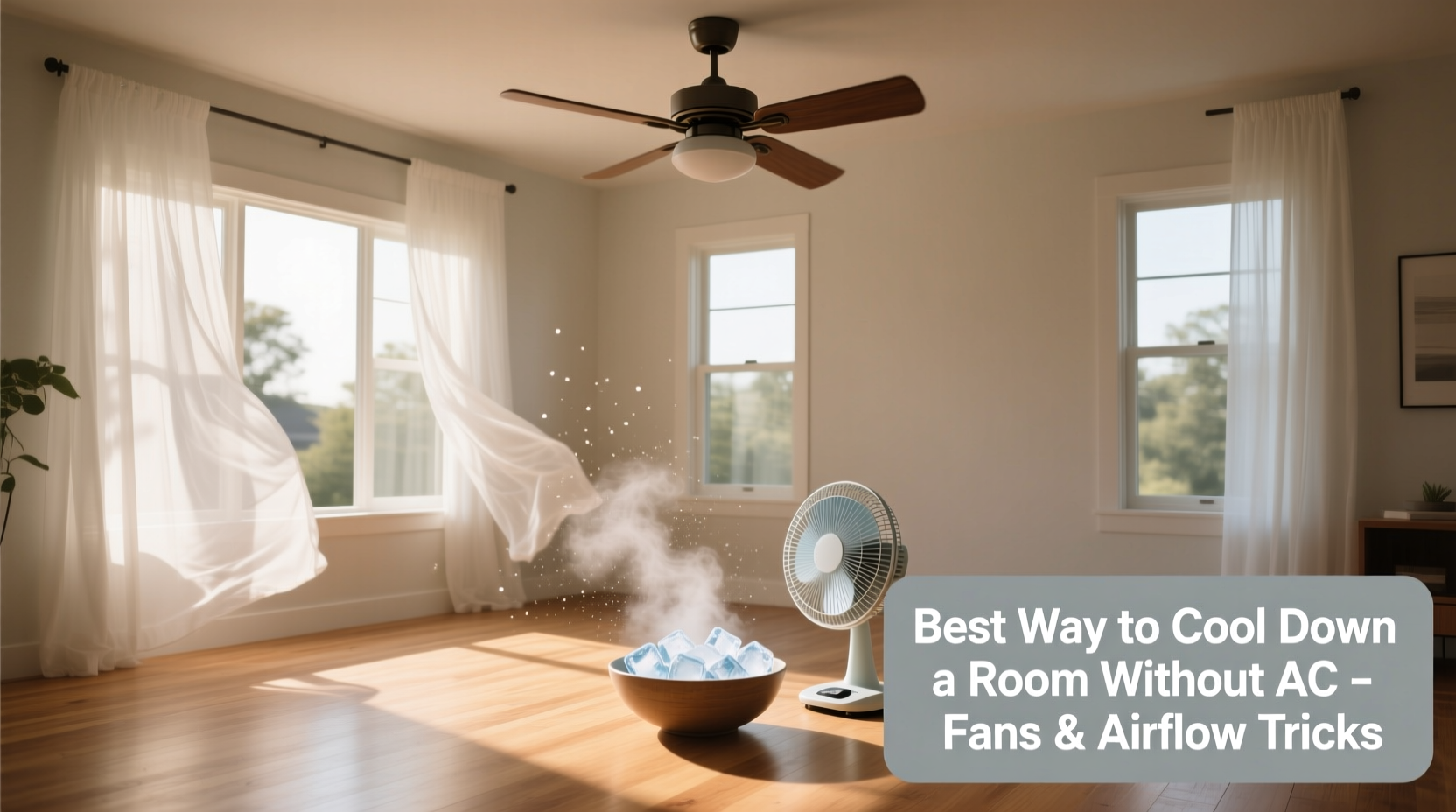
Fans don’t reduce room temperature—they move air. But that movement has a powerful physiological effect: it accelerates the evaporation of sweat from your skin, which is your body’s natural cooling mechanism. This creates a “wind chill” effect, making you feel significantly cooler even if the thermometer reads the same.
However, this only works when the air is dry enough for evaporation to occur. In high-humidity environments, the benefit diminishes because sweat doesn’t evaporate efficiently. Still, even in humid conditions, moving air prevents the stagnant, sticky feeling that amplifies discomfort.
“Air movement is one of the most underrated tools in thermal comfort. A well-placed fan can make a 90°F room feel like 78°F.” — Dr. Linette Watkins, Environmental Health Researcher, University of Oregon
Additionally, fans help dissipate the microclimate of warm, moist air that builds up around your body while sitting or sleeping. By disrupting this layer, fans keep your immediate environment fresher and more breathable.
Cross-Ventilation: The Foundation of Natural Cooling
Cross-ventilation is the deliberate use of openings—windows, doors, vents—to allow cool air to enter on one side of a room while warm air exits on the opposite side. When executed properly, it creates a continuous flow that flushes out heat and replaces it with fresher air.
To maximize cross-ventilation:
- Open windows or doors on opposite walls to create a direct path for airflow.
- Ensure openings are unobstructed by furniture, curtains, or screens.
- Use windows at different heights—one low, one high—to leverage thermal buoyancy (hot air rises).
If your room has only one window, open an interior door or hallway access point to create a partial airflow path. Even a small gap under a door can help maintain pressure balance and improve circulation.
Enhancing Cross-Ventilation with Fans
A single box fan can transform passive ventilation into active cooling. Here’s how to use it strategically:
- At night or during cooler hours: Place a fan facing inward in a window that receives cooler outside air. Position it as low as possible, since cooler air is denser and stays near the floor.
- During the day: Reverse the fan to blow hot indoor air out through a window on the warmer side of the house—typically the side exposed to afternoon sun.
- For maximum effect: Use two fans—one pulling cool air in, another pushing hot air out. This creates a controlled current, significantly increasing air exchange rate.
Strategic Fan Placement: Where You Put It Matters Most
Not all fan placements are equally effective. Randomly pointing a fan into a corner does little. Instead, follow these proven positioning strategies:
1. Ceiling Fans: Direction Is Key
Ceiling fans should rotate counterclockwise in summer to push air downward, creating a direct wind-chill effect. In winter, reverse to clockwise at low speed to circulate warm air trapped near the ceiling. Check your fan’s switch or remote—many people forget to adjust it seasonally.
2. Box Fans in Windows: One In, One Out
Set up opposing fans: one drawing in cool air, the other exhausting hot air. Ideal configuration includes:
- Inlet fan at a lower window on the shaded side of the building.
- Outlet fan at a higher window on the sunny or warmer side.
3. Floor Fans: Create Personal Breezes
Place oscillating fans near seating or sleeping areas. Angle them slightly upward to avoid blasting directly at the body, which can cause muscle stiffness. For beds, position the fan at the foot or side, aimed across the mattress rather than straight at the torso.
4. Tower Fans Near Doorways
Use tower fans in hallways or between rooms to channel cooler air from shaded zones into hotter ones. Their narrow profile allows placement in tight spaces without blocking foot traffic.
| Placement | Best Use Case | Pro Tip |
|---|---|---|
| Window (inward) | Night cooling with fresh air | Use lowest level window for coolest intake |
| Window (outward) | Daytime heat exhaust | Pair with inlet fan for balanced flow |
| Ceiling | Whole-room circulation | Set to counterclockwise in summer |
| Floor (oscillating) | Personal comfort | Orient to sweep across skin, not blow directly |
| Doorway | Channeling air between rooms | Point toward center of target room |
Advanced Airflow Tricks for Maximum Cooling
Beyond basic fan use, several clever techniques amplify cooling by manipulating air density, timing, and thermal mass.
Thermal Siphoning with Stacked Fans
Hot air rises. Use this principle by placing an exhaust fan high in a window or doorway to pull rising heat out of the room. Simultaneously, open a lower window on the opposite side to allow cooler air to replace it. This creates a \"thermal siphon\"—a continuous loop driven by natural convection.
Night Flushing: Cool the Structure, Not Just the Air
Buildings absorb heat during the day and re-radiate it at night. To break this cycle:
- Close windows and blinds during the day to trap cooler indoor air.
- As soon as outdoor temperature drops below indoor temperature (usually after sunset), open all windows.
- Deploy multiple fans to aggressively flush out stored heat.
- Run fans for 1–2 hours, then close up again before morning heat returns.
DIY Evaporative Cooling
In dry climates, evaporation can significantly lower perceived temperature. Try these simple hacks:
- Iced Fan Trick: Place a bowl of ice water in front of a fan. As air passes over it, it picks up cool moisture.
- Damp Sheet Method: Hang a damp cotton sheet in an open window. Use a fan behind it to draw air through the fabric. The evaporation cools incoming air.
- Wet Wrist Cooling: Wear a damp wristband or cloth around your wrist. Blood flowing through cooled veins helps regulate core temperature.
“In arid regions, evaporative cooling can reduce perceived temperature by 10–15 degrees with minimal energy use.” — National Renewable Energy Laboratory (NREL) Report, 2022
Mini Case Study: Cooling a Third-Floor Apartment in July
Carlos lives in a third-floor walk-up in Phoenix, Arizona. His apartment lacks central AC, and window units are too expensive to run continuously. During peak summer, indoor temperatures regularly exceed 92°F.
His solution:
- During the day, he keeps all windows closed and uses blackout curtains to block solar gain.
- At 8 PM, when outdoor temps drop to 84°F, he opens two windows—one on the north wall (lower), one on the south wall (higher).
- He places a box fan in the north window blowing inward and another in the south window blowing outward.
- He runs both fans for 90 minutes, then closes up.
- Inside, a ceiling fan runs on high, and a tower fan oscillates near his bed.
Result: Indoor temperature drops to 81°F within an hour. The structure remains cooler until noon the next day. Carlos reports being able to sleep comfortably without AC, cutting his electricity bill by 60% compared to previous summers.
Checklist: How to Cool Your Room Without AC – Step-by-Step
Follow this daily routine for consistent results:
- Close all windows and blinds by 9 AM.
- Seal gaps around windows with rolled towels if needed.
- Turn off heat-generating appliances (ovens, incandescent lights).
- Use ceiling fan in living/sleeping areas.
- Monitor outdoor temperature; begin flushing when it drops below indoor temp.
- Open two or more windows on opposite sides of the room/house.
- Set up intake and exhaust fans (one blowing in, one blowing out).
- Run fans for 60–90 minutes to fully refresh indoor air.
- Optionally add damp towels or ice in front of intake fan for evaporative boost.
- Shut everything before sunrise and repeat next day.
Frequently Asked Questions
Can fans actually lower room temperature?
No, fans do not lower air temperature. They move air to enhance evaporative cooling on your skin and prevent heat buildup around your body. However, when used with ventilation strategies like night flushing, fans can help remove warm air and bring in cooler air, effectively reducing indoor temperature over time.
Is it safe to leave fans running overnight?
Yes, modern fans are designed for continuous operation. However, ensure they are clean, placed securely, and not obstructed. Never leave modified setups (like wet towels near motors) unattended. For personal safety, avoid fans blowing directly at your face for extended periods during sleep.
What if I only have one window?
You can still create airflow. Open the window and an interior door (e.g., to a hallway or bathroom). Place a fan facing outward in the window to exhaust hot air. This creates negative pressure, pulling in cooler air from other parts of the home. Supplement with a second fan inside, pointed toward the window, to guide air movement.
Conclusion: Stay Cool, Save Energy, and Take Control
Cooling a room without air conditioning isn’t about enduring discomfort—it’s about working smarter with physics, airflow, and timing. By leveraging fans not just as appliances but as tools in a broader thermal strategy, you can achieve meaningful relief even in extreme heat.
The techniques outlined here—cross-ventilation, strategic fan placement, night flushing, and evaporative tricks—are accessible, low-cost, and highly effective when applied consistently. Whether you’re facing a heatwave, minimizing energy bills, or living off-grid, mastering airflow gives you control over your comfort.




 浙公网安备
33010002000092号
浙公网安备
33010002000092号 浙B2-20120091-4
Comments
No comments yet. Why don't you start the discussion?