
Folding fitted sheets is one of those household tasks that seems simple in theory but often ends in tangled fabric and mild annoyance. Unlike flat sheets or pillowcases, fitted sheets come with elastic edges and deep pockets, making them resistant to neat folding. Yet mastering this skill can transform your linen closet from chaotic to curated. The good news: there’s a reliable, repeatable method that turns confusion into clarity—no magic, just logic. With the right technique, anyone can fold a fitted sheet cleanly and consistently, regardless of size or fabric type.
Why Fitted Sheets Are So Hard to Fold
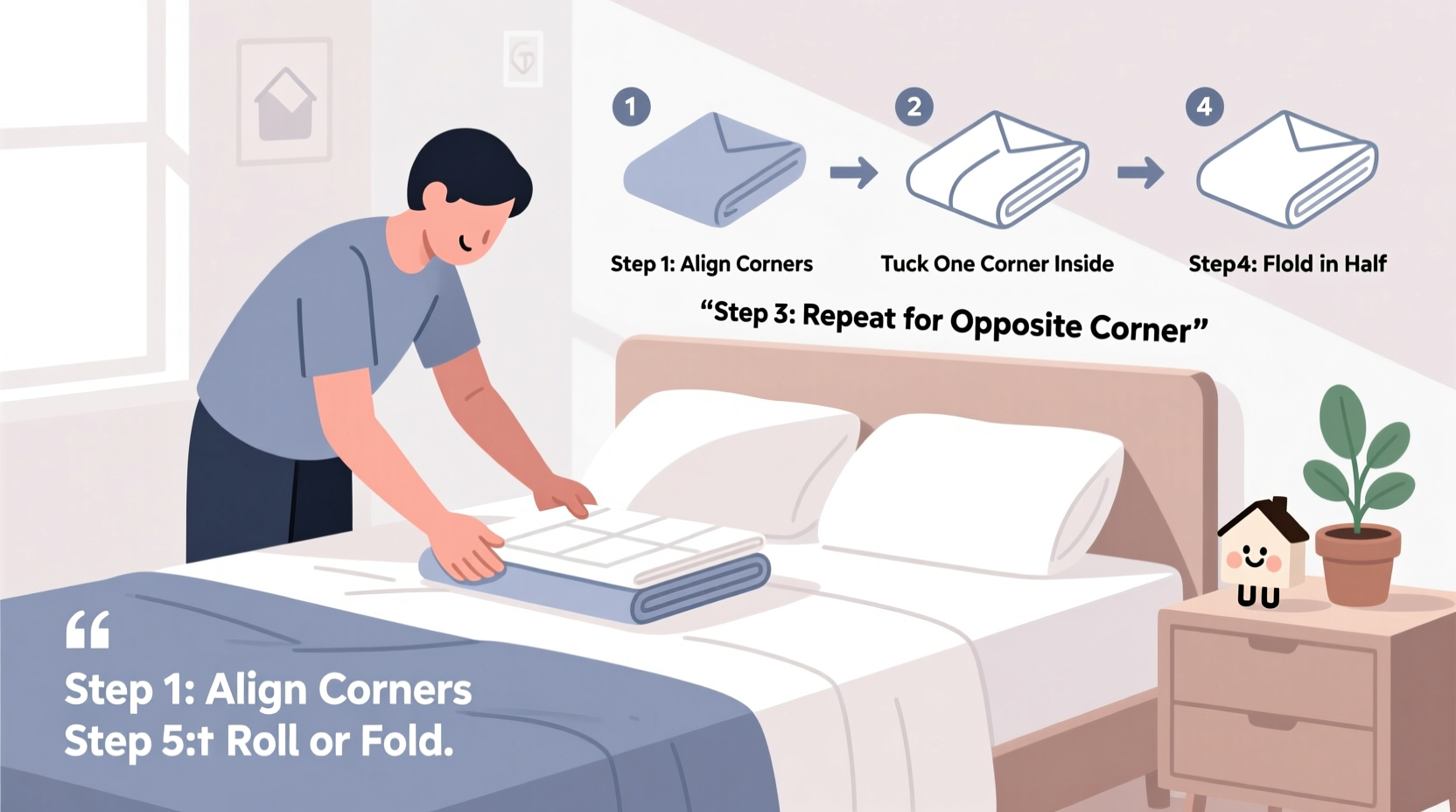
The challenge begins with design. Fitted sheets are built to stretch and conform to mattresses, which means their corners are reinforced with elastic and sewn into deep pockets. When removed from the bed, they lose their structure and collapse into an amorphous shape. Without defined edges or symmetry, it's difficult to align corners or create clean folds. Most people attempt to fold them like flat sheets, leading to uneven bunching and frustration.
Additionally, many try to fold them immediately after washing while still slightly damp, which increases stiffness and reduces flexibility. Others avoid folding altogether, opting to stuff them into drawers, which leads to wrinkles and inefficient storage.
“Fitted sheets don’t resist folding because they’re flawed—they resist because we’re applying the wrong technique.” — Clara Mendez, Home Organization Specialist
A Step-by-Step Guide to Folding Fitted Sheets Perfectly
The most effective method treats the fitted sheet like a three-dimensional object first, then flattens it into a two-dimensional form. This approach prioritizes corner pairing and elastic control before any actual folding begins. Follow these steps carefully, and you’ll achieve a compact, rectangular result every time.
- Hold the sheet by two adjacent corners – Pick up the sheet so that your hands grasp two corners on the same short edge. Make sure the inside (wrong side) of the sheet is facing out. This orientation keeps seams hidden and sets up for smoother folding.
- Insert one hand into each corner – Slide your thumbs and forefingers into the elastic pockets, turning one corner inside the other. This nests the corners together neatly and aligns the elastic edges.
- Find the opposite corners – Keeping the first two corners paired in one hand, locate the remaining two corners at the far end of the sheet. Reach across or adjust your grip as needed.
- Nest the second pair – Just as before, insert one corner into the other, tucking them together so all four corners are now matched in two stacked pairs.
- Lay the sheet flat on a surface – Place the nested sheet on a bed or table with the corners aligned at the top. Smooth out any wrinkles with your hands, ensuring the fabric lies as flat as possible.
- Fold lengthwise once – Bring one long edge toward the center, about halfway. Press down along the fold to create a crisp line.
- Fold the other side over – Take the opposite edge and fold it over the first fold, creating a long rectangle. At this point, the elastic should be fully contained within the folded layers.
- Fold into thirds or quarters – Depending on the original size of the sheet, fold the rectangle into equal thirds or halves until you reach a compact square or rectangle suitable for storage.
Do’s and Don’ts of Fitted Sheet Folding
Even with the correct technique, small mistakes can undermine your results. The following table outlines common behaviors to embrace or avoid when handling fitted sheets.
| Do | Don’t |
|---|---|
| Fold sheets when completely dry to maintain softness and ease of handling. | Attempt folding while damp—wet fabric resists smooth layering. |
| Use a flat, spacious surface like a bed or dining table. | Try folding in cramped spaces like laundry room floors. |
| Pair corners inside-out first before laying flat. | Start folding without securing corners—this leads to misalignment. |
| Store folded sheets with matching pillowcases tucked inside. | Keep sets separated, increasing the chance of mismatched bedding. |
| Label or sort by bed size to streamline access. | Mix all sizes together in one drawer, creating clutter. |
Real Example: How One Family Transformed Their Linen Closet
The Thompson family had long accepted a jumbled linen closet as inevitable. T-shirts, spare towels, and crumpled fitted sheets were shoved into a single cabinet, making weekend sheet changes a chore. After watching a quick tutorial based on the method described here, Sarah Thompson decided to reorganize the entire storage space.
She began by washing all bedding and drying it thoroughly. Then, she applied the corner-nesting technique to each fitted sheet, folding them uniformly into rectangles. To reinforce the habit, she labeled bins by bedroom and tucked matching pillowcases inside each folded set. Within an hour, the closet was transformed: stacks were aligned, visibility improved, and future changes became effortless.
“It took me five minutes per sheet the first time,” Sarah said. “Now I do it automatically. My kids even started doing it themselves once they saw how easy it was.”
Tips for Different Sheet Materials and Sizes
While the core folding method remains consistent, fabric composition and sheet dimensions can influence execution. Here’s how to adapt the process for various conditions.
- Cotton sheets – These are typically easier to fold due to natural stiffness when dry. They hold creases well and respond smoothly to smoothing.
- Jersey or knit blends – More stretchy and soft, these require extra attention when nesting corners to prevent slipping. Work slowly and refold if layers shift.
- Deep-pocket sheets (15”+) – Common with memory foam mattresses, these have longer sides. Ensure you fully tuck the outer corners into each other to avoid excess bulk.
- King and California King – Larger dimensions mean more fabric to manage. Use a king-sized bed or large table as your folding surface to maintain control.
- Silk or delicate fabrics – Avoid aggressive smoothing. Handle gently and consider storing between tissue paper to prevent snags.
Checklist: Master Fitted Sheet Folding in 8 Steps
To ensure success every time, follow this concise checklist:
- ☐ Wash and dry the sheet completely
- ☐ Choose a clean, flat surface (bed or table)
- ☐ Hold two adjacent corners with the inside of the sheet facing out
- ☐ Nest one corner into the other
- ☐ Locate and nest the opposite two corners
- ☐ Lay the sheet flat and smooth out wrinkles
- ☐ Fold lengthwise in half, then again into a rectangle
- ☐ Final fold into a compact square; store with matching set
FAQ: Common Questions About Folding Fitted Sheets
Can I fold a fitted sheet without a flat surface?
Yes, but it’s significantly harder. Folding mid-air or on your lap often results in misaligned corners and uneven layers. For consistent results, always use a stable, spacious surface like a bed or dining table.
What if my fitted sheet has split corners or loose elastic?
Damaged elastic makes folding more difficult, but not impossible. Focus on aligning the fabric edges rather than relying on pocket depth. You may need to manually adjust the folds to compensate for sagging corners. Consider retiring heavily worn sheets to reduce frustration.
Should I iron the sheet before folding?
Ironing isn’t necessary unless you prefer a crisp appearance. However, removing the sheet promptly from the dryer and folding immediately reduces wrinkles significantly. High-thread-count cotton may benefit from light steaming if deeply creased.
Expert Insight: Why Proper Folding Matters Beyond Appearance
Proper folding isn’t just about aesthetics—it impacts longevity and usability. When sheets are folded correctly, they experience less internal stress on fibers, reducing pilling and seam strain over time. Stored neatly, they also allow better air circulation, minimizing mustiness and mildew risk.
“People underestimate how much wear occurs during storage. A neatly folded sheet avoids constant creasing in the same spots, which weakens fabric over time.” — Dr. Lena Pruitt, Textile Preservation Researcher, University of Vermont
In institutional settings like hotels and hospitals, standardized folding techniques are mandatory—not for show, but for efficiency and durability. Adopting similar habits at home brings both practical and economic benefits.
Conclusion: Turn Frustration Into Confidence
Folding a fitted sheet doesn’t have to be a mystery or a source of irritation. With a clear sequence of actions—corner pairing, surface smoothing, and structured folding—you gain control over even the most unruly linens. The technique works across sizes and fabrics, and with minimal practice, it becomes second nature.
Imagine opening your linen closet to find uniform stacks, perfectly matched sets, and no more digging through tangled piles. That level of order starts with one simple fold. Try the method today, teach it to others in your household, and reclaim a small but meaningful part of your daily routine.




 浙公网安备
33010002000092号
浙公网安备
33010002000092号 浙B2-20120091-4
Comments
No comments yet. Why don't you start the discussion?