
Moving is stressful enough without worrying about your delicate dishes, glassware, or heirloom vases arriving cracked or shattered. While bubble wrap has long been the go-to for protecting fragile belongings, it’s not always accessible—especially during last-minute moves or eco-conscious relocations. The good news: you don’t need bubble wrap to keep your breakables safe. With smart packing strategies and common household materials, you can protect fragile items just as effectively, if not better, than plastic-based solutions.
This guide reveals practical, tested methods for securing fragile objects using everyday items like towels, clothing, newspapers, and cardboard. Whether you're on a budget, aiming for sustainability, or simply ran out of bubble wrap, these techniques ensure your valuables survive transit with minimal risk.
Why Bubble Wrap Isn’t Always Necessary
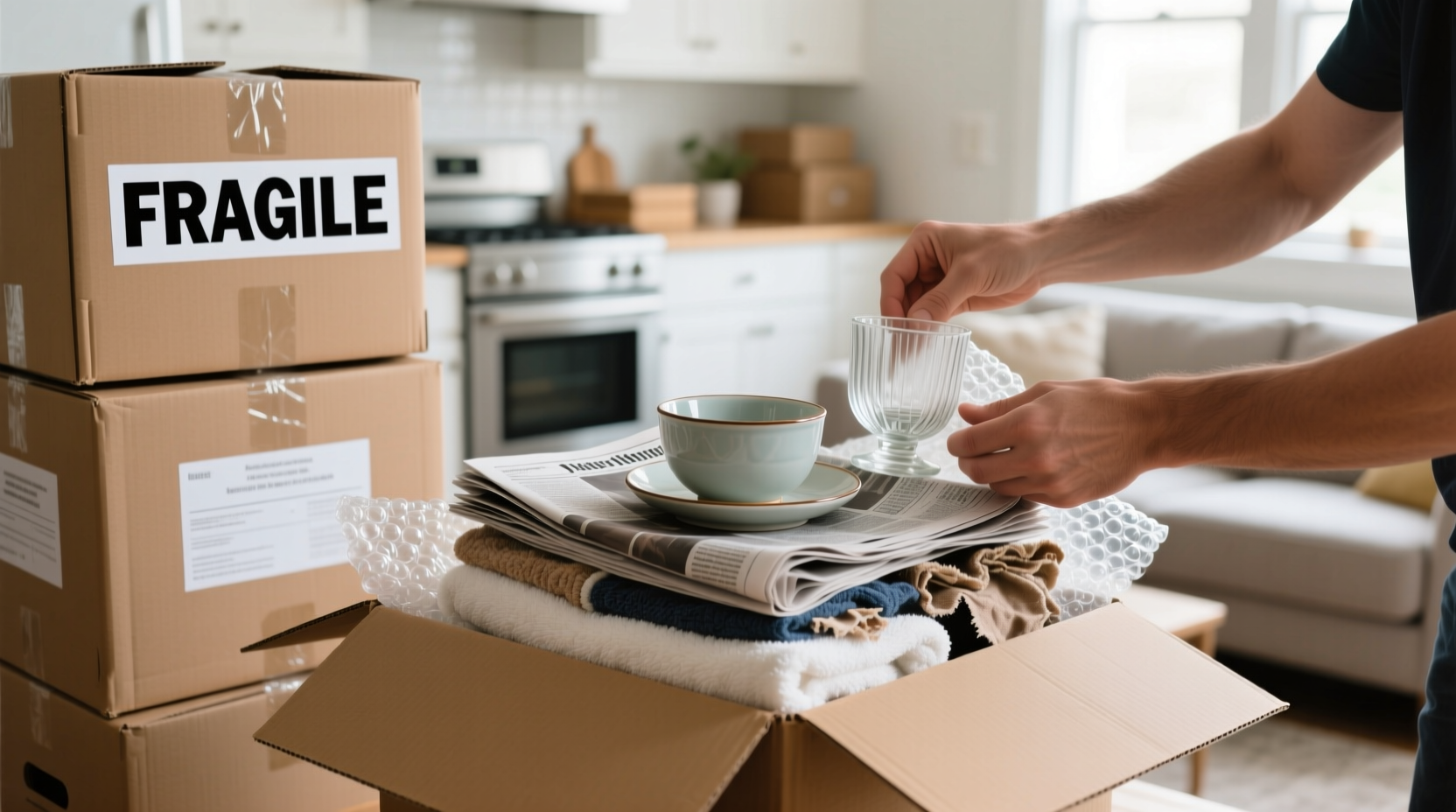
Bubble wrap provides cushioning through air pockets that absorb shock, but its effectiveness depends more on proper application than the material itself. Over-reliance on bubble wrap often leads to complacency—people assume wrapping something once guarantees safety, when in reality, secure layering and structural support matter more.
According to the International Safe Transit Association (ISTA), the key factors in preventing damage during transport are:
- Adequate cushioning between items
- Minimized internal movement within boxes
- Strong outer containers with no weak seams
- Proper weight distribution
These principles can be achieved without plastic. In fact, many professional movers use paper padding, foam inserts, and double-boxing systems that outperform basic bubble wrap alone. The focus should be on function, not packaging trends.
“Effective packing isn’t about the material—it’s about creating a stable micro-environment around each item.” — Daniel Reyes, Senior Packing Consultant at ReloSafe Logistics
Household Alternatives That Work Better Than Bubble Wrap
You likely already have everything you need to pack fragile items securely. The trick is knowing how to use these materials correctly. Below are the most effective substitutes, ranked by protection level and availability.
| Material | Best For | Limitations |
|---|---|---|
| Clothing & Towels | Dishes, electronics, picture frames | May compress under heavy load |
| Newspaper or Kraft Paper | Glassware, small decor, ceramics | Can smudge ink; less cushioning |
| Cardboard Inserts | Plates, mirrors, framed art | Time-consuming to cut and shape |
| Bed Sheets & Blankets | Lamps, TVs, large vases | Bulky; requires larger boxes |
| Paper Towel Rolls / Toilet Paper Tubes | Stemware, bottles, candlesticks | Niche use; limited coverage |
How to Prepare Each Material for Maximum Protection
Not all wrapping is created equal. Simply tossing a plate into a pile of clothes won’t prevent damage. Follow these preparation steps:
- Sort by fragility: Group items by breakability—fine crystal first, stoneware second, sturdy mugs last.
- Pre-fluff towels and blankets: Shake them out to restore loft, which improves shock absorption.
- Layer paper densely: Crumple newspaper or kraft paper into loose balls. This creates air pockets similar to bubble wrap.
- Reinforce cardboard dividers: Cut strips from shipping boxes and interleave plates vertically or horizontally to prevent sliding.
- Use socks for small parts: Wrap silverware, figurines, or electronic cords in clean socks to prevent scratching and tangling.
Step-by-Step Guide: Packing Fragile Items Without Bubble Wrap
Follow this systematic approach to ensure every box is packed for maximum safety.
- Select the Right Box: Use new, double-walled cardboard boxes. Avoid reused boxes with worn corners or moisture damage. Size matters—choose smaller boxes for heavy items (like books or dishes) so they remain manageable.
- Line the Bottom: Place 2–3 inches of crumpled paper, foam scraps, or folded towels at the base. This acts as a shock-absorbing foundation.
- Wrap Each Item Individually:
- For glasses: Insert crumpled paper inside the bowl and wrap the exterior in cloth or several layers of newspaper.
- For plates: Place cardboard cut to size between each plate, then wrap the entire stack in a towel.
- For lamps: Remove shades and bulbs. Wrap the base in a blanket and secure with twine. Pack the shade separately in a tall box lined with tissue.
- Arrange Strategically: Heavier items at the bottom, lighter ones on top. Never stack fragile objects directly on each other unless separated by rigid dividers.
- Fill All Gaps: After placing items, add extra padding in every empty space. A box that shifts during transit increases impact risk. Use socks, rags, or rolled-up t-shirts to eliminate voids.
- Seal and Label: Tape all seams with high-quality packing tape. Mark “Fragile – This Side Up” on at least two sides. Include contents (e.g., “Dishes – Kitchen”) for easier unpacking.
Real-World Example: Moving a Delicate China Cabinet
Sarah Thompson, a museum archivist in Portland, recently moved her family’s 1920s porcelain tea set across state lines without any commercial packing supplies. She used only old linens, newspapers, and shoeboxes.
Her process:
- She wrapped each saucer and cup in two layers of tissue paper, then placed them inside individual sock liners to prevent clinking.
- She cut cardboard inserts from cereal boxes to fit between each piece, simulating compartmentalized trays.
- The entire set was nestled inside a fitted pillowcase, then placed in the center of a wardrobe box surrounded by rolled jeans and sweaters.
- She labeled the box “Fragile – Do Not Lay Flat” and carried it in her car rather than loading it onto the moving truck.
Result: Every piece arrived intact. “People assume fragile means helpless,” she said. “But with attention to detail, even century-old china can travel safely without plastic.”
Do’s and Don’ts of Plastic-Free Fragile Packing
| Do’s | Don’ts |
|---|---|
| Use clean, dry materials to avoid mold or staining | Overpack boxes to the point of bulging |
| Double-box valuable items (place one box inside a larger one with padding in between) | Use grocery bags or thin plastic as wrapping—they trap moisture and offer zero cushioning |
| Keep original packaging for electronics and appliances | Place heavy books directly on top of wrapped glassware |
| Label contents clearly so you know what’s inside without opening | Store boxes on their side if labeled “This Side Up” |
| Transport irreplaceable items yourself, not on the moving truck | Wait until the last minute to gather packing materials |
Frequently Asked Questions
Can I use grocery store paper bags instead of packing paper?
Yes, but with caution. Brown paper bags provide some protection but lack the tensile strength of kraft paper. They’re best used as secondary layers, not primary wraps. Avoid colored or glossy bags, as ink may transfer to delicate surfaces.
What’s the safest way to move mirrors and framed art?
First, remove any hanging wires or protruding hardware. Then, cut two pieces of cardboard to match the frame dimensions and tape them tightly to the front and back. Reinforce edges with additional tape. For extra security, build a shallow wooden frame or use a pre-made mirror box. Always carry vertically, never flat.
Is it safe to pack fragile items in suitcases?
Suitcases with rigid shells can work well for small, high-value items like jewelry, perfume, or camera lenses. Line the interior with soft clothing, place wrapped items in the center, and avoid zipping too tightly. However, soft-sided luggage offers little impact resistance and should be avoided for anything truly delicate.
Final Checklist: Pre-Move Fragile Item Prep
- ✅ Inventory all fragile items and assess condition
- ✅ Gather clean towels, sheets, socks, and blankets
- ✅ Collect newspapers, kraft paper, or unused notebooks
- ✅ Source sturdy, appropriately sized boxes (new preferred)
- ✅ Cut cardboard dividers for plates, glasses, or electronics
- ✅ Label boxes clearly with contents and handling instructions
- ✅ Reserve a safe spot in your vehicle for irreplaceable items
- ✅ Confirm moving crew knows which boxes are highest priority
Conclusion: Smart Packing Beats Plastic Every Time
Packing fragile items without bubble wrap isn’t just possible—it’s often smarter. By leveraging household materials thoughtfully and applying sound packing principles, you gain control, reduce waste, and often improve protection. The key lies in preparation, layering, and minimizing movement within each box.
Whether you're moving across town or across the country, remember that care matters more than materials. Take the time to wrap, cushion, and label with intention. Your grandmother’s vase, your favorite wine glasses, and your handmade pottery deserve that attention.




 浙公网安备
33010002000092号
浙公网安备
33010002000092号 浙B2-20120091-4
Comments
No comments yet. Why don't you start the discussion?