
When assembling vegetable or meat skewers, onions are a staple ingredient—adding sweetness, color, and depth of flavor. But how you slice them can make the difference between a perfectly grilled bite and a charred, falling-apart disaster. The ideal onion slice for skewers must stay intact during grilling, cook evenly alongside other ingredients, and release flavor without overpowering the dish. This guide breaks down the optimal slicing technique, explains why it works, and provides practical tips for achieving consistent results every time.
Definition & Overview
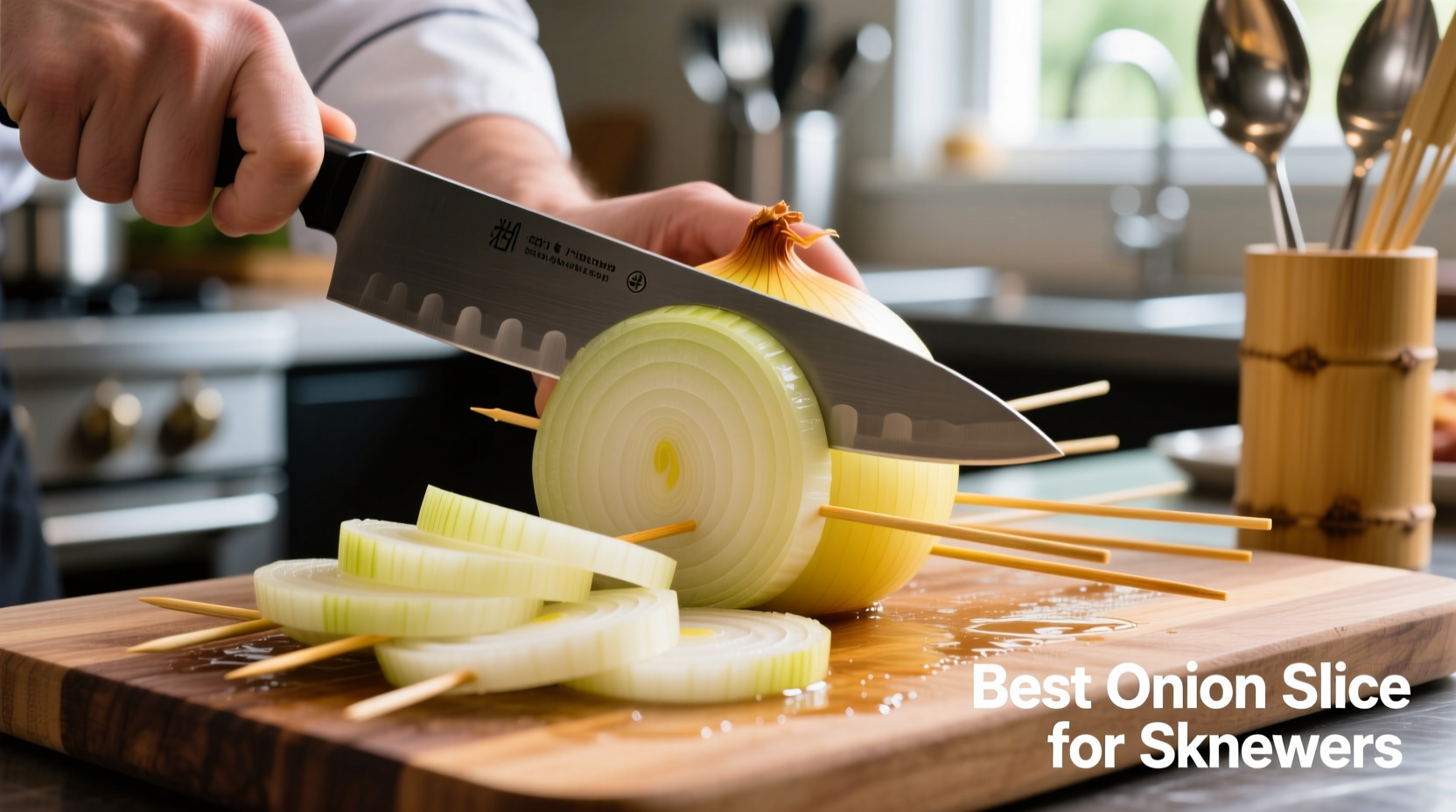
Onions (Allium cepa) are bulbous vegetables known for their pungent aroma and layered structure. When used in skewers—whether on kebabs, satay, or grilled vegetable platters—their role extends beyond mere garnish. They contribute moisture, natural sugars that caramelize over heat, and a savory backbone that complements meats like lamb, chicken, and beef, as well as vegetables such as bell peppers, zucchini, and mushrooms.
The challenge lies in preparing the onion so it maintains structural integrity while still being tender when cooked. Unlike diced onions meant for sautéing or minced ones for sauces, slices intended for skewers must balance thickness, grain alignment, and shape to withstand threading and exposure to direct heat.
Key Characteristics of Onion Slices for Skewers
| Characteristic | Description |
|---|---|
| Flavor Profile | Sharp when raw, sweetens dramatically when grilled due to caramelization of natural sugars. |
| Aroma | Pungent when cut; mellows significantly after cooking. |
| Texture After Cooking | Tender but not mushy; should hold together on the skewer. |
| Color/Shape | Translucent white to pale yellow rings or half-moons; golden-brown edges when properly grilled. |
| Culinary Function | Adds moisture, balances richness, enhances browning via Maillard reaction. |
| Shelf Life (Prepped) | Freshly sliced: up to 5 days refrigerated in airtight container; best used within 24 hours for skewers. |
Why Slicing Technique Matters for Skewers
Slicing isn't just about aesthetics—it directly impacts performance on the grill. Poorly cut onions may:
- Break apart when threaded
- Cook too quickly or unevenly
- Release excess moisture, causing flare-ups
- Slide along the skewer during turning
The goal is to create pieces that are stable, evenly thick, and aligned with the onion’s fiber structure to resist tearing. Additionally, uniformity ensures all components on the skewer finish cooking at the same time.
The Best Way to Slice Onions for Skewers: Step-by-Step Guide
The most effective method combines precision cutting with an understanding of onion anatomy. Follow these steps for reliable, restaurant-quality results:
- Choose the right onion. Yellow onions are ideal for grilling—they have a balanced sweetness and firm texture. Red onions work well too if you want vibrant color and slightly milder heat. Avoid overly large or soft bulbs.
- Cut off both ends. Place the onion on a cutting board. Use a sharp chef’s knife to trim approximately ¼ inch from the root end and stem end. Do not remove the root entirely yet—leaving it intact helps hold layers together during initial cuts.
- Halve pole-to-pole. Cut straight through the center from top to bottom, passing through both poles. This preserves the concentric rings essential for stability.
- Peel and separate into layers. Remove the papery skin and outer layer. Gently peel apart individual rings. Discard any damaged or discolored outer layers.
- Select appropriately sized rings. Medium-sized rings (about 1.5 to 2 inches in diameter) are easiest to thread and cook evenly. Larger rings can be halved into semicircles for better fit on smaller skewers.
- Trim excess core tissue (optional). If the central membrane inside each ring is tough or fibrous, use a paring knife to trim it slightly—this improves tenderness without compromising structure.
Pro Tip: For extra-sturdy threading, especially with delicate proteins or vegetables, press each onion ring flat between your fingers before skewering. This slight flattening increases surface contact and reduces wobbling on the stick.
Alternative Methods and Their Trade-offs
While the full-ring method is optimal, variations exist depending on recipe needs and personal preference:
1. Half-Moon Slices
Cut the onion in half pole-to-pole, then make horizontal cuts perpendicular to the fibers, creating crescent shapes. These lie flat and offer more exposed surface area for seasoning absorption. Ideal when pairing with chunkier ingredients like potatoes or halloumi.
2. Wedge Cuts
After halving, quarter the onion vertically (from pole to pole), producing long triangular wedges. These retain maximum structural integrity and are excellent for heartier kebabs with lamb or beef. However, they require larger skewers and longer cooking times.
3. Thick Rounds (Cross-Cut)
Slicing horizontally across the equator of the whole onion yields wide, irregular rings. While visually striking, this method often produces flimsy outer rings that break easily. Not recommended unless using very fresh, firm onions and immediate grilling.
| Method | Stability on Skewer | Cooking Time | Best For |
|---|---|---|---|
| Full Rings | High | Medium | Standard kebabs, mixed vegetable skewers |
| Half-Moons | Medium-High | Medium | Balanced ingredient sizes, marinades |
| Wedges | Very High | Long | Robust meats, slow-grilled dishes |
| Thick Cross-Rounds | Low-Medium | Variable | Specialty presentations only |
How to Thread Onions onto Skewers Like a Pro
Slicing is only half the battle—proper assembly ensures success on the grill:
- Use flat sides facing out. When using half-moons or wedges, orient the flat side against the skewer for maximum grip.
- Alternate with other ingredients. Pair onion slices with firmer items like cherry tomatoes, bell peppers, or cubes of marinated tofu. The surrounding pieces help stabilize the onion.
- Don’t overcrowd. Leave small gaps (about ⅛ inch) between components to allow heat circulation and even charring.
- Soak wooden skewers first. Prevent burning by soaking bamboo or wooden sticks in water for at least 30 minutes prior to use.
Grill Hack: Lightly brush onion slices with oil before threading. This prevents sticking, promotes browning, and reduces moisture loss during high-heat cooking.
Variants & Types of Onions for Skewers
Different onion varieties yield distinct textures and flavors when grilled. Choose based on desired outcome:
Yellow Onions
The gold standard for grilling. High in sulfur and natural sugars, they develop rich umami notes and deep golden edges. Firm flesh holds up exceptionally well under heat.
Red Onions
Milder and slightly sweeter than yellow onions, with a vibrant purple hue that fades to deep ruby when cooked. Retain some crispness, making them ideal for quick-grilled skewers or raw applications pre-marination.
White Onions
Common in Latin American cuisine, these are sharper and juicier. Best used in short-cook skewers or when paired with bold spices like cumin and chili powder.
Sweet Onions (Vidalia, Walla Walla, Maui)
Lower in pyruvic acid (responsible for pungency), these caramelize rapidly and can become mushy if overcooked. Use sparingly on skewers unless aiming for a jammy texture.
\"In Turkish kebab houses, we always use medium yellow onions cut into perfect rings. It's not just about taste—it's about respect for the craft. A collapsing onion ruins the rhythm of the bite.\" — Mehmet Yılmaz, Istanbul-based grill master and culinary instructor
Comparison with Similar Ingredients
Onions are sometimes substituted or confused with related alliums. Here’s how they compare in skewer applications:
| Ingredient | Texture When Grilled | Flavor Intensity | Skewer Suitability |
|---|---|---|---|
| Onion (Yellow) | Firm-tender, holds shape | Moderate → Sweet when cooked | Excellent |
| Shallot | Delicate, prone to burning | Mild, garlicky | Fair (best minced or roasted separately) |
| Green Onion (Scallion) | Soft, stalks wilt quickly | Grassy, mild | Good for finishing, not main component |
| Leek | Slippery when cooked, hard to secure | Sweet but watery | Poor (requires pre-cooking) |
True onions remain unmatched in versatility and structural reliability for skewered grilling.
Practical Tips & FAQs
How thick should onion slices be for skewers?
Ideal thickness is between ¼ inch and ½ inch. Thinner slices risk breaking or drying out; thicker ones may remain undercooked in the center.
Should I marinate onion slices before grilling?
Yes, especially if grilling solo or leading the skewer. A light marinade of olive oil, lemon juice, salt, and herbs infuses flavor and protects against scorching. Limit acidic marinades to 30 minutes to avoid textural breakdown.
Can I use frozen onions for skewers?
No. Freezing damages cell walls, resulting in soggy, fragile pieces unsuitable for threading. Always use fresh onions.
Do I need to pre-cook onions before skewering?
Generally no. Raw onions cook beautifully alongside meats and vegetables over medium-high heat (375°F–450°F). Pre-cooking leads to mushiness unless aiming for a confit-style texture.
What size onion is best for skewers?
Medium onions (about 3 inches in diameter) provide the most usable rings. Large onions have wider, thinner outer layers that tear easily; small ones yield too few slices per bulb.
How do I prevent onions from spinning on the skewer?
Ensure tight threading—push each piece snugly against adjacent ingredients. Using two parallel skewers (like a ladder) instead of one also stabilizes rotation during flipping.
Are metal skewers better than wood for onions?
Metal conducts heat faster, promoting even cooking and reducing burn risk. However, wood imparts a subtle smokiness and is cheaper. Either works if properly prepared.
Storage Note: Pre-sliced onions can be stored in a sealed container in the refrigerator for up to 24 hours. Beyond that, oxidation accelerates, leading to off-flavors and limp texture—never prep more than a day ahead for skewers.
Real-World Application: Building a Classic Chicken Kebab Skewer
Apply these principles in practice with a simple, flavorful example:
- Marinate boneless chicken thighs (cut into 1.5-inch cubes) in yogurt, garlic, paprika, cumin, and lemon juice for 2–4 hours.
- Prepare yellow onions: halve, peel, and separate into rings. Trim oversized rings into halves.
- Thread onto soaked wooden skewers in sequence: chicken → onion → bell pepper → onion → repeat.
- Brush lightly with oil, season with salt.
- Grill over medium-high heat for 10–12 minutes, turning every 3 minutes, until chicken reaches 165°F internally and onions are tender with charred edges.
This method ensures harmonious doneness, visual appeal, and structural resilience throughout cooking.
Summary & Key Takeaways
The best way to slice onions for skewers prioritizes structural integrity, even cooking, and flavor development. By following precise techniques rooted in culinary science, home cooks can achieve professional-grade results:
- Always cut pole-to-pole to preserve ring structure.
- Use medium yellow onions for optimal balance of sweetness and firmness.
- Size slices between ¼ and ½ inch thick for durability and tenderness.
- Thread carefully, alternating with complementary ingredients for stability.
- Avoid substitutions like leeks or shallots, which lack the necessary resilience.
- Never freeze or pre-cook unless specifically required by recipe.
Final Thought: Great skewers begin with thoughtful prep. Taking an extra minute to slice onions correctly pays dividends in presentation, texture, and taste. Master this detail, and your grilled dishes will stand out every time.




 浙公网安备
33010002000092号
浙公网安备
33010002000092号 浙B2-20120091-4
Comments
No comments yet. Why don't you start the discussion?