
Bread is a staple in kitchens around the world, but few things are more disappointing than reaching for a slice only to find it tough, dry, or oddly chewy. Despite common habits like keeping bread in the refrigerator or sealing it tightly in plastic, many people unknowingly accelerate staling rather than prevent it. The truth is, the best way to store bread depends on how soon you plan to eat it, the type of bread, and environmental conditions in your home. Understanding the science behind starch retrogradation and moisture loss unlocks smarter storage strategies that preserve texture, flavor, and shelf life.
The Science Behind Staling: Why Bread Goes Bad
Contrary to popular belief, mold isn’t the only enemy of fresh bread—staling begins long before visible spoilage occurs. Staling, or \"retrogradation,\" is primarily a chemical process involving starch molecules in flour. When bread cools after baking, the gelatinized starch begins to recrystallize, expelling water and firming up the crumb. This process accelerates at temperatures just above freezing—precisely the range of most refrigerators.
Moisture migration also plays a key role. In sealed plastic bags, moisture moves from the crumb to the crust, softening the outer layer while drying out the interior. Meanwhile, exposure to air leads to evaporation, resulting in a uniformly dry loaf. Temperature, humidity, packaging, and ingredients all influence how quickly these changes occur.
“Staling is not dehydration—it’s structural reorganization at the molecular level. Refrigeration speeds this up dramatically.” — Dr. Susan Selke, Director of the School of Packaging, Michigan State University
Optimal Storage Methods by Timeframe
The ideal storage method varies depending on whether you’re consuming bread within a day, over several days, or weeks into the future. Applying the right approach at the right time preserves quality without compromising safety.
Short-Term (1–3 Days): Room Temperature in Breathable Wrap
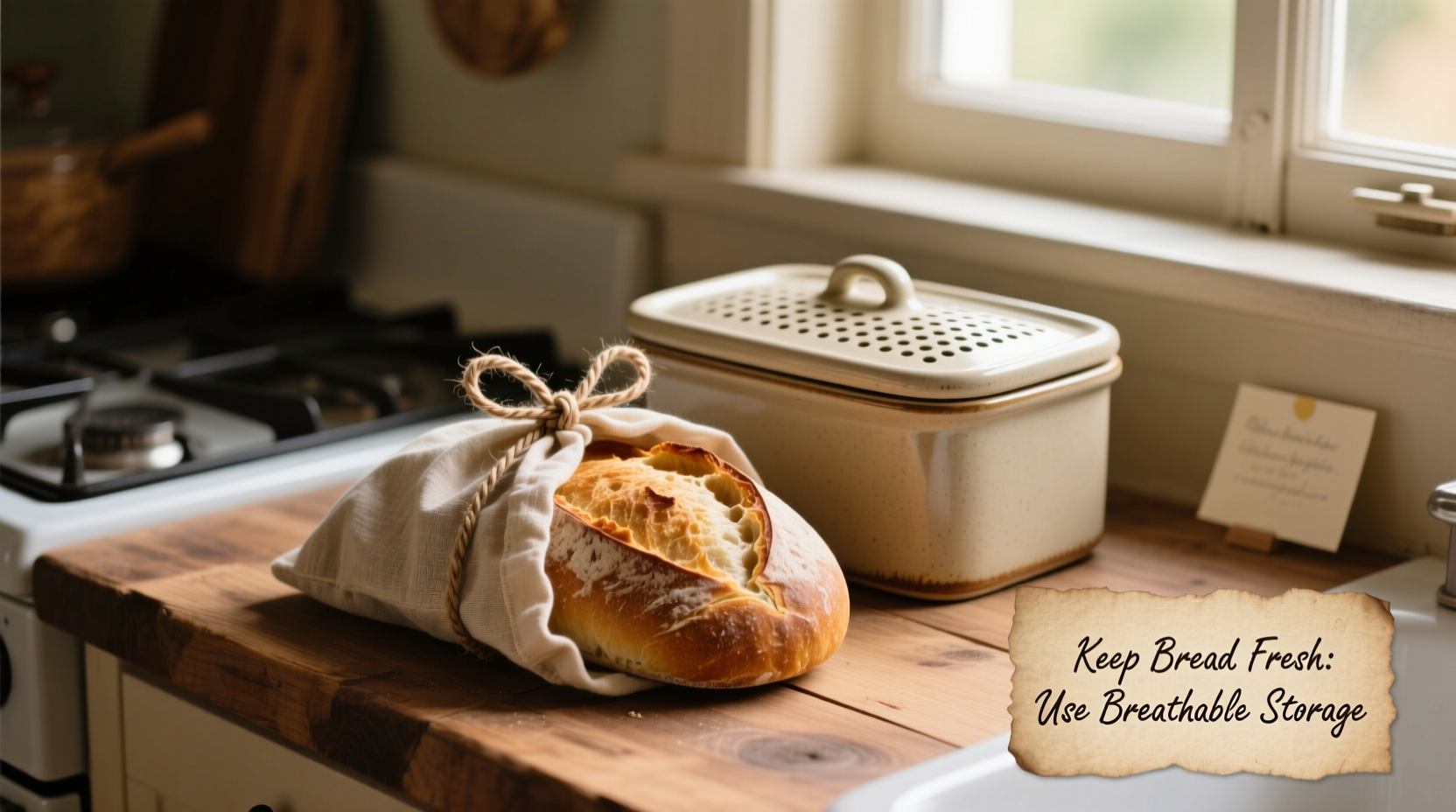
For bread consumed within 72 hours, room temperature storage is optimal. The goal is to slow moisture loss while allowing slight airflow to prevent sogginess. Avoid airtight plastic if possible; instead, use a cloth bag, linen wrap, or a bread box with ventilation.
Place the loaf in a cool, dark spot away from sunlight and heat sources like ovens or dishwashers. A pantry or cupboard works well. Never stack heavy items on top—this compresses the crumb and speeds up staling.
Medium-Term (3–7 Days): Sliced and Sealed, But Not Refrigerated
If you won’t finish the loaf in three days, consider slicing what you need and storing the rest properly—but skip the fridge. Refrigeration between 0°C and 10°C (32°F–50°F) promotes rapid starch retrogradation, making bread stale up to six times faster than at room temperature.
Instead, transfer unused portions to a resealable paper bag or waxed cloth pouch. These materials allow minimal moisture exchange while protecting against dust and pests. For sandwich breads or rolls, portion them before storage to avoid repeated opening and closing of the package, which introduces air and temperature fluctuations.
Long-Term (1 Week+): Freezing Is Your Best Bet
Freezing halts staling almost completely by immobilizing water molecules and stopping starch recrystallization. It's the single most effective method for preserving bread beyond a week.
To freeze bread correctly:
- Slice the loaf before freezing for easy portioning.
- Wrap tightly in aluminum foil or freezer-safe plastic wrap.
- Place in a resealable freezer bag, squeezing out excess air.
- Label with the date—most bread stays fresh for up to 3 months.
Thaw slices at room temperature in 30–60 minutes or toast directly from frozen. Avoid thawing and refreezing whole loaves, as this encourages condensation and mold growth.
Do’s and Don’ts of Bread Storage
| Do | Avoid |
|---|---|
| Store artisan bread in paper bags or bread boxes | Use plastic bags for sourdough or crusty loaves |
| Freeze excess bread immediately after purchase | Refrigerate any bread unless mold is imminent |
| Keep bread away from heat and sunlight | Store near fruits that emit ethylene gas (e.g., apples) |
| Use ceramic or wooden cutting boards to preserve crust | Stack objects on top of stored loaves |
| Refresh stale bread with 5–10 minutes in a 350°F oven | Microwave bread to revive it (creates rubbery texture) |
How Bread Type Changes Storage Needs
Not all breads behave the same way during storage. Ingredients, hydration levels, and crust thickness determine the best handling method.
- Sourdough and rustic loaves: High hydration and natural acids slow mold but make them vulnerable to sogginess. Store cut-side down on a board or in a bread box. Avoid sealing in plastic.
- Commercial sandwich bread: Contains preservatives like calcium propionate, extending mold resistance. Can be kept in original packaging at room temperature for 5–7 days or frozen longer.
- Brioche and enriched doughs: High fat and egg content make them prone to rancidity. Best consumed within 2–3 days or frozen promptly.
- Pita and flatbreads: Dry out quickly. Stack between parchment paper and seal in a zip-top bag. Freeze for longer storage.
Real-World Example: A Baker’s Weekly Routine
María González runs a small bakery in Portland, Oregon, selling over 200 loaves weekly. She noticed customers frequently returned saying their sourdough went “hard” within two days—even when stored in plastic bags. After tracking feedback, she began including care cards with each purchase.
Her advice? “Keep it in a cotton bread bag or brown paper sack. Cut side down. No fridge.” She also started pre-slicing and freezing half-loaves upon request. Within a month, customer complaints dropped by 70%, and repeat sales increased. “People were treating artisan bread like supermarket bread,” she said. “But they’re totally different animals.”
This case illustrates how matching storage to bread type prevents waste and enhances enjoyment. Education, not just product quality, drives satisfaction.
Step-by-Step Guide to Maximizing Bread Freshness
Follow this sequence to get the longest possible shelf life from every loaf:
- Assess consumption timeline: Will you eat it in 1–3 days, 4–6 days, or later?
- Choose storage method: Room temperature (breathable), freeze (long-term), or portion and freeze slices.
- Prepare packaging: Use paper bags, linen wraps, or freezer-safe materials. Avoid plastic for crusty breads.
- Store in ideal location: Cool, dark, dry area away from appliances and sunlight.
- Handle minimally: Slice only what you need. Re-wrap immediately after use.
- Revive when needed: Lightly mist and bake at 350°F for 5–10 minutes to restore crispness.
- Freeze surplus: Do it early—don’t wait until the bread starts to stale.
“The worst thing you can do to good bread is put it in the fridge. The second worst? Leave it in a plastic bag on the counter for five days.” — Chad Robertson, Tartine Bakery
Frequently Asked Questions
Can I store bread in the oven when it’s off?
Only if the oven is completely cold and dry. Residual moisture from previous use can promote mold. Additionally, ovens are often near stovetops, where heat and humidity fluctuate. A bread box or pantry is safer.
Why does my bread get moldy so fast?
Mold thrives in warm, humid environments. If your kitchen is damp or you live in a tropical climate, consider freezing bread sooner. Also, avoid touching bread with dirty hands—microbes transfer easily. Preservative-free bread naturally molds faster; freezing is highly recommended.
Is a bread box worth it?
Yes—for households that consume bread regularly. A well-designed bread box made of wood or ceramic regulates airflow and absorbs excess moisture while shielding the loaf from light. Choose one with a vented lid and clean it monthly to prevent microbial buildup.
Final Checklist: Are You Storing Bread Right?
- ☐ I know how soon I’ll consume the bread.
- ☐ I’m not refrigerating any type of bread unless absolutely necessary.
- ☐ Crusty loaves are stored in paper or cloth, not plastic.
- ☐ Sandwich bread is sealed but not over-compressed.
- ☐ Excess bread is sliced and frozen within 24 hours of purchase.
- ☐ My storage area is cool, dry, and away from direct sunlight.
- ☐ I refresh stale bread in the oven, not the microwave.
Conclusion: Make Every Slice Count
Proper bread storage isn’t about rigid rules—it’s about aligning technique with intention. Whether you bake your own or buy from a local bakery, each loaf represents time, craft, and resources. Treating it with care ensures better taste, texture, and value. By avoiding the refrigerator trap, embracing the freezer, and choosing breathable packaging for short-term use, you reclaim control over freshness. Start today: pull that loaf out of the fridge, wrap it in a clean towel, and give it the space it deserves. Your next sandwich—or buttered toast at midnight—will thank you.




 浙公网安备
33010002000092号
浙公网安备
33010002000092号 浙B2-20120091-4
Comments
No comments yet. Why don't you start the discussion?