
Jeans are a wardrobe staple—versatile, durable, and endlessly stylish. But despite their rugged reputation, denim is surprisingly sensitive to improper handling. Over time, even high-quality jeans can lose their color, stretch out of shape, or develop permanent creases if stored incorrectly. While washing and wearing habits play a role, how you store your jeans between uses is just as critical in preserving their fit and appearance. With insights from textile experts and denim care professionals, this guide reveals the most effective storage methods to keep your jeans looking fresh, structured, and vibrant for years.
Why Proper Storage Matters for Denim Longevity
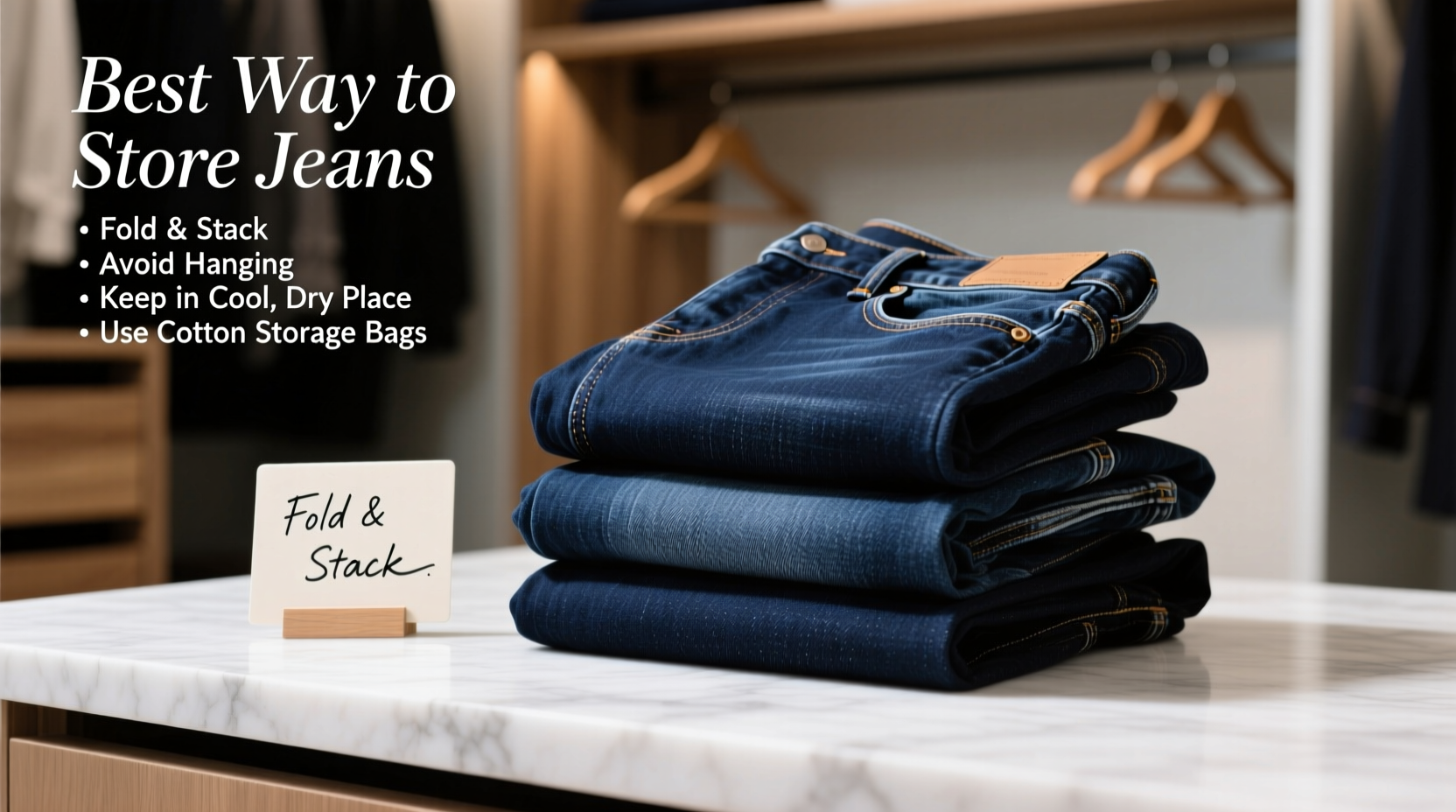
Denim is made from cotton, a natural fiber that responds strongly to environmental conditions. When exposed to light, moisture, heat, or pressure over extended periods, cotton fibers degrade, leading to fading, weakening, and deformation. The indigo dye used in most blue jeans is not fully bonded to the fabric, making it prone to oxidation and wash-out when exposed to air and sunlight. Additionally, gravity and improper folding can cause knees and seat areas to stretch or crease permanently.
Storing jeans correctly isn’t just about neatness—it’s a form of maintenance. According to Dr. Lena Torres, a textile preservation specialist at the Fashion Institute of Technology, “The way garments are stored directly impacts their structural integrity. For denim, avoiding tension points and light exposure is essential to maintaining both color and fit.”
“Improper storage can shorten a pair of jeans’ prime lifespan by up to 40%. Hanging, stuffing in drawers, or leaving them in damp spaces accelerates wear far more than regular use.” — Dr. Lena Torres, Textile Preservation Specialist
The Do’s and Don’ts of Jeans Storage
Many people unknowingly damage their jeans through everyday storage habits. Below is a comparison of common practices and their long-term effects.
| Practice | Effect on Jeans | Recommended? |
|---|---|---|
| Hanging jeans by the waistband | Causes fabric strain, stretches waist and hips over time | No |
| Folding neatly and storing flat | Preserves shape, prevents creasing and fading | Yes |
| Rolling jeans loosely | Minimizes creases, ideal for travel or small spaces | Yes |
| Storing in plastic bins or vacuum bags | Traps moisture, promotes mildew; compresses fibers | No |
| Leaving jeans bunched in a drawer | Creates deep wrinkles and abrasion at fold points | No |
| Exposing to direct sunlight | Accelerates fading and weakens fibers | No |
Step-by-Step Guide to Storing Jeans Correctly
Proper storage begins the moment you take off your jeans. Follow this timeline to ensure maximum longevity:
- Let them rest: After wearing, hang your jeans on a wooden hanger or lay them flat for 6–12 hours to air out. This allows moisture and body heat to dissipate, reducing odor buildup and fiber stress.
- Check for stains or dirt: Address any spots before storage. Soil attracts pests and accelerates fabric breakdown during prolonged storage.
- Fold with intention: Lay jeans flat on a clean surface. Fold one leg over the other, aligning seams. Then fold in half or thirds depending on drawer height. Avoid sharp creases by folding loosely.
- Choose the right location: Store in a cool, dark, dry place with good airflow—such as a linen closet or a breathable fabric drawer organizer. Avoid attics, basements, or near radiators.
- Rotate regularly: If storing multiple pairs, rotate their positions every few months to prevent permanent compression lines and ensure even air circulation.
Best Folding Techniques to Prevent Creasing and Stretching
How you fold your jeans matters. Traditional vertical folding (like in retail stores) often creates deep knee creases that become permanent. Instead, adopt these professional methods:
- The Flat Stack Fold: Ideal for drawers. Lay jeans face down, zip and button closed. Fold legs together symmetrically, then fold into thirds horizontally. This distributes weight evenly and minimizes strain.
- The Roll Method: Best for travel or tight spaces. Starting from the waistband, roll tightly but gently toward the cuffs. Place rolled jeans upright in a bin like files—this reduces horizontal pressure and saves space.
- The Shelf Lay: For open shelving or visible storage. Lay folded jeans flat in a single layer, ideally behind a glass cabinet or away from direct light. Use matching boxes or baskets for uniformity and UV protection.
Avoid folding at the knee or seat area whenever possible. These high-stress zones are already weakened from movement and bending. Folding there compounds the stress, leading to premature wear and sagging.
Real Example: How a Denim Enthusiast Preserved Her Collection
Sophia M., a denim collector from Portland, owns over 50 pairs of vintage Levi’s, some dating back to the 1950s. She credits her success in maintaining their condition to strict storage protocols. “I used to hang all my jeans,” she says. “Within two years, the waistbands were stretched, and the backs looked saggy. Once I switched to folding and storing in breathable cotton bins, the difference was immediate.”
Sophia now keeps her collection in a climate-controlled closet, organized by decade. Each pair is folded with archival tissue, stored away from windows, and rotated seasonally. “My 1966 501s look better than some new pairs I’ve seen,” she notes proudly. “It’s all about respecting the fabric.”
Expert-Recommended Storage Materials and Containers
Not all storage solutions are created equal. The materials you use can either protect or harm your denim over time.
- Cotton or linen storage bins: Allow airflow while shielding from dust and light. Unlike plastic, they don’t trap humidity.
- Wooden drawers or shelves: Naturally regulate moisture and resist mold. Cedar-lined options add mild insect-repelling benefits.
- Acid-free paper or cloth dividers: Prevent dye transfer between dark and light washes and reduce abrasion.
- Open-back cabinets with doors: Provide visibility without UV exposure. Ideal for displaying favorite pairs without risking sun damage.
Avoid vinyl garment bags, plastic bins, or airtight containers. These create a microclimate where condensation builds up, promoting mildew and musty odors. Even “dust-proof” plastic boxes can suffocate fabric, especially in seasonal storage.
Special Considerations for Raw, Black, and Colored Denim
Different types of denim require tailored approaches:
- Raw denim: Unwashed and starch-rich, raw jeans are particularly vulnerable to creasing and tension. Store flat and avoid folding at all if possible. Some enthusiasts drape them over padded hangers—but only temporarily, never long-term.
- Black denim: Prone to white streaking and fading due to pigment instability. Always store away from light and avoid stacking heavy items on top. Turn inside out before folding to protect the outer surface.
- Colored or coated denim: Includes colored stretch jeans or waxed finishes. These can crack or peel if folded too tightly. Loosely roll or store flat with soft padding between layers.
For all specialty denims, limit handling and exposure. The less agitation the fabric undergoes during storage, the longer its finish will last.
Seasonal and Long-Term Storage Tips
If you’re putting jeans away for several months—such as rotating out winter styles in spring—extra precautions are necessary.
- Clean thoroughly before storage. Residual sweat or oils attract moths and silverfish.
- Store in breathable cotton garment bags or muslin wraps, never plastic.
- Include silica gel packs to absorb ambient moisture, but avoid direct contact with fabric.
- Keep away from cedar blocks if you have sensitive skin or allergies—while effective against pests, the oil can stain light denim.
- Reassess every 3–4 months. Refold at different points to prevent set lines and check for signs of pests or dampness.
“Long-term storage should mimic museum conditions: stable temperature, low light, and free airflow. Denim may be tough, but it deserves archival care.” — James Reed, Vintage Apparel Conservator
Frequently Asked Questions
Can I hang my jeans if I use wide, padded hangers?
Even with padded hangers, hanging jeans long-term risks distorting the waistband and seat area due to gravitational pull. Cotton fibers slowly stretch under sustained load. Folding remains the safest method for daily storage.
Should I turn jeans inside out before storing?
Yes, especially for dark or black washes. Turning jeans inside out protects the outer fabric from light exposure and reduces surface abrasion from neighboring garments. It’s a simple step that significantly slows fading.
How many pairs of jeans should I store in one stack?
Ideally, no more than 5–6 pairs in a single stack. Over-stacking increases pressure on the bottom jeans, leading to deep creases and potential seam stress. Use shelf dividers or separate bins to maintain manageable heights.
Final Checklist: Your Jeans Storage Action Plan
- ✅ Air out jeans after wearing before storing
- ✅ Fold flat or roll loosely—never bunch or crumple
- ✅ Store in a cool, dark, dry place with airflow
- ✅ Use breathable containers like cotton bins or wooden drawers
- ✅ Keep away from direct sunlight and heat sources
- ✅ Rotate pairs every few months to prevent set folds
- ✅ Clean before long-term storage and avoid plastic enclosures
Take Care of Your Denim—It’s Worth It
Your jeans reflect your style, comfort, and personal history. Treating them with care extends not just their physical life, but their emotional value. By adopting thoughtful storage habits, you preserve the fit, color, and character that make each pair unique. Whether you own one favorite pair or a curated collection, the effort you invest in proper storage pays off in lasting quality and timeless appeal.




 浙公网安备
33010002000092号
浙公网安备
33010002000092号 浙B2-20120091-4
Comments
No comments yet. Why don't you start the discussion?