
When summer temperatures climb and your air conditioner is either unavailable, broken, or too costly to run, staying comfortable indoors becomes a challenge. But cooling a room doesn’t always require expensive machinery or high energy bills. With smart strategies rooted in airflow, insulation, and thermal physics, you can significantly lower indoor temperatures—often by several degrees—using simple, accessible methods. These proven techniques combine old-world wisdom with modern ingenuity to help you stay cool without relying on air conditioning.
Optimize Airflow with Strategic Fan Placement
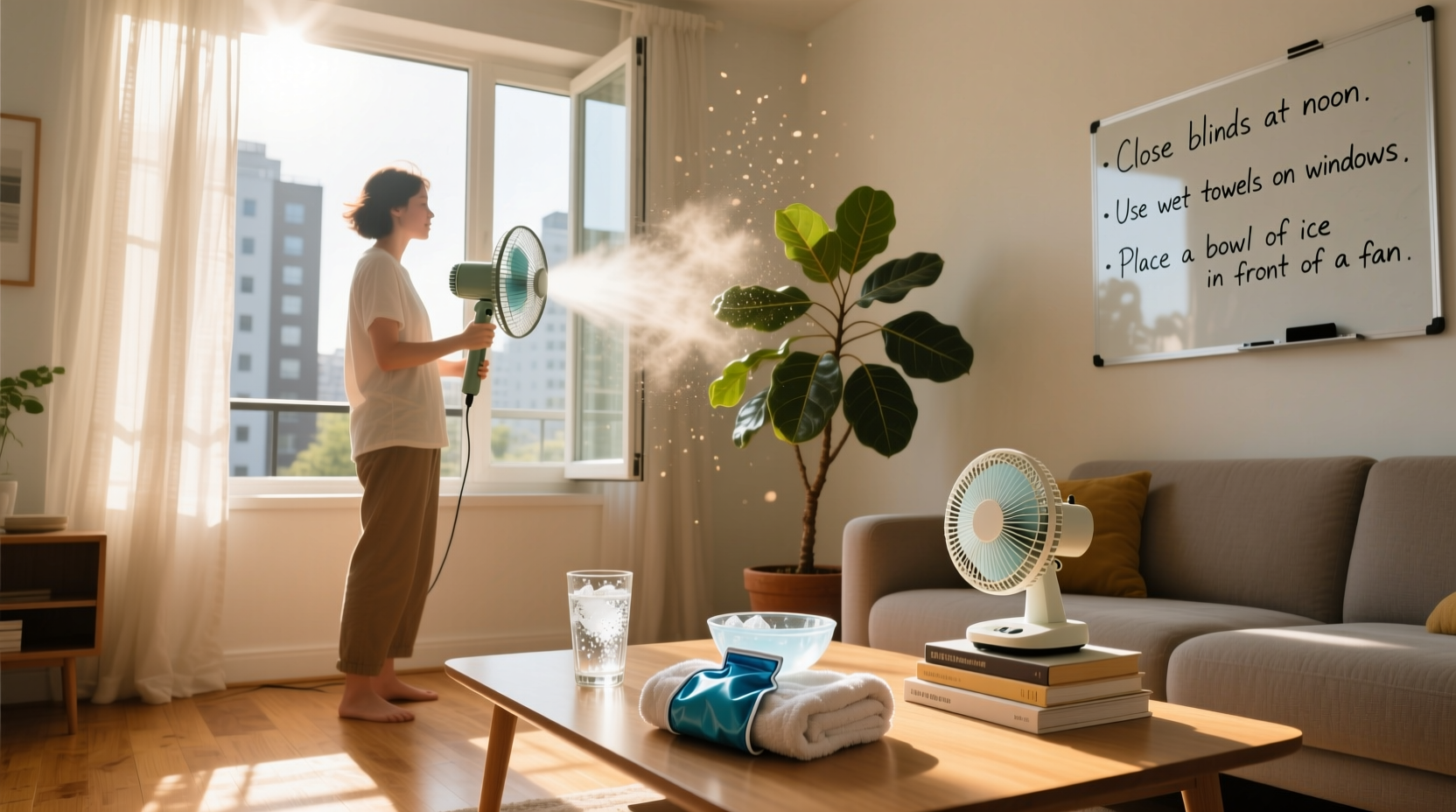
Fans are among the most underrated tools for natural cooling. While they don’t lower the actual temperature, they enhance evaporative cooling on your skin and move hot air out of living spaces. The key is positioning them correctly to create cross-ventilation or targeted cooling.
At night, when outdoor temperatures drop, open two or more windows on opposite sides of the room or house to allow a breeze to pass through. Place a box fan or window fan in one opening to pull in cooler outside air, and another in the opposite window to push hot air out. This creates a wind tunnel effect that rapidly exchanges warm indoor air with cooler outdoor air.
During the day, reverse the strategy. Keep windows closed and use ceiling fans set to rotate counterclockwise (in summer mode) to push air downward, creating a wind-chill effect. If you have a tower fan, angle it slightly upward to circulate air without blowing directly on you all day.
Block Heat Before It Enters: Window and Insulation Tactics
Up to 76% of sunlight that strikes standard windows enters as heat, according to the U.S. Department of Energy. Preventing solar gain is far more effective than trying to remove heat after it accumulates.
- Closed blinds and curtains: Use blackout curtains or thermal-lined drapes during daylight hours. Light-colored fabrics reflect more heat than dark ones.
- Aluminum foil trick: In a pinch, tape aluminum foil to cardboard and place it behind blinds or inside windows. The reflective surface bounces sunlight away before it heats up surfaces.
- Exterior shading: Awnings, shutters, or even temporary bamboo shades mounted outside windows block heat before it reaches the glass.
- Weather stripping: Seal gaps around doors and windows to prevent hot outdoor air from seeping in.
“Shading windows reduces indoor heat gain by up to 80%. It’s one of the most cost-effective cooling strategies.” — Dr. Linda Chen, Building Science Researcher, National Institute of Sustainable Design
For renters or those avoiding permanent installations, consider removable window films that reflect UV rays without blocking visibility. Look for “low-e” (low-emissivity) adhesive films designed for heat rejection.
Cool Yourself, Not the Room: Personal Cooling Techniques
When ambient temperatures are high, focus shifts from cooling entire rooms to maintaining personal comfort. Your body regulates temperature through evaporation and convection—methods you can enhance with minimal tools.
- Damp washcloth on pulse points: Place a cool, damp cloth on wrists, neck, or forehead. Blood vessels near the skin’s surface transfer heat efficiently, so cooling these areas lowers core body temperature.
- Chilled water bottle trick: Freeze a plastic water bottle half-full of water overnight. During the day, wrap it in a thin cloth and place it near your neck or under your arms while sitting still.
- Ice + fan combo: Position a bowl of ice in front of a fan. As the air passes over the melting ice, it cools slightly—creating a makeshift “swamp cooler” effect.
- Wear moisture-wicking clothing: Lightweight, breathable fabrics like cotton or linen allow sweat to evaporate, enhancing natural cooling.
Smart Ventilation Schedule: Night Flushing Technique
One of the most effective passive cooling methods is called “night flushing” or “thermal purging.” This involves aggressively ventilating your home at night to flush out accumulated heat, then sealing it during the day to keep cool air trapped.
| Time of Day | Action | Purpose |
|---|---|---|
| Evening (after sunset) | Open windows and turn on fans | Pull in cooler outdoor air |
| Night (10 PM – 6 AM) | Keep airflow going; use multiple fans if possible | Cool walls, floors, and furniture |
| Morning (before sunrise) | Close all windows and blinds | Trap cool air inside |
| Daytime (8 AM – 6 PM) | Keep sealed; use ceiling fans | Prevent heat buildup |
This method works especially well in climates with significant day-night temperature swings—common in desert regions or temperate zones. Concrete floors and brick walls act as thermal mass, absorbing coolness at night and slowly releasing it during the day.
Mini Case Study: Maria’s Third-Floor Apartment in Phoenix
Maria lives on the third floor of an older building in central Phoenix, where summer highs regularly exceed 110°F (43°C). Without central AC and limited window access, her apartment used to feel unbearable by noon. She implemented the night flushing technique: opening her two windows at 9 PM with a box fan pulling air in and a second fan exhausting from the bathroom. She ran both fans until 6 AM, then closed everything tightly and covered windows with white bedsheets.
Within three days, she noticed a consistent 8–10°F (4–5°C) difference between her apartment and neighboring units. Her tile floors stayed cool to the touch until mid-afternoon. “I was skeptical,” she said, “but now I sleep better and don’t dread coming home from work.”
DIY Evaporative Coolers and Low-Cost Hacks
In dry climates, evaporative cooling can reduce perceived temperature significantly. Unlike refrigerated AC, which removes heat, evaporative systems cool air through water evaporation—a process that works best when humidity is low.
Make a DIY Cooler with a Fan and Water
You can build a basic swamp cooler using common household items:
- Get a small plastic container or shallow tray.
- Fill it with water and add ice cubes.
- Place it directly in front of a fan.
- Optionally, attach a wet towel to a frame in front of the fan (secure with clips).
As the fan blows over the water or wet fabric, the air cools slightly due to evaporation. While this won’t chill a whole room, it can make a noticeable difference in personal comfort within a few feet of the setup.
Another clever hack: hang a damp sheet in an open doorway or window. When breezes pass through, they pick up moisture and deliver a subtle cooling effect. This traditional method has been used for centuries in Middle Eastern and North African homes.
Use Ceiling Fans Correctly
Many people forget that ceiling fans have seasonal settings. In summer, blades should rotate counterclockwise to push air down, creating a draft. In winter, reversing to clockwise (at low speed) pulls cool air up and recirculates warm air trapped near the ceiling.
To check your fan’s direction: stand underneath it while it’s running. If you feel a strong downdraft, it’s set correctly for summer. If not, use the switch on the fan housing or remote to reverse rotation.
Checklist: 7 Steps to Cool a Room Without AC
Follow this actionable checklist daily during hot weather:
- ✅ Close windows and blinds by 8 AM to trap cool morning air.
- ✅ Use blackout curtains or reflective barriers on sun-facing windows.
- ✅ Run ceiling fans counterclockwise during waking hours.
- ✅ Open windows at night and use cross-ventilation with fans.
- ✅ Place a bowl of ice in front of a fan for instant personal cooling.
- ✅ Avoid using oven, stove, or dryer during peak heat hours.
- ✅ Sleep with a chilled towel or damp sheet draped over your legs.
FAQ
Can I cool a room without electricity?
Yes. Passive methods like closing windows during the day, using thick curtains, and hanging damp cloths in breezy doorways require no power. Thermal mass materials (like tile or stone) also store coolness overnight and release it slowly.
Do plants really help cool a room?
Indirectly, yes. Large leafy plants release moisture through transpiration, which can slightly cool nearby air. More importantly, placing potted plants outside windows provides shade and reduces solar heat absorption. Indoor plants also improve air quality and psychological comfort.
Is it safe to sleep with a fan blowing directly on me?
Generally, yes—but prolonged exposure may cause dry skin, throat irritation, or muscle stiffness. Aim the fan away from your body or use oscillation mode. If using the ice-in-front-of-fan trick, ensure the water container is stable and won’t spill.
Conclusion: Stay Cool Without AC Using Smart, Sustainable Methods
Cooling a room without air conditioning isn’t about sacrifice—it’s about working smarter with what you have. By understanding how heat moves, leveraging natural ventilation, and applying simple physical principles, you can maintain a livable, even comfortable, indoor environment even during heatwaves. These strategies are not only cost-effective but also environmentally responsible, reducing reliance on energy-intensive systems.
The most successful approaches combine preparation (sealing and shading during the day), active cooling (fans and airflow at night), and personal adjustments (clothing, hydration, and habits). Whether you're dealing with a power outage, renting a space without AC, or simply trying to lower your energy bill, these clever hacks offer real relief.




 浙公网安备
33010002000092号
浙公网安备
33010002000092号 浙B2-20120091-4
Comments
No comments yet. Why don't you start the discussion?