
Sending a thoughtful gift is an act of care—but nothing diminishes that sentiment faster than receiving a shattered keepsake or cracked ornament. Whether you're mailing delicate glassware, handmade ceramics, vintage records, or sentimental heirlooms, ensuring they arrive intact requires more than just pretty paper. The key lies in combining protective packaging with elegant presentation. Unlike standard gifts, fragile items demand strategic layering, cushioning, and structural support long before the ribbon is tied. This guide breaks down the most effective, field-tested methods for wrapping fragile gifts securely while maintaining visual appeal.
Choose the Right Box: The Foundation of Safe Transit
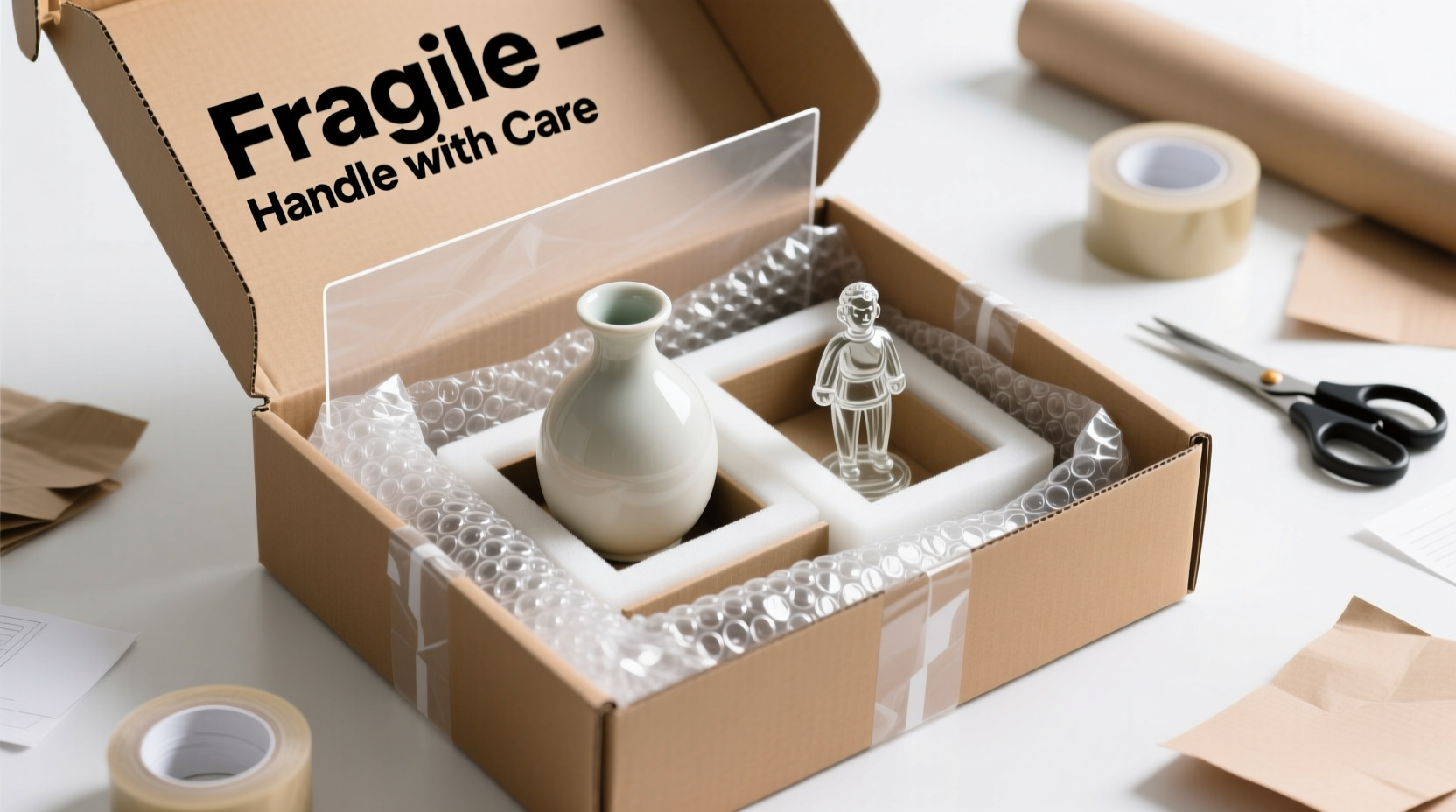
The container you select sets the tone for everything that follows. A flimsy box, even when beautifully wrapped, will not protect its contents from drops, compression, or rough handling during shipping. Always start with a rigid, double-walled corrugated cardboard box that’s slightly larger than the item itself—ideally 1 to 2 inches of clearance on all sides for padding.
Using a box that's too large increases movement inside, which raises the risk of impact damage. Too small, and you can't properly cushion the item. When in doubt, opt for a medium-sized box with customizable internal supports rather than trying to squeeze a fragile object into a snug fit.
Avoid These Common Box Mistakes
- Using single-wall boxes for anything breakable
- Packing in boxes previously exposed to humidity or water stains
- Selecting a box with visible creases or crushed corners
- Overloading one box with multiple fragile items unless individually isolated
Step-by-Step Guide: Securely Wrapping Fragile Items
Wrapping fragile items isn’t about aesthetics first—it’s about engineering protection. Follow this sequence to ensure your gift survives every bump, tilt, and drop along the way.
- Wrap the Item in Bubble Wrap: Use at least two layers of bubble wrap (preferably with 3/16” or 1/4” bubbles). Seal seams with tape but avoid taping directly onto delicate surfaces like painted ceramics or polished glass. For extra-sensitive pieces, place a sheet of tissue paper between the surface and the wrap.
- Reinforce Corners and Edges: Add extra padding to high-risk zones—corners, handles, spouts—by folding additional bubble wrap or foam sheets around them. These areas absorb the most impact during falls.
- Create a Custom Mold (Optional): For uniquely shaped objects (e.g., sculptures or lamps), use expanded polystyrene foam or moldable packing peanuts in a sealed plastic bag to form a cradle that holds the item snugly.
- Place in Inner Box or Divider: If available, use a smaller inner box or partitioned container within the main box. This adds another barrier against shifting and absorbs shock independently.
- Fill All Void Spaces: Surround the wrapped item with crumpled kraft paper, air pillows, or biodegradable packing peanuts. There should be zero room for movement when the box is gently shaken.
- Seal and Label Properly: Close the box with H-taping (tape across all seams and edges) using 2-inch-wide packing tape. Apply “Fragile,” “This Side Up,” and “Handle With Care” labels on at least two adjacent sides.
- Add Outer Decorative Layer: Only after secure boxing should you apply decorative elements like gift wrap, bows, or tags. Consider using a larger outer sleeve made of craft paper or fabric wrap that encases the entire box without compromising stability.
Best Cushioning Materials Compared
Not all packing materials offer equal protection. Some look festive but fail under stress. Below is a comparison of common options based on shock absorption, cost, and eco-friendliness.
| Material | Shock Absorption | Cost | Eco-Friendly? | Best For |
|---|---|---|---|---|
| Bubble Wrap (double layer) | ★★★★☆ | $$ | No (non-biodegradable) | Glass, electronics, mirrors |
| Kraft Paper (crumpled) | ★★★☆☆ | $ | Yes | Ceramics, books, moderate fragility |
| Foam Inserts / Sheets | ★★★★★ | $$$ | No | Precision instruments, collectibles |
| Biodegradable Packing Peanuts | ★★★☆☆ | $$ | Yes | Irregular shapes, void filling |
| Air Pillows (plastic) | ★★☆☆☆ | $ | No | Lightweight items, supplemental use |
Note: While bubble wrap remains the gold standard for impact resistance, environmentally conscious senders increasingly combine kraft paper with molded pulp trays for sustainable yet sturdy packaging.
Real Example: Shipping a Handmade Glass Vase Across States
Sarah, a potter from Portland, regularly ships custom-blown vases to clients across the U.S. After losing two pieces to carrier mishandling, she redesigned her packaging process. She now wraps each vase in three layers of bubble wrap, inserts it into a custom-cut foam ring at the neck, and places it upright in a double-walled box lined with crumpled newsprint. The base has a 2-inch foam pad, and the remaining space is filled with biodegradable peanuts. She seals the box with reinforced tape and uses a courier service with tracking and insurance.
Since implementing this system, Sarah has shipped over 70 vases with zero breakage. Her clients consistently comment not only on the pristine condition of the pieces but also on the tasteful, minimalist brown box adorned with a handwritten thank-you note and twine bow—proof that security and elegance aren’t mutually exclusive.
“Most damage occurs not from drops, but from vibration and angular impacts during sorting. Multi-layered cushioning distributed unevenly fails. You need uniform protection around every axis.” — Dr. Alan Zhou, Packaging Engineer at FedEx Innovation Lab
Do’s and Don’ts of Fragile Gift Wrapping
To prevent common pitfalls, refer to this essential checklist before sealing your package.
| Do’s | Don’ts |
|---|---|
| Use a box that allows 1–2 inches of padding on all sides | Use the original product box as the shipping container (it’s rarely strong enough) |
| Label clearly with “Fragile” and orientation arrows | Assume carriers will treat your package gently—most automated systems don’t read labels |
| Test stability by gently shaking the sealed box | Overfill with cushioning material to the point of compressing the item |
| Insure high-value or irreplaceable items | Include liquids or batteries unless properly sealed and compliant with shipping regulations |
| Take photos before sealing for insurance documentation | Write recipient details only on the gift tag—always include a backup label inside the box |
Alternative Wrapping Methods for Non-Boxed Gifts
Some fragile items don’t fit conventional boxes—a large plate, a framed photo, or a musical instrument. In these cases, flat-rate rigid mailers or custom crates may be necessary.
For flat fragile items like artwork or mirrors:
- Place between two sheets of corrugated cardboard or foam board, taped securely at the edges.
- Wrap the entire sandwich in several layers of bubble wrap.
- Insert corner protectors made of plastic or folded cardboard.
- Ship in a rigid envelope or specialized picture packer box.
For oddly shaped or oversized gifts:
Consider wooden crates for maximum durability, especially for international shipments. While heavier and more expensive, they provide unmatched rigidity and can be reused or repurposed by the recipient.
Frequently Asked Questions
Can I use newspaper instead of bubble wrap?
Newspaper provides minimal shock absorption and is best used as secondary filler. It’s excellent for crumpling into void spaces but should never be the primary cushioning layer for truly fragile items. Combine it with at least one layer of proper padding like bubble wrap or foam.
Is it safe to ship fragile items during winter or summer?
Extreme temperatures can affect adhesives, cause condensation inside boxes, or make certain materials brittle. If shipping in very cold or hot climates, avoid temperature-sensitive items like wine or chocolate unless insulated. For glass or ceramics, ensure there’s no moisture trapped inside the packaging, and consider expedited shipping to reduce exposure time.
What’s the most cost-effective way to ship fragile gifts?
Balance protection with weight. Over-padding adds bulk and increases shipping costs. Use the smallest suitable box with efficient cushioning (e.g., kraft paper + edge protection). Compare carrier rates—USPS Flat Rate boxes often offer predictable pricing, while UPS and FedEx provide better tracking and handling for high-value items. Always factor in insurance when determining true cost.
Final Checklist Before Shipping
Run through this final verification list to ensure your fragile gift is fully protected:
- ✅ Item is wrapped in at least two layers of bubble wrap or equivalent
- ✅ High-impact areas (corners, handles) have extra reinforcement
- ✅ Inner box or divider prevents movement
- ✅ All empty spaces are filled—no shifting when box is tilted
- ✅ Box is sealed with H-tape on all seams
- ✅ “Fragile” and “This Side Up” labels are visible on multiple sides
- ✅ Shipping label is securely attached and duplicates placed inside
- ✅ Package is insured if value exceeds $100 or is irreplaceable
Conclusion: Thoughtful Packaging Is Part of the Gift
A beautifully wrapped gift carries emotional weight, but a gift that arrives safely carries trust. Taking the time to properly protect fragile items reflects the same level of care as choosing them in the first place. By selecting the right materials, following a structured packing process, and understanding how packages move through transit networks, you dramatically increase the odds of delighting your recipient—not with a story of survival, but with an unbroken moment of joy.




 浙公网安备
33010002000092号
浙公网安备
33010002000092号 浙B2-20120091-4
Comments
No comments yet. Why don't you start the discussion?