
Teaching an older dog new tricks is not only possible—it can be deeply rewarding for both pet and owner. While puppies are often seen as the ideal candidates for training, adult and senior dogs possess advantages that younger ones lack: greater focus, reduced impulsivity, and a stronger bond with their humans. The key lies in adapting your approach to accommodate their age, energy levels, and past experiences. With the right mindset and methods, you can successfully introduce new behaviors and commands, even in dogs over 7 or 8 years old.
The myth that “you can’t teach an old dog new tricks” persists, but science and experience have long debunked it. What matters most isn’t age—it’s consistency, clarity, and compassion. Older dogs may learn at a different pace, but they are fully capable of acquiring new skills when trained with respect for their physical and emotional needs.
Understanding the Mature Canine Mind
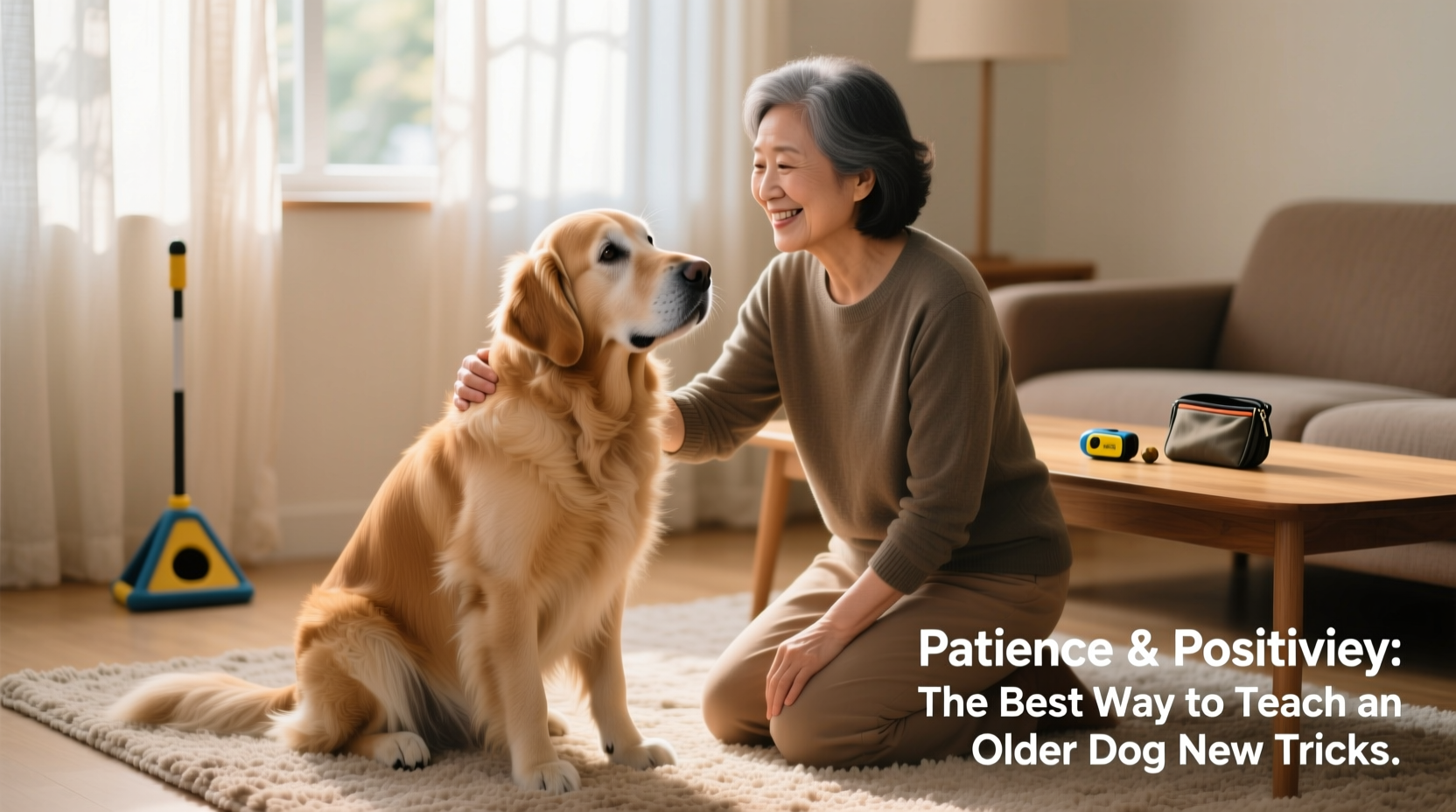
Dogs don’t stop learning as they age. In fact, mental stimulation becomes increasingly important in maintaining cognitive health. Just as humans benefit from puzzles and reading later in life, dogs thrive when challenged with new tasks. However, older dogs may face obstacles such as hearing loss, joint pain, diminished eyesight, or anxiety rooted in past environments—especially if adopted from shelters or difficult situations.
Recognizing these factors is the first step in effective training. A dog who once lived on the streets might be wary of sudden movements. One with arthritis may struggle to sit or lie down quickly. These aren't signs of stubbornness—they're signals to adjust your technique.
Neuroplasticity—the brain’s ability to form new connections—remains active throughout a dog’s life. Studies show that older dogs exposed to structured learning exhibit improved memory, mood, and confidence. Training isn’t just about obedience; it’s a tool for enrichment and emotional well-being.
Foundations of Frustration-Free Training
Success hinges on three core principles: patience, positivity, and pacing. Unlike young dogs eager to please and explore, older dogs may need time to trust the process. Rushing leads to confusion and stress, undermining progress.
Positive reinforcement is the gold standard. Reward desired behaviors immediately with treats, praise, or play. Avoid punishment-based methods, which increase fear and erode confidence—particularly harmful in dogs with unknown histories.
Use high-value rewards for new or challenging tasks. Cooked chicken, cheese bits, or freeze-dried liver often work better than kibble. Pair verbal praise (“Good boy!”) with physical affection (a gentle scratch behind the ears) to reinforce connection.
Keep sessions brief—5 to 10 minutes, two to three times daily. Short bursts prevent fatigue and maintain interest. End on a success, even if it means reverting to a known command like “sit” before wrapping up.
“Older dogs aren’t less intelligent—they’re more deliberate. They weigh actions carefully, and that makes them excellent learners when approached with empathy.” — Dr. Karen Becker, Veterinary Behaviorist
Step-by-Step Guide to Teaching New Tricks
Follow this structured timeline to introduce a new trick, such as “paw” or “roll over,” without overwhelming your dog:
- Choose the Right Time: Train when your dog is calm but alert—typically after a short walk or potty break. Avoid post-meal drowsiness or high-distraction environments.
- Break It Down: Complex tricks should be taught in micro-steps. For “roll over,” start with “lie down,” then lure the dog to turn their head toward their hip, then gradually guide a full roll.
- Lure and Shape: Use a treat to gently guide movement. Don’t force. Click or say “yes!” the moment the dog makes progress, then reward.
- Add the Cue: Only introduce the verbal command (e.g., “spin”) once the dog consistently performs the action. Say it just before luring—never after.
- Phase Out the Lure: After several successful trials, close your hand around the treat and mimic the motion. Reward only when the dog responds to the cue alone.
- Practice in Stages: Gradually increase difficulty—add mild distractions, change locations, or extend duration. Always return to easier settings if performance drops.
- Consolidate Daily: Reinforce the trick during casual moments: “Show me spin!” before mealtime or during family visits.
This method builds confidence through incremental success. An older dog learns to associate effort with reward, strengthening motivation over time.
Common Challenges and How to Overcome Them
Even with the best approach, setbacks occur. Here’s how to navigate frequent issues:
- Lack of Interest: Try higher-value treats or incorporate favorite toys. Some older dogs respond better to play than food.
- Physical Limitations: Modify commands. Replace “jump” with “touch” using a target stick. Use ramps or mats for mobility-impaired dogs.
- Distraction or Confusion: Reduce environmental stimuli. Train in a quiet room first. Simplify cues—one word per behavior—and use consistent tone.
- Regression: Dogs may forget or resist after illness, travel, or routine changes. Revisit basics without pressure. Progress often returns within days.
| Challenge | Do | Avoid |
|---|---|---|
| Slow response | Wait patiently; offer subtle cue again | Repeating command loudly or physically nudging |
| Getting up mid-session | End positively; try again later | Chasing or forcing back into position |
| Hearing loss | Use hand signals and visual cues | Assuming disobedience |
| Pain-related hesitation | Consult vet; modify exercises | Pushing through discomfort |
Real Example: Max Learns to Stay
Max, a 9-year-old mixed breed rescued from a hoarding situation, had never been formally trained. His adoptive family wanted him to master “stay” so he wouldn’t bolt at open doors. Initially, Max would sit but stand and pace after two seconds.
Using positive reinforcement, his owner started with one-second stays, clicking and treating immediately. Over two weeks, she increased duration by half-seconds, always ending before Max broke position. She practiced near quiet corners first, then near windows, then at the front door with someone holding it slightly ajar.
A turning point came when Max stayed for 10 seconds while the mail carrier passed by—something previously unthinkable. Within six weeks, he could remain seated for a full minute, even with mild distractions. The key wasn’t repetition alone, but celebrating every tiny win and never letting failure dominate the experience.
Today, Max confidently waits at thresholds, tail wagging, awaiting his release cue. His owners report not only improved safety but also a noticeable boost in his demeanor—he seems prouder, more engaged.
Essential Checklist for Training Success
Before beginning any new training phase, ensure you have the following in place:
- ✅ High-value, soft treats easily broken into small pieces
- ✅ A quiet, familiar space free from loud noises or foot traffic
- ✅ A clicker or consistent verbal marker (“yes!”)
- ✅ A leash or harness for control, if needed
- ✅ Realistic expectations based on your dog’s health and history
- ✅ A notebook to track progress (e.g., “Held sit for 8 sec today”)
- ✅ Patience to repeat steps without showing frustration
This checklist ensures consistency and reduces variables that could lead to confusion. Preparation sets the stage for calm, productive sessions.
Frequently Asked Questions
Can a 10-year-old dog learn to sit or stay?
Absolutely. Age does not eliminate learning capacity. Many dogs well into their teens master basic commands. The process may take longer, and physical limitations must be considered, but cognitive ability remains intact. Start simple, reward generously, and celebrate small victories.
What if my dog seems uninterested in treats?
Some older dogs lose enthusiasm for food. Try warming treats slightly to enhance aroma, or switch to novel options like peanut butter (xylitol-free), canned fish, or baby food. Alternatively, use non-food rewards: a favorite toy, a gentle ear rub, or access to a sunny spot. Discover what motivates your individual dog.
How long does it take to teach a new trick to an older dog?
There’s no fixed timeline. Simple tricks like “touch” (nose to hand) may take 1–2 weeks with daily practice. More complex behaviors like “play dead” can take 4–8 weeks. Progress depends on the dog’s temperament, prior exposure to training, and consistency in practice. Focus on steady improvement, not speed.
Conclusion: Empathy Is the Best Tool
Teaching an older dog new tricks isn’t about proving a point—it’s about deepening a relationship. Every small success builds trust, strengthens communication, and enriches your dog’s quality of life. Frustration rarely stems from the dog’s inability to learn, but from mismatched expectations or impatience on the human side.
When you meet your dog where they are—with kindness, structure, and unwavering encouragement—you create more than obedience. You foster confidence in an animal who may have spent years feeling uncertain. That transformation is priceless.




 浙公网安备
33010002000092号
浙公网安备
33010002000092号 浙B2-20120091-4
Comments
No comments yet. Why don't you start the discussion?