
Cucumbers are a staple in salads, sandwiches, and refreshing summer drinks. Their crisp texture and mild flavor make them a favorite among gardeners and home cooks alike. But nothing ruins the experience faster than biting into a cucumber that tastes sharply bitter. This unpleasant taste isn’t just disappointing—it’s often misunderstood. The bitterness in cucumbers isn’t random; it stems from natural compounds and environmental factors. Understanding the causes and knowing how to prevent them ensures you grow or buy consistently sweet, enjoyable cucumbers.
The Science Behind Cucumber Bitterness
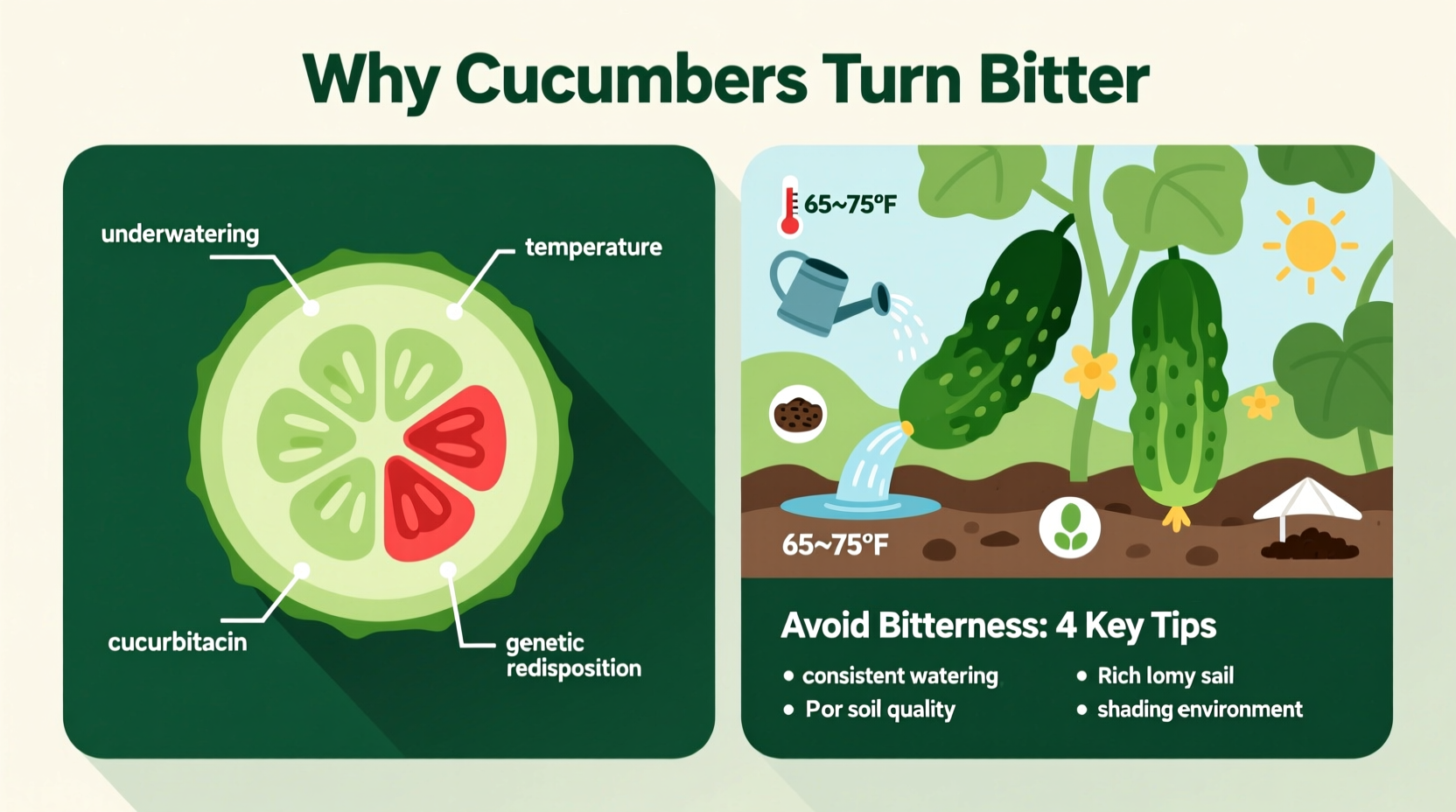
Bitterness in cucumbers is caused by organic compounds called cucurbitacins, primarily cucurbitacin B and cucurbitacin C. These chemicals are naturally present in the cucumber plant as a defense mechanism against pests. While they’re concentrated in the leaves, stems, and roots, stress conditions can cause these compounds to migrate into the fruit.
In wild cucurbits, high levels of cucurbitacins make the plants unpalatable to insects and animals. However, cultivated cucumbers have been selectively bred over generations to minimize bitterness. Despite this progress, certain growing conditions can trigger the reactivation of these defensive compounds, leading to bitter-tasting fruits.
“Even modern cucumber varieties can produce bitter fruit when under environmental stress. It’s not a flaw—it’s the plant’s survival instinct.” — Dr. Linda Harper, Horticulture Researcher, University of California Cooperative Extension
Key Reasons Why Cucumbers Turn Bitter
Bitterness doesn’t happen by chance. Several interrelated factors contribute to the development of cucurbitacins in the fruit:
- Inconsistent watering: Fluctuations between drought and overwatering create plant stress, prompting the production of bitter compounds.
- High temperatures: Extended periods of heat above 90°F (32°C) increase the likelihood of bitterness, especially during fruit development.
- Poor soil conditions: Soil lacking in nutrients or with improper pH (ideal range: 6.0–7.0) stresses the plant and affects flavor.
- Overripe harvest: Leaving cucumbers on the vine too long increases cucurbitacin concentration, particularly near the stem end.
- Variety selection: Some older or heirloom varieties are genetically more prone to bitterness than modern hybrids.
- Physical damage: Bruising, pest attacks, or rough handling can trigger chemical responses that lead to off-flavors.
How to Grow Non-Bitter Cucumbers: A Step-by-Step Guide
Preventing bitterness starts long before harvest. Follow this timeline to cultivate consistently sweet cucumbers:
- Choose the right variety: Opt for cultivars labeled “burpless” or “non-bitter,” such as ‘Marketmore 76’, ‘Sweet Slice’, or ‘Tasty Green’. These have been bred to suppress cucurbitacin production.
- Prepare nutrient-rich soil: Mix in compost or aged manure before planting. Test your soil pH and adjust to 6.0–7.0 using lime (to raise pH) or sulfur (to lower it).
- Plant at the correct time: Wait until soil temperatures reach at least 70°F (21°C). In cooler climates, use black plastic mulch to warm the soil.
- Water consistently: Provide 1–2 inches of water per week, increasing during hot spells. Use drip irrigation or soaker hoses to maintain even moisture without wetting foliage.
- Mulch around plants: Apply 2–3 inches of straw or shredded leaves to retain moisture, regulate soil temperature, and reduce weed competition.
- Harvest early and often: Pick cucumbers when they’re young and firm—typically 6–8 inches long for slicing types. Harvest every other day during peak season to prevent overripening.
- Provide shade in extreme heat: In regions with intense summer sun, use shade cloth (30%) during midday to reduce heat stress.
Do’s and Don’ts for Preventing Bitterness
| Do’s | Don’ts |
|---|---|
| Water deeply and regularly, especially during fruit set | Allow soil to dry out completely between waterings |
| Use balanced fertilizer (e.g., 5-10-10) every 3–4 weeks | Over-fertilize with nitrogen, which promotes leafy growth at the expense of fruit quality |
| Harvest cucumbers frequently to encourage new blooms | Leave mature cucumbers on the vine—they become bitter and reduce further yields |
| Grow in full sun (6–8 hours daily) with good air circulation | Plant in shaded or crowded areas where humidity encourages disease |
| Rotate crops annually to prevent soil depletion and disease buildup | Plant cucumbers in the same spot year after year |
Real Example: A Home Gardener’s Turnaround
Sarah, a backyard gardener in Texas, struggled for two summers with bitter cucumbers despite using the same seeds and location. Her plants looked healthy, but every batch had an unpleasant aftertaste. After consulting her local extension office, she realized her watering routine was erratic—she’d skip days due to travel, then overcompensate with heavy watering.
She installed a simple drip irrigation system connected to a timer and began applying organic mulch. She also switched to ‘Diva’, a disease-resistant, non-bitter hybrid. Within one season, her cucumbers were consistently crisp and sweet. “I didn’t realize how much stress inconsistent watering caused,” she said. “Now I harvest weekly and never have a bitter one.”
What to Do If You Already Have Bitter Cucumbers
If you find yourself with a bitter cucumber, don’t toss it immediately. There are ways to reduce or remove the bitterness:
- Cut off the stem end: As cucurbitacins concentrate near the blossom and stem ends, slicing off about half an inch from both ends can eliminate most of the bitterness.
- Peel and salt: Peel the cucumber, slice it, and sprinkle with salt. Let it sit for 10–15 minutes, then rinse. Salt draws out moisture and some bitter compounds.
- Soak in cold water: Submerge slices in ice water for 20–30 minutes. This dilutes surface bitterness and improves crispness.
- Cook or blend: Bitterness diminishes when cucumbers are blended into smoothies or cooked in soups—though this changes texture.
Frequently Asked Questions
Can I still eat a slightly bitter cucumber?
Yes, if the bitterness is mild. Remove the stem and blossom ends, peel the skin, and soak the slices in cold water for 15–20 minutes. Taste again before serving. If bitterness persists, consider using it in a cooked dish or composting it.
Are organic cucumbers less likely to be bitter?
Not necessarily. Organic growing methods promote soil health and sustainability, but bitterness is more related to water stress, temperature, and variety than farming method. Organic cucumbers can still be bitter under stressful conditions.
Why are store-bought cucumbers usually not bitter?
Commercial growers use carefully selected hybrid varieties bred specifically for low bitterness. They also control irrigation, harvest frequently, and often wrap cucumbers in plastic to preserve freshness. These practices minimize stress and ensure consistent flavor.
Final Thoughts and Action Steps
Bitter cucumbers are preventable with the right knowledge and care. From choosing low-bitterness varieties to maintaining steady watering and timely harvesting, each step plays a role in flavor quality. Whether you're growing your own or selecting cucumbers at the market, understanding the root causes empowers you to enjoy their refreshing taste without surprise bitterness.
Start applying these strategies today: test your soil, set up consistent irrigation, pick the right variety, and harvest early. Small changes in your gardening habits can yield noticeably sweeter results.




 浙公网安备
33010002000092号
浙公网安备
33010002000092号 浙B2-20120091-4
Comments
No comments yet. Why don't you start the discussion?