
Despite their similar names and overlapping presence in global spice cabinets, black cumin and cumin are distinct spices with unique botanical origins, flavor profiles, and culinary roles. Confusing the two can dramatically alter the outcome of a dish, especially in traditional cuisines where precision matters. For home cooks navigating Indian, Middle Eastern, or North African recipes, understanding the difference is not just helpful—it’s essential. This guide clarifies the identity of each spice, explores their sensory characteristics, and provides practical guidance on when and how to use them correctly.
Definition & Overview
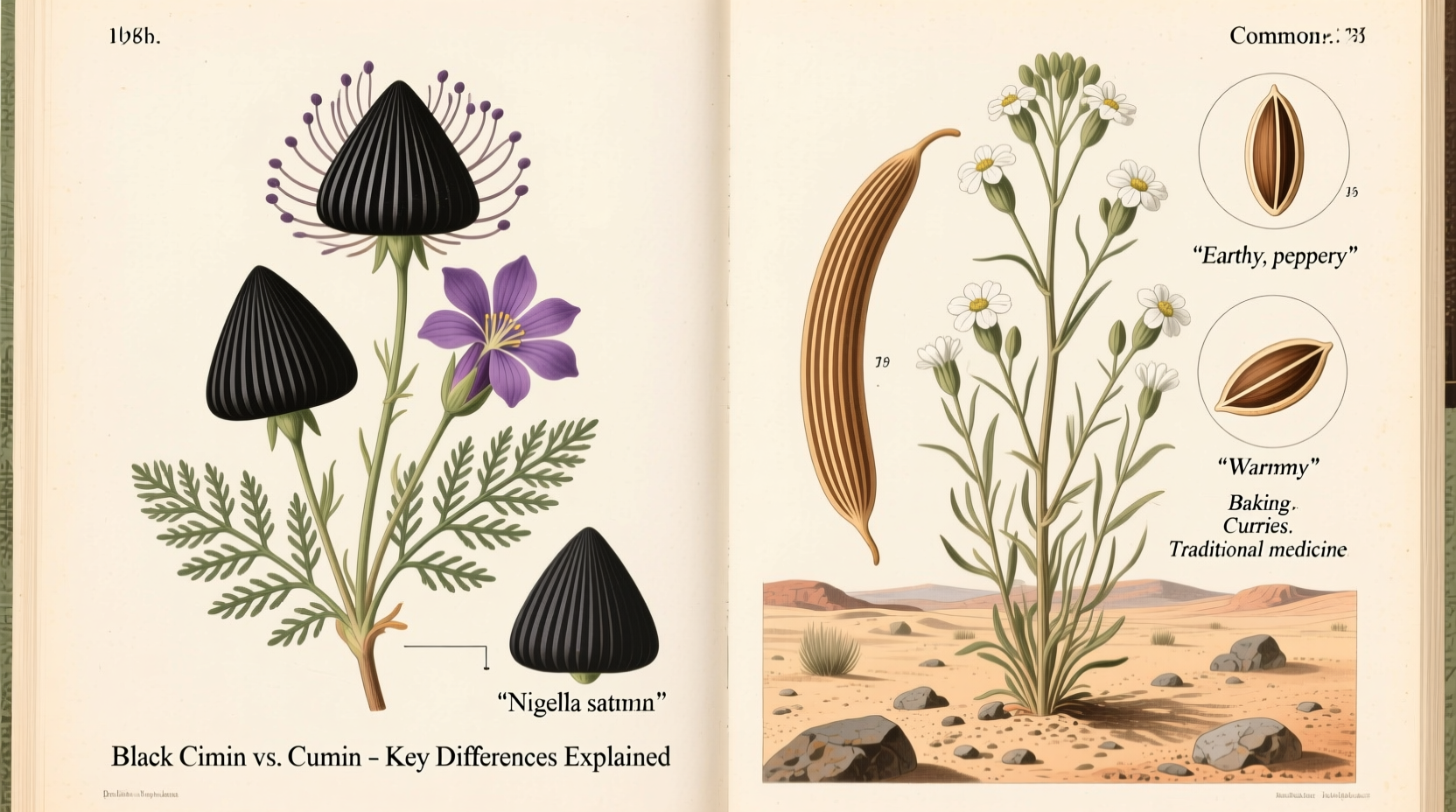
Cumin (Cuminum cyminum) is a flowering plant in the Apiaceae family, native to the eastern Mediterranean and widely cultivated across India, Iran, and the Americas. Its seeds are oblong, ridged, and range from light to medium brown. Ground or whole, cumin is a cornerstone of spice blends like garam masala, chili powder, and berbere. It delivers a warm, earthy, slightly peppery taste that anchors savory dishes.
Black cumin, by contrast, refers to one of two commonly confused spices: Nigella sativa (also known as kalonji, black caraway, or fennel flower) or Bunium persicum (sometimes called kala jeera or black cumin). The former is far more prevalent in modern usage, particularly in South Asian and Middle Eastern cooking. Nigella sativa seeds are small, matte black, and triangular, with a subtle onion-garlic aroma and a mildly bitter, aromatic profile. They are often sprinkled on flatbreads, used in pickles, or tempered in oil at the start of cooking.
The confusion arises because both are called “black cumin” in different regions. In Indian markets, “kala jeera” may refer to Bunium persicum, a slender, dark-brown seed with a smoky, earthy scent closer to regular cumin but more refined. True cumin (Cuminum cyminum) remains distinctly separate. Clarifying which black cumin is referenced in a recipe is crucial for authenticity and balance.
Key Characteristics
| Characteristic | Cumin (Cuminum cyminum) | Black Cumin – Nigella sativa | Black Cumin – Bunium persicum |
|---|---|---|---|
| Appearance | Light to medium brown, elongated, ridged | Small, matte black, teardrop-shaped | Thin, dark brown to black, curved, thread-like |
| Flavor Profile | Earthy, warm, slightly bitter, peppery | Oniony, slightly soapy, nutty, faintly bitter | Smoky, earthy, delicate, with camphor-like notes |
| Aroma | Pungent, roasted, toasty | Garlicky, herbal, faintly sulfurous | Woody, resinous, reminiscent of cumin and caraway |
| Culinary Function | Base spice in curries, stews, rubs | Garnish, tempering agent, bread topping | Delicate seasoning in rice, lentils, slow-cooked dishes |
| Heat Level | None (adds warmth, not heat) | None | None |
| Shelf Life (Whole) | 3–4 years in cool, dark place | 2–3 years | 2 years (more volatile oils) |
| Common Names | Jeera, cumin seed | Kalonji, black onion seed, siyah dane | Kala jeera, shahi jeera, black caraway |
Practical Usage: How to Use Each Spice
Cumin: Building Depth in Savory Dishes
Cumin is a foundational spice in Mexican, Indian, Middle Eastern, and North African cuisines. It functions best when its essential oils are activated through dry roasting or blooming in oil.
To maximize flavor:
- Dry roast whole cumin seeds in a skillet over medium heat for 1–2 minutes until fragrant. Cool before grinding or using whole.
- Bloom ground cumin in hot oil at the start of sautéing aromatics—this unlocks its full aroma and integrates it into the dish base.
- Use in ratios: 1 tsp ground cumin per 4 servings in curries; ½ tsp in soups or stews.
Cumin shines in dishes like chana masala, chili con carne, falafel, and taco seasoning. It pairs well with coriander, turmeric, garlic, and smoked paprika. Overuse can make a dish harsh or overly medicinal, so moderation is key.
Black Cumin (Nigella sativa): Aromatic Finisher
Nigella sativa is rarely used in large quantities. Instead, it adds a subtle pungency and visual contrast.
Typical applications:
- Sprinkled on top of naan, sheermal, or Kashmiri roti before baking.
- Tempered in mustard oil or ghee and drizzled over dal or yogurt-based raitas.
- Incorporated into pickling brines for mango or lime.
- Used in Iranian *loobia polo* (green bean rice) or Turkish *çörek* (sweet bread).
Due to its mild bitterness, use sparingly—¼ to ½ tsp for a family-sized dish. It should complement, not dominate.
Black Cumin (Bunium persicum): The Royal Touch
Often labeled “shahi jeera” (royal cumin), Bunium persicum is prized in Mughlai and Awadhi cuisine for its refined depth.
Best practices:
- Use whole seeds only—grinding diminishes their delicate aroma.
- Temper in ghee at the beginning of cooking rice dishes like biryani or pulao.
- Add to slow-cooked meat curries (e.g., nihari or korma) for a smoky, earthy undercurrent.
- Combine with cardamom, cloves, and cinnamon in premium spice mixes.
Because of its cost and rarity, it’s typically used in smaller amounts than regular cumin—about ½ tsp per pot of rice.
Pro Tip: When a recipe calls for \"black cumin,\" check the context. If it's a flatbread or pickle, it likely means Nigella sativa. If it's a rich rice dish or royal curry, it probably refers to Bunium persicum. When in doubt, look for visual cues: small black dots suggest nigella; thin, curled threads point to kala jeera.
Variants & Types
Forms of Cumin
- Whole cumin seeds: Ideal for tempering, roasting, or grinding fresh. Retain flavor longer than ground.
- Ground cumin: Convenient for blending into spice mixes or rubs. Loses potency faster—buy in small batches.
- Roasted cumin powder: Darker, more intense; common in chaat masala or street food seasonings.
- Cumin extract or essential oil: Used in flavorings and supplements, not typical in home cooking.
Forms of Black Cumin
- Nigella sativa seeds (whole): Most common form. Sold in spice aisles or health food stores.
- Black cumin oil: Cold-pressed from Nigella sativa; used medicinally or as a condiment in small doses.
- Bunium persicum (whole): Rare outside specialty Indian or Persian markets. Often mixed with regular cumin in pre-made blends.
- Ground versions: Not recommended—both lose complexity when powdered.
Comparison with Similar Ingredients
The naming overlap among cumin, caraway, and black cumin creates persistent confusion. Here’s how they differ:
| Spice | Botanical Name | Flavor Difference | Common Misuse |
|---|---|---|---|
| Cumin (Cuminum cyminum) | Cuminum cyminum | Warm, earthy, slightly sharp | Substituted for caraway in European dishes—works moderately well |
| Caraway | Carum carvi | Sweet, anise-like, more floral | Used in rye bread; sometimes mistaken for kala jeera due to appearance |
| Black Cumin (Nigella sativa) | Nigella sativa | Onion-garlic note, mildly bitter | Never interchangeable with cumin; wrong substitution ruins dish balance |
| Black Cumin (Bunium persicum) | Bunium persicum | Smoky, refined cumin-like, with piney undertones | Can substitute for cumin in small amounts but lacks punch |
\"I’ve seen cooks ruin an entire batch of biryani by using kalonji instead of kala jeera. One is a garnish, the other is a foundation. Context is everything.\" — Chef Anika Rahman, Culinary Instructor, Institute of Indian Cuisine
Practical Tips & FAQs
Q: Can I substitute cumin for black cumin?
No—not without altering the dish significantly. Regular cumin is stronger and earthier than Nigella sativa, and lacks the garlicky top note. Using cumin in place of kalonji on bread will result in an overpowering, muddy flavor.
Q: What about substituting black cumin for cumin?
Also not advisable. Nigella sativa cannot replicate cumin’s depth in chili or curry. At best, you’ll miss a core flavor; at worst, introduce unwanted bitterness.
Q: How should I store these spices?
All three should be stored in airtight glass containers, away from heat and sunlight. Whole seeds last longer than ground forms. Label clearly: “Nigella sativa” vs. “Bunium persicum” to avoid mix-ups.
Q: Is black cumin the same as black seed?
Yes. “Black seed” typically refers to Nigella sativa, especially in wellness circles. It’s celebrated for its thymoquinone content and antioxidant properties, though culinary use remains modest.
Q: Which dishes absolutely require the correct black cumin?
Authentic Kashmiri yakhni (yogurt-based lamb curry) relies on Nigella sativa for its signature finish. Shahi paneer or Lucknowi biryani demands Bunium persicum for aromatic authenticity. Substitutions compromise tradition.
Q: Can I grow these spices at home?
Cumin is challenging outside arid climates—it needs a long, hot growing season. Nigella sativa is easier; it grows as an ornamental in temperate zones (often sold as “love-in-a-mist”). Harvest seeds when pods turn brown.
Storage Checklist:
- Use amber glass jars with tight lids
- Keep in a dark pantry, not above the stove
- Grind cumin only as needed
- Label containers with purchase date
- Refresh stock every 18–24 months for peak flavor
Summary & Key Takeaways
Understanding the distinction between black cumin and cumin is fundamental to authentic global cooking. While their names suggest kinship, they are botanically unrelated and serve different purposes in the kitchen.
- Cumin (Cuminum cyminum) is a robust, earthy spice essential in beans, stews, and spice blends.
- Black cumin most commonly refers to Nigella sativa—a small, black seed with onion-garlic notes, used as a garnish or tempering agent.
- Kala jeera or Bunium persicum is a rare, smoky cousin of cumin used in elite Indian rice dishes.
- Never interchange these spices without adjusting expectations—the results can be jarring.
- Always verify which “black cumin” a recipe intends based on regional context and application.
Equipping your spice cabinet with correctly identified, high-quality seeds—and knowing how to deploy them—is a mark of a thoughtful cook. Take the time to source accurately, store properly, and apply with intention. The depth and authenticity of your dishes will reflect the care you invest.
Next time you reach for a jar labeled “black cumin,” pause and inspect: shape, color, and intended use matter more than the name on the bottle. Your palate will thank you.




 浙公网安备
33010002000092号
浙公网安备
33010002000092号 浙B2-20120091-4
Comments
No comments yet. Why don't you start the discussion?