
For many people, a restful night’s sleep begins with one essential condition: complete darkness. Whether you live in a city with bright streetlights, near a busy intersection, or simply want to create a cinema-like atmosphere in your bedroom, blocking external light is critical. Two of the most common solutions are blackout curtains and window blinds. But when it comes to eliminating every last sliver of unwanted light, which option truly delivers superior performance?
The answer isn’t always straightforward. While both products can reduce light intrusion, their design, materials, and installation methods lead to significant differences in how effectively they block out street lights. This article dives deep into the functional realities of blackout curtains versus blinds, compares their light-blocking capabilities, and provides actionable guidance to help you choose the right solution for achieving true darkness.
How Light Intrusion Affects Sleep and Well-Being
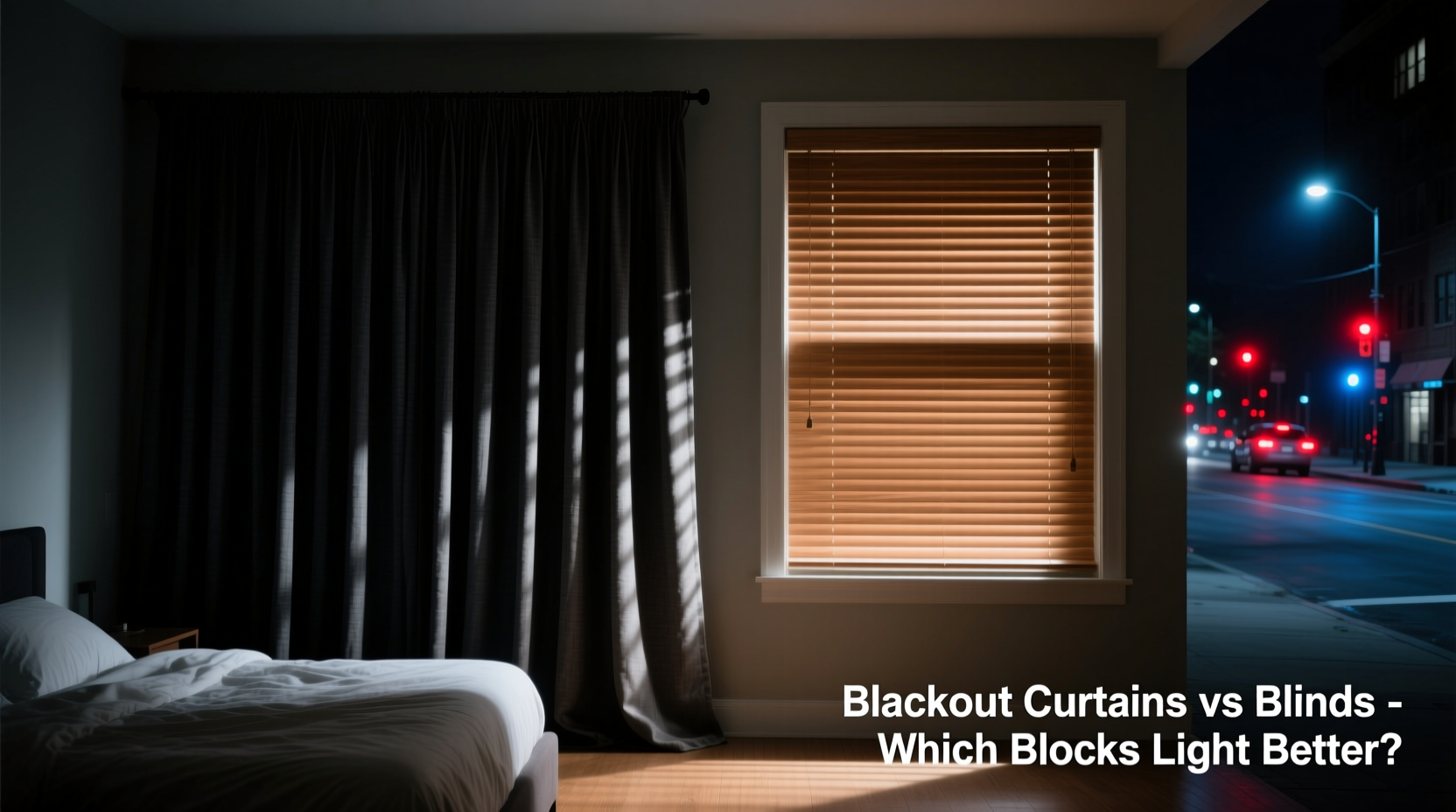
Before comparing physical products, it’s important to understand why blocking street lights matters beyond mere comfort. Research from the National Sleep Foundation shows that even low levels of ambient light—especially blue-rich wavelengths from LED streetlamps—can suppress melatonin production, disrupt circadian rhythms, and reduce sleep quality.
Chronic exposure to nighttime light has been linked to increased risks of insomnia, mood disorders, and long-term health issues like obesity and cardiovascular disease. For shift workers, children, light-sensitive individuals, or those recovering from illness, achieving a pitch-black environment is not a luxury—it’s a necessity.
“Total darkness is one of the most underappreciated elements of sleep hygiene. Even small light leaks around windows can interfere with deep sleep cycles.” — Dr. Lena Patel, Sleep Specialist at Pacific Wellness Institute
Blackout Curtains: Design, Materials, and Performance
Blackout curtains are specifically engineered to block nearly all incoming light. They are typically made from tightly woven, multi-layered fabrics, often including a foam or rubberized backing that prevents light penetration. High-quality versions use triple-weave technology or laminated coatings to enhance opacity without sacrificing drape.
When properly installed, top-tier blackout curtains can block 99% to 100% of external light. However, effectiveness depends heavily on three factors:
- Material density: Thicker, layered fabrics perform better than single-layer “room darkening” alternatives.
- Installation method: Gaps at the sides, top, or bottom significantly compromise performance.
- Coverage width: Curtains should extend at least 6–8 inches beyond the window frame on each side to minimize edge leakage.
One advantage of blackout curtains is their ability to cover irregularly shaped or large windows more easily than blinds. Additionally, they provide added benefits such as thermal insulation, noise reduction, and UV protection, making them a versatile upgrade for any room.
Window Blinds: Types and Light Control Limitations
Blinds come in various styles—horizontal (aluminum, faux wood, real wood), vertical, and roller—but none offer perfect light blockage due to inherent design flaws. Even so-called “blackout blinds” rarely achieve full darkness because of the following structural issues:
- Gaps between slats: Horizontal blinds have visible spaces between each slat, allowing light to filter through even when closed.
- Headrail gap: The top housing unit always leaves a small opening where light enters above the blind.
- Sidewall clearance: Most inside-mount blinds fit within the window frame, leaving narrow but noticeable gaps along the edges.
Faux wood and aluminum blinds may appear solid when viewed head-on, but tilt them slightly and light pours in from multiple angles. Real wood blinds, while aesthetically pleasing, are often less effective due to natural warping and uneven finishes.
Roller blinds marketed as “blackout” can perform better, especially if they use thick, opaque fabric and are mounted outside the window recess. Still, unless paired with side channels or sealed brackets, they suffer from edge bleed.
“Most customers assume closing their blinds means total darkness. In reality, we see up to 30% residual light transmission in standard installations.” — Marcus Tran, Window Treatment Installer with 12 years of experience
Direct Comparison: Blackout Curtains vs Blinds
| Feature | Blackout Curtains | Window Blinds |
|---|---|---|
| Light Blockage (Ideal Conditions) | 99–100% | 70–90% |
| Edge Light Leakage | Minimal (if properly installed) | Common (gaps at sides, top, between slats) |
| Thermal Insulation | High (traps air layers) | Moderate to Low |
| Noise Reduction | Yes (absorbs sound) | No |
| Aesthetic Flexibility | High (wide range of colors, textures) | Moderate (limited by material type) |
| Child Safety | High (no cords required) | Varies (corded models pose risk) |
| Cost Range (per standard window) | $30–$150 | $50–$200+ |
As shown in the table, blackout curtains generally outperform blinds in overall light elimination, particularly when attention is paid to installation details. Blinds may offer more precise adjustability during daytime hours, but they fall short when absolute darkness is required.
Real-World Case Study: Urban Apartment Bedroom Transformation
Jessica M., a graphic designer living in downtown Chicago, struggled with disrupted sleep due to constant illumination from streetlights and neighboring buildings. Her bedroom had two large double-hung windows fitted with white aluminum mini-blinds. Despite closing them fully at night, a persistent glow filled the room, especially during summer when nights are shorter.
She experimented with adding sheer curtains behind the blinds, then tried magnetic blackout liners clipped onto the existing setup. Neither solution eliminated the overhead and side glare. After consulting a sleep coach, she invested in floor-to-ceiling blackout curtains made from triple-weave polyester, mounted on extended ceiling tracks.
The change was immediate. With no visible light seepage and improved temperature regulation, Jessica reported falling asleep 20 minutes faster and waking less frequently. A follow-up sleep tracker analysis confirmed an increase in REM cycle duration by 18% over four weeks.
This case illustrates that product choice alone isn’t enough—installation strategy plays a decisive role in achieving optimal results.
Step-by-Step Guide to Achieving Total Darkness
If your goal is to eliminate all external light, follow this proven sequence:
- Assess your current windows: Check for gaps around frames, measure width and height, and note whether mounts are inside or outside the recess.
- Choose the right product: Prioritize certified blackout-rated curtains (look for ASTM light-block ratings) or cellular shades designed for light exclusion.
- Extend mounting hardware: Install curtain rods at least 6–8 inches beyond each side of the window and as close to the ceiling as possible.
- Ensure full drop coverage: Curtains should touch or pool slightly on the floor to prevent under-light leakage.
- Seal remaining gaps: Use flexible draft stoppers, tension rods with secondary blackout panels, or adhesive light-blocking tape for stubborn edges.
- Test in darkness: Turn off all indoor lights at night and inspect for any faint beams or halos around the window area.
Checklist: Choosing the Best Light-Blocking Solution
- ✅ Confirm the product is labeled “blackout,” not just “room darkening”
- ✅ Measure your window and plan for extra width/height coverage
- ✅ Opt for ceiling or wall mounting outside the window frame
- ✅ Select heavier fabrics with thermal backing for best results
- ✅ Avoid corded blinds in homes with children or pets
- ✅ Consider layered window treatments for maximum control
- ✅ Read customer reviews focusing on real-world light blockage
Frequently Asked Questions
Can regular curtains block street lights effectively?
No. Standard curtains, even thick ones, typically block only 30–50% of light. True blackout performance requires specialized fabric construction with opaque linings or coatings.
Are there blinds that completely block light?
Fully sealed systems like blackout cellular shades with side tracks come closest, but traditional horizontal or vertical blinds cannot achieve 100% darkness due to inherent gaps. Only custom-installed, track-guided models approach curtain-level performance—and at a much higher cost.
Do blackout curtains work for shift workers?
Yes, and they’re highly recommended. When properly installed, blackout curtains create a consistently dark environment regardless of the time of day, helping regulate melatonin and support non-traditional sleep schedules.
Final Recommendation: Why Blackout Curtains Win for Total Darkness
While both blackout curtains and blinds serve valuable roles in home window treatment, the verdict is clear when the priority is eliminating street light for total darkness: blackout curtains are the superior choice. Their seamless coverage, minimal edge leakage, and ability to be customized for any window size make them the most reliable option for creating a truly dark room.
Blinds offer convenience and daytime adjustability but are structurally limited in their capacity to deliver full light blockage. Unless you invest in high-end, track-guided cellular shades—a niche and expensive solution—some level of ambient light will persist.
For anyone serious about improving sleep quality, enhancing privacy, or creating a media-friendly space, installing properly sized and mounted blackout curtains is the most effective, affordable, and practical solution available.




 浙公网安备
33010002000092号
浙公网安备
33010002000092号 浙B2-20120091-4
Comments
No comments yet. Why don't you start the discussion?