
Creating a comfortable, temperature-regulated environment in a nursery is essential for a baby’s sleep quality and overall well-being. One of the most impactful decisions parents make involves window treatments—specifically, whether to use blackout curtains or blinds. Both options offer benefits in blocking light and managing heat, but they differ significantly in performance, safety, ease of use, and long-term comfort. Understanding these differences helps ensure the nursery stays cool during hot months while supporting healthy sleep patterns.
How Window Treatments Affect Nursery Temperature
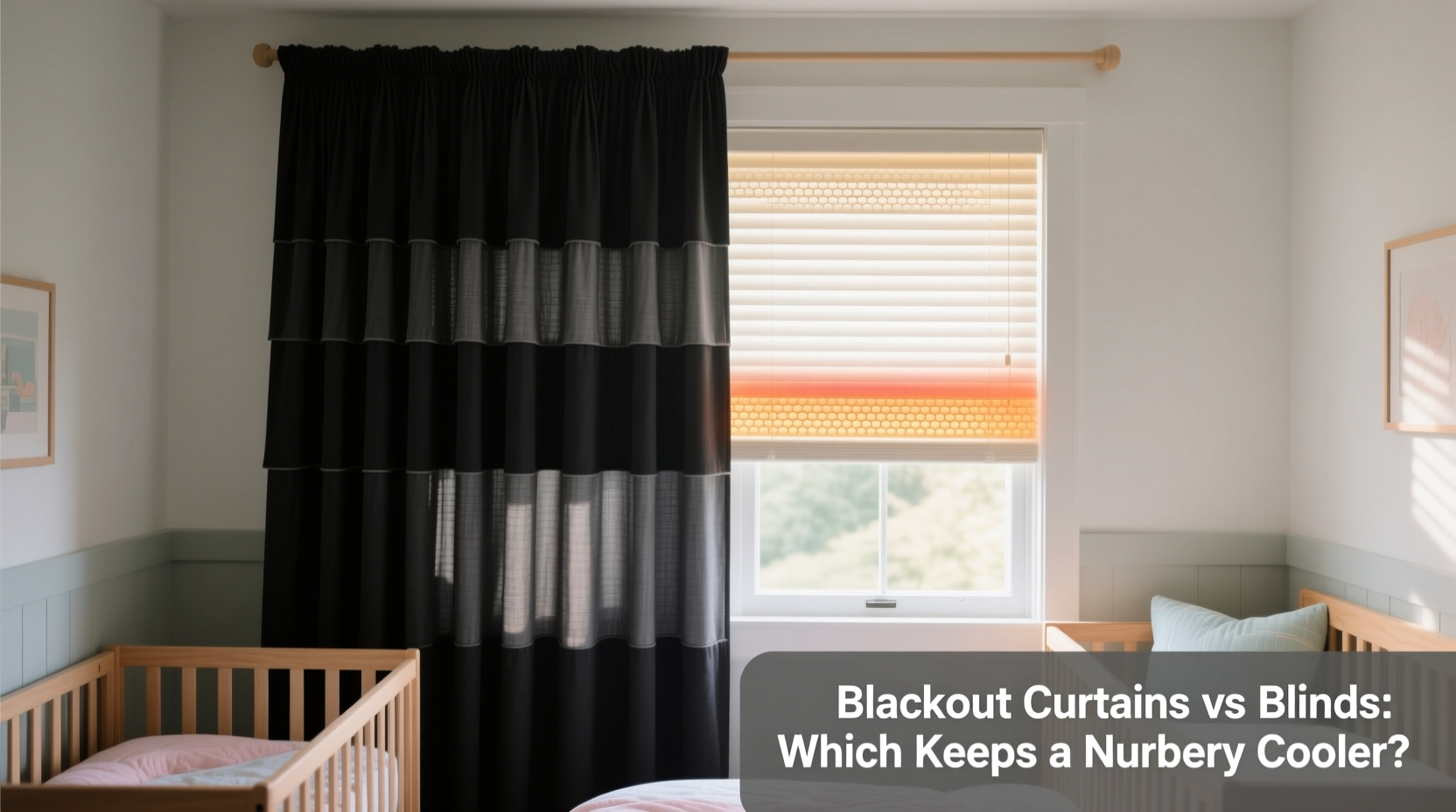
The primary function of any window covering in a nursery isn’t just privacy or aesthetics—it’s thermal regulation. Windows are major sources of heat gain, especially when exposed to direct sunlight. On a sunny summer day, indoor temperatures can rise by 10–20°F due to solar radiation entering through untreated glass. This makes choosing the right window treatment not just a matter of preference, but of comfort and energy efficiency.
Heat enters through windows via three mechanisms: conduction (heat transfer through materials), convection (air movement near the glass), and radiation (sunlight). Effective window coverings reduce all three. The key factors influencing cooling performance include:
- Material density – Thicker, tightly woven fabrics block more heat.
- Air gap creation – A layer of trapped air between the window and room acts as insulation.
- Light absorption vs. reflection – Darker materials absorb heat; lighter or reflective surfaces deflect it.
- Seal quality – Gaps around edges allow hot air infiltration.
Given these principles, both blackout curtains and blinds interact with heat differently—and one often outperforms the other depending on design and installation.
Blackout Curtains: Strengths and Limitations for Cooling
Blackout curtains are specifically engineered to block light and insulate against heat. Most are made from tightly woven polyester or triple-weave fabric with a foam or rubberized backing that prevents light penetration and reduces thermal transfer.
Well-designed blackout curtains can reduce solar heat gain by up to 33%, according to the U.S. Department of Energy. Their effectiveness comes from several features:
- Full coverage – When properly sized, they extend beyond the window frame, minimizing edge gaps.
- Dual-layer construction – Many include a thermal lining beneath the decorative outer layer.
- Air pocket formation – The space between the curtain and window creates an insulating buffer zone.
However, performance varies widely based on quality. Budget blackout curtains may claim “100% light blocking” but lack proper sealing or dense backing, reducing their real-world cooling ability. Additionally, improper installation—such as mounting too close to the glass or using short rods—diminishes their insulating effect.
“Thermal curtains can significantly improve room temperature stability, especially in sun-exposed rooms. The key is full perimeter coverage and high-quality material.” — Dr. Lena Patel, Building Science Researcher at NIST
Blinds: Functionality and Thermal Performance
Blinds—including roller, cellular (honeycomb), vertical, and mini-blinds—offer adjustable light control and space-saving design. However, their cooling capabilities depend heavily on type and operation.
Roller blinds with blackout fabric can perform similarly to curtains if fully lowered and sealed at the edges. But most standard models leave gaps at the sides and top, allowing hot air to infiltrate.
Cellular (honeycomb) blinds stand out as the most thermally efficient blind option. Their unique structure traps air in honeycomb-shaped cells, creating excellent insulation. Double-cell versions can achieve R-values as high as 4.0—comparable to some insulated walls. These blinds reduce heat transfer effectively in both summer and winter.
Mini-blinds (aluminum or vinyl) offer minimal insulation. While they can reflect some sunlight when angled upward, they do little to stop radiant heat and often increase convection currents near the window.
One limitation of blinds is adjustability: while useful for daytime light management, even slight openings compromise cooling performance. Fully closed cellular blinds come closest to matching high-end blackout curtains in thermal resistance.
Comparative Analysis: Blackout Curtains vs Blinds
| Feature | Blackout Curtains | Blinds (General) | Cellular Blinds |
|---|---|---|---|
| Heat Reduction | High (up to 33%) | Low to Moderate | Very High (up to 45%) |
| Light Blocking | Excellent (with proper fit) | Fair to Good | Excellent |
| Air Gap Insulation | Yes (if mounted correctly) | Limited | Yes (built into cells) |
| Safety (Cord Hazards) | Low risk (cordless options available) | Higher risk (unless cordless) | Available cordless |
| Durability | High (fabric wear over time) | Moderate (mechanical parts fail) | Moderate to High |
| Installation Ease | Easy | Moderate | Moderate (custom fit best) |
| Cost | $–$$ | $–$$$ | $$–$$$ |
This comparison shows that while traditional blinds underperform in cooling, cellular blinds are a strong contender—even surpassing standard blackout curtains in insulation. However, cost and customization requirements may limit accessibility.
Safety and Practicality in a Nursery Setting
In nurseries, safety is non-negotiable. The Consumer Product Safety Commission (CPSC) reports that window covering cords are responsible for dozens of child strangulation incidents annually. This makes cordless operation a top priority.
Blackout curtains can be designed without cords using rod pockets, grommets, or magnetic tie-backs. Custom-made cordless versions eliminate dangling strings entirely. In contrast, many blinds—especially older models—rely on lift cords or continuous loops that pose entanglement risks.
Modern solutions include motorized or spring-tension cellular blinds and cordless roller systems, which meet current safety standards. The Best for Kids certification program identifies window treatments free of hazardous cords, making it easier for parents to choose safely.
Practicality also matters. Parents often need to adjust lighting quickly during nighttime feedings or naps. Blinds offer precise control—you can tilt slats slightly to let in soft light without fully exposing the room. Curtains require pulling back entirely, which may disrupt sleep if bright outdoor light floods in.
Real-World Example: Cooling a West-Facing Nursery
Sarah, a first-time mother in Phoenix, Arizona, struggled with her baby waking up cranky each afternoon. Her nursery faced west, receiving intense late-day sun. She initially installed white mini-blinds, thinking the color would reflect heat. However, the room regularly exceeded 82°F by 4 PM.
After consulting a local energy auditor, she replaced the blinds with floor-to-ceiling blackout curtains made of triple-weave fabric, mounted on a wide rod extending 6 inches beyond the window frame on each side. She also added a thermal liner behind the curtain for extra insulation.
The change was immediate. Room temperature dropped by nearly 7°F during peak sun hours, and her baby began sleeping longer in the afternoons. Sarah later upgraded to motorized cellular shades for even better performance and convenience, noting that the combination of exterior shade trees and high-efficiency window treatments made the nursery consistently comfortable year-round.
Step-by-Step Guide to Choosing the Best Option
Selecting between blackout curtains and blinds requires evaluating your priorities. Follow this sequence to make an informed decision:
- Assess sun exposure – Note the direction your nursery windows face. South and west-facing rooms receive the most heat.
- Measure window dimensions – Ensure any treatment covers the entire opening with overlap to prevent gaps.
- Prioritize safety – Eliminate corded options. Look for Best for Kids or cordless-certified products.
- Evaluate insulation needs – If cooling is critical, consider R-value or energy performance ratings.
- Compare materials – For curtains, look for thermal backing and tight weave. For blinds, opt for cellular designs.
- Test usability – Can you operate the treatment one-handed while holding a baby? Is it easy to open/close quietly?
- Budget accordingly – High-performance cellular blinds cost more upfront but may save on AC bills over time.
FAQ: Common Questions About Nursery Window Coverings
Can I use both blackout curtains and blinds together?
Yes, combining both offers superior insulation and light control. For example, installing cellular blinds behind blackout curtains creates multiple thermal barriers. Just ensure the setup doesn’t obstruct operation or create pinch points.
Do blackout curtains really help with temperature control?
Yes, especially when made with thermal linings and properly installed. They reduce heat transfer by limiting solar radiation and creating an insulating air gap. Independent tests show quality blackout curtains can lower indoor temperatures by 5–10°F compared to uncovered windows.
Are there eco-friendly options for nursery window treatments?
Yes. Look for blackout curtains made from recycled polyester or organic cotton blends with non-toxic dyes. Cellular blinds made from recyclable fabrics or FSC-certified wood are also sustainable choices. Some brands offer take-back programs for old coverings.
Final Recommendation: Which Is Better?
For most nurseries, **high-quality blackout curtains** offer the best balance of cooling performance, affordability, and safety—provided they are well-installed and cordless. They are particularly effective in bedrooms where complete darkness supports circadian rhythm development in infants.
However, **cellular blinds** are the superior choice for maximum thermal efficiency and sleek, space-saving design. If budget allows, they represent the gold standard in energy-smart window treatments for nurseries.
The ideal solution may involve a hybrid approach: cellular blinds for daily use and light control, paired with blackout curtains for nighttime insulation and enhanced light blocking. This dual-layer strategy maximizes comfort while adapting to changing conditions throughout the day.
Take Action for a Cooler, Safer Nursery
Your baby deserves a cool, dark, and safe space to sleep and grow. Don’t underestimate the impact of your window treatment choice on room temperature and sleep quality. Start by evaluating your current setup: Are there gaps? Are cords present? Does the room overheat in the afternoon?
Upgrade to a cordless, high-insulation option—whether premium blackout curtains or cellular blinds—and experience the difference in comfort. Share your nursery transformation story or ask questions in the comments below. Together, we can create healthier, safer environments for our little ones—one window at a time.




 浙公网安备
33010002000092号
浙公网安备
33010002000092号 浙B2-20120091-4
Comments
No comments yet. Why don't you start the discussion?