
Smartphones are both essential tools and personal style statements. As a result, phone cases have evolved beyond mere protection into fashion accessories. On one end of the spectrum are rugged cases—engineered for maximum impact resistance. On the other are bling cases, adorned with rhinestones, glitter, or metallic finishes that turn your device into a statement piece. But when style meets substance, a critical question arises: does adding bling really make your phone less protected?
The short answer is: it depends. Not all bling cases sacrifice protection, but many do—especially those prioritizing aesthetics over structural integrity. Understanding the materials, design choices, and real-world performance differences between these two categories can help you make an informed decision without compromising on safety.
What Defines a Rugged Case?
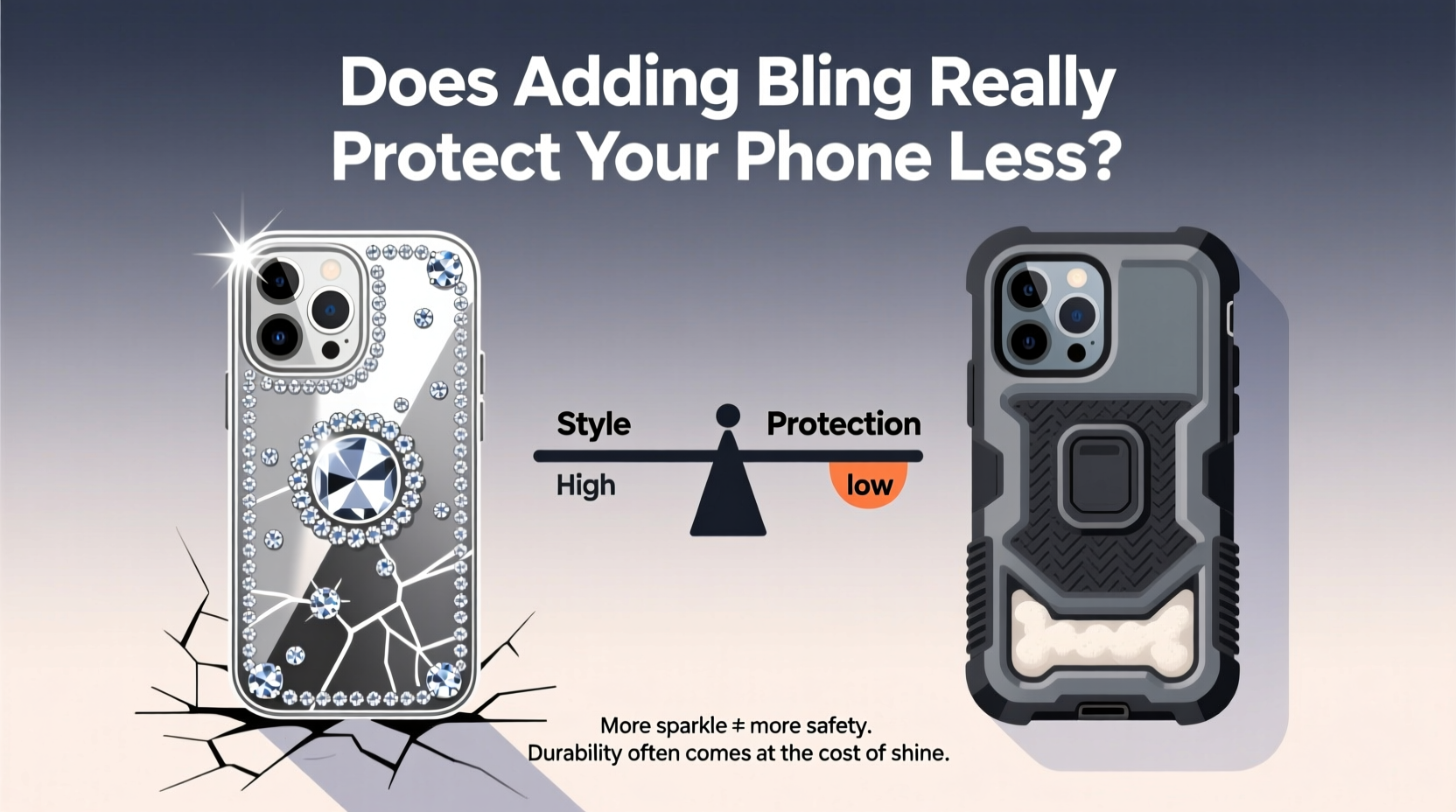
Rugged cases are built with durability as their primary goal. They're commonly made from dense thermoplastic polyurethane (TPU), polycarbonate, or hybrid materials designed to absorb shock. Brands like OtterBox, UAG (Urban Armor Gear), and Spigen lead this category with cases that meet military-grade drop-test standards (MIL-STD-810G).
Key features of rugged cases include:
- Multi-layer construction (hard outer shell + soft inner liner)
- Elevated bezels to protect screen and camera when placed face-down
- Reinforced corners, the most common impact point during drops
- Water and dust resistance in select models
- Bulkier profile for added protection
These cases excel in high-risk environments—construction sites, hiking trails, or households with young children—where accidental drops are frequent and severe.
What Makes a Case “Bling”?
Bling cases prioritize visual appeal. They often feature embedded crystals, holographic foils, mirrored finishes, or colorful patterns. Some even come with LED lights or interchangeable decorative panels. While they may offer basic scratch and minor bump protection, their core value lies in self-expression.
Common materials used in bling cases include:
- Soft silicone or TPU with surface embellishments
- Acrylic or plastic overlays with glitter layers
- Metallic films bonded to transparent shells
The downside? Many bling cases lack structural reinforcement. Rhinestones can detach upon impact, creating sharp edges. Glitter layers may crack or peel after minimal wear. And because aesthetics dominate design, protective features like raised edges or shock-absorbing geometry are often sacrificed.
Protection Showdown: Bling vs Rugged
To assess how much protection bling truly sacrifices, consider three key factors: drop resistance, material durability, and long-term reliability.
| Feature | Rugged Case | Bling Case |
|---|---|---|
| Drop Protection (up to 6 ft) | ✅ Consistently passes MIL-STD tests | ❌ Rarely tested; inconsistent results |
| Corner Reinforcement | ✅ Double-layered, energy-dissipating | ❌ Often flat or decorative only |
| Screen & Camera Protection | ✅ Raised bezels standard | ❌ Usually flush or recessed poorly |
| Durability Over Time | ✅ Maintains integrity after months | ❌ Glitter fades, stones fall off |
| Style Options | ❌ Limited colors/patterns | ✅ Highly customizable, trendy |
In controlled lab tests, rugged cases typically survive multiple 6-foot drops onto concrete with no internal damage. Bling cases, even those labeled “shockproof,” often fail after one or two impacts—particularly if the decoration interferes with the case’s ability to compress and absorb force.
“Many decorative cases market ‘protection’ loosely. True impact resistance requires engineering, not just marketing claims.” — Dr. Lena Torres, Materials Engineer at Mobile Safety Labs
A Real-World Example: The Coffee Shop Drop
Sophia, a graphic designer in Austin, loves bold accessories. She bought a heavily bejeweled iPhone case with a floral crystal pattern. One morning, while reaching for her latte, she knocked her phone off the counter—about 3.5 feet onto tile flooring.
The case cracked along the bottom edge where crystals were densely clustered. The structural weakness caused the phone’s corner to take direct impact, resulting in a spiderweb fracture across the screen. A week earlier, her colleague dropped the same phone model in a rugged OtterBox on a similar surface—with zero damage.
Sophia’s experience isn’t rare. Decorative stress points can create fracture lines that compromise the entire case. In contrast, rugged designs distribute force evenly through flexible yet tough materials.
Can You Have Both Style and Protection?
Yes—but it requires careful selection. The growing demand for fashionable yet functional cases has led some brands to merge both worlds. Look for hybrid models that incorporate bling elements without sacrificing core protective features.
Features to Prioritize in a Stylish Protective Case
- Military-grade certification: Ensures tested drop protection.
- Shock-absorbing corners: Even if decorated, they should feel thicker and flexible.
- Scratch-resistant coating: Prevents glitter or foil from peeling prematurely.
- Functional raised edges: Screen and camera must sit above surface when laid down.
- Secure embellishment bonding: Crystals or studs should be embedded, not glued on top.
Brands like Casetify, Speck, and dbrand now offer customizable cases with optional bling upgrades while maintaining structural integrity. Their “Impact” or “Defender” series allow users to add sparkle without fully compromising safety.
Step-by-Step Guide to Choosing the Right Case
Follow this decision framework to balance your needs:
- Assess your lifestyle: Do you work in a high-movement environment? Carry your phone in a bag with keys? If yes, lean toward rugged.
- Determine your priority: Is daily protection non-negotiable, or is personal expression equally important?
- Research third-party testing: Watch independent drop test videos (e.g., YouTube reviewers) for real-world performance.
- Check return policies: Buy from retailers that allow returns if the case fails within the first month.
- Inspect build quality: Feel the weight, flex the corners, and examine seam tightness before committing.
Frequently Asked Questions
Do rhinestones on a case increase the risk of damage?
Yes, if they are poorly attached or create uneven surfaces. Loose stones can scratch screens or snag fabrics. More critically, clusters of gems can form rigid zones that prevent the case from absorbing impact, transferring force directly to the phone.
Are clear cases with glitter safe?
They can be—if the glitter is sealed between layers of durable TPU or polycarbonate. Avoid cases where glitter floats freely inside thin plastic, as these tend to yellow and crack quickly. Look for UV-resistant coatings and brand reputation.
Can I use a bling case with a rugged one?
In most cases, no. Layering cases can interfere with button responsiveness, port access, and wireless charging. However, some modular systems (like PopSockets-integrated rugged cases) allow removable decorative add-ons without stacking.
Final Thoughts: Style Shouldn’t Mean Sacrifice
Choosing between a bling case and a rugged one doesn’t have to be an either-or decision. While traditional bling cases often underperform in protection, the market now offers smart compromises. The key is to avoid superficial glamour and focus on engineered safety—even when sparkle is involved.
Your phone is a significant investment. Whether you prefer subtle elegance or head-turning dazzle, ensure your case earns its place by passing two tests: does it reflect your personality, and does it truly defend your device? When both answers are “yes,” you’ve found the right balance.




 浙公网安备
33010002000092号
浙公网安备
33010002000092号 浙B2-20120091-4
Comments
No comments yet. Why don't you start the discussion?