
If you've ever blocked a number only to find a new voicemail from the same contact minutes later, you're not imagining things. This frustrating experience is more common than most people realize. Blocking a number should stop calls and texts, but in many cases, voicemails still come through—sometimes repeatedly. The reason lies in how mobile carriers, operating systems, and voicemail systems interact. Understanding the technical and logistical gaps behind this issue is the first step toward truly silencing unwanted callers.
Why Blocked Numbers Can Still Leave Voicemails
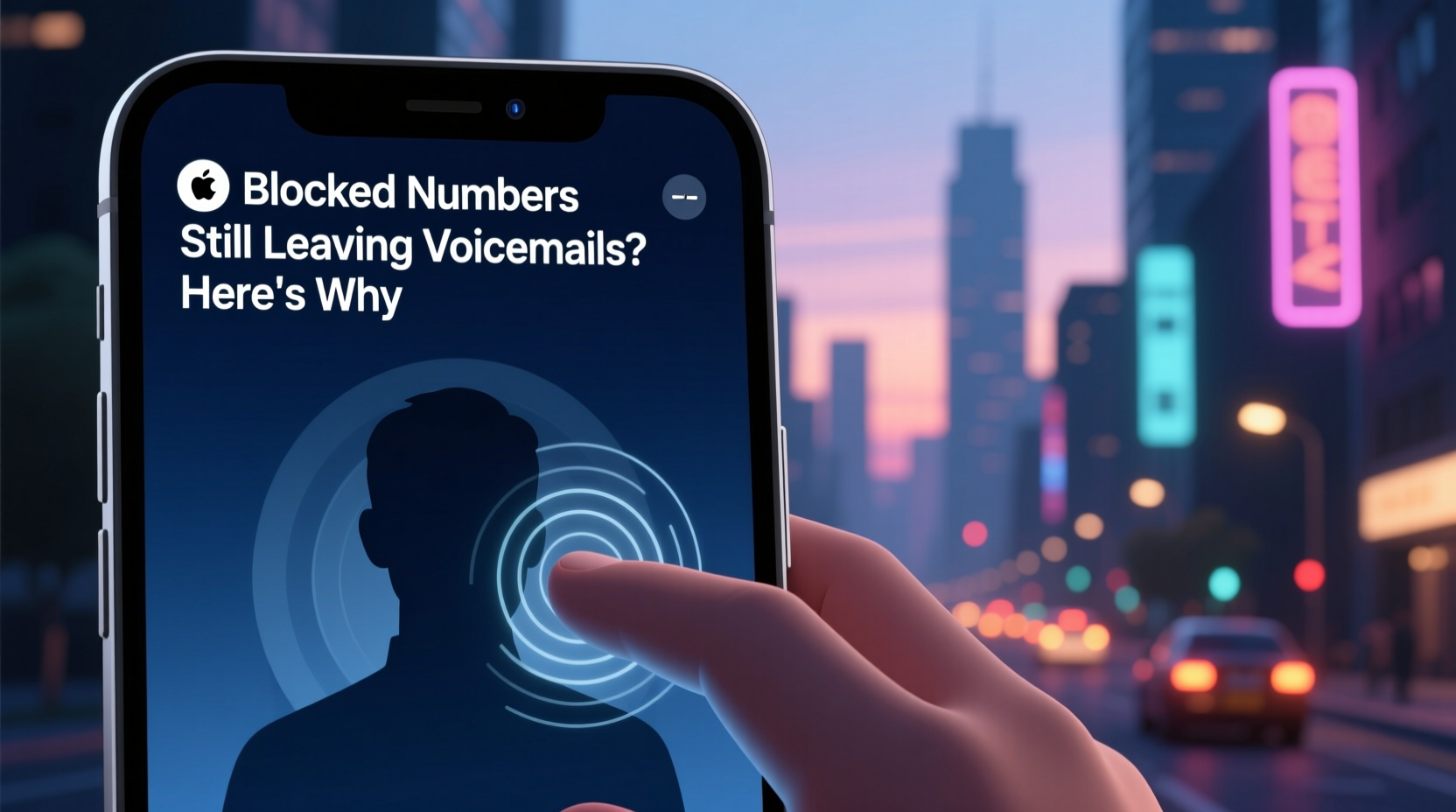
The core issue stems from the difference between call blocking and voicemail handling. When you block a number on your smartphone, the device or carrier prevents the call from ringing your phone. However, the call may still be routed to your carrier’s voicemail server before the block takes full effect. Since voicemail exists on the network level—not just on your device—the blocked caller can leave a message even if your phone never rings.
iOS and Android handle blocks differently, but neither completely disables voicemail access by default. On iPhones, for example, blocked callers are sent to voicemail, where they can record a message that appears in a separate \"Blocked Messages\" section. Android devices vary by manufacturer and carrier, but many follow a similar pattern: the call is silenced, but the voicemail is still accepted and stored.
“Blocking stops the ring, but not the voicemail pipeline. The system treats voicemail as a separate service, which is why messages still get through.” — David Lin, Senior Network Engineer at MetroVoice Communications
How Carrier Voicemail Systems Enable This Loophole
Your mobile carrier maintains a voicemail system that operates independently of your device settings. When a call is placed to your number, the network checks whether the line is busy, unanswered, or blocked. In many cases, the system interprets a blocked call as “unanswered” rather than “rejected,” so it forwards the call to voicemail after a few rings.
This behavior varies by carrier:
| Carrier | Voicemail Handling for Blocked Numbers | Can Be Fully Disabled? |
|---|---|---|
| Verizon | Allows voicemails from blocked numbers; stored in main inbox | Limited; requires third-party app or advanced settings |
| AT&T | Blocks calls but stores voicemails in a filtered folder | No direct disable option |
| T-Mobile | Voicemails delivered unless using Scam Shield with enhanced blocking | Yes, with Scam Shield Premium |
| iPhone (iOS) | Voicemails go to “Blocked Messages” under Voicemail tab | No option to disable voicemail receipt from blocked numbers |
| Android (Google Voice) | Filters spam and blocked voicemails into separate folder | Can disable via Google Voice settings |
The lack of standardization across carriers means users must take proactive steps to close this gap. Relying solely on built-in blocking tools often isn’t enough.
Step-by-Step Guide to Stop Voicemails from Blocked Numbers
To fully prevent unwanted voicemails, follow this comprehensive approach:
- Confirm the Number Is Properly Blocked
Go to your phone’s settings and verify the number is listed in your block list. On iPhone: Settings > Phone > Blocked Contacts. On Android: Phone app > Settings > Blocked numbers. - Enable Enhanced Spam Protection
Use your carrier’s anti-spam service. For example:- AT&T: Enable AT&T Call Protect (free or premium tier)
- Verizon: Use Call Filter app with spam detection
- T-Mobile: Activate Scam Shield and turn on “Block International Calls” and “Enhanced Scam Protection”
- Switch to Google Voice (Android Users)
Google Voice offers superior filtering. Set up Google Voice, forward your number, and use its robust spam detection. Blocked numbers won’t reach your voicemail at all. - Disable Voicemail Temporarily (If Safe)
Contact your carrier to temporarily deactivate voicemail. While extreme, this stops all messages—including legitimate ones—so only use during persistent harassment. - Use Third-Party Call Blocking Apps
Apps like Hiya, RoboKiller, or Truecaller can intercept calls before they hit your carrier’s voicemail system. These apps use crowd-sourced data to identify and block spam callers more effectively.
Real-World Example: Persistent Telemarketer Harassment
Sarah, a small business owner in Austin, began receiving daily voicemails from a debt collection agency despite having blocked the number weeks earlier. The messages were automated but frequent, sometimes arriving five times a day. She assumed blocking would stop all contact, but the voicemails kept appearing in her iPhone’s “Blocked Messages” folder.
After contacting her carrier (AT&T), she learned that their default settings allowed voicemails from blocked numbers. By enabling AT&T Call Protect’s premium tier ($3.99/month), she activated “Advanced Caller ID & Spam Blocking,” which finally stopped both the calls and voicemails. Additionally, she reported the number to the FTC and added it to the National Do Not Call Registry, reducing future attempts.
Sarah’s case highlights a common misconception: blocking a number doesn’t guarantee complete communication cutoff. Proactive carrier-level tools are often required for full protection.
Do’s and Don’ts When Dealing with Blocked Voicemails
| Do | Don't |
|---|---|
| Regularly check your blocked voicemail folder to ensure no false positives | Assume blocking stops all forms of communication |
| Use carrier-provided spam protection services | Reply to or engage with suspicious voicemails |
| Report persistent spam callers to the FCC and FTC | Delete evidence before documenting harassment |
| Consider switching to Google Voice for better control | Rely solely on your phone’s built-in block feature |
Frequently Asked Questions
Can someone leave a voicemail if I blocked them on iPhone?
Yes. On iPhones, blocked callers can still leave voicemails, which are automatically moved to a “Blocked Messages” section within the Voicemail tab. You won’t receive a notification, but the message is stored and accessible.
Is there a way to stop blocked numbers from leaving voicemails entirely?
Yes, but it requires additional tools. Using carrier-based spam protection (like T-Mobile Scam Shield or AT&T Call Protect) or third-party apps (such as RoboKiller or Google Voice) can prevent the call from reaching the voicemail system altogether.
Why don’t carriers block voicemails by default when a number is blocked?
Carriers prioritize network reliability and avoid false positives. They treat voicemail as a passive service—if a call isn’t explicitly rejected by the network, it may still be routed to voicemail. Full blocking could risk missing important messages due to incorrect spam flags.
Take Control of Your Communication Privacy
Just because you’ve blocked a number doesn’t mean your privacy is fully protected. The gap between call blocking and voicemail delivery is a known limitation in today’s mobile ecosystem. But with the right combination of device settings, carrier tools, and third-party apps, you can close that gap for good.
Start by reviewing your current blocking setup. Then, activate enhanced spam protection through your carrier or switch to a more controlled environment like Google Voice. Stay vigilant, especially if you’re dealing with scams, harassment, or repeated unwanted contact. Technology should serve you—not expose you to stress.




 浙公网安备
33010002000092号
浙公网安备
33010002000092号 浙B2-20120091-4
Comments
No comments yet. Why don't you start the discussion?