
For cyclists, eyewear isn’t just about style—it’s a critical piece of gear. Whether you're commuting through city traffic or tackling mountain trails, protecting your eyes from wind, debris, and UV rays is essential. But with the rise of wearable tech, a new category has emerged: Bluetooth cycling glasses. These smart sunglasses promise audio integration, voice navigation, and even real-time fitness tracking. The question many riders are asking is simple: do these high-tech features actually add value, or are they just flashy distractions?
To answer this, we need to look beyond marketing claims and assess real-world performance, comfort, cost, and practicality—comparing Bluetooth-enabled cycling glasses directly against trusted, high-quality regular sunglasses.
The Core Purpose of Cycling Eyewear
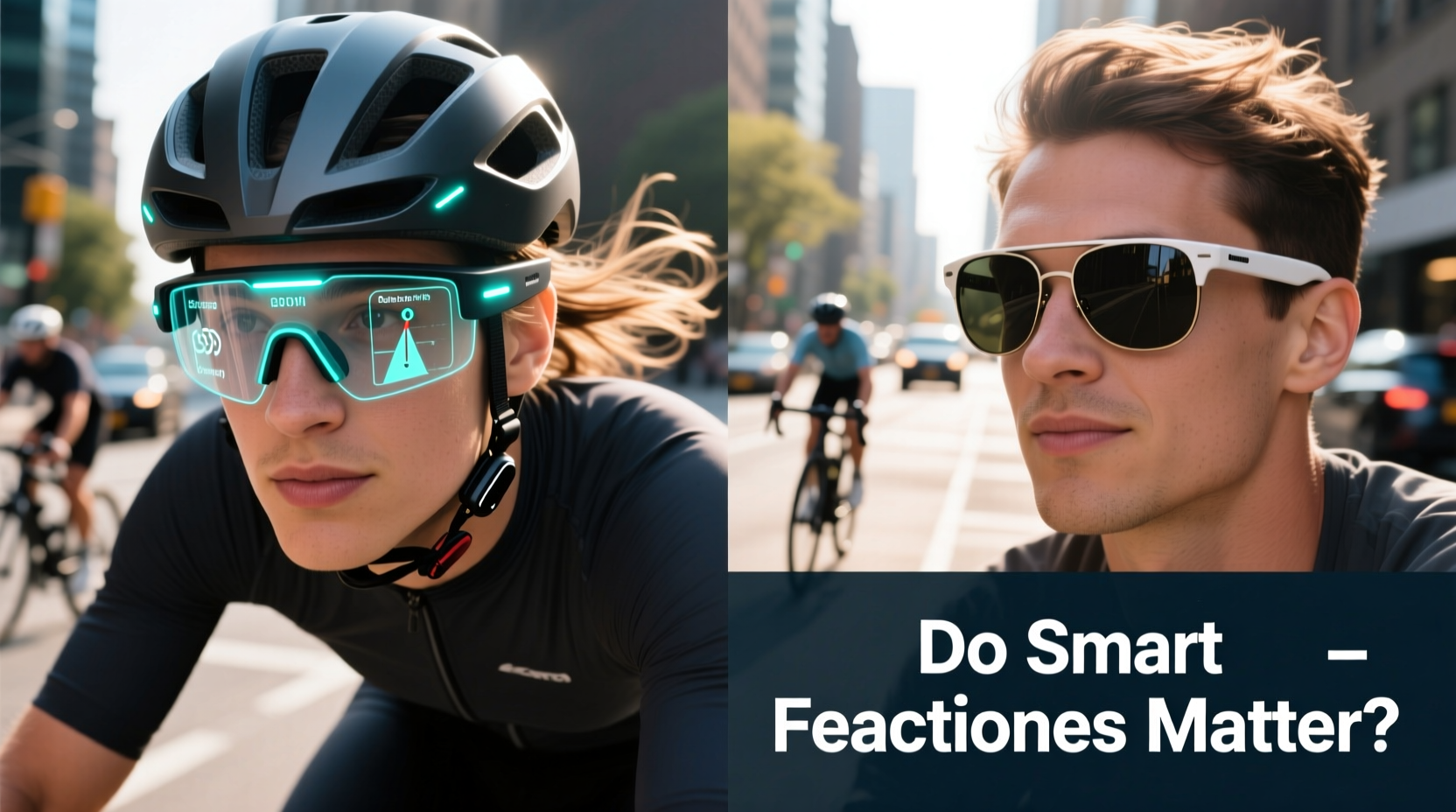
All cycling sunglasses, whether smart or traditional, serve three primary functions: protection, visibility, and comfort. They shield your eyes from UV radiation, reduce glare with polarized or photochromic lenses, and stay securely in place during intense rides. Ventilation prevents fogging, while lightweight frames minimize pressure on the nose and ears.
Regular sunglasses have evolved significantly over the years. Modern models use impact-resistant polycarbonate lenses, hydrophobic coatings, and ergonomic wraparound designs tailored for aerodynamics. Brands like Oakley, Rudy Project, and Tifosi offer specialized lenses that adapt to changing light conditions, making them highly effective for serious riders.
Smart cycling glasses build on this foundation—but instead of stopping at optics, they integrate electronics. This raises expectations: not only should they perform like premium sunglasses, but they must also deliver reliable connectivity, clear audio, and intuitive controls without compromising fit or safety.
What Bluetooth Cycling Glasses Actually Offer
Bluetooth cycling glasses embed miniature speakers near the temples, enabling audio playback without earbuds. Some models include microphones for phone calls or voice assistant access. Others go further, syncing with GPS apps to deliver turn-by-turn navigation through bone-conduction audio or stereo sound. Advanced versions, such as those from Bose or Oakley’s Radar EV Path series, even support real-time fitness metrics via companion apps.
The appeal is clear: hands-free communication, music without blocking ambient noise (a major safety benefit), and seamless route guidance. For long-distance cyclists or urban commuters, receiving spoken directions without glancing at a phone can be invaluable.
Yet functionality comes with trade-offs. Smart glasses typically weigh more than standard models due to embedded batteries and circuitry. Battery life ranges from 2 to 6 hours, limiting usefulness on extended rides unless recharged mid-route. Charging requires a cable or case, adding another item to carry. And while open-ear audio preserves environmental awareness, volume control becomes crucial—too low, and you miss cues; too high, and you risk auditory fatigue.
Feature Comparison: Smart vs. Standard
| Feature | Bluetooth Cycling Glasses | Regular Sunglasses |
|---|---|---|
| Lens Quality & UV Protection | Comparable to premium brands (e.g., Oakley) | Excellent; wide range of lens technologies |
| Audio Integration | Yes – built-in speakers/microphone | No |
| Battery Life | 2–6 hours depending on usage | N/A |
| Weight | Heavier due to electronics | Lightweight; optimized for comfort |
| Fog Resistance | Varies; some struggle under load | Generally excellent with proper vents |
| Durability | Moderate – sensitive internal components | High – simpler construction |
| Price Range | $200–$400+ | $50–$200 |
| Safety (Situational Awareness) | Good – open-ear design preserves ambient sound | Excellent – no distractions |
Real-World Example: A Commuter’s Experience
Take Sarah, a daily cyclist who commutes 12 miles each way in a busy metropolitan area. She upgraded from her Tifosi Slipstream glasses to a pair of Bose Frames Tempo, drawn by the promise of turn-by-turn navigation and Spotify integration. Initially thrilled, she found that while the audio cues helped avoid missed turns, wind noise often muffled instructions at speeds above 18 mph. On longer rides, the battery died before she reached home, forcing her to carry a charging case. After six months, one speaker failed after a minor fall—repairs were costly and not covered under warranty.
She eventually returned to her original sunglasses, pairing them with a handlebar-mounted Garmin Edge for navigation. “The smart glasses were cool,” she said, “but I spent more time managing tech than enjoying the ride.”
“Technology should enhance the cycling experience—not dominate it. The best gear gets out of the way.” — Dr. Marcus Lin, Human Performance Researcher at Boulder Sports Lab
When Smart Features Make Sense
Despite limitations, Bluetooth cycling glasses shine in specific scenarios. Riders training with audio-based coaching apps benefit from real-time feedback without needing a phone mount. Cyclists navigating unfamiliar terrain appreciate voice-guided routes that keep their eyes on the road. And for those who rely on podcasts or music during endurance events, integrated audio offers convenience over tangled wires or isolated earbuds.
But these advantages come with prerequisites: consistent Bluetooth pairing, reliable firmware updates, and favorable weather conditions. In rainy or dusty environments, exposed ports and speakers increase vulnerability. Sweat corrosion remains a concern, especially behind the ears where electronics meet skin.
Checklist: Is a Pair of Bluetooth Cycling Glasses Right for You?
- Do you frequently navigate unfamiliar routes without a mounted GPS?
- Do you listen to audio (music, podcasts, coaching) during rides?
- Are you willing to charge your glasses regularly and manage software updates?
- Can you afford a higher upfront cost and potential repair fees?
- Do you prioritize situational awareness over immersive sound?
If most answers are “yes,” smart glasses may be worth exploring. If not, a high-performance traditional model paired with a separate audio device might offer better reliability and value.
FAQ
Can I wear Bluetooth cycling glasses for running or hiking?
Yes, many models are designed for multi-sport use. However, ensure they’re sweat-resistant and secure during dynamic movement. Audio features may be less useful off-road without connected navigation.
Are Bluetooth glasses safe for night riding?
Safety depends on lens tint. Most smart glasses use mirrored or dark lenses unsuitable for low light. Some brands offer interchangeable lenses, but few provide dedicated night-vision options. Always prioritize visibility and consider using clear or yellow-tinted lenses after dark.
Do Bluetooth cycling glasses work with all smartphones?
Most are compatible with iOS and Android devices supporting Bluetooth 5.0 or later. However, app functionality (like voice navigation) may vary by platform. Check manufacturer specifications before purchasing.
Conclusion
Bluetooth cycling glasses represent an exciting evolution in wearable tech—one that blends optical performance with digital connectivity. For certain riders, particularly those relying on audio navigation or coaching, the smart features can meaningfully improve the experience. Yet for the majority, regular sunglasses remain the smarter choice: lighter, more durable, less expensive, and free from technical dependencies.
The truth is, smart features don’t inherently make glasses better—they only matter if they solve a real problem in your riding routine. Before investing in high-tech eyewear, ask yourself: am I buying utility, or just novelty?




 浙公网安备
33010002000092号
浙公网安备
33010002000092号 浙B2-20120091-4
Comments
No comments yet. Why don't you start the discussion?