
Lentils are a cornerstone of global cuisine—nutritious, affordable, and versatile—but their success in any dish hinges on one critical factor: cooking time. Undercooked lentils remain chalky and indigestible; overcooked ones dissolve into mush, ruining texture and presentation. With multiple varieties available—each differing in density, skin thickness, and starch content—boiling times vary significantly. Understanding these differences ensures consistent results whether you're making a hearty dal, a structured salad, or a savory stew. This guide delivers precise boiling durations, preparation techniques, and usage strategies tailored to each major lentil type, empowering home cooks to harness their full potential.
Definition & Overview
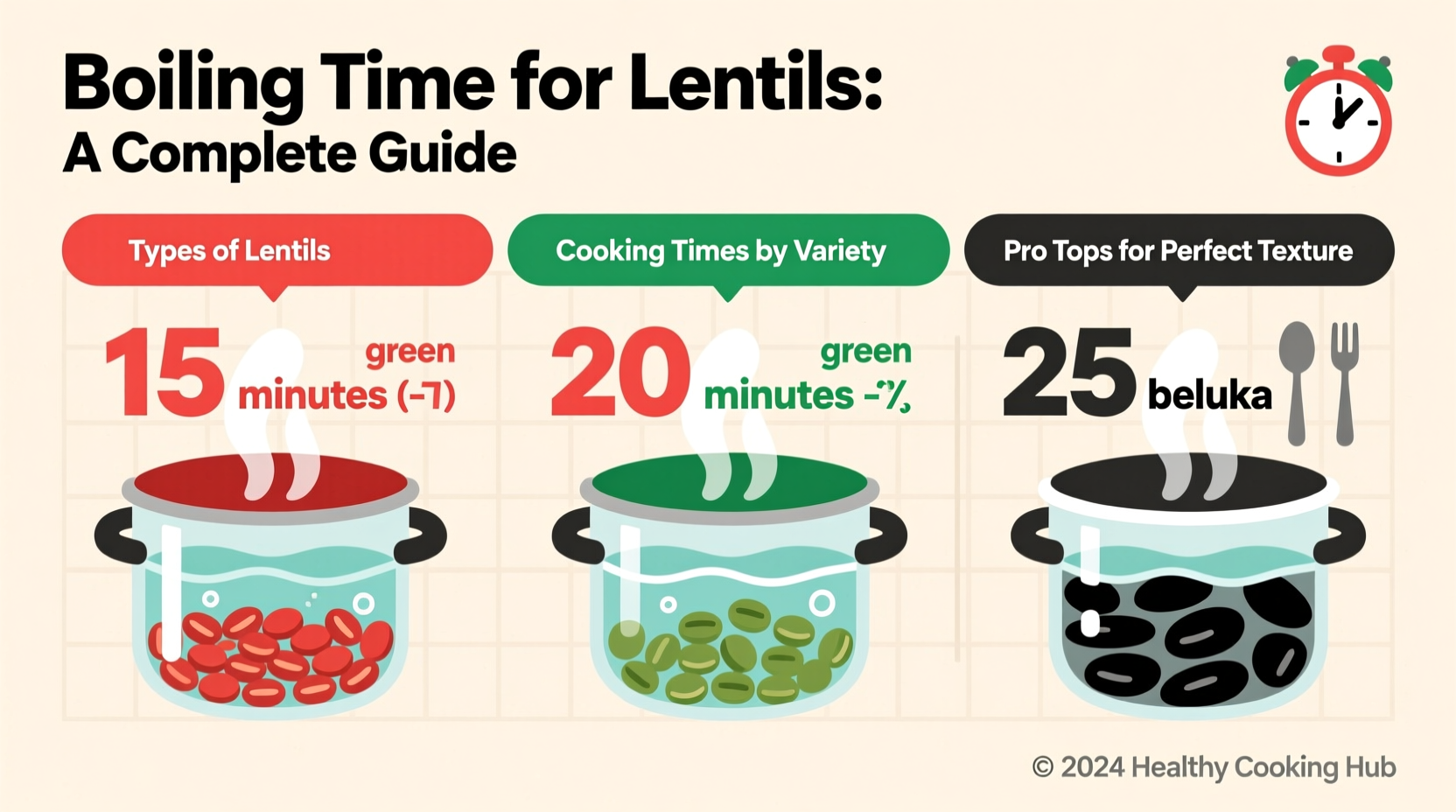
Lentils (Lens culinaris) are edible legumes belonging to the pulse family, cultivated for over 10,000 years and among the first crops domesticated in the Near East. They grow in flat, lens-shaped seeds enclosed in small pods and are prized for their high protein, fiber, iron, and folate content. Unlike many beans, most lentils do not require pre-soaking, making them ideal for quick meals. Their natural earthiness, mild sweetness, and ability to absorb surrounding flavors make them adaptable across culinary traditions—from Indian curries and Middle Eastern mujadara to French soups and North American grain bowls.
In their raw state, lentils are dry, firm, and shelf-stable for up to two years when stored properly. Once boiled, they soften while retaining varying degrees of structure depending on variety. The key to mastering lentils lies not just in timing but in selecting the right type for the intended application. Boiling transforms them from inert seeds into functional ingredients capable of anchoring meals nutritionally and texturally.
Key Characteristics
| Lentil Type | Color/Appearance | Flavor Profile | Texture After Cooking | Average Boiling Time (Unsoaked) | Culinary Function |
|---|---|---|---|---|---|
| Green/Brown Lentils | Olive green to mottled brown | Earthy, slightly peppery | Firm, holds shape well | 20–30 minutes | Soups, stews, salads |
| French Green (Puy) | Small, dark blue-green | Peppery, mineral-rich | Dense, very resilient | 25–35 minutes | Gourmet salads, side dishes |
| Red/Yellow Lentils | Bright orange or golden after splitting | Sweet, mild, buttery | Soft, breaks down completely | 15–20 minutes | Dals, purees, thickening agents |
| Black (Beluga) | Jet black, pearl-like | Rich, umami-forward | Firm, glossy, caviar-like | 25–30 minutes | Elegant sides, garnishes |
| White Lentils | Pale beige, split or whole | Mild, neutral | Tender, slightly grainy | 15–20 minutes | Baby food, smooth soups |
Practical Usage: How to Boil Lentils Correctly
The method used to boil lentils directly affects both cooking time and final texture. While variations exist by region and tradition, a universal approach ensures consistency:
- Sort and rinse: Spread dry lentils on a tray and remove debris, shriveled pieces, or small stones. Rinse under cool water in a fine-mesh strainer to eliminate dust and residual chaff.
- Use the correct water ratio: For firmer lentils (green, Puy, beluga), use 3 cups water or broth per 1 cup lentils. For softer, faster-cooking types (red, yellow), use 2.5 cups liquid per 1 cup lentils to prevent oversaturation.
- Start with cold liquid: Add lentils to cold water before heating to promote even hydration. Exceptions include red lentils in Indian dals, where boiling liquid is often used to accelerate breakdown.
- Bring to a boil, then simmer: Rapid boiling fractures skins prematurely. Instead, bring to a rolling boil, reduce to a gentle simmer, and cover partially to allow steam to escape without drying.
- Season strategically: Add salt only after lentils have softened slightly (about 10 minutes in). Early salting can toughen skins. Avoid acidic ingredients (tomatoes, vinegar, lemon juice) until the end—acidity inhibits softening.
- Test frequently: Begin checking texture 5 minutes before the minimum estimated time. Ideal doneness depends on use: al dente for salads, fully tender for soups.
- Drain and refresh if needed: For salads or cold applications, drain immediately and rinse under cool water to halt cooking and preserve texture.
Pro Tip: To enhance digestibility and reduce oligosaccharides (which cause gas), add a 2-inch strip of kombu seaweed to the pot while boiling. It also improves mineral absorption and adds subtle umami depth.
Variants & Types: Choosing the Right Lentil
Not all lentils behave the same way when boiled. Selecting the appropriate type is essential for achieving desired outcomes.
Green and Brown Lentils
The most widely available, these are workhorse lentils suitable for everyday cooking. They maintain integrity through prolonged simmering, making them ideal for robust dishes like shepherd’s pie, casseroles, and bolognese-style sauces. Brown lentils may soften slightly more than green, but both resist disintegration better than split varieties.
French Green (Puy) Lentils
Grown in the volcanic soils of Le Puy, France, these are smaller, darker, and denser. Their tight cellular structure resists breakdown even after extended cooking. Puy lentils excel in composed salads, such as lentilles du Puy au lard, where texture contrast with bacon and vinaigrette is paramount.
Red and Yellow Lentils
Typically sold split and hulled, these cook quickly and break down into a creamy consistency. Red lentils dominate South Asian cuisine in dishes like masoor dal, where they are boiled with turmeric, garlic, and ginger until smooth. Yellow lentils (often moong or toor) follow similar principles but offer a milder profile. These are unsuitable for dishes requiring bite.
Black (Beluga) Lentils
Named for their resemblance to caviar, beluga lentils are nutritionally dense and visually striking. They retain a firm, glossy exterior after boiling and pair well with rich accompaniments like roasted squash, goat cheese, or duck confit. Their long cooking window demands attention to avoid sogginess.
White Lentils
Often referred to as \"macrosemina,\" white lentils are low in tannins and produce a delicate, almost porridge-like texture. Common in Italian zuppa di lenticchie and Middle Eastern baby foods, they absorb flavors readily and require minimal seasoning.
Comparison with Similar Ingredients
Lentils are sometimes confused with other legumes due to overlapping uses or appearance. Clarifying distinctions prevents substitution errors.
| Ingredient | Similarity to Lentils | Key Differences | Boiling Time Comparison |
|---|---|---|---|
| Split Peas | Yellow/green color, used in soups | Rounder shape, higher starch, slower rehydration | 45–60 minutes (longer than red lentils) |
| Chickpeas | Used in stews and salads | Denser, require soaking, far longer cook time | 60–90 minutes (vs. 20–30 for most lentils) |
| Black Beans | Hold shape in dishes, high protein | Require pre-soak, larger size, stronger flavor | 75–90 minutes unsoaked |
| Quinoa | Grain-like, used in salads and bowls | Seed, not legume; fluffier texture; cooks faster | 12–15 minutes (slightly less than red lentils) |
“The mistake most home cooks make is treating all lentils the same. A Puy lentil should never be substituted for a red lentil in dal—it won’t break down, and the dish loses its soul.”
— Chef Amira Hassan, author of *Legumes of the Mediterranean*
Practical Tips & FAQs
How much do lentils expand when boiled?
Dry lentils typically double in volume when cooked. One cup (200g) dry yields about 2.5 cups (600g) cooked. Plan accordingly for portioning.
Do lentils need to be soaked before boiling?
No. Unlike beans, lentils lack significant levels of phytic acid or oligosaccharides that necessitate soaking. However, a 1–2 hour soak can reduce cooking time by 5–7 minutes and improve digestibility, especially for green and brown varieties.
Can I use a pressure cooker or Instant Pot?
Yes—and it's highly efficient. Most lentils cook in half the stovetop time:
- Red/yellow: 6–8 minutes high pressure
- Green/brown: 10–12 minutes
- Puy/beluga: 12–15 minutes
Why did my lentils stay hard after boiling?
Several factors contribute:
- Age: Old lentils lose moisture and become resistant to softening. Purchase from high-turnover stores.
- Acidic environment: Adding tomatoes or vinegar too early halts gelatinization of starches.
- Hard water: High mineral content can interfere with hydration. Use filtered water if possible.
Are canned lentils a good alternative?
Canned lentils are pre-cooked and convenient for salads or last-minute additions. Drain and rinse to reduce sodium. They lack the control of fresh-boiled lentils but save time. Texture is generally softer, so avoid using in dishes requiring firmness unless specified.
How to store cooked lentils?
Cooled lentils keep:
- Refrigerator: 5–7 days in an airtight container
- Freezer: Up to 6 months in portioned bags or containers
What spices pair best with boiled lentils?
Combinations vary by cuisine:
- Indian: Cumin, coriander, turmeric, mustard seeds, curry leaves
- Mediterranean: Thyme, rosemary, bay leaf, garlic, smoked paprika
- Middle Eastern: Cinnamon, allspice, cardamom, dried mint
- Latin American: Onion, bell pepper, oregano, epazote
Storage Checklist:
- Store dry lentils in airtight glass or metal containers away from light and heat.
- Label with purchase date; use within 12 months for optimal texture.
- Inspect for weevils or off odors before use.
- Keep cooked lentils separate from strong-smelling foods (e.g., onions) to avoid flavor transfer.
Summary & Key Takeaways
Mastering lentil boiling time is foundational to plant-based and globally inspired cooking. Each variety brings distinct advantages based on texture retention, flavor absorption, and culinary role. Remember these essentials:
- Match the lentil to the dish: Use firm types (green, Puy, beluga) for salads and structured recipes; soft-breakdown types (red, yellow) for dals and thickeners.
- Control variables: Water ratio, salt timing, and acidity dramatically affect outcome. Avoid early acid addition and adjust seasoning at the end.
- Monitor closely: Begin taste-testing early. Perfect lentils are tender but not disintegrated—al dente when needed, creamy when desired.
- Use modern tools wisely: Pressure cookers reduce time significantly but require natural release to preserve texture.
- Store smartly: Cooked lentils are meal-prep gold. Freeze in usable portions for quick weeknight additions.
Lentils are not merely a pantry staple—they are a canvas for creativity, nutrition, and cultural expression. By respecting their individual boiling behaviors, cooks unlock consistent, restaurant-quality results at home. Whether building a spiced dal, layering a grain bowl, or crafting a vegan pâté, precision in timing transforms simplicity into excellence.




 浙公网安备
33010002000092号
浙公网安备
33010002000092号 浙B2-20120091-4
Comments
No comments yet. Why don't you start the discussion?