
Boiling sweet potatoes is one of the most common and effective ways to prepare them—whether for mashing, roasting, baking, or incorporating into soups and stews. Yet, despite its simplicity, many home cooks struggle with inconsistent results: undercooked centers, mushy exteriors, or uneven textures that compromise the final dish. The key to success lies not just in timing but in understanding how variables like size, variety, and preparation method influence the cooking process. Getting the boiling time right ensures a tender, creamy interior while preserving flavor and nutritional integrity. This guide breaks down everything you need to know to achieve perfectly boiled sweet potatoes every time.
Definition & Overview
Sweet potatoes (*Ipomoea batatas*) are root vegetables belonging to the morning glory family. Unlike regular potatoes (which are tubers from the nightshade family), sweet potatoes grow on trailing vines and are native to Central and South America. They have been cultivated for thousands of years and are now a staple in cuisines across Africa, Asia, the Caribbean, and the American South.
The flesh ranges in color from pale yellow to deep orange and even purple, with corresponding differences in sweetness, moisture, and starch content. Boiling is particularly well-suited to orange-fleshed varieties, which are high in beta-carotene and naturally moist. When cooked properly, boiled sweet potatoes develop a soft, custard-like texture ideal for pureeing or further roasting. However, overcooking can lead to waterlogged results, while undercooking leaves behind fibrous, chewy cores.
Key Characteristics of Sweet Potatoes
Understanding the inherent traits of sweet potatoes helps explain why they respond differently to boiling than other root vegetables. Below is a breakdown of their essential characteristics:
| Characteristic | Description |
|---|---|
| Flavor Profile | Naturally sweet, especially when cooked; notes of caramel, honey, and nuttiness emerge during heating. |
| Aroma | Mildly earthy when raw; develops warm, roasted-sugar fragrance when boiled or baked. |
| Flesh Color | Orange (most common), white/cream, or purple; affects texture and nutrient density. |
| Moisture Content | High in orange and purple varieties; contributes to creaminess but increases risk of sogginess if overcooked. |
| Starch Level | Moderate to low compared to russet potatoes; less fluffy, more dense and smooth when cooked. |
| Culinary Function | Acts as a base for purees, side dishes, desserts, and savory applications like grain bowls and curries. |
| Shelf Life (Raw) | Lasts 3–5 weeks in a cool, dark, dry place; avoid refrigeration before cooking. |
| Nutritional Highlights | Rich in vitamin A (as beta-carotene), fiber, potassium, and antioxidants. |
Factors That Influence Boiling Time
There is no single “correct” boiling time for all sweet potatoes. Several interrelated factors determine how long they should cook:
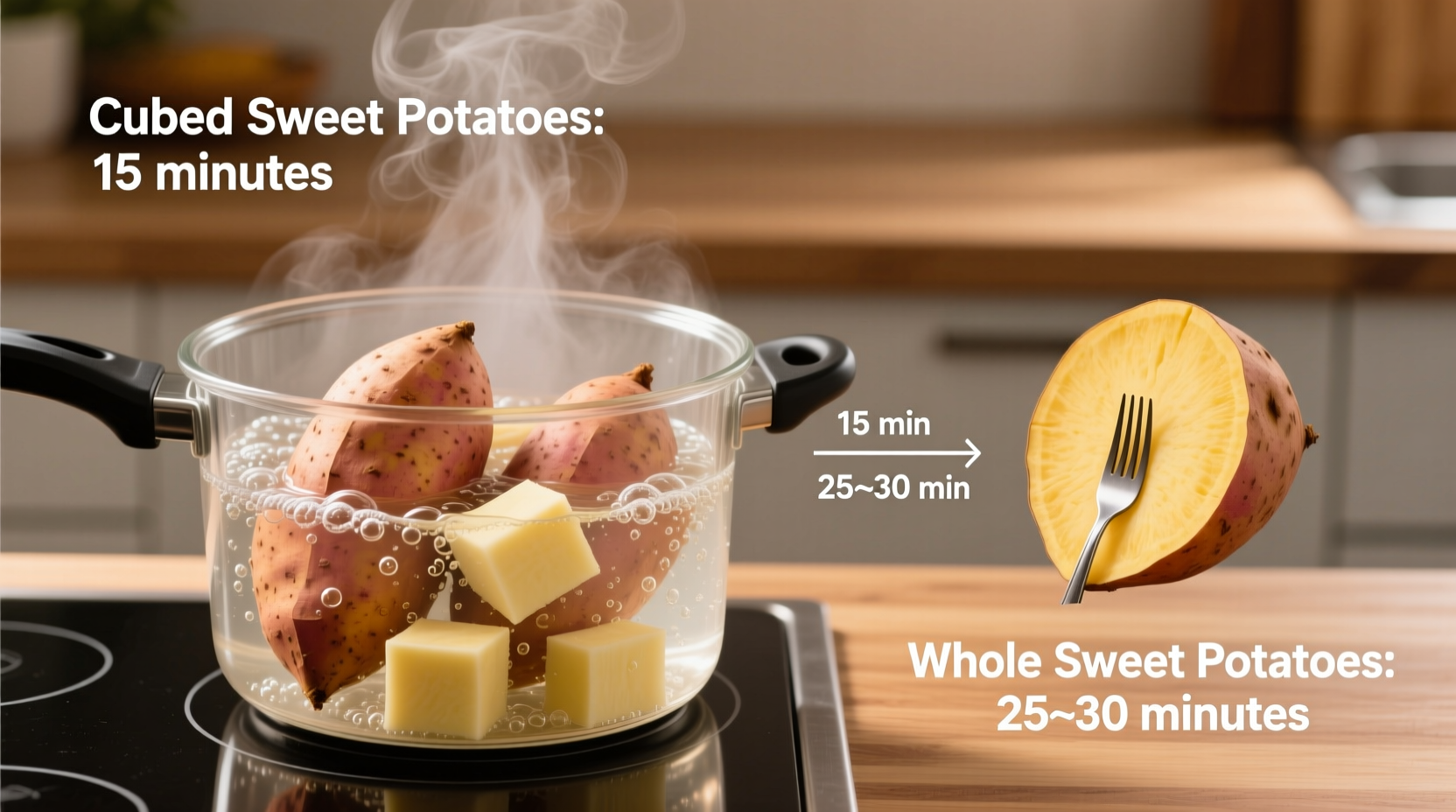
- Size and Cut: Whole medium sweet potatoes take 30–45 minutes. Cubed pieces (1-inch) require only 12–20 minutes.
- Variety: Orange-fleshed types (e.g., Beauregard, Jewel) cook faster due to higher moisture. Drier, starchier white or cream-fleshed types may need slightly longer.
- Starting Temperature: Always start with cold water. Dropping sweet potatoes into boiling water causes uneven cooking—outer layers soften too quickly while centers remain hard.
- Altitude: At elevations above 3,000 feet, water boils at lower temperatures, increasing cooking times by up to 25%.
- Pot Type and Lid Use: A heavy-bottomed pot with a tight-fitting lid maintains consistent heat and reduces evaporation.
Standard Boiling Times by Preparation Method
To ensure accuracy, always use a timer and test doneness with a fork or knife tip. Here are general guidelines based on common preparations:
| Preparation Style | Boiling Time | Doneness Indicator |
|---|---|---|
| Whole medium sweet potato (6–8 oz) | 30–45 minutes | Fork slides easily through center with little resistance |
| Halved lengthwise | 20–30 minutes | No firm core remains along the cut edge |
| Cubed (1-inch pieces) | 12–20 minutes | All cubes yield uniformly to gentle pressure |
| Thin slices (¼ inch) | 8–12 minutes | Flexible but not falling apart |
Note: These times assume starting in cold, salted water over medium-high heat, brought to a simmer (not a rolling boil) once the water reaches 212°F (100°C). Vigorous boiling can cause fragmentation, especially in delicate orange-fleshed types.
Step-by-Step Guide to Boiling Sweet Potatoes Perfectly
- Wash and Scrub Thoroughly: Rinse under running water and use a vegetable brush to remove dirt. Do not peel unless required by recipe (skin protects flesh during cooking).
- Decide on Cut Size: For even cooking, cut into uniform pieces. Smaller = faster; whole = denser texture retention.
- Place in Cold Water: Add sweet potatoes to a large pot and cover with cold water by at least 1 inch. Starting cold ensures internal and external doneness align.
- Add Salt (Optional): One teaspoon of kosher salt per quart enhances natural sweetness without overpowering.
- Bring to a Simmer: Heat uncovered over medium-high until bubbles form around edges (about 180–200°F). Reduce heat slightly to maintain a steady simmer.
- Cook Until Tender: Begin checking early—start testing cubed pieces at 12 minutes, whole potatoes at 30. Insert a paring knife or skewer into the thickest part.
- Drain Immediately: Once tender, pour into a colander. Let sit 1–2 minutes to allow excess moisture to evaporate, preventing watery mash.
- Proceed Based on Recipe Needs: Mash directly, roast for crispness, or chill for salads.
Pro Tip: If making mashed sweet potatoes, leave skins on during boiling—they act as a barrier against water absorption. Peel after draining while still warm.
Variants & Types: How Variety Affects Cooking
Not all sweet potatoes behave the same way when boiled. Choosing the right type matters for both texture and timing:
- Jewel / Beauregard (Orange Flesh): Most widely available in U.S. supermarkets. High in moisture and sugars. Cooks relatively quickly and becomes very soft. Ideal for mashing, baking, and casseroles.
- Garnet (Deep Orange): Similar to Jewel but slightly sweeter and more aromatic. Slightly denser; may hold shape better in soups.
- O’Henry (White/Cream Flesh): Milder flavor, lower sugar content, drier texture. Takes marginally longer to boil due to reduced moisture. Better suited for savory applications where subtlety is desired.
- Japanese / Stokes Purple®: Distinctive purple skin and flesh. Lower moisture, waxy texture. Resists breaking down during boiling—excellent for salads and pickling. Requires full 20+ minutes even when cubed.
When substituting between types, adjust expectations: orange-fleshed varieties will break down faster and absorb more liquid, while white and purple types retain structure longer.
Comparison with Regular Potatoes
Sweet potatoes are often confused with yams or regular white potatoes, but they differ significantly in composition and cooking behavior. Here's how boiling differs:
| Feature | Sweet Potato | Regular Potato (Russet/Yukon Gold) |
|---|---|---|
| Botanical Family | Morning glory | Nightshade |
| Texture When Boiled | Creamy, moist, sometimes fibrous near skin | Fluffy (russet) or buttery (Yukon) |
| Sweetness | Naturally sweet; intensifies with heat | Neutral, mildly starchy |
| Boiling Time (Cubed) | 12–20 minutes | 15–25 minutes |
| Water Absorption | Higher—can become soggy if overcooked | Moderate—absorbs water evenly |
| Browning After Cutting | Minimal; slight oxidation possible | Rapid—requires soaking in water |
| Best Uses Post-Boil | Mashing, roasting, blending into soups | Mashing, frying, potato salad (if cooled) |
\"Many people treat sweet potatoes like russets when boiling, but their chemistry is different. They’re more fragile, more hydrated, and more sensitive to overcooking. Treat them gently, and you’ll be rewarded with silkier results.\" — Chef Lena Torres, Culinary Instructor, Institute of Plant-Based Cuisine
Practical Tips & FAQs
Can I boil sweet potatoes with the skin on?
Yes, and it’s recommended. The skin protects the flesh from absorbing too much water, helping maintain texture. Peel after boiling while still warm using a paring knife or your fingers (wear gloves if handling hot).
Should I salt the water?
Yes. Salting enhances flavor development, balancing natural sweetness. Use about 1 tsp kosher salt per quart of water—similar to pasta water.
Why did my boiled sweet potatoes turn out mushy?
Overcooking is the most common cause. Check early and frequently. Also, starting in already-boiling water accelerates surface breakdown before the center heats through.
Can I prep boiled sweet potatoes ahead of time?
Absolutely. Cook fully, cool completely, then store in an airtight container in the refrigerator for up to 5 days. Reheat gently in a saucepan with a splash of milk or broth to restore moisture.
Do I need to blanch sweet potatoes before freezing?
For best quality, yes. Boil until just tender (about 75% done), drain, cool, and freeze on a tray before transferring to bags. Fully boiled sweet potatoes can also be frozen mashed—add fat (butter, oil) to prevent graininess upon thawing.
Is boiled sweet potato healthy?
Yes. Boiling preserves most nutrients, including vitamin A and fiber. While some water-soluble vitamins (like B6 and C) leach slightly into the water, retaining the cooking liquid for soups or sauces recaptures these benefits.
Can I boil sweet potatoes and carrots together?
Yes, but monitor closely. Carrots typically take longer to soften unless cut smaller. Cube carrots slightly finer than sweet potatoes to ensure even doneness.
Storage Tip: Never store raw sweet potatoes in the refrigerator—they suffer chilling injury that leads to hard centers and off-flavors when cooked. Keep in a cool, dark pantry instead.
Expert Applications: Beyond Basic Boiling
Professional kitchens leverage boiled sweet potatoes in creative ways beyond simple sides:
- Emulsified Soups: Blended with stock, aromatics, and cream, boiled sweet potatoes create velvety bisques. Roast first for deeper flavor, then finish with a short boil to soften any charred bits.
- Dough Enrichment: Mashed boiled sweet potato adds moisture, color, and subtle sweetness to breads, dumplings, and bao buns.
- Infused Liquids: Simmer peeled cubes in milk or plant-based alternatives to infuse desserts and custards with natural sweetness and body.
- Cold Grain Bowls: Chill boiled, cubed sweet potatoes and toss with quinoa, kale, tahini dressing, and seeds for nutritious meal prep.
In restaurant settings, chefs often parboil sweet potatoes before finishing them in a high-heat oven or pan-sear to build layered textures—soft inside, lightly caramelized outside.
Summary & Key Takeaways
Boiling sweet potatoes successfully hinges on attention to detail—not just timing, but also cut size, variety, and technique. Start in cold, salted water, bring to a simmer, and test frequently to avoid overcooking. Orange-fleshed types cook fastest and are best for mashing, while drier or purple varieties hold shape better for salads and stews.
Unlike regular potatoes, sweet potatoes are more prone to waterlogging and texture degradation if left too long in boiling water. Their natural sweetness means they don’t require added sugar in most recipes—especially when building depth through proper boiling and optional roasting afterward.
By mastering the fundamentals of boiling time and method, home cooks unlock the full potential of this nutrient-dense, versatile ingredient. Whether preparing a holiday casserole, weekday soup, or plant-based dinner bowl, precise boiling ensures optimal texture and flavor integration.
Now that you know the science and practice behind boiling sweet potatoes, put it to work in your next kitchen project. Try a batch of golden-orange mash with cinnamon and brown butter, or fold chilled cubes into a hearty grain salad. Precision meets flavor—one boil at a time.




 浙公网安备
33010002000092号
浙公网安备
33010002000092号 浙B2-20120091-4
Comments
No comments yet. Why don't you start the discussion?