
Writing is often seen as a serious, structured endeavor—but it doesn’t have to be. For many, the pressure to produce polished, logical prose can stifle the very thing that gives writing its soul: imagination. One surprisingly effective way to break through mental blocks and reawaken creative energy is through playful tools—specifically, cartoon character pens. These whimsical writing instruments do more than add charm to your desk; they serve as psychological triggers that lower inhibitions, invite spontaneity, and reconnect you with the childlike joy of storytelling.
Used intentionally, a cartoon character pen can transform an intimidating blank page into a playground of ideas. Whether you're a novelist, student, or journaler, integrating these colorful tools into your writing routine can shift your mindset from performance to play—where true creativity thrives.
The Psychology Behind Playful Tools and Creative Flow
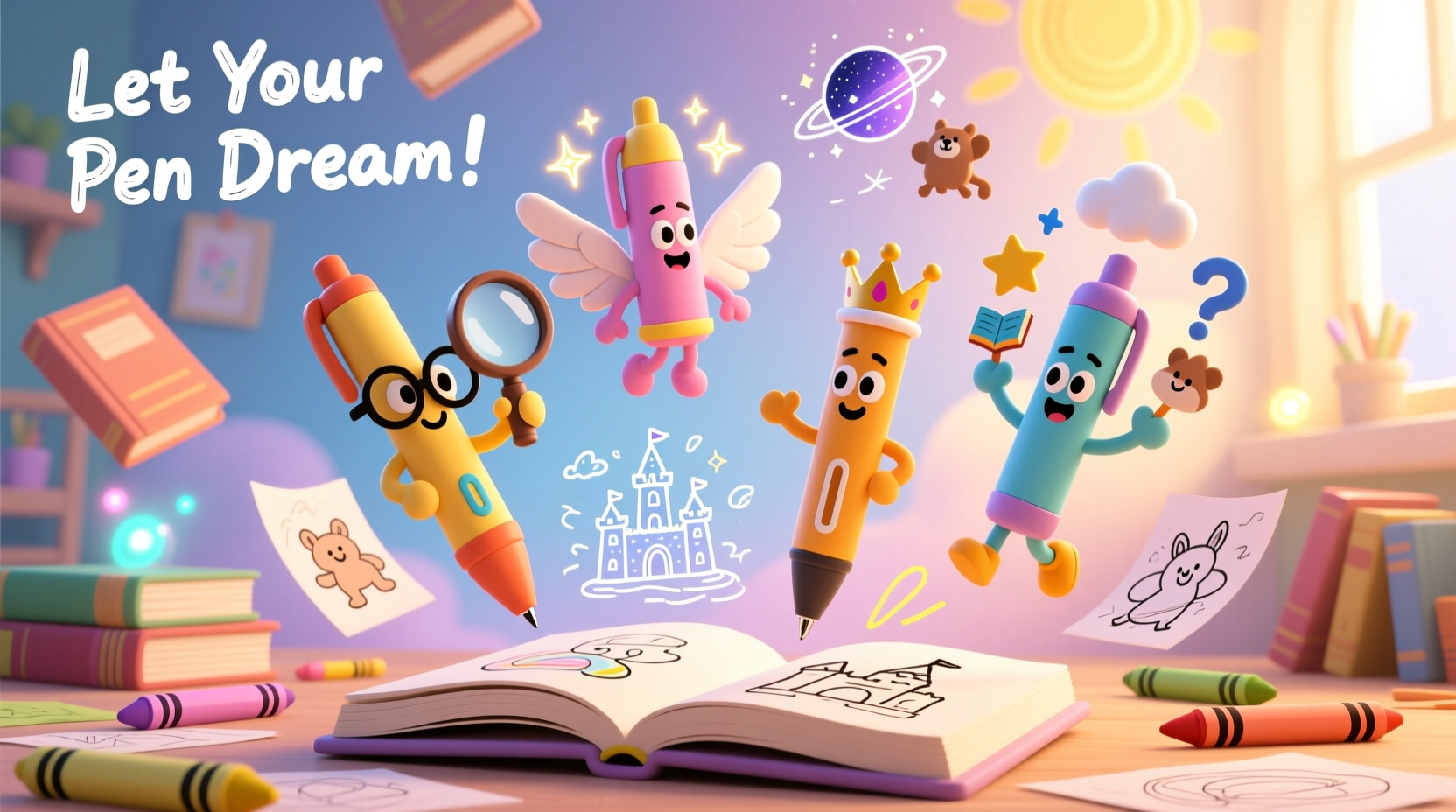
Creativity isn't just about talent—it's deeply tied to emotional state and environment. Research in cognitive psychology shows that humor, novelty, and tactile engagement stimulate divergent thinking, the mental process behind idea generation. When we introduce something unexpected or joyful into a task, like using a pen shaped like Mickey Mouse or Pikachu, we disrupt habitual thought patterns.
This disruption is beneficial. It interrupts the inner critic—the voice that says \"this isn’t good enough\"—and creates space for raw, unfiltered ideas to emerge. Dr. Shelley Carson, a Harvard psychologist and author of Your Creative Brain, explains:
“Engaging in low-stakes, playful activities lowers anxiety and activates brain regions associated with imagination and problem-solving. Simple sensory cues—like holding a fun object—can signal the brain that it’s safe to explore.” — Dr. Shelley Carson, Cognitive Psychologist
A cartoon character pen acts as such a cue. Its visual familiarity (especially from childhood) evokes nostalgia and comfort, reducing the fear of failure that often paralyzes writers. This emotional safety encourages freer expression, which is essential during brainstorming or drafting stages.
How Cartoon Character Pens Activate Imagination
These pens aren’t just novelties—they function as imaginative anchors. Each character carries a personality, history, and world. Using a SpongeBob pen might subconsciously prompt sillier, exaggerated ideas. A Batman pen could inspire grittier narratives. The key is leveraging this associative power deliberately.
Here’s how different aspects of the pen contribute:
- Visual Stimulus: Bright colors and familiar faces capture attention and spark associative thinking.
- Tactile Engagement: Unusual shapes or rubber grips make the act of writing more sensory-rich, increasing focus and presence.
- Narrative Prompting: Characters come with built-in backstories. Asking “What would Dora say about this topic?” can generate unexpected angles.
- Emotional Tone Setting: A Hello Kitty pen sets a gentle, kind tone; a Deadpool pen invites irreverence and satire.
Step-by-Step Guide: Using Cartoon Character Pens to Unlock Ideas
To harness the full creative potential of these pens, follow this structured approach:
- Select a character aligned with your writing goal. Need humor? Pick Homer Simpson. Writing fantasy? Try a Studio Ghibli Totoro pen. Match the energy.
- Begin with a free-write session. Set a timer for 10 minutes. Write without stopping, using the pen. Let the character influence tone or voice—even if it feels silly.
- Adopt the character’s perspective. Ask: “How would Winnie the Pooh describe heartbreak?” or “What advice would Bugs Bunny give a struggling writer?” Record their answers in first person. <4> Switch pens mid-session. After 15 minutes, change to a contrasting character (e.g., from严肃的 Iron Man to playful Pikachu). Notice shifts in rhythm, vocabulary, and idea flow.
- Review and mine for gold. Don’t judge during writing. Later, highlight any surprising phrases, metaphors, or concepts worth developing.
This method works especially well when stuck on plot development, dialogue, or opening lines. The absurdity breaks perfectionism, allowing authentic voice to surface.
Do’s and Don’ts of Using Character Pens for Creativity
| Do’s | Don’ts |
|---|---|
| Use them during brainstorming and drafting—not final editing. | Don’t rely on them exclusively; transition to neutral tools for refinement. |
| Choose characters with strong personalities or emotional associations. | Don’t pick overly distracting designs that hinder actual writing. |
| Pair the pen with themed music or background visuals for immersion. | Don’t feel pressured to write “in character” if it feels forced. |
| Keep a dedicated notebook for pen-specific idea sessions. | Don’t dismiss “childish” output—it may contain valuable kernels. |
Mini Case Study: Reviving a Stalled Novel Draft
Sophie, a freelance writer in Portland, had been stuck on her middle-grade fantasy novel for months. Every time she sat down to write, she felt burdened by expectations—both her own and imagined reader reactions. On a whim, she bought a pen shaped like Pusheen the cat, a character known for calmness and humor.
She began using it only for morning freewriting, setting a rule: everything had to be written in Pusheen’s voice. At first, she resisted—“This is ridiculous,” she thought. But within days, Pusheen started commenting on the story’s tension, saying things like, “Maybe the dragon just needs a nap and a tuna sandwich.”
One morning, Pusheen “suggested” that the villain wasn’t evil—just misunderstood and overworked. That single line cracked open the entire narrative. Sophie realized her antagonist lacked motivation. She rewrote the character with empathy, transforming the story’s emotional core. Six weeks later, she completed her draft.
“The pen didn’t write the book,” she said later, “but it gave me permission to stop taking myself so seriously. Once I laughed, the words came back.”
Checklist: Maximize Your Creative Pen Sessions
- ☑ Choose a character relevant to your project’s tone or theme
- ☑ Limit sessions to 10–20 minutes to maintain playful energy
- ☑ Write by hand—don’t type—to enhance neural engagement
- ☑ Allow yourself to write badly, off-topic, or absurdly
- ☑ Reflect afterward: underline one idea worth exploring further
- ☑ Store pens visibly as inspiration triggers, not hidden in drawers
Frequently Asked Questions
Can cartoon character pens really improve writing quality?
Not directly—but they improve the conditions for creativity. By reducing stress and encouraging experimentation, they help you generate more material, some of which will be high-quality. The improvement comes from increased output and risk-taking, not the pen itself.
Are these tools only for children or casual writers?
No. Professional authors, screenwriters, and poets use similar techniques—Edward Lear wrote nonsense verse to warm up; Neil Gaiman recommends doodling before drafting. The tool matters less than the mindset it creates. If it helps you access flow, it’s valid.
What if I don’t connect with any cartoon characters?
That’s okay. The principle applies to any playful or nostalgic object: a funky gel pen, a vintage typewriter key, or even a lucky coin. The goal is to find a tactile anchor that signals “play mode” to your brain.
Conclusion: Reclaim Joy as a Creative Foundation
Creativity doesn’t flourish under pressure. It grows in moments of curiosity, surprise, and delight. A cartoon character pen is more than a gimmick—it’s a deliberate choice to prioritize imagination over perfection. In a world where writing is often measured by productivity and polish, these small acts of playfulness become radical.
You don’t need expensive software or years of training to reignite your creative spark. Sometimes, all it takes is picking up a pen shaped like a smiling panda or a grumpy cat and letting yourself write like no one’s watching—because the best ideas often come when you’re not trying to impress anyone, not even yourself.




 浙公网安备
33010002000092号
浙公网安备
33010002000092号 浙B2-20120091-4
Comments
No comments yet. Why don't you start the discussion?