
Choosing the right keychain might seem like a small decision, but it reflects personal taste, functionality needs, and even emotional value. Two of the most popular styles—bowknot keychains and initial keychains—each bring unique strengths to the table. One leans into charm and whimsy; the other emphasizes identity and simplicity. But when it comes down to it, which one is truly cuter and more practical for daily life? The answer depends on what you value most in both aesthetics and usability.
The Aesthetic Appeal: Cuteness Compared
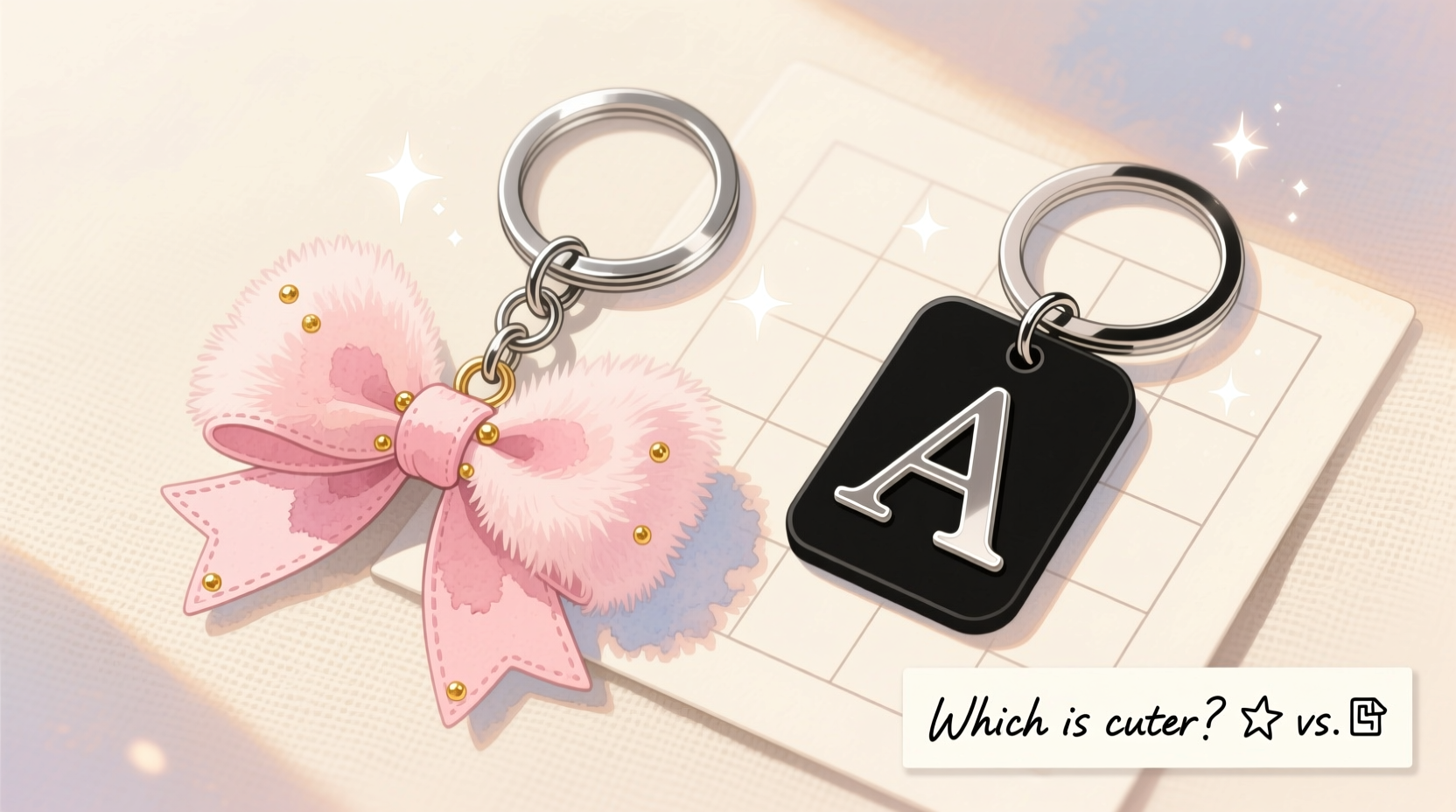
Cuteness is subjective, but certain design elements consistently trigger positive emotional responses. Bowknot keychains, often made with soft silicone, enamel, or fabric, mimic the look of a perfectly tied ribbon. Their rounded loops and symmetrical shape evoke nostalgia, femininity, and playfulness. They’re frequently found in pastel colors, glitter finishes, or paired with tiny charms like hearts or stars, making them especially popular among teens and young adults who favor kawaii or minimalist-cute fashion.
In contrast, initial keychains focus on elegance through minimalism. Typically crafted from metal, leather, or engraved acrylic, they feature a single letter—usually the owner’s first initial. Their appeal lies in sophistication and personal significance. While not “cute” in the traditional sense, they carry a quiet charm that grows with wear, becoming a subtle extension of identity.
Bowknot Keychains: When Sweetness Takes Center Stage
The bowknot design inherently draws attention. Its three-dimensional shape catches light differently than flat accessories, and its texture—especially in plush or rubberized versions—adds tactile appeal. Many find the bow symbolically comforting, reminiscent of gift-wrapping or childhood hair accessories. This emotional resonance amplifies its perceived cuteness.
However, over time, excessive ornamentation can feel juvenile depending on context. A sparkly pink bowknot may clash with a professional work environment or a sleek leather jacket. Cuteness, in this case, trades some versatility for immediate visual delight.
Initial Keychains: Subtle Charm with Lasting Impact
Initials don’t shout—they whisper. An engraved stainless steel \"L\" or a rose-gold-plated \"M\" doesn’t rely on frills to stand out. Instead, it gains meaning through repetition and ownership. People notice initials because they recognize them as markers of individuality. Over time, an initial keychain becomes less about appearance and more about association—like a signature stitched into everyday life.
While less overtly cute, initial keychains often win points for timeless style. They age gracefully, avoiding the trend-driven obsolescence that can affect novelty designs.
Practicality: Function Meets Daily Use
Beauty means little if an accessory fails in function. Practicality encompasses durability, weight, ease of access, and compatibility with different key types.
| Feature | Bowknot Keychain | Initial Keychain |
|---|---|---|
| Durability | Varies by material; fabric knots fray, silicone lasts longer | Generally high; metal resists wear and corrosion |
| Weight | Light to moderate (can bulk up with multiple keys) | Light (especially aluminum or acrylic), heavier with solid metal |
| Key Access | Sometimes obstructed by design bulk | Usually unobstructed; simple ring attachment |
| Style Flexibility | Limited to casual or themed outfits | Adaptable across formal, casual, and professional settings |
| Personalization Level | Low (standard designs, occasional color choice) | High (custom letter, font, finish, material) |
Bowknot keychains, while visually engaging, can be less practical due to their size and structure. Keys attached behind or within the knot may be harder to identify quickly, especially in low-light situations. Additionally, fabric-based versions absorb moisture and stains, requiring careful maintenance.
Initial keychains, particularly those with a split-ring or lobster-clasp design, offer streamlined functionality. The letter often doubles as a grip point, making it easier to pull keys from a pocket or bag. Materials like titanium or brushed aluminum resist scratches and tarnishing, ideal for long-term use.
“Personalization increases attachment to everyday objects. A well-chosen initial keychain isn’t just functional—it becomes a ritual object.” — Dr. Lena Torres, Behavioral Designer & Product Psychologist
Real-Life Example: Office Worker vs. College Student
Consider two users: Maya, a 24-year-old graphic designer in art school, and James, a 38-year-old project manager at a finance firm.
Maya uses a translucent lavender bowknot keychain with a dangling star charm. It matches her pastel backpack and reflects her creative personality. She loves how it makes her smile when she sees it. However, she admits it occasionally snags on her scarf and once broke when her keys got caught in a door hinge. Still, she replaces it every few months because “it feels like *me*.”
James owns a matte black titanium initial keychain with his “J” subtly etched. He chose it after losing three previous keychains—he wanted something durable and understated. “I don’t think about it,” he says, “but I’ve had it for two years, and it still looks new. Plus, my colleagues always notice it’s clean and sharp.”
This contrast illustrates how lifestyle shapes preference. Maya prioritizes expression; James values resilience and professionalism.
How to Choose Based on Your Lifestyle
Selecting between these styles shouldn’t be arbitrary. Consider your routine, environment, and emotional connection to accessories.
Who Should Choose a Bowknot Keychain?
- You enjoy expressing yourself through colorful, playful accessories.
- Your daily attire leans toward casual, feminine, or trendy styles.
- You're buying a gift for someone who loves kawaii culture or nostalgic details.
- You don’t mind replacing it every 6–12 months due to wear.
Who Should Choose an Initial Keychain?
- You prefer timeless, minimalist design over fleeting trends.
- You carry keys frequently in professional or formal settings.
- Durability and low maintenance are top priorities.
- You appreciate meaningful, personalized items with emotional weight.
Step-by-Step Guide: Choosing and Caring for Your Keychain
- Assess your daily routine: Do you rush between meetings or lounge between classes? High-motion lifestyles need sturdier builds.
- Match to your wardrobe: Take note of your go-to outfits. Does a bow complement them, or would an initial blend better?
- Test for comfort: Attach a sample to your keys for a day. Does it dig into your hand? Is it easy to grab?
- Check material quality: Look for UV-resistant coatings, anti-tarnish metals, or reinforced stitching.
- Maintain regularly: Wipe metal initials with a microfiber cloth monthly. Avoid submerging bowknots in water unless specified as waterproof.
Frequently Asked Questions
Can I personalize a bowknot keychain?
Some brands offer custom colors or add-on initials, but full personalization is rare. Most bowknots come in standard designs, limiting uniqueness compared to dedicated initial models.
Are initial keychains only for monograms?
No. While traditionally used for first initials, many people choose initials representing names of loved ones, pets, or even motivational words (e.g., “B” for “Believe”). The letter itself is flexible in meaning.
Which keychain lasts longer?
Initial keychains made from metal alloys typically last longer than fabric or silicone bowknots. With proper care, a quality initial keychain can endure 5+ years, while bowknots may degrade within 1–2 years, especially with frequent use.
Final Verdict: Cuteness vs. Practicality
If cuteness were the only factor, the bowknot keychain would win hands down. Its soft curves, vibrant hues, and symbolic sweetness make it an instant mood-lifter. It’s the accessory equivalent of a sticker-covered journal—full of personality and joy.
But when practicality enters the equation, the balance shifts. Initial keychains outperform in durability, adaptability, and long-term value. They integrate seamlessly into diverse lifestyles without demanding attention or maintenance.
The truth is, neither is universally superior. The best choice aligns with your identity and daily demands. You might even rotate them—one for weekend outings, another for workdays.




 浙公网安备
33010002000092号
浙公网安备
33010002000092号 浙B2-20120091-4
Comments
No comments yet. Why don't you start the discussion?