
When choosing a backpack that can withstand daily wear—whether for commuting, traveling, or school—the material matters more than most realize. Two popular styles often compared are bowknot fabric backpacks and full-grain leather backpacks. While both have loyal followings, their performance over time differs significantly under real-world conditions. One is built for rugged endurance; the other leans toward style and affordability. Understanding how they fare against abrasion, moisture, weight load, and aging helps determine which truly lasts longer.
Durability by Material: Fabric vs Leather
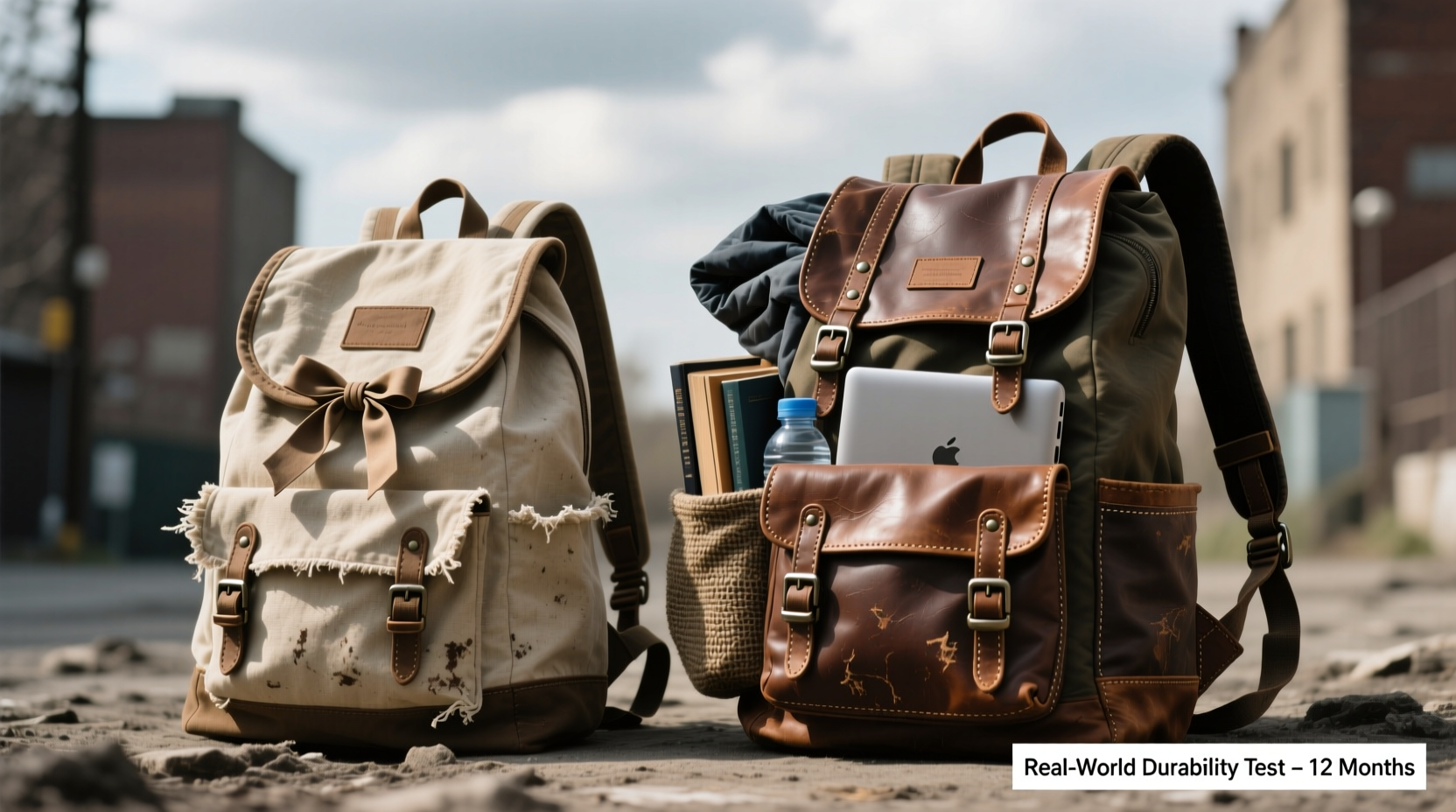
Bowknot backpacks typically use woven synthetic fabrics like polyester, nylon, or canvas blends, often with decorative knot details on straps or closures. These materials are lightweight and water-resistant to varying degrees but inherently less durable than high-quality leather when exposed to long-term stress.
Leather backpacks, especially those made from full-grain or top-grain hides, offer superior tensile strength. Leather fibers are naturally dense and tightly interwoven, resisting tears and punctures better than fabric weaves. Over time, leather develops a patina—a natural sheen formed through oxidation and use—that many consider part of its character, rather than a sign of wear.
Real-World Stress Factors Compared
In actual daily use, backpacks face constant challenges: rain, heavy loads, friction from seat belts, exposure to UV light, and rough handling. How each material responds defines longevity.
- Moisture Resistance: Most bowknot fabric packs come with water-resistant coatings, but these degrade after repeated exposure. Leather absorbs moisture slowly and can be conditioned to resist it, though prolonged soaking causes stiffness or mold if not dried properly.
- Abrasion: Fabric edges fray over time, especially at stress points like strap junctions. Leather resists fraying and only shows wear as gradual smoothing or creasing—often enhancing appearance.
- Weight Load: Heavy textbooks, laptops, or travel gear strain stitching and base panels. Leather distributes weight more evenly due to its structural integrity, while fabric may stretch or sag.
- UV Exposure: Sunlight fades dyes in fabric and dries out leather. However, faded fabric looks worn; conditioned leather retains richness even with age.
“After five years of daily subway commutes, my leather backpack still holds up—my old nylon one lasted just two seasons.” — Daniel Reyes, Urban Commuter & Gear Tester
Comparative Longevity Table: Bowknot Fabric vs Leather Backpacks
| Factor | Bowknot Fabric Backpack | Leather Backpack |
|---|---|---|
| Average Lifespan (Daily Use) | 2–3 years | 7–15+ years |
| Tear Resistance | Moderate (prone to snags) | High (resists punctures) |
| Water Resistance | Good initially, degrades over time | Fair (requires conditioning) |
| Stitching Durability | May unravel at seams | Holds strong with quality thread |
| Weight Support | Limited (fabric stretches) | Excellent (leather maintains shape) |
| Maintenance Needs | Low (spot clean) | Moderate (conditioning every 3–6 months) |
| Patina Development | None (only fading or staining) | Yes (adds character over time) |
Care Requirements That Impact Longevity
No backpack lasts long without proper care—but the type and frequency differ drastically between materials.
Fabric backpacks require minimal maintenance: occasional wiping with a damp cloth, air drying, and avoiding machine washing unless specified. However, once the waterproof coating wears off, the fabric becomes vulnerable to stains and mildew.
Leather demands more attention but rewards it with extended life. Regular cleaning with a pH-balanced leather wipe, followed by application of conditioner every few months, prevents cracking and keeps fibers supple. Storing in a breathable cotton bag away from heat sources preserves integrity.
“Consistent care and proper storage can double a bag’s lifespan.” — Emma Clarke, Fashion Care Expert
Real Example: The Five-Year Commute Test
Consider Sarah Lin, a graphic designer in Chicago who used two backpacks interchangeably over five years. Her navy bowknot nylon pack handled well for the first 18 months—lightweight, easy to clean, stylish. But by year two, the bottom panel began fraying, zippers stiffened, and the shoulder straps lost padding resilience. She replaced it at 27 months.
Her brown full-grain leather backpack, purchased at the same time, showed initial stiffness but softened beautifully within months. After weekly subway rides, occasional rain exposure, and laptop transport, it required only quarterly conditioning. At five years, it remains fully functional, with deeper color tone and no structural issues. Only the brass hardware shows slight tarnish—easily polished.
This case illustrates a broader trend: short-term convenience versus long-term investment.
Step-by-Step Guide to Extending Backpack Life
- Inspect Weekly: Check for loose threads, zipper alignment, and strap attachments.
- Empty and Air Out: Remove contents nightly and leave open for ventilation to prevent odor and moisture buildup.
- Clean Gently: For fabric, use mild soap and a soft brush. For leather, use专用 cleaner (never household detergents).
- Condition Leather Every 3–6 Months: Apply a thin layer of leather balm with a lint-free cloth; buff after 20 minutes.
- Store Properly: Keep in a cool, dry place with stuffing (tissue paper or soft cloth) to maintain shape.
- Avoid Overloading: Never exceed manufacturer weight limits—especially critical for fabric models.
- Rotate Bags: If possible, alternate between two backpacks to reduce continuous strain.
FAQ: Common Questions About Backpack Longevity
Can a bowknot fabric backpack last as long as leather with good care?
Unlikely. Even with meticulous maintenance, synthetic fabrics degrade faster due to fiber breakdown from UV exposure, friction, and repeated flexing. While care extends usability, the inherent material limitations cap lifespan around 3–4 years under heavy use.
Do all leather backpacks last longer, or does quality matter?
Quality is crucial. Bonded leather or corrected grain may peel or crack within 2–3 years. True full-grain leather, stitched with waxed thread and reinforced at stress points, is what delivers decade-long performance. Always check construction details before purchase.
Is a leather backpack worth the higher price?
If you plan to use it daily for years, yes. A $250 leather backpack lasting 10 years costs $25/year. A $80 fabric model replaced every 2.5 years totals $32/year—and lacks the aesthetic evolution of aged leather.
Final Checklist Before You Choose
- ✅ Assess your daily load: heavy electronics favor leather.
- ✅ Consider climate: rainy areas need treated fabric or oiled leather.
- ✅ Evaluate personal style: do you prefer evolving character (leather) or consistent look (fabric)?
- ✅ Factor in maintenance willingness: leather needs routine care.
- ✅ Check warranty and craftsmanship: reinforced stitching, metal zippers, and lining quality matter.
Conclusion: Choosing for the Long Haul
The evidence is clear: in real-world use, a well-made leather backpack outlasts a bowknot fabric model by a significant margin. While fabric options win on initial cost and variety, they cannot match the structural resilience, weight tolerance, and aging potential of genuine leather. With basic care, leather doesn’t just survive—it improves.
If you're looking for a single backpack that serves reliably for years, handles daily abuse, and grows more distinctive over time, leather is the smarter, more sustainable choice. Invest once, maintain consistently, and carry confidence knowing your pack was built to endure.




 浙公网安备
33010002000092号
浙公网安备
33010002000092号 浙B2-20120091-4
Comments
No comments yet. Why don't you start the discussion?