
Autism spectrum disorder (ASD) affects millions of individuals worldwide, with a notable gender imbalance: boys are diagnosed with autism at a significantly higher rate than girls—approximately four times more often. This disparity has long intrigued researchers, clinicians, and families alike. While it may seem like autism simply occurs more frequently in males, the reality is far more nuanced. Biological, genetic, diagnostic, and social factors all contribute to this observed pattern. Understanding why boys are more commonly identified with autism is not just an academic question—it has real-world implications for early intervention, accurate diagnosis, and equitable support for all children on the spectrum.
The Statistical Landscape: What the Numbers Show
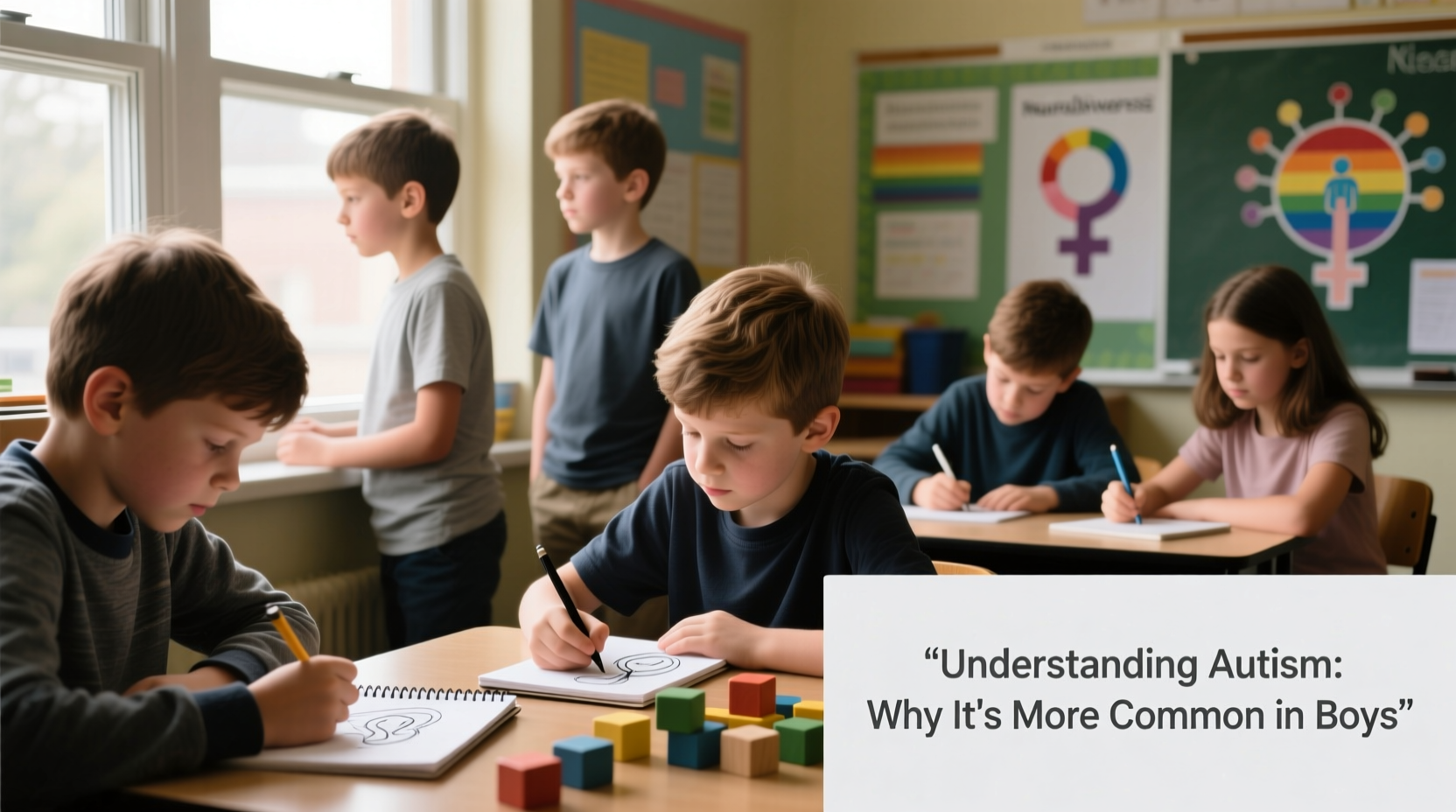
Data from the U.S. Centers for Disease Control and Prevention (CDC) consistently shows that about 1 in 36 children is diagnosed with autism, with boys accounting for nearly 80% of those cases. This 4:1 male-to-female ratio has held steady across multiple studies and decades of research. However, recent evidence suggests that this gap may be narrowing slightly, not necessarily because autism rates in boys are decreasing, but because awareness and diagnostic practices for girls are improving.
It's critical to recognize that these statistics reflect diagnosed cases—not necessarily actual prevalence. Some researchers argue that the true incidence of autism may be more balanced between genders, but girls are underdiagnosed due to differences in symptom presentation and societal expectations.
Biological and Genetic Factors
One of the most compelling explanations for the gender disparity lies in biology. The “female protective effect” theory suggests that females may require a greater genetic \"load\" or more mutations to manifest autistic traits. In other words, girls may be biologically more resilient to the genetic changes associated with autism, meaning only those with stronger genetic predispositions show clear symptoms.
Studies have found that girls diagnosed with autism often have more significant genetic deletions or duplications than boys with similar symptom severity. This supports the idea that female brains may have compensatory mechanisms that delay or mask the expression of autism traits.
Additionally, prenatal hormone exposure—particularly testosterone—has been linked to brain development patterns associated with autism. The \"extreme male brain\" theory, proposed by psychologist Simon Baron-Cohen, posits that autism represents an exaggeration of systemizing tendencies more common in males, though this model remains debated and does not account for all autistic experiences.
“Sex differences in autism are not just about numbers—they reflect deeper biological and cognitive variations that influence how autism presents across genders.” — Dr. Meng-Chuan Lai, Psychiatrist and Autism Researcher
Diagnostic Bias and Gendered Expectations
Another major factor contributing to the higher diagnosis rate in boys is bias in clinical assessment tools and societal perceptions. Most diagnostic criteria and screening instruments were developed based on studies predominantly involving boys. As a result, they emphasize behaviors more typical in males—such as repetitive movements, intense fixations, and overt social withdrawal.
Girls with autism, by contrast, often display different behavioral patterns. They may be more socially motivated, engage in imitation strategies (\"masking\"), and develop elaborate coping mechanisms to fit in. A girl might observe and mimic peers’ social interactions, making her challenges less visible to parents and professionals.
This masking can lead to delayed or missed diagnoses, sometimes well into adolescence or adulthood. By the time a girl receives a diagnosis, she may already be struggling with anxiety, depression, or burnout from years of camouflaging her needs.
Common Differences in Autism Presentation by Gender
| Characteristic | More Common in Boys | More Common in Girls |
|---|---|---|
| Social Interaction | Avoidance, limited eye contact | Mimicry, desire to make friends |
| Special Interests | Trains, numbers, systems | Animals, celebrities, literature |
| Repetitive Behaviors | Hand-flapping, lining up objects | Ritualistic routines, scripting conversations |
| Diagnosis Age | Typically earlier (ages 3–5) | Often later (school age or beyond) |
Real-Life Impact: A Case Study
Consider the case of eight-year-old Liam and his classmate Emma, both exhibiting signs of developmental differences. Liam rarely speaks during group activities, lines up his pencils repeatedly, and becomes distressed when classroom routines change. His teacher quickly refers him for evaluation, and he is diagnosed with autism by age five.
Emma, meanwhile, is talkative and eager to please. She memorizes scripts from TV shows to use in conversations and spends hours drawing detailed maps of fictional worlds. Though she struggles with peer relationships and sensory overload, her behavior is interpreted as “shyness” or “being quirky.” It isn’t until third grade, after falling behind academically and experiencing panic attacks, that Emma undergoes an autism assessment—and finally receives a diagnosis.
This example illustrates how identical levels of need can go unrecognized simply because they don't match the stereotypical profile of autism. Without broader awareness, many girls like Emma remain invisible in the data, reinforcing the illusion of a male-dominated condition.
Actionable Steps for Parents and Educators
Recognizing autism in all children—regardless of gender—requires vigilance, education, and a willingness to look beyond outdated assumptions. Here’s what caregivers and professionals can do:
- Use gender-inclusive screening tools that account for masking and internalizing behaviors.
- Observe how a child copes in unstructured settings (e.g., recess), where social demands are less scripted.
- Listen to parent concerns without dismissing them as “overreaction,” especially when girls are involved.
- Promote professional training on sex-based differences in autism presentation.
- Support environments that reduce the need for masking by embracing neurodiversity.
Checklist: Early Signs of Autism in Girls
- Strong interest in people but difficulty maintaining reciprocal friendships
- Frequent imitation of others’ speech, gestures, or social behaviors
- Intense, narrow interests that may appear age-typical (e.g., horses, unicorns, books)
- High levels of anxiety, especially in social situations
- Extreme reactions to sensory stimuli (textures, sounds, lights)
- Need for predictable routines and distress when plans change
- Physical clumsiness or motor coordination issues
Frequently Asked Questions
Are girls less likely to have autism?
No—current research suggests girls are just as likely to be autistic, but their symptoms often present differently and are underrecognized. The lower diagnosis rate reflects gaps in detection, not lower biological prevalence.
Why are boys diagnosed earlier than girls?
Boys tend to exhibit more externalized behaviors—like aggression or hyperactivity—that prompt earlier referrals. Girls are more likely to internalize challenges, appear compliant, and mask difficulties, delaying identification.
Does the gender disparity affect treatment options?
Yes. Because many therapies and school supports are designed around male-centric models of autism, girls may not receive interventions tailored to their unique social and emotional needs, such as support for anxiety, self-esteem, or friendship dynamics.
Toward a More Equitable Future
The apparent predominance of autism in boys is not a simple fact of nature—it’s the result of complex interactions between biology, behavior, and societal interpretation. While genetic and hormonal factors may contribute to differential vulnerability, diagnostic practices and cultural expectations play a powerful role in shaping who gets seen and supported.
Moving forward, the goal should not be to reinforce the idea that autism is a “male disorder,” but to refine our understanding so that every child—regardless of gender—can be recognized early and given the tools to thrive. This means updating diagnostic criteria, training clinicians in gender-sensitive assessment, and listening closely to the lived experiences of autistic girls and women.




 浙公网安备
33010002000092号
浙公网安备
33010002000092号 浙B2-20120091-4
Comments
No comments yet. Why don't you start the discussion?