
Keychains are more than just functional—they’re small expressions of personality, style, and practicality. But when it comes to long-term use, the real test isn’t aesthetics; it’s durability. Among the most popular materials are braided rope and leather. Both offer a premium feel, but which one actually holds up over time without fraying, cracking, or breaking down? The answer depends on usage patterns, environment, care habits, and material quality. This in-depth comparison cuts through marketing claims and examines real-world longevity.
Durability Under Daily Wear and Tear
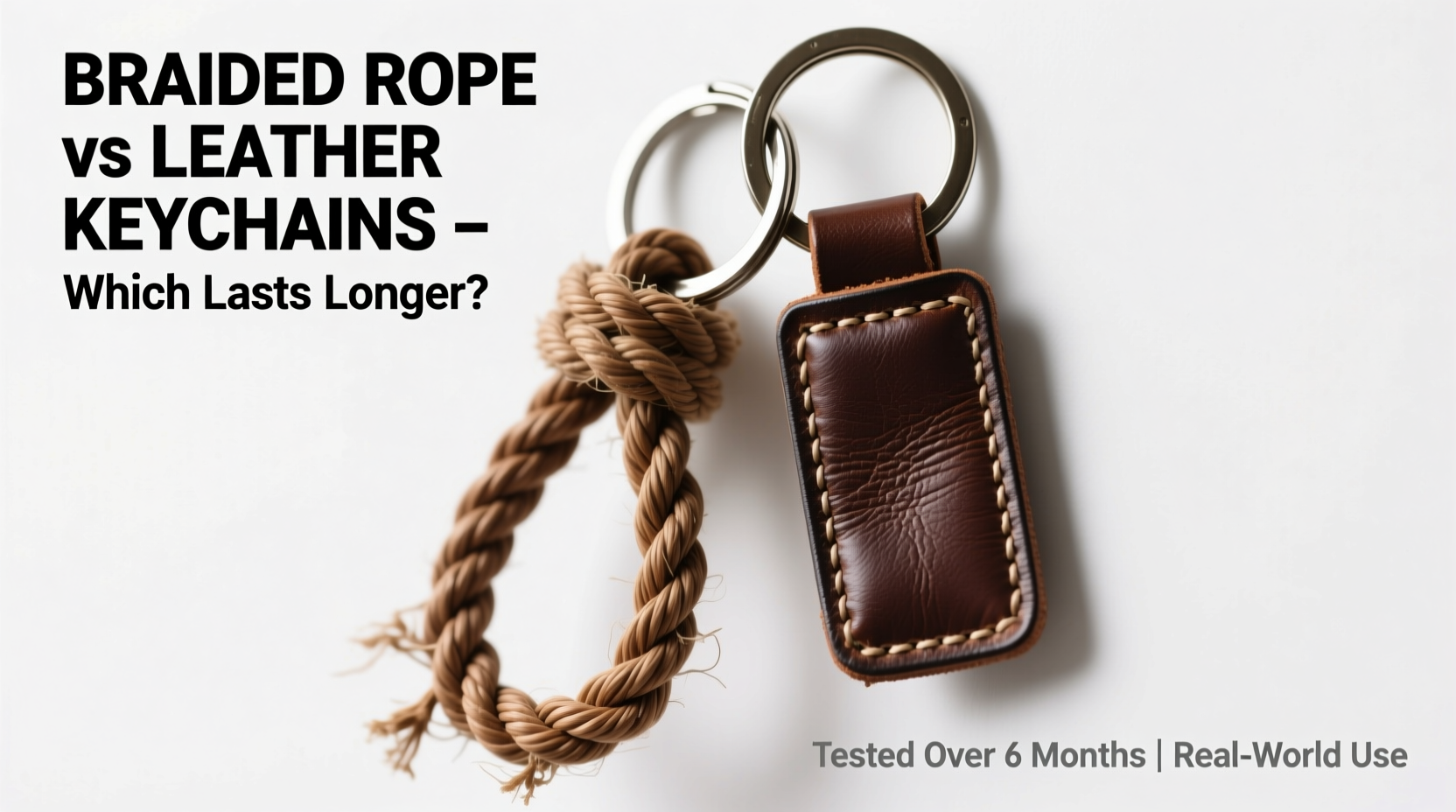
Daily use subjects keychains to constant stress—jostling in pockets, exposure to moisture, friction against metal keys, and accidental drops. Leather keychains, especially full-grain varieties, start strong with a rich texture and natural resilience. However, repeated bending and stretching can lead to creasing, which over time develops into cracks, particularly at stress points like stitching or attachment loops.
Braided rope keychains, typically made from synthetic fibers like nylon or polyester, handle mechanical stress differently. Their strength lies in redundancy: multiple strands woven together distribute force evenly. Even if one strand wears thin, the others maintain structural integrity. In high-friction environments—like being clipped to a belt loop or tossed daily into a backpack—rope tends to resist abrasion better than untreated leather.
“Rope keychains excel in tensile strength and flexibility. They don’t crack under pressure the way leather does when dried out.” — Marcus Tran, Product Engineer at Urban Gear Labs
Environmental Resistance: Water, Sun, and Temperature
Leather is organic. That means it reacts to its environment. Prolonged exposure to sunlight fades color and dries out natural oils, leading to brittleness. Spills, rain, or even sweaty hands introduce moisture that causes swelling, warping, or mildew if not dried properly. While some leathers are treated for water resistance, few remain fully impervious after months of use.
In contrast, synthetic braided ropes are inherently water-resistant. Nylon, for example, absorbs minimal moisture (less than 2% by weight) and dries quickly. UV resistance varies by dye and fiber type, but many modern paracord-style ropes include UV stabilizers. This makes them far more suitable for outdoor enthusiasts, travelers, or anyone living in humid climates.
Real-World Example: Hiker’s Keychain After One Year
Consider a case study involving two identical keyrings carried by the same person—one with a leather fob, the other with a military-grade paracord design. After a year of hiking, kayaking, and frequent use in rainy conditions, the leather piece showed visible fading, surface cracking near the clasp, and a slight odor due to trapped moisture. The braided rope version had minor surface dirt but no structural damage, no fraying, and retained its original shape and strength.
Material Quality and Construction Matter Most
Not all leather or rope keychains are created equal. A $5 mass-produced leather tag will degrade faster than a hand-stitched, vegetable-tanned version from a reputable artisan. Similarly, cheap polypropylene rope may unravel after six months, while high-density kernmantle braid (used in climbing gear) can last years.
Look for these signs of quality:
- For leather: Tight grain, consistent thickness, edge painting, and saddle stitching (not glued).
- For rope: Tight, uniform braiding, fused ends, and a metal shackle or reinforced loop.
Stitching method is critical. Leather often relies on thread, which can rot or snap if exposed to moisture and tension. Rope keychains frequently use heat-sealed or whipped ends, eliminating weak points where threads might fail.
Comparison Table: Braided Rope vs Leather Keychains
| Feature | Braided Rope | Leather |
|---|---|---|
| Tensile Strength | High (up to 550 lbs for paracord) | Moderate (depends on thickness) |
| Water Resistance | Excellent (synthetic fibers) | Poor to moderate (unless treated) |
| UV Resistance | Good (with stabilizers) | Fair (fades over time) |
| Abrasion Resistance | Very high (multi-strand protection) | Moderate (scratches show easily) |
| Lifespan (average) | 3–7 years | 2–5 years |
| Maintenance Required | Low (occasional wipe-down) | Moderate (conditioning every 3–6 months) |
| Eco-Friendliness | Lower (plastic-based) | Higher (biodegradable, if untreated) |
Care and Maintenance: How User Habits Affect Longevity
No material lasts forever without care—but the level of effort required differs significantly. Leather demands proactive maintenance. To prevent drying and cracking, it should be cleaned with a pH-balanced wipe and conditioned every few months with a beeswax or oil-based product. Neglect leads to premature failure.
Rope requires almost no upkeep. A rinse under tap water removes dirt and salt buildup. If stained, mild soap and a soft brush usually suffice. Because it doesn’t absorb liquids, there’s little risk of internal degradation from spills or sweat.
Step-by-Step Guide: Extending Keychain Life
- Inspect monthly: Check for fraying, loose stitches, or discoloration.
- Clean gently: Use a damp cloth for leather; rinse rope with water.
- Dry thoroughly: Air-dry both materials away from direct heat.
- Condition leather: Apply a thin layer of leather conditioner every 3–6 months.
- Rotate usage: Switch between two keychains to reduce wear on either.
- Store properly: Keep in a dry drawer or pouch when not in use for long periods.
When Leather Wins—and When Rope Does
Leather has undeniable appeal. It ages gracefully, developing a patina that many find attractive. For office workers, professionals, or those who value classic elegance, a well-cared-for leather keychain can last five years or more. Its weakness lies in inconsistency: a single season of neglect or harsh conditions can drastically shorten its life.
Braided rope, meanwhile, thrives in rugged environments. It’s the go-to choice for EDC (everyday carry) enthusiasts, military personnel, and outdoor adventurers. Its lifespan is more predictable because it resists environmental damage so effectively. Even lower-end versions often outlast premium leather pieces subjected to similar abuse.
“Durability isn’t just about material—it’s about match. Match the keychain to your lifestyle, and you’ll get the longest life.” — Lena Patel, Industrial Designer at Field & Forge
FAQ
Can I repair a cracked leather keychain?
Minor cracks can sometimes be minimized with leather filler and conditioning, but deep fissures compromise structural safety. Replacement is often safer than repair.
Do braided rope keychains fray over time?
Poorly made ones do, especially if ends aren’t sealed. High-quality versions use heat-fusion or whipping techniques that prevent unraveling, even after years of use.
Are leather keychains eco-friendly?
Natural leather is biodegradable, but tanning processes (especially chrome) can be environmentally harmful. Vegetable-tanned leather is a greener option, though still resource-intensive.
Conclusion: Which Lasts Longer?
The evidence points clearly toward braided rope as the more durable option in most real-world scenarios. Its resistance to water, UV light, and abrasion gives it an edge in longevity, especially when subjected to daily stress. While high-end leather can perform well with meticulous care, it’s inherently more vulnerable to environmental factors and user error.
If your priority is “set it and forget it” reliability, braided rope is the smarter investment. But if you appreciate aging character and are willing to maintain it, leather remains a stylish contender. Ultimately, the longest-lasting keychain isn’t just about material—it’s about how well it fits your life.




 浙公网安备
33010002000092号
浙公网安备
33010002000092号 浙B2-20120091-4
Comments
No comments yet. Why don't you start the discussion?