
When you press the brake pedal and it sinks all the way to the floor with little or no resistance, it’s more than just a minor inconvenience—it’s a serious safety hazard. This issue means your vehicle may not stop efficiently, putting you, your passengers, and others on the road at risk. Understanding why this happens and knowing how to respond can prevent accidents and costly repairs down the line.
The brake system is a hydraulic mechanism that relies on fluid pressure to transfer force from the pedal to the brake components at each wheel. Any disruption in this system—such as air in the lines, fluid leaks, or internal failure—can cause the pedal to feel soft or go straight to the floor. While some causes are simple to fix, others require immediate professional attention.
Common Causes of a Brake Pedal That Sinks to the Floor
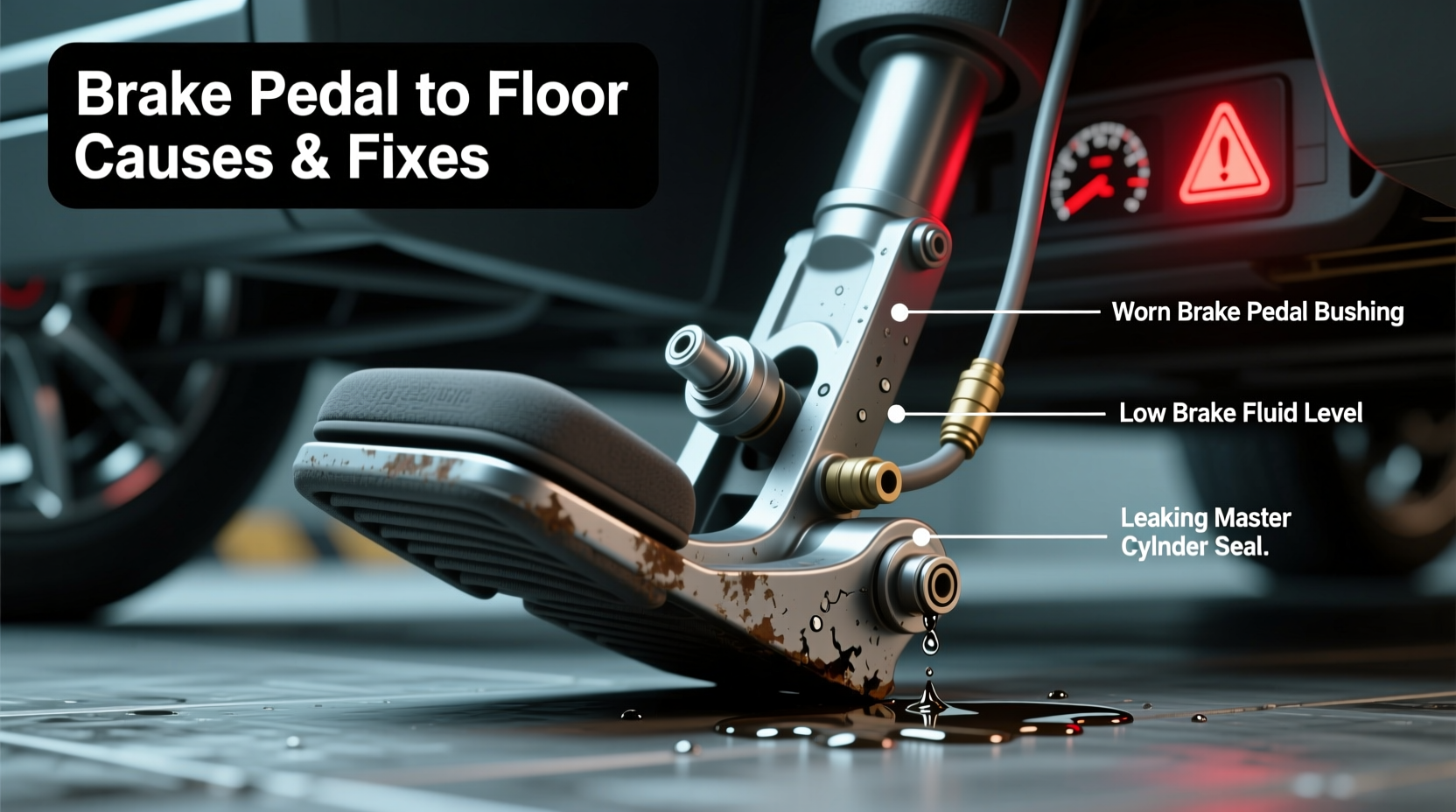
A sinking brake pedal typically points to a failure in maintaining consistent hydraulic pressure. Several mechanical or fluid-related issues can lead to this dangerous condition.
- Low brake fluid: The most frequent culprit. Fluid levels drop due to leaks or normal wear of brake pads, reducing the system’s ability to build pressure.
- Internal master cylinder failure: The master cylinder generates hydraulic pressure when you press the pedal. If its internal seals fail, fluid bypasses the piston instead of building pressure, causing the pedal to sink.
- Air in the brake lines: Air is compressible, unlike brake fluid. When air enters the system through leaks or improper bleeding, it creates a spongy pedal that may continue to depress.
- Leaking brake lines or hoses: Cracked steel lines or deteriorated rubber hoses allow fluid to escape, leading to pressure loss.
- Faulty calipers or wheel cylinders: Leaks at individual wheels, especially in drum brakes, can drain system pressure over time.
- Worn brake pads: Severely worn pads increase the distance the caliper must travel, which can mimic a soft pedal—but usually doesn’t cause full pedal drop unless combined with other issues.
Immediate Actions When Your Brake Pedal Goes to the Floor
If this happens while driving, staying calm and acting quickly is essential. Here’s what to do:
- Pump the brake pedal: Repeatedly pressing the pedal may build temporary pressure, especially if air is present or fluid is low. This can help slow the vehicle enough to pull over safely.
- Apply the parking brake gradually: If foot braking fails, use the parking (emergency) brake to slow down. Do so gently to avoid locking the rear wheels and losing control.
- Downshift to reduce speed: On manual transmissions, shift down gears progressively. In automatics, switch to a lower gear (L, 2, or “+” mode) to engage engine braking.
- Steer to safety: Signal and move to the shoulder or side of the road. Turn on hazard lights to alert others.
- Do not turn off the engine: Power steering and brake assist rely on engine vacuum. Turning it off increases steering effort and eliminates brake boost.
“Never ignore a soft or sinking brake pedal. Even one instance can indicate a critical failure waiting to happen.” — Carlos Mendez, ASE-Certified Master Technician
Troubleshooting Checklist: Diagnose the Issue Step by Step
Once the vehicle is safely parked, follow this checklist to identify the source of the problem.
- Inspect brake fluid level in the reservoir.
- Look under the car and around wheels for signs of fluid leaks (shiny, oily spots).
- Examine brake lines and hoses for cracks, bulges, or corrosion.
- Press the brake pedal and watch the fluid level—if it bubbles or fluctuates, air may be entering.
- Have an assistant press the pedal while you check for leaking calipers or wheel cylinders.
- Test the master cylinder: With the engine off, press the pedal several times. It should feel firm after a few pumps. If it sinks slowly when held down, the master cylinder is likely failing.
Repair Options and When to Seek Professional Help
Some fixes can be done at home with basic tools and knowledge, but others demand specialized equipment and expertise.
| Issue | DIY Possible? | Recommended Action | Estimated Cost Range |
|---|---|---|---|
| Low brake fluid | Yes | Top off with correct DOT-rated fluid; investigate cause of loss. | $5–$20 (fluid only) |
| Air in brake lines | Sometimes | Bleed brakes using proper procedure (gravity, pump, or vacuum bleed). | $0–$50 (tools/fluid) |
| Leaking brake hose | Moderate | Replace hose; torque fittings properly to avoid new leaks. | $50–$150 per hose |
| Faulty master cylinder | Advanced | Replace or rebuild; bench bleed before installation. | $200–$500 (parts + labor) |
| Cracked brake line | No (recommended) | Professional repair with flared tubing; requires precise tools. | $150–$400 |
While topping off fluid or replacing a hose might be within reach for experienced DIYers, tasks like master cylinder replacement or brake line repair involve high-pressure systems where mistakes can be deadly. If you’re unsure, trust a certified mechanic.
Real-World Example: A Preventable Breakdown
Mark, a delivery driver, noticed his brake pedal felt softer than usual one morning. He dismissed it, assuming it was cold weather affecting performance. By midday, the pedal sank completely while approaching a red light. He managed to downshift and use the parking brake to stop, narrowly avoiding a collision.
At the shop, the technician found a ruptured rear brake hose spraying fluid onto the inside of the wheel. The leak had been developing for days, slowly depleting the system. Had Mark checked under the hood or inspected his wheels, he might have spotted the dampness early. After replacing the hose and bleeding the system, the brakes returned to normal. His takeaway? “A five-minute inspection could’ve saved me a heart attack.”
Frequently Asked Questions
Can I drive with a brake pedal that goes to the floor?
No. Driving with a compromised brake system is extremely dangerous. Even if the car stops eventually, increased stopping distances and unpredictable response make accidents far more likely. Tow the vehicle to a repair shop.
Why does my brake pedal sink even though there are no visible leaks?
An internal master cylinder failure often shows no external signs. Worn seals allow fluid to leak past the piston internally, causing the pedal to sink when pressure is held. This is a common failure mode and requires cylinder replacement.
How long does it take to fix a sinking brake pedal?
Repairs vary widely. Topping off fluid takes minutes. Bleeding brakes may take 30–60 minutes. Replacing a master cylinder or brake line typically takes 2–4 hours, depending on the vehicle and accessibility.
Final Steps: Restore Safety and Confidence
A brake pedal that sinks to the floor is not a warning to be delayed. It’s a definitive signal that your braking system is compromised. Whether the cause is a simple fluid top-off or a major component failure, addressing it promptly restores safety and prevents further damage.
Regular maintenance—checking fluid levels, inspecting for leaks during oil changes, and paying attention to pedal feel—can catch issues before they become emergencies. Don’t wait for total failure. Your ability to stop safely depends on the integrity of every part in the brake system.




 浙公网安备
33010002000092号
浙公网安备
33010002000092号 浙B2-20120091-4
Comments
No comments yet. Why don't you start the discussion?