
In the critically acclaimed television series Breaking Bad, dialogue often carries layers of subtext, symbolism, and narrative weight. One such moment that stands out for its quiet intensity and thematic resonance is the question: “Why are you blue?” This seemingly simple phrase appears at a crucial turning point in the story and encapsulates core themes of identity, consequence, and moral descent. To fully understand its impact, it’s essential to explore not just what is said, but when, by whom, and what lies beneath the surface.
The Scene: Context and Characters Involved
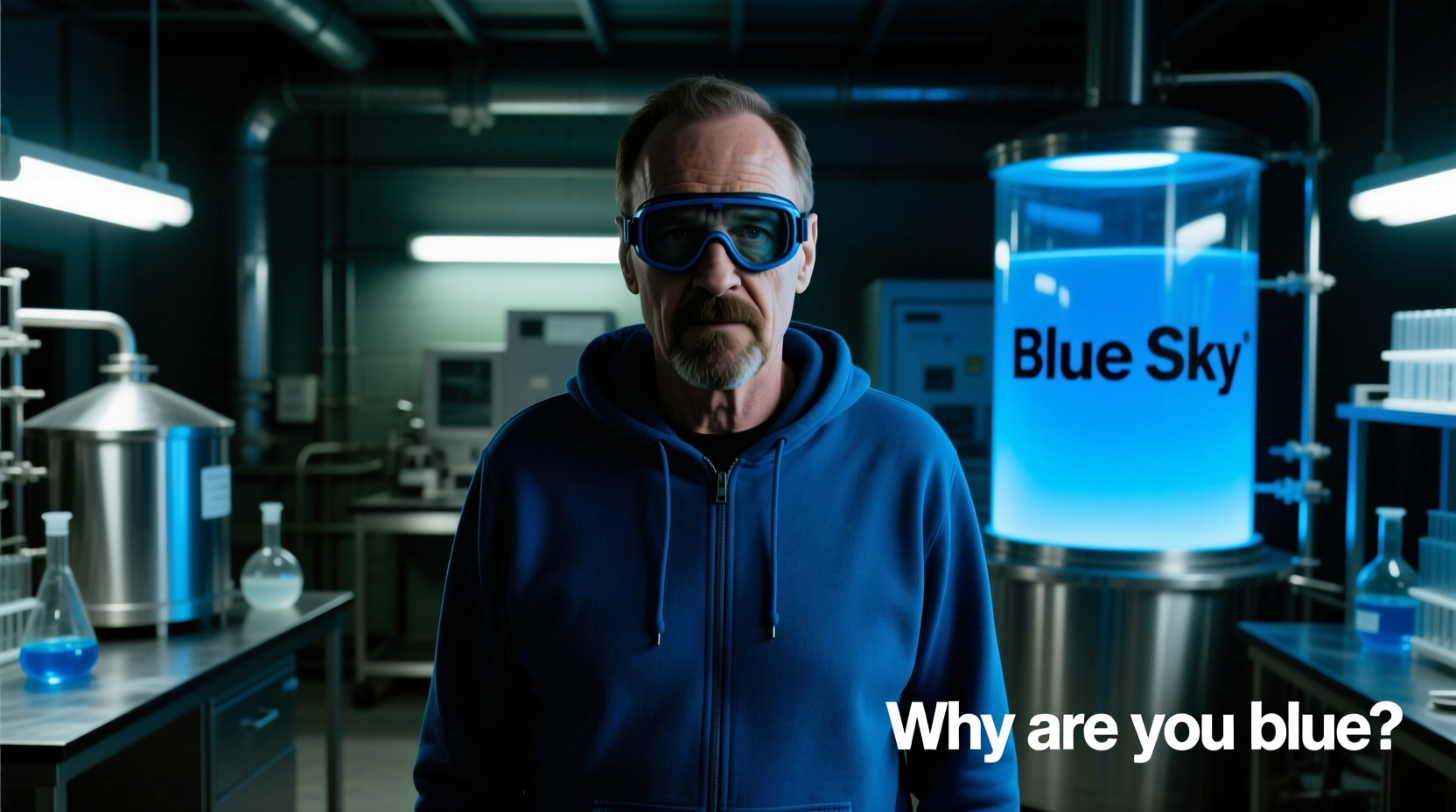
The line “Why are you blue?” is spoken by Jesse Pinkman to Walter White during Season 3, Episode 7, titled “One Minute.” The scene occurs in the aftermath of a violent confrontation involving the Aryan Brotherhood and law enforcement. Jesse arrives at Walt’s home to find him disheveled, emotionally drained, and covered in blue residue from their methamphetamine product.
At this point in the series, Walt has transitioned from a meek high school chemistry teacher diagnosed with terminal cancer into a calculated, increasingly ruthless drug manufacturer. The blue meth — chemically pure and visually distinct — has become his signature. Its striking color sets it apart in the criminal underworld and symbolizes both scientific mastery and dangerous ambition.
Jesse, who has long been Walt’s partner and emotional foil, notices the blue stains on Walt’s hands, clothes, and face. He asks, almost tenderly, “Why are you blue?” It’s not a literal inquiry about pigment; it’s a metaphorical plea to understand how far Walt has fallen — and what he has become.
Symbolism of the Blue Meth
The blue color of the methamphetamine produced by Walt and Jesse is one of the most iconic elements of the series. Unlike real-world crystal meth, which is typically clear or white, the fictional “blue sky” meth is vividly colored — a creative liberty taken by the show’s writers to signify uniqueness and superiority.
But beyond branding, the blue serves as a powerful symbol:
- Purity and Precision: The consistent hue reflects Walt’s expertise as a chemist. It signals unmatched quality in a cutthroat market.
- Identity and Ego: As Walt embraces his alter ego “Heisenberg,” the blue becomes a mark of pride — a visible sign of his power and control.
- Contamination and Corruption: Just as the dye stains skin and clothing, Walt’s choices leave permanent marks on his soul and those around him.
The blue isn’t just a product trait — it’s a manifestation of Walt’s transformation. By asking “Why are you blue?”, Jesse is indirectly questioning whether this identity was necessary, inevitable, or worth the cost.
Character Dynamics: Jesse vs. Walt
Jesse Pinkman operates largely on emotion, guilt, and a search for redemption. Throughout the series, he struggles with the consequences of their criminal enterprise — addiction, loss, betrayal. In contrast, Walt rationalizes his actions through logic, necessity, and self-preservation. Their philosophical divide grows wider with each season.
“Why are you blue?” captures this rift perfectly. For Jesse, the blue represents pain, death, and moral compromise. For Walt, it initially represented survival, but later evolved into a symbol of legacy and dominance.
“Jesse’s question isn’t about chemistry. It’s about humanity. He’s asking, ‘Have you lost yourself?’ That moment reveals how far apart they’ve drifted.” — Dr. Lena Peterson, Television Narrative Analyst, University of Southern California
This line underscores Jesse’s role as the show’s moral center. Even as he participates in illegal acts, he remains attuned to the human cost — something Walt progressively suppresses.
A Timeline of Transformation: How Walt Became \"Blue\"
To appreciate the full weight of the question, it helps to trace Walt’s evolution leading up to this moment:
- Season 1: Diagnosed with lung cancer, Walt cooks meth to secure his family’s financial future. His initial motivation is sympathetic.
- Season 2: Walt expands operations, lies to his family, and allows Jane Margolis to die — a turning point in his moral decline.
- Season 3: He manipulates Jesse, eliminates rivals, and begins embracing the Heisenberg persona. The blue meth becomes a status symbol.
- Mid-Season 3: After nearly being killed by Tuco’s cousins, Walt is physically and psychologically scarred. Jesse finds him broken — literally stained by the life he chose.
- The Question: “Why are you blue?” lands not just as concern, but as an indictment of Walt’s choices.
Do’s and Don’ts: Interpreting Symbolic Dialogue in Breaking Bad
| Do | Don’t |
|---|---|
| Consider the visual and auditory context (lighting, music, camera angles) | Take lines at face value without examining subtext |
| Analyze how dialogue reflects character development | Ignore the emotional state of the speaker |
| Connect recurring motifs (e.g., color, silence, repetition) | Overlook small details like clothing stains or offhand remarks |
| Revisit earlier episodes to track thematic evolution | Assume every line has a single, fixed interpretation |
Mini Case Study: The Laundry Scene
Shortly after Jesse asks, “Why are you blue?”, Walt attempts to wash the blue residue from his clothes in a laundromat. Despite aggressive scrubbing, the stain persists. This brief sequence reinforces the central theme: some consequences cannot be undone.
The laundry scene functions as a metaphor for futility. No matter how much Walt tries to clean himself — literally or morally — the evidence of his actions remains. The indelible blue echoes Lady Macbeth’s inability to wash away blood: “Out, damned spot!”
In this moment, the audience sees Walt not as a mastermind, but as a man haunted by what he’s done. Jesse’s question lingers in the silence of the laundromat — unanswered, yet deafening.
Frequently Asked Questions
Was the blue meth real, or just a TV invention?
The blue color was entirely fictional. Real methamphetamine does not naturally appear blue. The show’s creators chose the color to make Walt’s product visually distinctive and memorable, enhancing its mythos within the story.
Does “blue” have any connection to Jesse’s nickname “Cap’n Cook”?
No direct link. “Cap’n Cook” refers to Jesse’s role as the cook in their operation, playing on slang for a meth producer. The “blue” refers specifically to the product’s appearance and symbolic weight, not Jesse’s identity.
Is there a deeper cultural meaning behind the color blue in the show?
Yes. Blue traditionally symbolizes calm, trust, and intelligence — all traits associated with Walt’s public persona. But in this context, it’s inverted: the blue represents cold calculation, emotional detachment, and the chilling reality of his choices.
Actionable Checklist: Analyzing Key Moments in Breaking Bad
To better understand pivotal scenes like this one, follow these steps:
- ✅ Re-watch the episode with subtitles to catch subtle dialogue.
- ✅ Note physical details: clothing, stains, lighting, and setting.
- ✅ Consider the character’s arc up to that point.
- ✅ Ask: What is left unsaid? What emotions underlie the words?
- ✅ Research interviews with writers or actors for insight into intent.
- ✅ Compare the moment to earlier or later scenes for thematic continuity.
Conclusion: Why This Line Still Resonates
“Why are you blue?” endures because it transcends plot. It’s a moment of raw human connection in a series defined by escalating violence and deception. Jesse isn’t confronting a drug lord — he’s speaking to a father figure, a mentor, a friend who has vanished beneath layers of lies and bloodshed.
The brilliance of Breaking Bad lies in its ability to embed profound questions within sparse dialogue. This single line forces viewers to confront the same issue: At what point does survival justify corruption? And once you’re stained by your choices, can you ever truly wash it away?




 浙公网安备
33010002000092号
浙公网安备
33010002000092号 浙B2-20120091-4
Comments
No comments yet. Why don't you start the discussion?