
For individuals with ADHD, maintaining focus in a world full of distractions can feel like an uphill battle. While medication and behavioral strategies are foundational, many people turn to sensory tools to support attention and reduce mental clutter. One increasingly popular method is the use of background noise—specifically, white and brown noise. But which one truly supports ADHD focus? And why do some people swear by one over the other?
The answer isn't universal, but understanding the differences between brown and white noise—and how they interact with the ADHD brain—can help you make a more informed choice.
Understanding Noise Colors: White, Brown, and Beyond
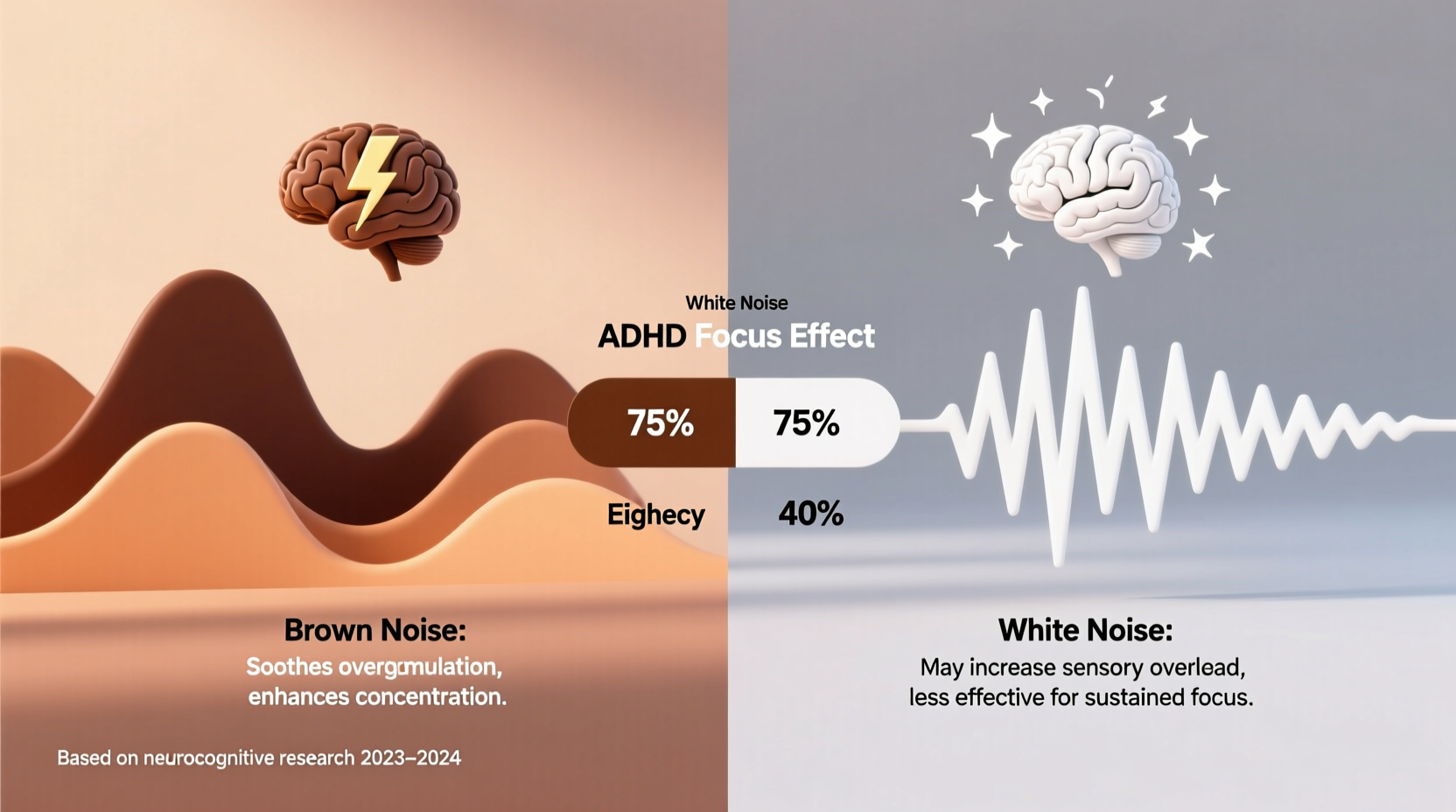
Noise \"colors\" refer to the frequency distribution of sound across the audible spectrum. Just like light can be broken into colors, sound can be categorized by how its power is distributed across frequencies. The most commonly used types are white, pink, and brown (also called red) noise.
- White noise contains all frequencies at equal intensity. Think of it as the audio equivalent of static on an old TV—consistent, hissy, and evenly spread.
- Brown noise emphasizes lower frequencies, creating a deeper, rumbling sound—like thunder, a strong waterfall, or distant traffic. It’s named after Robert Brown, not the color, due to its relationship with Brownian motion.
- Pink noise, often mentioned in this context, falls between the two, with power decreasing as frequency increases—commonly described as balanced and natural, like steady rainfall.
Each type affects the brain differently. For neurodivergent individuals, especially those with ADHD, these subtle differences can have significant impacts on concentration, emotional regulation, and sensory processing.
How Noise Affects the ADHD Brain
ADHD is characterized by differences in dopamine regulation, executive function, and neural connectivity—particularly in regions responsible for attention and impulse control. Many people with ADHD report being either overstimulated or understimulated by their environments. This paradox explains why some thrive in busy cafes while others need total silence.
Background noise can act as a form of “sensory grounding.” By providing a consistent auditory input, it may help regulate the brain’s response to unpredictable sounds—door slams, conversations, phones ringing—that would otherwise disrupt focus.
Research suggests that moderate levels of external stimulation can improve cognitive performance in individuals with ADHD. A 2020 study published in *Frontiers in Psychology* found that white noise exposure enhanced verbal learning and memory in adolescents with ADHD, possibly by increasing arousal levels to an optimal range—a concept known as stochastic resonance.
“External noise may compensate for lower internal arousal in ADHD, effectively ‘tuning’ the brain into a more focused state.” — Dr. Söderlund, Cognitive Psychologist, Stockholm University
This doesn’t mean noise works the same for everyone. Sensitivity varies widely, and what helps one person concentrate might overwhelm another.
White Noise: Pros, Cons, and Practical Use
White noise has long been a go-to for sleep and concentration. Its uniform frequency profile makes it effective at masking sudden or distracting sounds—ideal for open offices, noisy households, or studying near high-traffic areas.
Benefits of White Noise for ADHD Focus
- Masks abrupt environmental noises (e.g., barking dogs, slamming doors).
- Provides consistent auditory input that may stabilize attention.
- Widely available through apps, machines, and free online streams.
- Effective for some during tasks requiring sustained attention, like reading or writing.
Potential Drawbacks
- Can feel harsh or overly bright due to high-frequency emphasis.
- May increase anxiety or agitation in sound-sensitive individuals.
- Long-term use at high volumes risks auditory fatigue.
For people with ADHD who are prone to sensory overload, the sharpness of white noise might exacerbate restlessness rather than calm it. In such cases, a smoother alternative like brown noise may be preferable.
Brown Noise: Deep, Soothing, and Focused
Brown noise stands out for its deep, rumbly quality. Unlike white noise’s hiss, brown noise feels more like a constant, gentle roar—similar to a strong wind or ocean waves. Because it emphasizes lower frequencies, it tends to be less abrasive and more immersive.
Anecdotal evidence from online ADHD communities shows a surge in brown noise popularity. Reddit threads, TikTok videos, and productivity forums frequently highlight users reporting improved focus, reduced mind-wandering, and even better sleep when using brown noise.
Why Brown Noise Might Work Better for Some with ADHD
- Lower frequency dominance reduces auditory stress and feels more grounding.
- Creates a \"sonic cocoon\" that buffers against distractions without overstimulating.
- May enhance theta wave activity, linked to relaxed focus and creativity.
- Feels less artificial than white noise, making it easier to tolerate for extended periods.
A 2023 pilot study from the University of Oslo explored brown noise in adult ADHD participants during computer-based attention tasks. Though small in scale, results indicated modest improvements in reaction time consistency and self-reported focus compared to silence. Participants described the experience as “feeling more anchored” and “less mentally scattered.”
Comparing Brown and White Noise: A Side-by-Side Analysis
| Feature | White Noise | Brown Noise |
|---|---|---|
| Frequency Profile | Equal intensity across all frequencies | Stronger low frequencies, weaker highs |
| Sound Quality | Hissy, static-like | Deep, rumbling, like thunder |
| Best For | Masking sudden noises, quick focus shifts | Sustained concentration, calming overactivity |
| Potential Downsides | Can feel harsh; may cause fatigue | May be too dull or sleepy-inducing for some |
| ADHD Suitability | Good for under-stimulated brains needing activation | Ideal for overstimulated or anxious minds seeking stability |
Real-World Example: How Sarah Found Her Focus Sound
Sarah, a 28-year-old graphic designer diagnosed with ADHD in her early twenties, struggled with focus while working from home. Despite trying medication and time-blocking techniques, she found herself constantly distracted by household sounds—her neighbor’s dog, delivery trucks, even the hum of the refrigerator.
She first tried white noise, using a popular app during work hours. Initially helpful, she soon noticed increased tension in her jaw and headaches by midday. “It felt like my brain was buzzing along with the noise,” she said.
On a recommendation from an ADHD support group, she switched to brown noise—specifically a 10-hour YouTube track labeled “Deep Thunderstorm Brown Noise.” To her surprise, her afternoon crashes diminished, and she completed design drafts faster. “It’s like the noise holds my thoughts together. I don’t spiral into tangents as much.”
Sarah now uses brown noise for deep work and reserves white noise for quick tasks or when she needs a sharper mental edge.
How to Choose the Right Noise for Your ADHD Needs
There’s no one-size-fits-all solution. The best way to determine what works is through structured experimentation. Follow this step-by-step guide to find your optimal sound environment.
Step-by-Step: Testing Noise Types for ADHD Focus
- Define your goal: Are you trying to block distractions, reduce anxiety, or boost alertness?
- Select a baseline: Work for 30 minutes in silence on a familiar task. Rate your focus from 1–10 afterward.
- Test white noise: Repeat the task with white noise at moderate volume. Note any changes in comfort, distraction, and output.
- Test brown noise: Do the same with brown noise. Pay attention to whether it feels calming or drowsy.
- Compare results: Which condition led to better completion, fewer interruptions, and higher self-rated focus?
- Adjust variables: Experiment with volume, duration, and timing (e.g., morning vs. afternoon).
- Re-evaluate weekly: Sensitivities change. Reassess every few weeks or when routines shift.
Keep a simple log: task type, noise used, duration, and subjective focus score. Over time, patterns will emerge.
Frequently Asked Questions
Is brown noise safe for long-term use?
Yes, when used at moderate volumes (below 70 dB). Prolonged exposure to any sound above 85 dB can contribute to hearing fatigue or damage. Use headphones wisely and take listening breaks.
Can noise replace ADHD medication?
No. While background noise can support focus, it is not a substitute for medical treatment. It should be viewed as a complementary tool within a broader management strategy that may include therapy, medication, and lifestyle adjustments.
What about pink noise or nature sounds?
Pink noise is another viable option—softer than white, fuller than brown—and often preferred for sleep. Nature sounds (rain, forest, waves) can also aid focus, though their variability may distract some with ADHD. Test them alongside structured noise types.
Final Checklist: Optimizing Your Noise Routine for ADHD Focus
- ✅ Identify whether you’re over- or under-stimulated when distracted.
- ✅ Start with short trials (15–30 minutes) of white and brown noise.
- ✅ Use high-quality audio sources—avoid compressed or distorted tracks.
- ✅ Keep volume low to moderate—just enough to mask distractions.
- ✅ Pair noise with a dedicated focus ritual (e.g., starting a timer, sipping tea).
- ✅ Monitor for side effects like headaches or fatigue.
- ✅ Combine with other ADHD-friendly strategies: task lists, body doubling, or movement breaks.
Conclusion: Finding Your Sonic Anchor
When it comes to brown noise vs white noise for ADHD focus, the answer depends on your unique neurology. White noise may energize an under-aroused brain, while brown noise can soothe an overactive one. The key is intentional experimentation—not defaulting to trends or assumptions.
Sound is a powerful, accessible tool. Used wisely, it can create a stable auditory environment that supports clarity, reduces cognitive strain, and enhances productivity. Whether you gravitate toward the deep rumble of brown noise or the steady hiss of white, the goal remains the same: to give your mind a foundation where focus can flourish.




 浙公网安备
33010002000092号
浙公网安备
33010002000092号 浙B2-20120091-4
Comments
No comments yet. Why don't you start the discussion?