
Mosquito bites are a common annoyance during warm seasons, but most people don’t expect them to leave behind bruises. While typical reactions include redness, swelling, and itching, some individuals develop darkened or discolored skin at the bite site—resembling a bruise. This reaction can be alarming, especially when it appears without direct trauma. Understanding why this occurs, who is more susceptible, and how to manage it effectively can help reduce anxiety and prevent complications.
Why Mosquito Bites Sometimes Cause Bruising
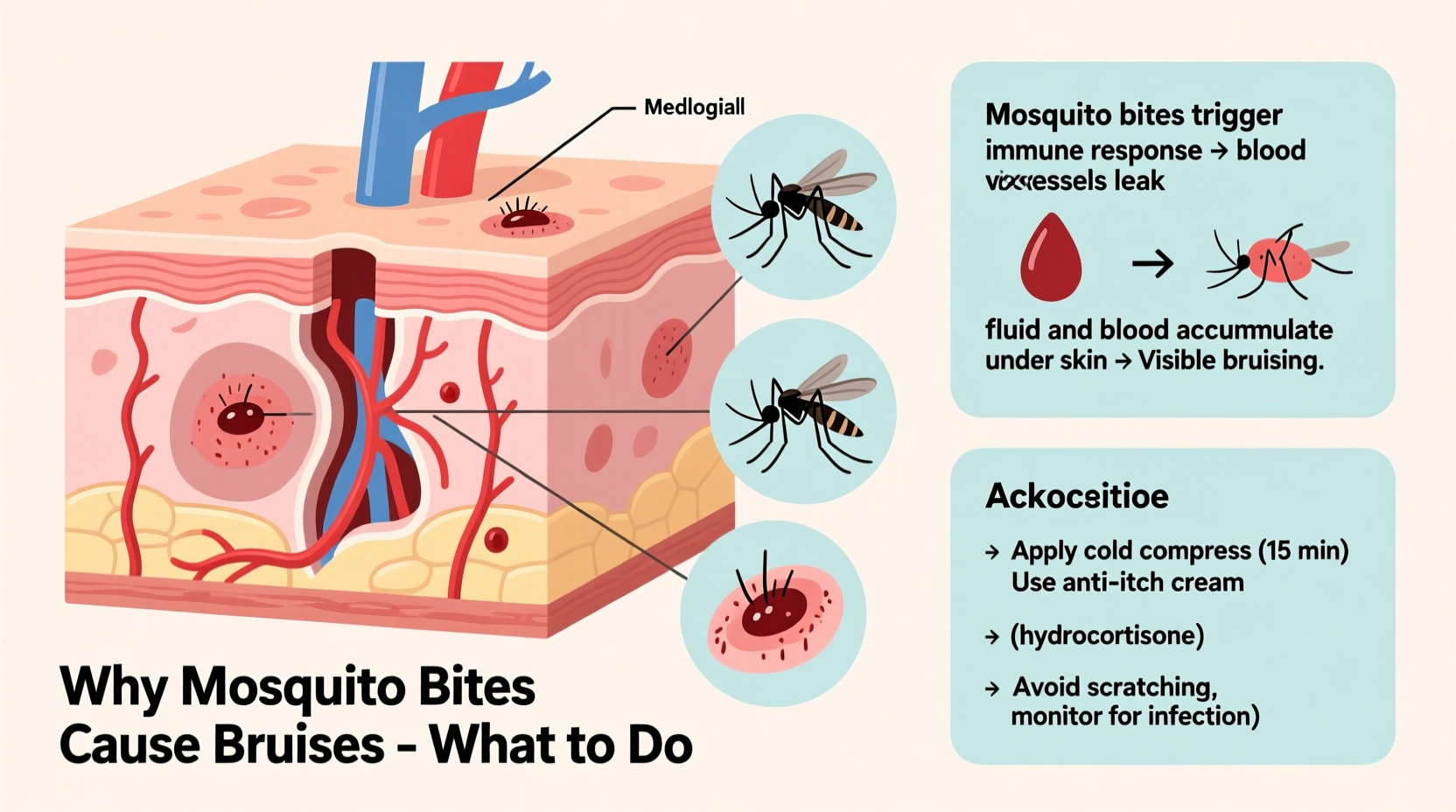
When a mosquito bites, it pierces the skin with its proboscis to access blood. During this process, it injects saliva containing proteins that prevent blood from clotting. The body recognizes these foreign proteins as invaders and triggers an immune response. Histamine is released, causing localized inflammation, itching, and swelling. In some cases, this immune reaction leads to minor blood vessel damage beneath the skin, resulting in a small pool of blood that leaks into surrounding tissue—what we perceive as a bruise.
Bruising from mosquito bites is not due to physical impact but rather a vascular response. The tiny capillaries near the skin’s surface may rupture under the pressure of inflammation or due to increased fragility. This phenomenon is more common in individuals with sensitive skin, compromised circulation, or underlying health conditions affecting blood vessels or coagulation.
Who Is More Likely to Develop Bruises from Mosquito Bites?
Certain groups are more prone to bruising after mosquito bites due to biological or medical factors:
- Children and elderly individuals: Thinner skin and more fragile capillaries increase susceptibility.
- People with fair or sensitive skin: These skin types often show visible reactions more easily.
- Those on blood-thinning medications: Drugs like aspirin, warfarin, or certain supplements (e.g., fish oil) can impair clotting.
- Individuals with vitamin deficiencies: Low levels of vitamin C or K affect blood vessel strength and coagulation.
- People with autoimmune or inflammatory conditions: Disorders like lupus or vasculitis may amplify immune responses.
Recurrent or unusually severe bruising should prompt medical evaluation to rule out underlying hematologic or dermatologic issues.
Step-by-Step Guide: What to Do When a Mosquito Bite Causes a Bruise
If you notice a bruise forming after a mosquito bite, early intervention can minimize discomfort and speed healing. Follow this timeline for optimal results:
- Immediately after the bite: Wash the area gently with soap and water to reduce infection risk. Avoid scratching.
- Within 1–2 hours: Apply a cold compress for 10–15 minutes to constrict blood vessels and reduce leakage.
- Day 1–2: Use over-the-counter hydrocortisone cream or calamine lotion to soothe itching and inflammation.
- Day 3–5: Switch to warm compresses to promote blood reabsorption if bruising persists.
- Ongoing: Monitor for signs of infection such as increasing redness, warmth, pus, or fever.
Topical arnica gel, known for reducing bruising, may also be beneficial when applied twice daily. However, avoid using it on broken skin.
Do’s and Don’ts: Managing Bruised Mosquito Bites
| Do’s | Don’ts |
|---|---|
| Keep the area clean and dry | Scratch or pick at the bite |
| Use anti-itch creams or oral antihistamines | Apply alcohol or hydrogen peroxide directly |
| Elevate the affected limb if swelling occurs | Ignore worsening symptoms like spreading redness |
| Take photos to track changes over time | Assume all bruising is harmless without context |
Expert Insight: When to Seek Medical Advice
“While mild bruising after a mosquito bite is usually benign, persistent or expanding discoloration warrants evaluation. It could indicate an exaggerated immune response or an underlying coagulopathy.” — Dr. Lena Patel, Dermatologist and Allergy Specialist
Medical attention is advised if:
- The bruise grows larger than 2 inches in diameter.
- Pain increases significantly or limits mobility.
- You experience systemic symptoms like fever, fatigue, or joint pain.
- Bruising occurs frequently from minor bites or other small injuries.
Mini Case Study: A Child with Recurrent Bite-Related Bruising
Six-year-old Mia developed dark purple spots on her legs every summer after playing outside. Her parents initially assumed they were regular mosquito bites, but the marks resembled bruises and lasted up to two weeks. After consulting a pediatric dermatologist, tests revealed mild platelet dysfunction. The doctor recommended using insect repellent consistently, wearing protective clothing, and monitoring future reactions. With preventive measures, Mia’s episodes decreased significantly the following year.
This case highlights how seemingly minor symptoms can point to deeper health considerations, especially in children whose immune and circulatory systems are still developing.
Prevention Checklist: Reduce Your Risk of Bruising from Mosquito Bites
Proactive steps can minimize both bites and their aftermath. Use this checklist to stay protected:
- ✅ Apply EPA-approved insect repellent (DEET, picaridin, or oil of lemon eucalyptus)
- ✅ Wear long sleeves and pants during dawn and dusk
- ✅ Eliminate standing water around your home to reduce mosquito breeding
- ✅ Install or repair window and door screens
- ✅ Strengthen capillary health with a diet rich in vitamin C, bioflavonoids, and vitamin K
- ✅ Avoid scratching by trimming nails and using anti-itch treatments promptly
Frequently Asked Questions
Can a mosquito bite really cause a bruise?
Yes. Although mosquitoes don’t “punch” hard enough to cause trauma, their saliva triggers an immune response that can damage small blood vessels under the skin. This leads to leakage of blood into tissues, creating a bruise-like appearance.
How long does a bruised mosquito bite last?
Most resolve within 7 to 14 days. Smaller bruises may fade in a week, while larger ones can take up to three weeks, depending on skin tone and individual healing rates.
Is bruising from a mosquito bite dangerous?
In most cases, no. However, if bruising is frequent, unusually large, or accompanied by other symptoms like easy bleeding or fatigue, it may signal an underlying condition such as a clotting disorder or vascular disease. Consult a healthcare provider if concerned.
Conclusion: Take Control of Your Skin’s Response
Bruises from mosquito bites, while uncommon, are a real physiological response rooted in immune activity and vascular sensitivity. Recognizing the signs early, managing symptoms appropriately, and taking preventive action can make a significant difference in comfort and recovery. Pay attention to your body’s signals—especially if reactions seem excessive compared to others’. Simple lifestyle adjustments, combined with informed care, can reduce both the frequency and severity of these unexpected side effects.




 浙公网安备
33010002000092号
浙公网安备
33010002000092号 浙B2-20120091-4
Comments
No comments yet. Why don't you start the discussion?