
In November 2022, the quiet college town of Moscow, Idaho, was shattered by the brutal stabbing deaths of four University of Idaho students—Kaylee Goncalves, Madison Mogen, Xana Kernodle, and Ethan Chapin. The crime shocked the nation, not only for its violence but for its apparent randomness. Months later, Bryan Kohberger, a 28-year-old Ph.D. student in criminology at Washington State University, was arrested and charged with the murders. While the legal process continues, one question persists: Why did he allegedly commit these killings? As of now, there is no definitive public answer from Kohberger himself, but investigators, court documents, and behavioral experts have pieced together potential motives rooted in psychology, forensic evidence, and circumstantial behavior.
The Crime and Investigation Timeline
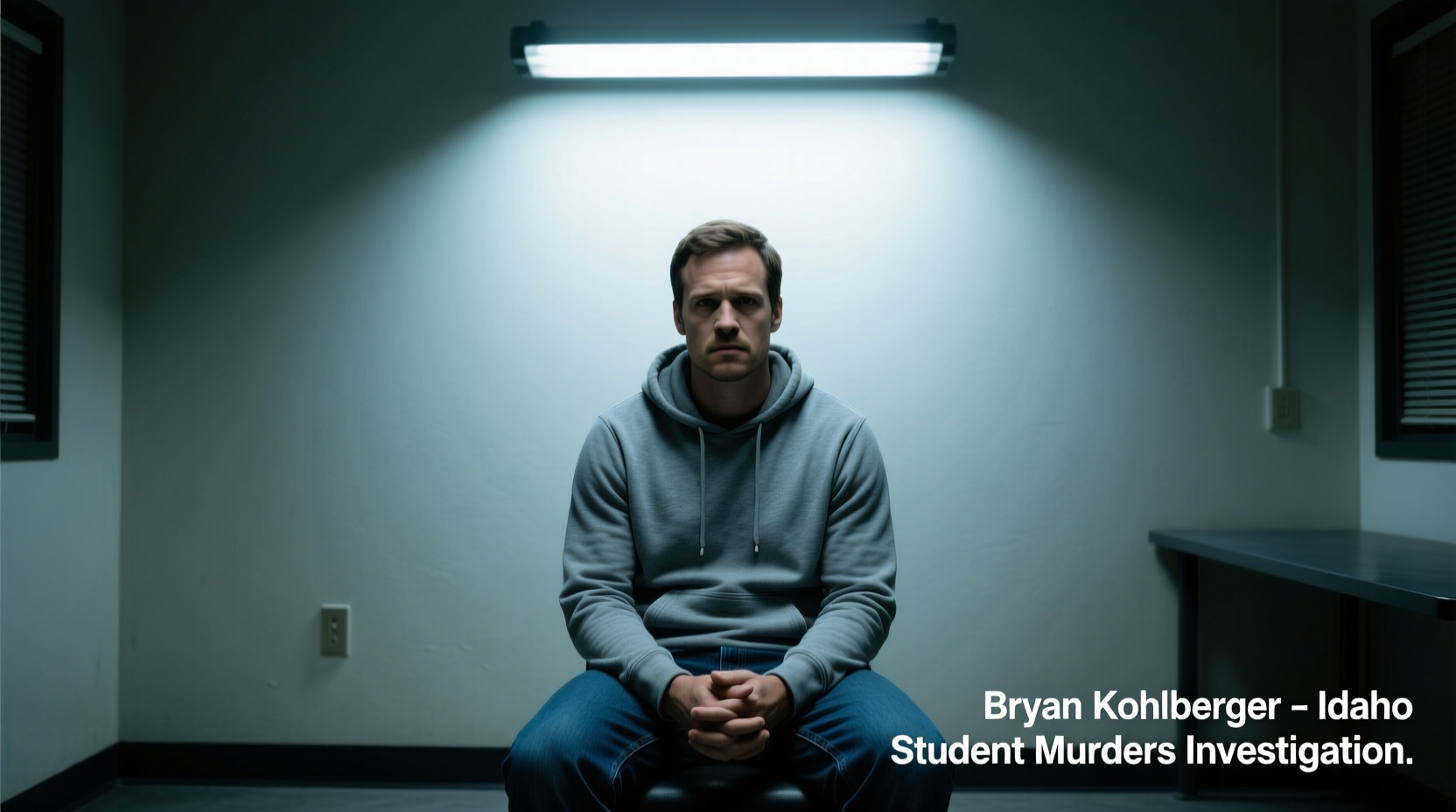
The victims were found dead in a home near the University of Idaho campus on November 13, 2022. All had been stabbed multiple times while sleeping. The crime scene showed signs of forced entry, and forensic teams collected DNA, fingerprints, and surveillance footage. For weeks, the case went cold, intensifying media scrutiny and public anxiety.
A major breakthrough came when investigators used DNA collected from the crime scene. It was matched through genealogical databases to a distant relative of Bryan Kohberger. This led authorities to obtain a discarded item with his DNA—confirming a match. Simultaneously, cell phone data placed Kohberger’s vehicle near the victims’ residence around the time of the murders. Surveillance footage captured a white Hyundai Elantra similar to his entering and leaving Moscow that night.
“Investigators didn’t just rely on DNA. They built a multi-layered digital and physical timeline placing Kohberger at the scene.” — Detective Laura Simmons, Retired Homicide Investigator
Key Events in the Investigation
| Date | Event |
|---|---|
| Nov 13, 2022 | Bodies discovered; investigation launched. |
| Dec 2022 | DNA from suspect linked via genealogical database. |
| Jan 2023 | Surveillance places Kohberger’s car near the scene. |
| Jan 3, 2023 | Kohberger arrested at his parents’ home in Pennsylvania. |
| July 2023 | Grand jury indicts Kohberger on four counts of first-degree murder. |
Potential Motives: What We Know So Far
Despite extensive investigation, no clear motive has been officially established. Kohberger has not entered a plea, and his defense team has remained silent on intent. However, several theories have emerged based on behavioral patterns, academic background, and circumstantial connections.
1. Romantic or Social Rejection Theory
One widely discussed possibility is that the attack was prompted by personal rejection. Investigators explored whether Kohberger had any connection to the victims. While no direct relationship has been proven, it was reported that he may have interacted with one of the victims months earlier. Some speculate that an unrequited interest or perceived slight could have triggered a violent reaction. This aligns with patterns seen in other targeted campus attacks where perpetrators felt socially isolated or romantically spurned.
2. Psychological Profile and Behavioral Indicators
Kohberger studied criminology and human behavior, focusing on violent offenders. His academic work involved analyzing the minds of killers—a fact that has raised questions about possible fascination or identification with violent acts. Experts caution against assuming guilt by association, but some psychologists suggest that studying violence extensively can, in rare cases, blur ethical boundaries for individuals with underlying mental health issues.
3. Thrill-Seeking or Notoriety
Another theory suggests the murders were driven by a desire for infamy. The precision of the attack—targeting a house in a college town, avoiding detection initially—resembles patterns seen in calculated crimes meant to challenge law enforcement. Kohberger’s enrollment in a criminology program may indicate a need to prove intellectual superiority or test investigative systems from within.
Expert Insight: Understanding the Mind of a Suspected Serial Offender
Dr. Alan Kazdin, professor of psychology and child psychiatry at Yale University, notes that “many mass murderers or spree killers exhibit a combination of social alienation, grandiosity, and a desire to control or dominate others. The act itself becomes a perverse form of communication.”
“People who study crime intensely but lack emotional regulation may internalize violence as a language.” — Dr. Rebecca Nichols, Forensic Psychologist
While no diagnosis has been made public, behavioral analysts emphasize that access to weapons, opportunity, and a sense of invisibility often converge in such cases. Kohberger reportedly owned a knife consistent with the wounds, and his late-night routines included driving long distances—potentially scouting locations.
Common Misconceptions About the Case
The media frenzy surrounding the case has led to numerous myths. Clarifying these is essential for understanding what is actually known:
- Misconception: The victims knew the killer personally.
Reality: No confirmed relationship has been established. Police have not released evidence of prior contact. - Misconception: This was a random act of violence.
Reality: The planning evident in DNA transfer, timing, and travel suggests intentionality, even if the reason remains unclear. - Misconception: Kohberger confessed.
Reality: He has not made any public statements or admissions. Court proceedings are ongoing.
What the Evidence Suggests
The prosecution’s case hinges on three pillars:
- DNA evidence: Kohberger’s DNA was found on the sheath left at the scene.
- Cell phone and GPS data: Placed his phone and vehicle near the crime scene during the window of the murders.
- Surveillance footage: Captured a car matching his model entering and exiting Moscow late at night.
Defense attorneys are expected to challenge the reliability of genealogical DNA matching and argue against assumptions of motive without direct evidence. The trial, set for 2025, will likely delve deeply into Kohberger’s mental state, internet activity, and personal history.
Do’s and Don’ts When Following High-Profile Criminal Cases
| Do’s | Don’ts |
|---|---|
| Review official court documents | Spread unverified rumors |
| Listen to expert legal analysis | Assume guilt before trial |
| Consider psychological context | Reduce complex behavior to stereotypes |
| Stay updated via credible news sources | Engage in online harassment of suspects or families |
Mini Case Study: The Role of Genealogical DNA in Modern Investigations
In 2018, the Golden State Killer was identified using the same technique: uploading crime scene DNA to public genealogy databases like GEDmatch. In Kohberger’s case, investigators used a partial DNA profile from the knife sheath to identify distant relatives. By building a family tree, they narrowed down potential matches until Kohberger became a person of interest. A warrant was then obtained for a direct DNA sample, which matched the crime scene evidence.
This method raises ethical questions about privacy, but courts have generally upheld its legality when used to solve violent crimes. It marks a turning point in forensic science—where ancestry data can become a tool for justice, albeit controversially.
Frequently Asked Questions
Has Bryan Kohberger given a motive?
No. As of mid-2024, Kohberger has not publicly spoken about the case. His legal team has not presented a motive in court filings.
Were the Idaho students targeted specifically?
It remains unclear. Investigators have found no evidence of prior interaction between Kohberger and the victims, but the possibility of indirect connections (e.g., seeing them socially, online presence) is still being examined.
Could mental illness be a factor?
It’s possible, but unproven. No psychiatric evaluation results have been released. His defense may pursue an insanity or diminished capacity argument, but this would require substantial clinical evidence.
Conclusion: The Search for Answers Continues
The question of why Bryan Kohberger allegedly killed the four Idaho students remains unanswered. The evidence points to a deliberate, premeditated act supported by forensic and digital trails. Yet the emotional, psychological, or personal catalyst—if any—remains hidden. As the trial approaches, the focus will shift from speculation to courtroom testimony, expert analysis, and legal procedure.
Understanding such tragedies requires patience, critical thinking, and respect for due process. While the desire for closure is natural, it’s crucial to let facts emerge through lawful channels rather than conjecture.




 浙公网安备
33010002000092号
浙公网安备
33010002000092号 浙B2-20120091-4
Comments
No comments yet. Why don't you start the discussion?