
When choosing a handbag, most shoppers focus on size, material, or color. But one of the most overlooked—yet critical—details is the closure mechanism. The way a bag opens and closes impacts security, accessibility, durability, and even aesthetic appeal. Nowhere is this more evident than in the comparison between bucket bags and drawstring bags. While both have gained popularity in recent years for their minimalist silhouettes and effortless style, they differ significantly in how they secure contents. So, does the closure really matter? The answer isn’t just yes—it’s foundational to how you use and experience your bag.
The Anatomy of Closure: Why It Matters
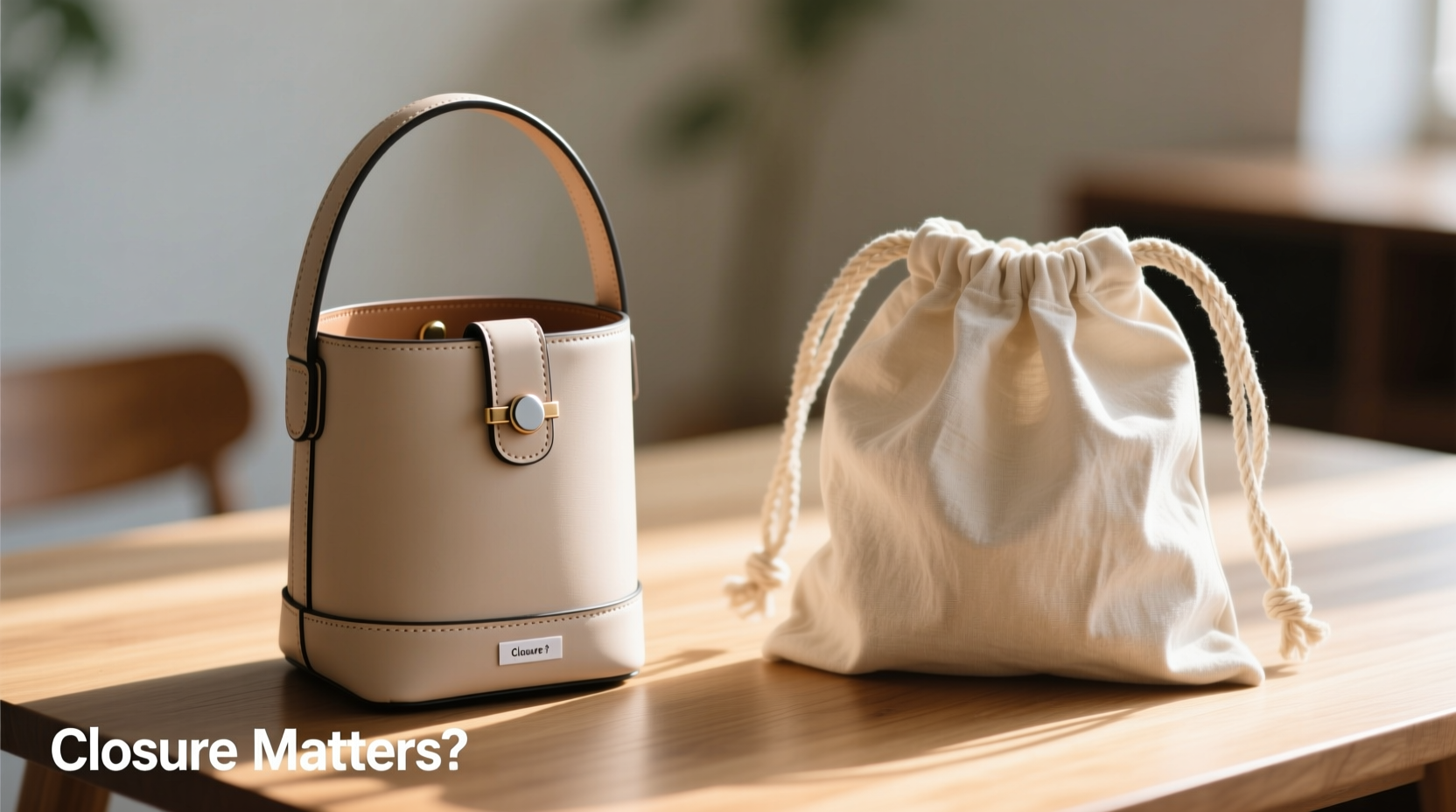
Closure type influences everything from theft resistance to weather protection. A poorly secured bag can lead to lost items, damaged contents, or frequent frustration. Bucket bags typically feature structured tops with magnetic snaps, zippers, or twist locks, while drawstring bags rely on cords pulled through metal or fabric rings. This fundamental difference shapes not only function but also fashion context.
Designers like Stella McCartney and Mansur Gavriel have championed the bucket bag for its balance of openness and control. Meanwhile, brands like The Row and Totême favor drawstring closures for their soft, unstructured elegance. Yet behind the runway appeal lies a practical trade-off: ease of access versus peace of mind.
Functional Comparison: Security, Accessibility, and Durability
To understand which bag suits your daily needs, consider three core factors: how well it protects your belongings, how easy it is to reach inside, and how long the closure will last under regular use.
| Feature | Bucket Bag (with snap/zipper) | Drawstring Bag |
|---|---|---|
| Security | High – resists slipping open; harder to access without notice | Moderate – can loosen if cord slips; vulnerable in crowds |
| Accessibility | Moderate – requires opening mechanism each time | High – instant access with a single pull |
| Durability | High – metal or plastic clasps withstand repeated use | Variable – cords fray over time; rings may bend |
| Weather Resistance | Better – tighter seal keeps out rain and dust | Limited – gaps around strings allow moisture entry |
| Style Flexibility | Structured, modern, office-appropriate | Soft, casual, bohemian |
For urban commuters or travelers, the bucket bag’s controlled opening offers reassurance. In contrast, the drawstring excels in relaxed settings where quick access trumps security—like reaching for sunglasses at a beach resort or grabbing a snack during a weekend hike.
Real Example: Commuter vs. Weekend Warrior
Sophie, a graphic designer in Brooklyn, uses her leather bucket bag Monday through Friday. She appreciates that her wallet stays put when she sets the bag down on subway seats or café floors. On weekends, she switches to a canvas drawstring tote. “I don’t carry much—just my book, keys, and water bottle,” she says. “The drawstring lets me grab things fast, and I’m not worried about theft at the farmer’s market.” Her dual-bag strategy reflects a growing trend: using closure type as a functional filter based on activity.
“Closure isn’t an afterthought—it’s part of the design language. A drawstring says ‘effortless,’ while a snap closure says ‘prepared.’ Choose based on what message—and function—you want.” — Lena Torres, Accessories Editor at *Urban Style Weekly*
Material and Longevity: How Closure Impacts Wear Over Time
The longevity of a bag often hinges on stress points—and few areas endure more strain than the closure. Drawstrings create friction where the cord meets the grommet or ring. With daily use, especially with heavier loads, the fabric around the top can stretch or tear. Some high-end drawstring bags now reinforce these zones with bonded linings or double-stitched channels, but wear remains a concern.
Bucket bags with rigid tops distribute weight more evenly. Metal or plastic frames maintain shape, reducing deformation over time. However, moving parts like zippers or snaps can fail if low-quality hardware is used. Always check whether the closure feels smooth and secure before purchasing.
Step-by-Step Guide: Choosing Based on Your Lifestyle
Selecting between a bucket bag and a drawstring shouldn’t be arbitrary. Follow this decision framework to match form with function:
- Assess your daily routine. Do you navigate crowded subways, attend meetings, or walk in variable weather? High-activity environments favor secure closures.
- List what you carry. Frequent access to small items (lip balm, phone) benefits from drawstring ease. Valuables (wallet, tablet) need better containment.
- Evaluate storage habits. Will the bag sit on floors or hang on hooks? Open-top drawstrings risk debris falling in.
- Consider climate. Rainy cities demand tighter seals. Dry, indoor-focused lifestyles are more forgiving.
- Match to personal style. Prefer polished minimalism? Lean toward structured bucket bags. Favor soft, flowing aesthetics? Drawstrings align better.
This method shifts the decision from trend-driven to intention-based—ensuring your bag supports your life, not complicates it.
Checklist: Is This Bag Right for You?
- ✅ Can I securely close it in under 3 seconds?
- ✅ Does the opening stay shut when jostled?
- ✅ Are the cords or clasps made of quality materials?
- ✅ Can I comfortably reach my most-used item?
- ✅ Does the closure complement my typical outfits?
- ✅ Is the top reinforced to prevent sagging?
Frequently Asked Questions
Can I modify a drawstring bag for more security?
Yes. Some users add small padlocks to the drawcord ends or insert a fold-over flap with a hidden snap. Aftermarket accessories like anti-slip cord stops also help keep the bag partially closed while in motion.
Are bucket bags always heavier due to hardware?
Not necessarily. While some feature metal frames, many modern versions use lightweight polymers or molded textiles. Always check product specs for weight—some bucket bags weigh less than 1.5 lbs despite their structure.
Do drawstring bags work for professional settings?
In creative industries or casual offices, yes—especially if made from luxe materials like suede or pebbled leather. However, for client-facing roles or formal environments, a bucket bag with a defined closure appears more polished and organized.
Conclusion: Closure Is More Than a Detail—It’s a Decision Point
The debate between bucket bags and drawstring bags isn’t just about trends—it’s about intentionality. The closure determines how confidently you move through your day. Whether you value speed, security, or style, your choice should reflect real-life demands, not just Instagram aesthetics. A drawstring offers fluidity and ease, ideal for laid-back moments. A bucket bag provides control and protection, suited for dynamic, demanding routines. Recognizing this distinction empowers smarter purchases and longer-lasting satisfaction.




 浙公网安备
33010002000092号
浙公网安备
33010002000092号 浙B2-20120091-4
Comments
No comments yet. Why don't you start the discussion?