
When choosing a handbag, functionality often outweighs fashion—especially for those who use their bags daily. Two popular silhouettes dominate the conversation in casual-chic accessories: the bucket bag and the drawstring bag. While both have gained traction on runways and city streets alike, they serve different needs. One excels in structure and security; the other offers effortless access and soft volume. So, which is truly more practical?
The answer isn’t universal—it depends on lifestyle, usage patterns, and personal priorities. To help you decide, we’ll break down each bag type across key criteria: organization, accessibility, security, durability, and versatility.
Design & Structure: Built for Purpose
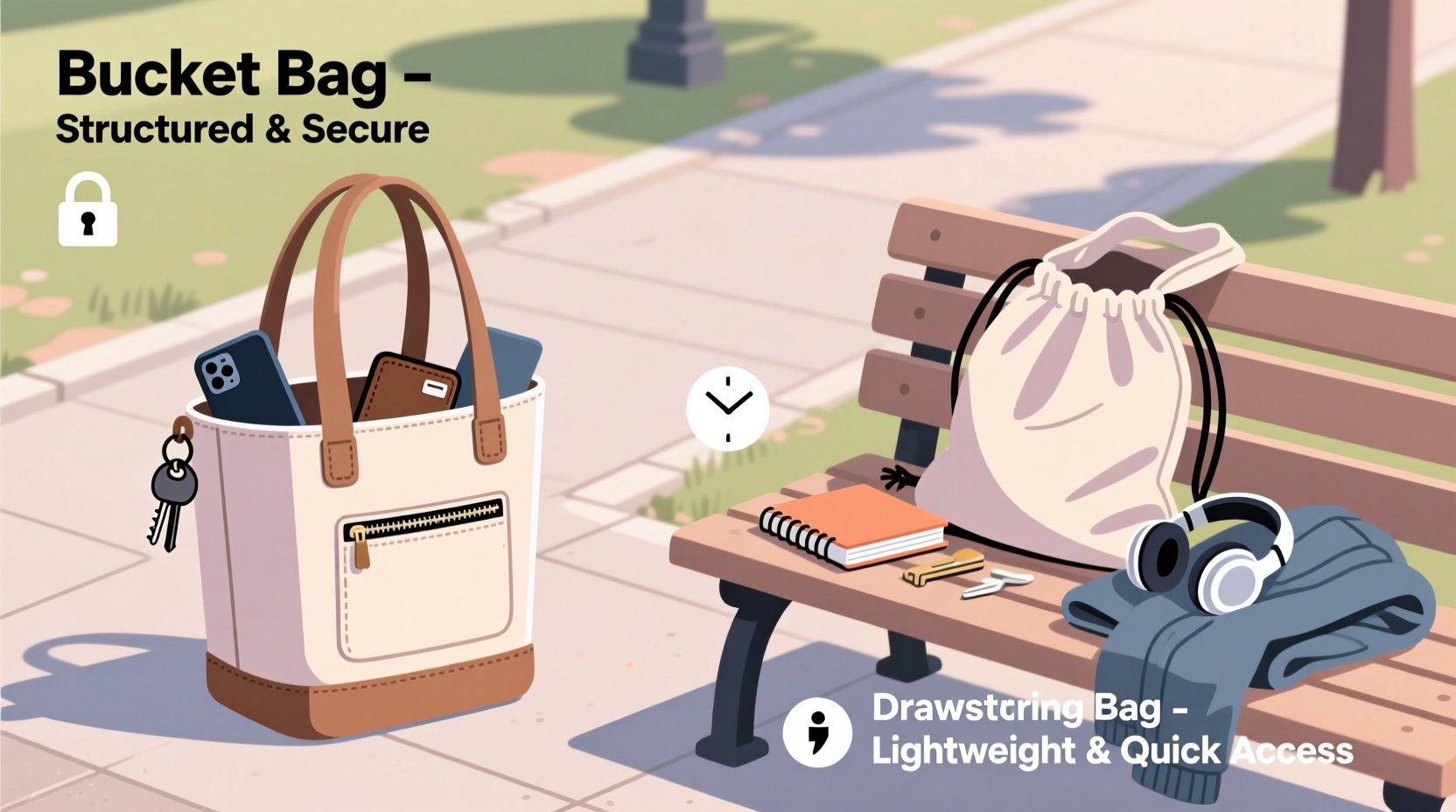
The structural differences between bucket bags and drawstring bags define their performance. A bucket bag typically features a cylindrical or tapered shape with a flat base, vertical sides, and a top handle or strap. It opens wide at the top, usually secured with a drawstring, flap, magnetic snap, or zipper. The rigid form maintains its shape even when empty, offering predictable storage capacity.
In contrast, a drawstring bag—often referred to as a pouch or sack-style bag—is softer and more collapsible. Its defining feature is a corded closure that cinches the top closed. While some versions include a structured base or stiffened fabric, most are entirely pliable, conforming to whatever contents are inside.
Capacity and Shape Retention
- Bucket bags maintain consistent volume thanks to their structured walls and base. This makes them ideal for organized packing and stacking items without shifting.
- Drawstring bags expand or contract depending on load but can slump over when full, making retrieval harder and risking damage to delicate contents.
Accessibility and Daily Use
How quickly and easily you can reach your essentials matters—especially during commutes, errands, or travel. Here, the drawstring bag has an edge in simplicity. With just one pull, the top opens fully, allowing immediate visibility and access to all contents. No zippers to snag, no flaps to lift—just open and grab.
However, this ease comes at a cost. Because the entire interior is exposed upon opening, there’s no protection from rain, dust, or prying hands. Bucket bags, especially those with zip-top closures or overlapping flaps, offer better environmental shielding and controlled access.
“From a usability standpoint, the bucket bag strikes a balance between openness and protection. It gives quick access while minimizing spill risk.” — Lena Patel, Accessory Designer & Urban Lifestyle Consultant
User Scenarios Compared
| Situation | Bucket Bag Advantage | Drawstring Bag Advantage |
|---|---|---|
| Daily commute | Better organization; less chance of losing small items | Faster entry/exit for phone or wallet |
| Travel (carry-on) | Holds toiletries, electronics, snacks securely | Lightweight and packable as a secondary bag |
| Running errands | Stays upright in car or shopping cart | Easily stuffed into larger tote when not needed |
| Evening out | Secure closure prevents accidental spills | Minimalist look pairs well with dressy outfits |
Security and Spill Prevention
Practicality isn’t just about what fits inside—it’s also about keeping things in. Drawstring bags rely solely on tension from the cords to keep contents secure. While double-drawstrings improve safety, sudden movements or overfilling can cause the top to loosen unexpectedly.
Bucket bags, particularly those with dual closures (e.g., drawstring plus flap or zipper), provide layered protection. Even if the drawstring slips, the secondary mechanism acts as a backup. This makes them far less prone to accidental dumping—critical when carrying makeup, keys, or electronic devices.
Real-Life Example: The Coffee Shop Spill
Sophie, a freelance writer, used her favorite canvas drawstring bag for months. One morning, while reaching for her notebook in a crowded café, she swung the bag onto the table—and the top sprung open. Her pen, phone, and lip balm tumbled directly into her latte. After replacing damaged items, she switched to a compact leather bucket bag with a magnetic flap over the drawstring. “I still get the soft silhouette I love,” she says, “but now I don’t panic every time I set it down.”
Durability and Long-Term Wear
A bag’s longevity hinges on construction, material, and stress points. Bucket bags generally score higher here due to their reinforced bases, stronger handles, and balanced weight distribution. Their shape reduces strain on seams, and many are crafted from durable materials like waxed canvas, pebbled leather, or technical fabrics designed for daily wear.
Drawstring bags, especially unlined cloth versions, suffer from fraying at the neck and wear along the cord channels. Repeated pulling weakens stitching over time, and the lack of a base means they’re often placed directly on dirty surfaces, accelerating soiling and abrasion.
Checklist: Signs Your Bag Is Built to Last
- Double-stitched seams, especially around straps and closure points
- Reinforced bottom panel or molded base
- High-quality hardware (e.g., metal grommets, sturdy cords)
- Water-resistant or easy-to-clean exterior material
- Interior lining with at least one zippered or slip pocket
Versatility Across Occasions
Both styles adapt well to various settings, but in different ways. Bucket bags transition seamlessly from day to night, work to weekend, especially in neutral tones or premium finishes. Their defined shape adds polish to casual ensembles and complements tailored looks without overwhelming them.
Drawstring bags lean toward relaxed aesthetics. They shine in minimalist wardrobes, bohemian styles, or athletic-inspired outfits. However, their informal nature limits professional applications unless elevated with luxe materials like suede or metallic finishes.
For travelers, the drawstring bag’s packability is a major asset. Folded flat, it takes up minimal space and serves as an impromptu laundry sack or shoe bag. But once unpacked, it lacks the stability needed for active exploration. Bucket bags may take up more room in luggage, but they perform reliably throughout the trip.
FAQ: Common Questions Answered
Can a drawstring bag be used as a work bag?
Only in very casual workplaces. Most drawstring bags lack organization features like pockets and dividers, and their open design raises concerns about professionalism and item security. A slim bucket bag with internal compartments is a smarter choice for office environments.
Are bucket bags heavier than drawstring bags?
Generally, yes—but the trade-off is worth it. The added weight comes from structural reinforcements that enhance durability and usability. Lightweight bucket designs made from nylon or soft leather are available for those prioritizing portability.
Which bag is easier to clean?
Bucket bags win again. Their smooth interiors and wipeable linings make spills and stains simple to address. Drawstring bags often have narrow openings that complicate cleaning, and their soft bodies trap odors and debris in folds.
Making the Right Choice for Your Lifestyle
If your days involve multitasking—carrying tech, parenting supplies, gym gear, or work tools—the bucket bag delivers unmatched practicality. Its ability to stay upright, protect contents, and offer smart organization makes it a long-term investment in efficiency.
The drawstring bag shines as a secondary option: a beach companion, gift pouch, or overnighter for minimalist packers. It’s ideal for those who value aesthetic fluidity and occasional use over rugged reliability.
Ultimately, practicality isn’t just about features—it’s about alignment with how you live. Ask yourself:
- Do I need my bag to stand independently?
- Am I constantly retrieving small items?
- Do I prioritize speed or security?
- Will this bag face rough conditions?
Your answers will guide the best fit.
Final Verdict: The Practical Winner
While both bags have merits, the **bucket bag** emerges as the more practical choice for everyday use. It combines thoughtful design with resilience, offering superior protection, organization, and adaptability. The drawstring bag remains a stylish, convenient option for low-stakes scenarios, but it falls short in consistency and dependability.
That said, owning both can be strategic. Use the bucket bag as your primary carrier, and keep a foldable drawstring version in your trunk or suitcase for spontaneous needs.




 浙公网安备
33010002000092号
浙公网安备
33010002000092号 浙B2-20120091-4
Comments
No comments yet. Why don't you start the discussion?