
In recent years, streetwear has seen a quiet but definitive tug-of-war between two seemingly casual accessories: the bucket hat and the dad cap. Once dismissed as afterthoughts, both have taken center stage in fashion cycles, each representing distinct aesthetics, subcultures, and generational identities. But now, whispers are spreading—have bucket hats peaked? Is the low-profile dad cap quietly winning the war for wardrobe dominance?
The answer isn’t just about trends. It’s about identity, functionality, and how fashion reflects broader social currents. To understand whether bucket hats are truly on their way out, we need to trace their rise, dissect their appeal, and compare them not only stylistically but culturally to the enduring dad cap.
A Tale of Two Hats: Origins and Evolution
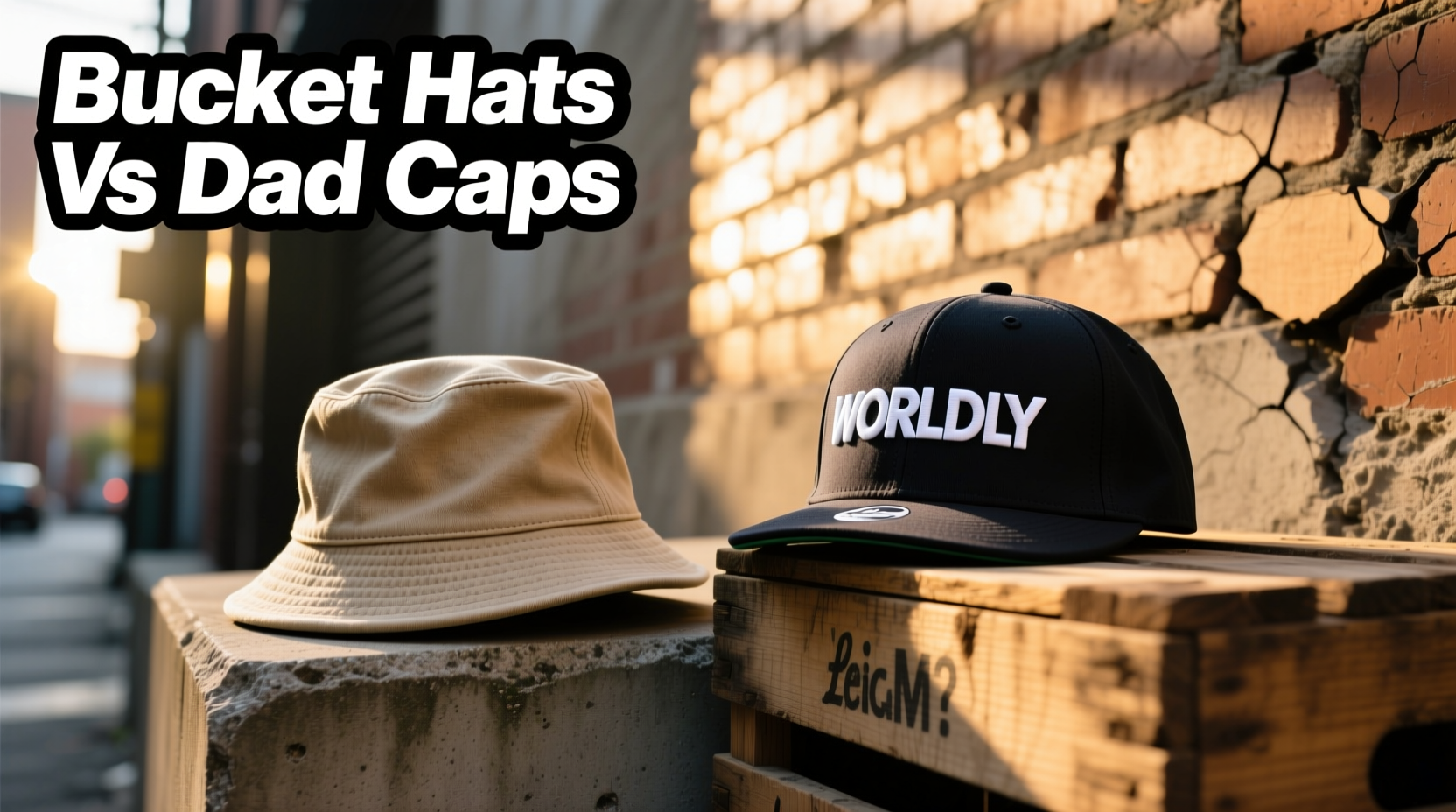
The bucket hat emerged in the early 20th century as practical outdoor wear for Irish farmers and anglers. Made from wool or cotton with a wide, downward-sloping brim, it offered protection from rain and sun. By the 1960s, it had crossed into mod culture in the UK, then resurfaced in the 1980s and ’90s through hip-hop and rave scenes. Run-DMC, TLC, and later Pharrell Williams helped cement its place in urban fashion.
In contrast, the dad cap—a structured, curved-brim baseball cap with a mesh back—originated as functional sportswear. Its association with actual dads began ironically in the 1990s when middle-aged men wore promotional caps from hardware stores or golf outings. Over time, irony turned into influence. The “normcore” movement of the 2010s elevated the dad cap from kitsch to cool, embraced by fashion-forward millennials and Gen Z alike.
Where bucket hats screamed individuality and boldness, dad caps whispered understatement. One was loud; the other, deliberately unremarkable. Yet both found relevance in an era that values authenticity over polish.
Style Showdown: Aesthetic and Wearability Compared
To assess which hat is gaining traction, it helps to break down their differences across key lifestyle factors. Below is a detailed comparison:
| Feature | Bucket Hat | Dad Cap |
|---|---|---|
| Silhouette | Wide brim, soft crown, slouchy profile | Narrow brim, structured front, curved peak |
| Fabric Variety | Cotton, nylon, denim, corduroy, even sequins | Polyester, cotton twill, mesh panels |
| UV Protection | High (covers ears and neck) | Moderate (shades face and forehead) |
| Versatility | Better with casual, festival, or streetwear looks | Works with athleisure, smart-casual, and minimalist outfits |
| Packability | Often folds easily into bags | Less compressible; retains shape |
| Cultural Association | Hip-hop, music festivals, Y2K revival | Streetwear minimalism, normcore, tech bros, influencers |
| Gender Neutrality | Strong unisex appeal | Widely worn across genders |
The data suggests that while bucket hats offer superior sun protection and bolder self-expression, dad caps win on versatility and subtlety. In a world where “quiet luxury” and low-key branding dominate high-end fashion, the dad cap aligns more closely with current sensibilities.
Market Signals: What Sales and Search Data Reveal
Trends live and die by visibility—and data doesn’t lie. Google Trends analysis from 2019 to 2024 shows a telling pattern: searches for “bucket hat” peaked in mid-2021 during the height of Y2K nostalgia and pandemic-era loungewear experimentation. Since then, interest has declined by nearly 35%, settling at a steady but lower baseline.
Meanwhile, “dad hat” has maintained consistent search volume, with minor spikes around spring and summer months. More importantly, e-commerce platforms report stronger repeat purchase rates for dad caps. Brands like Carhartt, New Era, and Lululemon report higher inventory turnover on structured caps than on novelty bucket hats.
Fashion retailers also note a shift in merchandising. While bucket hats still appear in seasonal collections, they’re increasingly positioned as statement pieces rather than staples. Conversely, dad caps are being integrated into core lines—from eco-conscious brands launching organic cotton versions to luxury labels offering leather-paneled iterations.
“Accessories that blend into daily life tend to outlast those designed for moments. The dad cap wins because it disappears into the outfit—just like good design should.” — Lena Tran, Senior Fashion Analyst at StyleLogic
Cultural Shifts: Why Subtlety Is Winning
The decline of the bucket hat isn’t just commercial—it’s symbolic. In the post-pandemic era, consumers are favoring longevity over virality. TikTok may celebrate the flamboyant, but Instagram’s curated feeds and real-world interactions reward restraint.
Consider the rise of “stealth wealth” fashion—outfits that look simple but cost thousands. The dad cap fits this mold perfectly. A plain black or navy cap from a premium brand communicates taste without shouting. Bucket hats, especially those in loud prints or oversized proportions, demand attention. That worked in 2021. Today, it risks looking dated.
There’s also a gender-fluid angle. Dad caps have become a go-to accessory for non-binary and gender-nonconforming individuals seeking neutral, adaptable style. Their lack of overt styling makes them inclusive in a way that trend-driven pieces often aren’t.
Mini Case Study: Alex Rivera’s Wardrobe Reset
Alex, a 28-year-old graphic designer from Portland, used to collect bucket hats. His collection included tie-dye, camo, and even a glow-in-the-dark version he wore to festivals. But in 2023, he noticed something: he wasn’t reaching for them anymore.
“I’d put one on and feel like I was performing,” he said. “It made me aware of myself in a way that felt exhausting. The dad cap, though? I forget I’m wearing it. It just works with everything—from my bike commute to client meetings.”
He kept three bucket hats—one sentimental, two vintage—but donated the rest. Now, his rotation includes two neutral-toned dad caps: one cotton, one recycled polyester. “They’re not exciting,” he admitted, “but they’re honest.”
Alex’s experience mirrors a broader sentiment: people don’t want accessories that require justification. They want ones that serve.
When to Choose Which: A Practical Guide
Declaring one hat “over” would be premature. Both have roles to play—depending on context, purpose, and personal style. Here’s a step-by-step guide to help you decide which to reach for:
- Assess the occasion: Going to a music festival, beach day, or themed party? A bucket hat adds flair. For errands, work, or casual meetups, lean toward the dad cap.
- Check your outfit’s tone: If your look is already busy (patterns, layers, bright colors), a simple dad cap balances it. If your outfit is minimalist, a bucket hat can be the focal point.
- Consider weather needs: In intense sun or light rain, the bucket hat’s coverage is unmatched. For quick shade or wind protection, the dad cap suffices.
- Evaluate long-term wear: Can you see yourself wearing this piece in two years? If yes, it’s likely a dad cap. If it feels tied to a moment, it’s probably a bucket hat.
- Test for confidence: Try both. Which one makes you feel like yourself—not a version of yourself for social media?
Checklist: Building a Balanced Hat Wardrobe
- ✅ Own at least one neutral dad cap (black, navy, beige)
- ✅ Limit bucket hats to 2–3 favorites that reflect your personality
- ✅ Prioritize natural or sustainable materials (organic cotton, hemp, recycled fabrics)
- ✅ Ensure proper fit—neither too tight nor slipping down
- ✅ Clean regularly: hand-wash bucket hats; spot-clean dad caps
- ✅ Store flat or on a shelf—avoid crushing the brim
FAQ: Your Headwear Questions Answered
Are bucket hats still fashionable in 2024?
Yes, but selectively. They remain popular in niche circles—streetwear collectors, festival-goers, and fans of retro aesthetics. However, they’re no longer considered a must-have mainstream item. Think of them as accent pieces rather than essentials.
Can you wear a dad cap formally?
Not in traditional formal settings (weddings, business interviews). But in creative industries or smart-casual environments, a sleek, logo-free dad cap can complement a tailored jacket or minimalist ensemble—especially in urban or coastal cities.
Why do influencers seem to prefer dad caps?
Dad caps offer consistency in visual branding. They don’t distract from the face, work in varied lighting, and maintain a cohesive look across seasons. For content creators building a recognizable image, predictability trumps novelty.
Conclusion: The Future of Headwear Isn’t Either/Or—It’s Intentional
Bucket hats aren’t disappearing—they’re evolving. Like bell-bottoms or platform shoes, they’ll cycle in and out of prominence, resurfacing when nostalgia or rebellion calls. But for now, the momentum has shifted. The dad cap’s reign reflects a deeper cultural turn: toward simplicity, sustainability, and self-aware dressing.
This isn’t a defeat for the bucket hat. It’s a recalibration. The most thoughtful wardrobes don’t chase every trend—they curate. They keep the pieces that serve, express, and endure.
If you love your bucket hats, keep wearing them—with intention. Pair them mindfully. Let them mean something. And if you’ve been overlooking the dad cap, give it a try. You might find that the quietest accessory becomes your most trusted one.




 浙公网安备
33010002000092号
浙公网安备
33010002000092号 浙B2-20120091-4
Comments
No comments yet. Why don't you start the discussion?