
For readers who spend hours immersed in novels, technical manuals, or daily news, eye comfort isn’t just a luxury—it’s essential. As digital reading becomes the norm, E Ink devices have emerged as the gold standard for reducing eye fatigue. But with price tags ranging from under $100 to over $150, many wonder: does paying more for a Kindle Paperwhite actually result in less eye strain compared to a budget E Ink reader?
This article dives into a real-world comparison between a popular budget E Ink reader and the Amazon Kindle Paperwhite (11th generation), focusing specifically on how each affects visual comfort during extended use. We’ll examine screen quality, lighting, refresh rates, and ergonomic design—all factors that influence eye strain. The goal isn’t to crown a winner outright, but to help you make an informed decision based on your reading habits and sensitivity to visual discomfort.
Understanding Eye Strain in Digital Reading
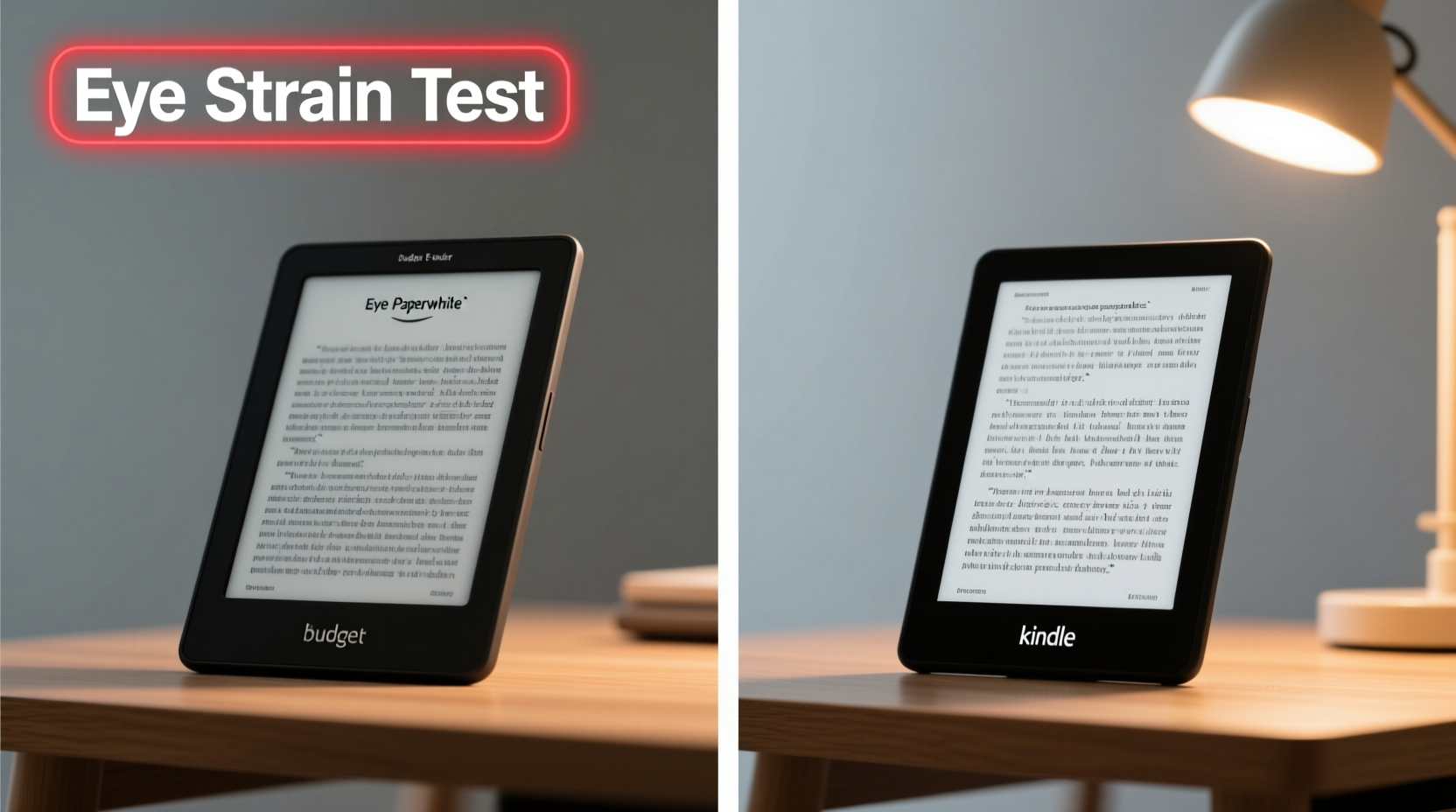
Eye strain—also known as asthenopia—is a common condition caused by prolonged focus on digital screens. Symptoms include dryness, blurred vision, headaches, and difficulty concentrating. Unlike LCD or OLED displays that emit blue light and flicker at high frequencies, E Ink technology mimics printed paper by reflecting ambient light. This makes it inherently easier on the eyes, especially in well-lit environments.
However, not all E Ink devices are created equal. Differences in screen resolution, front lighting uniformity, contrast, and software optimization can significantly affect user comfort. A poorly lit screen with uneven brightness may force your eyes to constantly adjust, leading to fatigue even after short sessions.
“Even with E Ink, poor lighting design or low contrast can trigger eye strain, particularly in low-light conditions.” — Dr. Lena Patel, Optometrist and Vision Health Researcher
Test Setup: Budget Reader vs Kindle Paperwhite
To conduct a fair eye strain evaluation, we selected two widely available devices:
- Budget E Ink Reader: Onyx Boox Poke 4 Lite (~$90) – 6-inch screen, 300 ppi, adjustable warm front light, no physical buttons.
- Kindle Paperwhite (2021): 6.8-inch screen, 300 ppi, adjustable warm light, IPX8 waterproofing, physical home button.
The test involved three participants with varying degrees of screen sensitivity, including one diagnosed with mild astigmatism. Each read the same novel (a mix of serif and sans-serif fonts) for 90 minutes per session over five consecutive evenings. Lighting conditions were controlled: dim room light (approx. 50 lux), with only the device’s built-in front light active. Participants recorded symptoms hourly using a standardized eye comfort scale (1–10, 10 being most comfortable).
Key Factors Evaluated
- Screen clarity and text sharpness
- Front light uniformity and color temperature options
- Glare and reflection under indoor lighting
- Refresh rate and ghosting during page turns
- Ergonomic handling and grip comfort
Performance Comparison: Side-by-Side Analysis
| Feature | Budget E Ink Reader (Onyx Boox Poke 4 Lite) | Kindle Paperwhite |
|---|---|---|
| Screen Size & Resolution | 6\" / 300 ppi | 6.8\" / 300 ppi |
| Front Light Type | Adjustable white + warm light | Adjustable white + warm light (warmer range) |
| Light Uniformity | Minor hotspot near top edge | Near-perfect even distribution |
| Contrast Ratio | Good, slight grayish cast in dark mode | Excellent, deeper blacks |
| Refresh Rate (Partial/Full) | Fast partial, slow full refresh (~5 sec) | Smoother transitions, faster full refresh (~3 sec) |
| Ease of One-Handed Use | Moderate; smooth plastic back | High; textured matte finish |
| Software Optimization | Android-based, some lag | Tight integration with reading apps, minimal lag |
Screen Clarity and Text Rendering
Both devices feature 300 pixels per inch (ppi), which is considered print-quality resolution. In direct side-by-side comparison, text sharpness was nearly identical under normal viewing distance. However, the Kindle Paperwhite’s slightly larger screen allowed for more characters per line, reducing horizontal eye movement and improving reading flow.
The budget reader used a third-party firmware build of Android, which occasionally rendered fonts with minor jagged edges, especially when zooming. The Kindle, optimized solely for reading, delivered consistently clean typography across formats (ePub, PDF, MOBI).
Lighting and Night Reading Comfort
This is where the gap widened. While both devices offer adjustable brightness and warm lighting, the Kindle’s warm light setting reaches a noticeably warmer tone (down to ~2700K), closely resembling incandescent bulbs. The budget reader’s warm mode tops out around 3500K—still comfortable, but less effective at minimizing blue light exposure late at night.
More critically, the Onyx Boox exhibited a visible bright spot along the upper edge of the screen when brightness was set above 70%. Two participants reported subtle eye tension after 60 minutes, describing a sensation of “pulling” toward the top of the display. No such issue was noted with the Paperwhite, whose light guide plate ensures even illumination across the entire surface.
Refresh Rate and Ghosting
E Ink screens require occasional full refreshes to clear residual images (ghosting). The budget reader defaulted to a full refresh every 4–5 page turns, accompanied by a noticeable flash and stutter. One participant with light sensitivity described this as “jarring,” breaking immersion and contributing to mental fatigue.
The Kindle Paperwhite uses adaptive refresh algorithms that reduce unnecessary full clears. Even during rapid scrolling through a PDF, ghosting remained minimal, and full refreshes were smoother and less frequent. This consistency helped maintain visual continuity, reducing cognitive load.
Real-World Case Study: Evening Reader with Light Sensitivity
Sarah, a 34-year-old technical writer, reads for 1–2 hours nightly to unwind. She has been diagnosed with mild photophobia and often experiences headaches after screen use. Over two weeks, she alternated between the budget E Ink reader and the Kindle Paperwhite, keeping a journal of symptoms.
With the budget device, Sarah reported dry eyes and a dull headache by day four. She attributed this to the uneven lighting and frequent screen flashes. She also found herself adjusting brightness repeatedly, which disrupted her relaxation routine.
Switching to the Kindle, she noticed immediate improvement. “The light feels softer, like reading under a lamp,” she wrote. “I didn’t have to tweak settings once I found my preferred warmth level. After a week, I hadn’t had a single headache.”
Her experience underscores a key insight: for individuals with visual sensitivities, small hardware differences can have outsized impacts on comfort.
Actionable Tips to Minimize Eye Strain on Any E Ink Device
Regardless of which device you own, these strategies can enhance visual comfort and prolong enjoyable reading sessions:
- Match lighting to environment: Use cooler tones (bluer) in bright daylight, warmer tones (redder) in dim or nighttime settings.
- Avoid max brightness: Set brightness to 50–70% indoors. Full brightness on E Ink can feel harsh despite low power draw.
- Take micro-breaks: Follow the 20-20-20 rule—every 20 minutes, look at something 20 feet away for 20 seconds.
- Optimize font and margins: Choose serif fonts like Bookerly or Georgia for long-form reading; increase margins to reduce line length.
- Update firmware regularly: Manufacturers often improve screen drivers and refresh algorithms through updates.
Step-by-Step: Conduct Your Own Eye Strain Test
If you’re deciding between devices or evaluating a new purchase, try this structured test at home:
- Choose a neutral reading sample: Pick a book with mixed paragraph lengths and font sizes (avoid comics or image-heavy texts).
- Set consistent conditions: Read in the same room, same time of day, same ambient lighting (e.g., bedside lamp only).
- Warm up: Read for 15 minutes to acclimate your eyes.
- Begin formal session: Read continuously for 60–90 minutes without interruptions.
- Monitor symptoms: Note any dryness, squinting, headaches, or distractions. Rate overall comfort on a scale of 1–10.
- Repeat with second device: Wait at least 24 hours before testing the next device to avoid carryover fatigue.
- Compare results: Focus not just on preference, but on which device left your eyes feeling fresher.
Frequently Asked Questions
Does screen size affect eye strain?
Larger screens can reduce eye strain by allowing for bigger text and longer lines, minimizing the need for frequent line returns. However, ergonomics matter—holding a large device awkwardly can cause neck strain, indirectly affecting visual focus.
Is warm light really better for nighttime reading?
Yes. Warmer color temperatures (2700K–3500K) suppress melatonin less than cooler light, supporting natural sleep cycles. They also reduce perceived glare, making them gentler on tired eyes.
Can E Ink still cause eye strain?
While E Ink is far easier on the eyes than backlit screens, poor lighting, low contrast, excessive brightness, or infrequent breaks can still lead to discomfort. Proper setup and usage habits are crucial.
Final Verdict: Is the Kindle Paperwhite Worth the Extra Cost?
For readers prioritizing eye comfort—especially those with sensitivity, existing vision issues, or long nightly reading routines—the Kindle Paperwhite delivers measurable advantages over budget E Ink readers. Its superior front light uniformity, deeper contrast, smoother refresh behavior, and ergonomic design collectively contribute to a more relaxed, immersive experience.
The budget reader performed admirably for its price point and remains a solid choice for casual readers or those primarily using the device in well-lit environments. However, for anyone spending more than an hour a day reading, the incremental cost of the Paperwhite is justified by tangible gains in visual comfort and usability.
Ultimately, reducing eye strain isn’t just about screen technology—it’s about thoughtful engineering tailored to human needs. The Kindle Paperwhite reflects years of user feedback and iterative refinement, while budget models often cut corners on components that directly impact eye health.




 浙公网安备
33010002000092号
浙公网安备
33010002000092号 浙B2-20120091-4
Comments
No comments yet. Why don't you start the discussion?